
I was given the gift of a handicap to keep me in constant touch with my limitations. Satan’s angel did his best to get me down; what he in fact did was push me to my knees. No danger then of walking around high and mighty! At first I didn’t think of it as a gift, and begged God to remove it. Three times I did that, and then he told me, “My grace is enough; it’s all you need. My strength comes into its own in your weakness.” [2 Corinthians 12:7-9 (MSG)]

I recently read about a man who can’t feel pain because of a rare neurological condition called “congenital insensitivity to pain.” As someone who often reaches for the Ibuprofen because of assorted aches and pains, this sounded like a true blessing. In actuality, as nice as never having a headache, sciatica, or feeling the sting of fire ants initially sounds, it is life-threatening. Although this man can identify whether something is warm or cool, he can’t know that the coffee is burning his tongue, the stovetop is blistering his fingers, or the subzero temperatures have given him frostbite. He won’t feel the pain in his abdomen before his appendix bursts or the tightening in his heart signaling a heart attack. He chewed off part of his tongue when just a baby and has broken over seventy bones simply because he doesn’t know how to avoid injury. With no pain to restrain them, children with this condition tend to be daredevils. Pain is what teaches us to use our bodies correctly and safely. It warns of danger by telling us when something is too hot, cold, heavy, tight, hard or sharp and alerts us when something is wrong—a muscle is torn, a bone is broken, or an infection has set in.
Not only does pain protect and correct us, it certainly gets our attention, knocks us to our knees and turns us toward God. Moreover, it offers an opportunity both for our church family to draw near and comfort us and for us to witness to others in our pain. As much as we don’t appreciate pain, it is a blessing rather than a burden. In reality, along with thanking God for the Ibuprofen, we should be thanking Him for the pain.
Pain insists upon being attended to. God whispers to us in our pleasures, speaks in our conscience, but shouts in our pain: it is His megaphone to rouse a deaf world. [C.S. Lewis]
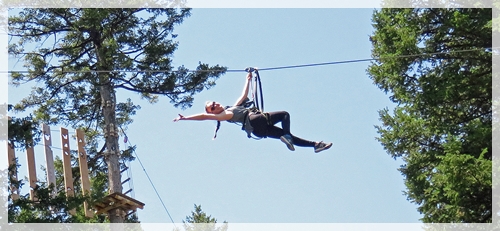 This I declare about the Lord: He alone is my refuge, my place of safety; he is my God, and I trust him. [Psalm 91:2 (NLT)]
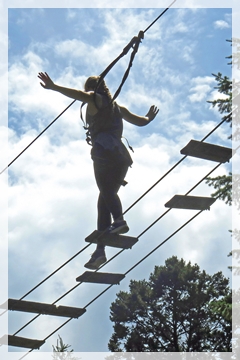 and literally jumped through hoops; all of this took place some twelve to eighty feet above the forest floor.
 Richard Williams was watching TV when he saw a tennis player awarded a $40,000 check for winning a tournament. He decided then that his as yet unborn children would become tennis stars. Williams wrote a 78-page plan detailing their future, taught himself how to play tennis and, when his girls were four, started teaching them to play the game. Before they were even born, he’d planned the future for tennis greats Serena and Venus Williams.
 My child, pay attention to what I say. … Guard your heart above all else, for it determines the course of your life. … Look straight ahead, and fix your eyes on what lies before you. Mark out a straight path for your feet; stay on the safe path. Don’t get sidetracked; keep your feet from following evil. [Proverbs 4:20a,23, 25-27 (NLT)]
 Many years ago, we did some major remodeling on our lake house. The original structure was gutted: carpets ripped up, paneling pulled off, decks knocked down, stairs demolished, walls cut open, and our landscaping ruined. Filled with fear and misgivings, I stared at the gaping hole in the hillside and what was left of the original dwelling. The architect/builder kept reassuring me that, having drawn the plans, he knew how everything would eventually fit together. Me? I just saw the ruined house, a deep pit and piles of dirt. I hadn’t expected this devastation; it had seemed so simple on paper. How this mess was ever going to become the house we’d pictured, I didn’t know. I simply had to trust the builder and leave it in his hands. Seven months later, I stood in the same spot, thrilled with the final result; it was better than I’d ever expected!
 While talking with a friend, I mentioned how many people of our generation seem unprepared for the challenges of widowhood. Having relinquished certain responsibilities to their spouses during the decades of marriage, they’re ill-equipped when they lose that spouse. There are men who have no idea how to do laundry, grocery shop, clean the bathroom or use the microwave. On the other hand, many of my women friends have never done minor repairs, paid bills, made an investment or purchased a car. “That was me!” replied my friend whose husband died of cancer. His death, while unwelcome, was not unexpected so I asked why they hadn’t prepared her for widowhood. “He tried to,” she said, “but I wouldn’t listen.” As long as they didn’t talk about his imminent passing and her future life without him, she still could deny its reality.
