
I have hidden your word in my heart, that I might not sin against you. … I will study your commandments and reflect on your ways. I will delight in your decrees and not forget your word. [Psalm 119:11,15-16 (NLT)]
 “Biology!? Math!? English! AAHH!” groans Nancy in a recent one of Guy Gilchrist’s comics. “I shouldn’t have to memorize anything I can Google!!” she protests with a frown. Oh, I feel your pain, Nancy; indeed, I do! Were it not for my Bible’s concordance and Google, I’d be hard put to include Bible verses in my devotions. I can manage to remember the gist of many verses but don’t ask me for chapter or verse and you’d better not quote me because my words won’t be exact. If quizzed on Scripture, I definitely would need an open book test and, like Nancy, would much prefer having access to Google.
We are called to witness for Christ and yet, without a Bible (or a computer) in hand, I make a pretty poor witness. The Bible, however, is pretty clear about knowing God’s word—not just reading it—but actually knowing it. I may read it, I may study and write about it but, when it comes to actually knowing Scripture and being able to recite it, I’m at the bottom of the class.
Granted, being able to talk the talk and recite Scripture certainly doesn’t make someone a follower of Christ or a good witness for His kingdom. Having faith and walking the walk is more important that being able to rattle off Bible verses. Nevertheless, at some point, we’ll be asked why we walk with Christ and what makes us so sure ours is the path to take. It’s then that we need to be able to do some talking—to share what we believe and why we believe it.
At Bible study recently, someone asked our pastor how to defend his belief that Christ is the only way to salvation. The answer, of course, is found in Scripture—John 14:6 which says, “I am the way, the truth, and the life. No one can come to the Father except through me.” Our pastor reminded us that the Holy Spirit will provide us with the words we need when witnessing and, indeed, He will. Yet, we need to remember that God already has provided us with most of those words in the Bible. Let us never forget that God’s armor has only one weapon—the Sword of the Spirit—which is God’s word. Even without our Bibles, iPads or a wireless connection, we’ll have all the weaponry we need if we have God’s word in our hearts and minds.
I know of no other single practice in the Christian life more rewarding, practically speaking, than memorizing Scripture. . . . No other single exercise pays greater spiritual dividends! Your prayer life will be strengthened. Your witnessing will be sharper and much more effective. Your attitudes and outlook will begin to change. Your mind will become alert and observant. Your confidence and assurance will be enhanced. Your faith will be solidified. [Chuck Swindoll]
 As I grabbed my jacket, I noticed the familiar Under Armour logo on the front. Looking down, I saw that my t-shirt advertised a local boot camp class and my shorts displayed Fila’s logo. Eyeing my husband, I saw that his shorts displayed the same logo as mine and his shirt advertised the physical therapy clinic that has treated him over the years. While my cap sported the famed Nike swish, the name of a local pub was embroidered on his. A red swish peeked out from the top of his shoes while my socks were decorated with New Balance’s logo and pink ribbons for breast cancer awareness. The large “N” on each side of our sneakers identified them as another New Balance purchase. We were virtual walking billboards and we’d paid a hefty price for the privilege of advertising other people’s goods and services!
 Back in 1765, Dr. John Fawcett became the pastor of a small church in Wainsgate, England. Although his congregation of farmers and shepherds paid him a modest salary and donated wool and potatoes to them, the growing Fawcett family struggled to make ends meet. When a prestigious London church extended a call to him, Fawcett accepted and preached his farewell sermon. The family’s belongings were loaded on their wagon when parishioners gathered around him and begged him to stay. When his wife cried, “Oh John, John, I cannot bear this,” the pastor agreed. He ordered the wagon unloaded and remained at that parish for 54 years. Tradition has it that Fawcett wrote the words to “Blest be the Tie” in commemoration of that day.
 Walking through the farmer’s market in a nearby town, I was surprised to look over and see a bright red banner saying “Prayer Station.” Curious, I walked over and introduced myself. Manning the station were two members of a small local church. People are there every Saturday morning, summer and winter, fair weather or foul, giving friendly greetings to passers-by. If someone stops, they offer a listening ear and prayers, if so desired. Prayer stations like theirs actually started in 2001 when Youth with a Mission (YWAM) established them around New York City following the September 11th attacks.
 “Compromise” and “cooperation” are words we hear all too rarely when it comes to our government. Illinois, with a $206 billion debt, has been operating without a budget for nearly a year because Republicans, Democrats and the governor can’t come to an agreement. Although Illinois managed to continue most operations this past year, the state’s poorest and neediest residents suffered the most. If an agreement isn’t reached by July 1, there will be additional shutdowns, more programs cut, schools will lose funding and all road projects will stop. Unfortunately, the winning of political arguments has become more important than serving the people.
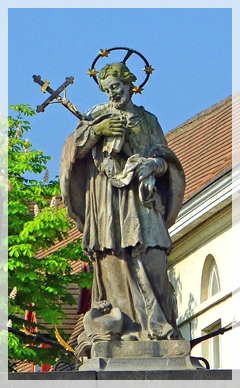 How would we prove we are Christians? If we were Islamic converts to Christianity, seeking asylum in the United Kingdom or several other nations, an assessor would interview us to determine whether or not we actually are believers. Unfortunately, many of those doing the interviewing have no real understanding of Christianity themselves. Worse, as new Christians, we probably won’t know the answers to the sort of questions that are asked while those who are pretending to be Christian might have all the answers memorized. After all, back in Jesus’ time, the Pharisees had all the answers but were sorely lacking in faith. If we failed our interviews, we’d be subject to deportation. For a Christian, especially a Christian convert (an apostate), returning to one’s Islamic homeland could have dire (even fatal) consequences.
