
Jesus was born in Bethlehem in Judea, during the reign of King Herod. About that time some wise men from eastern lands arrived in Jerusalem, asking, “Where is the newborn king of the Jews? We saw his star as it rose, and we have come to worship him.” [Matthew 2:1-2 (NLT)]
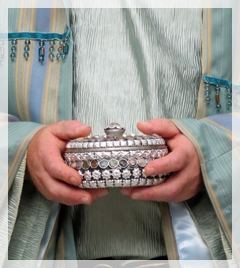
Assuming you don’t worship in the Orthodox Church, today is known as the Feast of Three Kings or Epiphany. Since the church year for Orthodox Christians follows the Julian calendar, tonight is their Christmas Eve and Epiphany won’t be until January 19th. For those of us using the Gregorian calendar, however, today often is the day the Christmas tree is taken down, the nativity sets boxed up, and the holiday decorations are tucked away until next December.
Epiphany, however, isn’t about decorations or eating the last of the Christmas cookies. The word “epiphany” means to show, make known, or reveal. Those “ah-ha” moments when we have a flash of insight or understanding are often called epiphanies. (I frequently prayed for epiphanies when studying algebra and geometry.) When the travelers to Emmaus (in the gospel of John) suddenly recognized the resurrected Jesus, they had an epiphany as did Saul when Jesus revealed Himself on the road to Damascus. Today’s Epiphany celebration is about the coming of the wise men with gifts to visit the Christ child. Their visit revealed Jesus to the world as Lord and King, not just to the Jews, but also to the Gentiles.
When the long awaited Messiah was born, angels sent the birth announcement to lowly shepherds rather than religious leaders. The king was born, not in a palace, but in a stable. The newspaper didn’t list His birth but a star led the way. The baby gifts were brought not by Jews but by Gentiles: pagans who traveled from Persia, Arabia or India for several months to find this newborn king. They didn’t present the family with typical baby gifts and their offerings certainly weren’t what a poor carpenter’s family would expect to receive. Their offerings, however, were standard gifts to honor a king or deity in the ancient world. Gold, the metal of royalty, symbolized His kingship and acknowledged His right to rule. Frankincense, used in worship and the anointing of priests, symbolized the role Jesus would take as our High Priest. Myrrh, a spice used for embalming, was an odd gift for a child but the magi were familiar with the prophecies that told of the Messiah’s suffering. This was the perfect offering for the One who would be a sacrifice. Perhaps the greatest gift the magi brought was the one that didn’t come in a box: their worship!
As we put away the last of the holiday decorations, let’s not put away the message of Christmas. May the living Christ remain in our hearts: our King, God, and Savior—the One who lived and died so that we might die and live.
Born a king on Bethlehem’s plain, Gold I bring to crown Him again,
King forever, ceasing never Over us all to reign. …
Frankincense to offer have I. Incense owns a Deity nigh.
Prayer and praising all men raising, Worship Him, God on high. …
Myrrh is mine: Its bitter perfume Breaths a life of gathering gloom.
Sorrowing, sighing, bleeding dying, Sealed in the stone-cold tomb.
[“We Three Kings” by John Henry Hopkins, Jr.]
 The story is told of a minister who made this announcement just before passing out the offering plates: “The good news is that God has all of the funds necessary to fund His church’s ministry.” As the congregation started to return their checks and cash to their wallets, the pastor added, “But the bad news is that it’s still in our pockets!”
 John Wesley had an excellent alternative to making a New Year’s resolution that’s unlikely to be kept. Believing that Christians should reaffirm their covenant with God, in 1755, he introduced a covenant service to the Methodist Societies. By 1775, this service was usually held on New Year’s Eve (and called a Watch Night Service) or New Year’s Day. This was a service of renewal in which believers would gather for self-examination and reflection and then renew their covenant with God by dedicating themselves wholly to Him. The practice of a covenant renewal service held on the Sunday nearest January 1st continues in some Methodist churches today and is a practice that has crossed denominational lines.
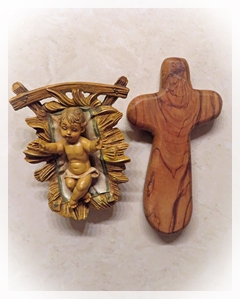 Pew Research reports that while 90% of Americans celebrate Christmas, more than half of them celebrate it only as a cultural holiday! While they’ll decorate their house with lights and wreaths, trim a tree, send cards, and exchange gifts, Christmas is just an excuse for good food, parties, family gatherings, and presents. While they’re not indifferent to Santa, gifts, merriment, or decorations, like the people of 1st century Palestine, they are indifferent to the Christ child. The shepherds saw the star and sought the babe in the manger and a caravan from the East brought Him gifts, but we don’t read of any townspeople visiting Joseph and Mary. What of the priests and scribes who told Herod where the Messiah would be born? They knew the prophecies but didn’t join the Magi in their quest to find the One who would fulfill those prophecies. Lowly shepherds and men from a faraway land recognized Jesus as the Messiah but most of God’s chosen people ignored the greatest event in all of history.
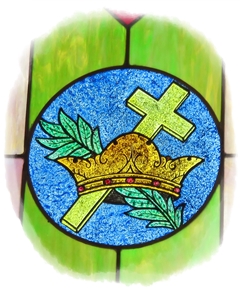 Seeing the rise of secularization, communism, fascism, and atheism following World War I, Pope Pius XI instituted the Feast of Christ the King in 1925. He wanted to remind Christians who their only King was and that it was Christ (and Christ alone) who should reign in our hearts! Originally celebrated the last Sunday in October, the feast day was moved to the last Sunday of the liturgical year in 1969. In spite of being created by the Roman Catholic Church, many Protestants including Episcopalians, Methodists, Lutherans, and Presbyterians celebrate the day.
 Two weeks ago, in recognition of Reformation Day (commemorating Martin Luther’s posting of his Ninety-Five Theses in 1517), the minister at our liturgical church spoke about needed reforms in today’s church. By definition, reformation is changing or improving something by correcting its faults, removing inconsistencies and abuses, and imposing modern methods and values. While I firmly believe in correcting errors, removing contradictions and misuses, and even using modern methods, I would suggest caution about adopting modern values.
 Devotions of the Heart