BE THE CHURCH!

I pray that God, the source of hope, will fill you completely with joy and peace because you trust in him. Then you will overflow with confident hope through the power of the Holy Spirit. [Romans 15:13 (NLT)]
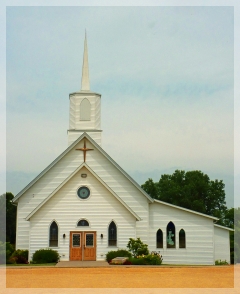
Shepherd of the Hills - Schapville IL

Shutting their doors last Sunday was not an easy choice for church boards or parishioners. We are designed for community; gathering together for prayer, praise, instruction, fellowship, and the Lord’s Supper is part and parcel of being a Christian. Suddenly, our worship experience, traditions, rituals, and church family were taken from us with this new concept of “social distancing.” What it comes down to is simple: Jesus’ command to love one another. Right now, the best way to love one another is to avoid putting anyone, most especially those at high risk, in danger. Unfortunately, that means no longer meeting together in houses of worship.

I imagine Satan was chuckling in devilish glee last week as church after church cancelled services and closed their doors. What Satan doesn’t understand is that, while a church is a building, the Church isn’t! Scripture likens the Church to being a family, a flock of sheep, a body, and the “bride” of Christ. Whether a cathedral or a gazebo at the beach, the Church isn’t where we go, it’s who we are! Simply put, the church is a body of believers who live out the Gospel in their words and actions. We don’t need walls, pews, sound systems, kneelers, hymnals, programs, and video screens or an altar, stage, organ, choir, sanctuary, sacristy or narthex to do that!

Not attending church services or Bible study doesn’t mean we stop worshiping, praying, learning, or serving. We just have to do it another way by taking advantage of 21st century technology with things like streaming, pod casts, conference calls, FaceTime, App offerings, and on-line studies. Granted, it’s difficult to be the church when we can’t meet together, even in small groups. Nevertheless, we can still check on and encourage one another, paying special attention to those who live alone or may be without any support system. When necessary to leave our homes for supplies, we can continue to be Christ’s hands and feet by picking up necessities for house-bound neighbors. We even can evangelize by sharing our church’s online services with others. Although we all have suffered economically, some are better off than others. For those who are still able, continued (or even increased) support of our churches, missions, and relief organizations is a must. The need doesn’t go away when church doors shut! We’ll have to be creative, but we can continue to love and serve our sisters and brothers—even from a distance.

We can seek the hidden blessings in our isolation. Between closures and cancellations, I deleted forty events from my calendar for the next thirty days. My habitual complaint has been lack of time but, now that my calendar is free and I have nowhere to go, I have plenty of it! Let us endeavor to look at this forced isolation as a blessing rather than a curse!

Even though we can’t meet together, we must continue to encourage one another by finding joy in our trials and inspiring others to do the same. Using WhatsApp to spread the news, a Spanish trainer held a workout class on a low rooftop. Looking down through their windows, his class did jumping jacks and squats while sequestered in their apartments! Locked-down Italians have been having impromptu concerts from their balconies: a guitar and flute duet was presented in Turin, a man performed a trumpet solo in Trapani, and the streets of Siena and Salerno were filled with song as housebound people sang to one another. Last Friday, the term “flash mob” took on a new meaning when thousands of confined Italians stood on their balconies or hung out windows and made music with whatever they could find. A quarantined magician aboard the Diamond Princess is offering a daily televised magic show to his fellow room-bound passengers!

Most of us can’t lead an exercise class, sing from our balconies or make quarters disappear (except into vending machines), but we all can find a way to be the church. For example, the young people from a Colorado SK8 church are making grocery and pharmacy runs for the community’s elderly and housebound. As Christ followers, we continue to praise God, find joy in our circumstances, and bring light into darkness! While church doors are closed, our hearts and minds remain open to receive the joy of the Lord. We will pass that joy and His good news on to others because we are the church!

And now, dear brothers and sisters, one final thing. Fix your thoughts on what is true, and honorable, and right, and pure, and lovely, and admirable. Think about things that are excellent and worthy of praise. Keep putting into practice all you learned and received from me—everything you heard from me and saw me doing. Then the God of peace will be with you. [Philippians 4:8-9 (NLT)]

Copyright ©2020 jsjdevotions. All rights reserved.

SPEAK

And he said to them, “Go into all the world and proclaim the gospel to the whole creation. [Mark 16:15 (ESV)]

zebra longwing butterflyMy latest exercise in learning how to live the abundant life promised by Jesus was both easy and difficult: I was to speak to one person about God, even if all I said was, “God is good” or “God loves you.” Since I write about God five days a week, said “God bless you!” to a friend, and talked about God with my pastor, I figured I was done, except I knew I wasn’t.

As with every abundance exercise I’ve been given, I wondered how this task led to an abundant life. When I took notice of God’s incredible creation in the first exercise, I joined the Psalmist in praise, thanksgiving, and worship. The second exercise entailed both acknowledgement of my sin and forgiveness, the third and fourth required me to encourage others and to be kind while expecting nothing in return. With last week’s assignment of sacrifice and this one of speaking about God, a common thread began to emerge: abiding in the Lord. Since we can’t abide in Him without being obedient to Him, each exercise involved obedience to His word. Both the Old and New Testaments tell us that obedience brings blessings—both to us and to others. The abundant life Jesus gives us is only realized when we truly are obedient to Him: when we abide in Him and He is us.

Obedience often means stepping out of our comfort zone and this exercise took me out of mine. Although talking about God with other believers and writing about Him in my blog fulfilled the letter of the assignment, it didn’t fulfill its spirit. Blessing someone when they sneeze or adding, ”God’s peace and joy,” to an email may be a start but they’re not the end of our Christian witness. Even though we’re called to proclaim the gospel to the world, many of us are hesitant to do that and our reticence is what prevents us from enjoying the richness of our faith. “To be a soul winner is the happiest thing in this world. And with every soul you bring to Jesus Christ, you seem to get a new heaven here upon earth,” are the words of evangelist Charles Spurgeon. His words tell us that he knew what it was to experience the abundant life in Christ; it’s “heaven here upon earth!”

It is our commitment to Jesus that brings His blessings and true commitment requires obedience, even when that means stepping forward in witness. We are blessed by God when we bless the lives of others and I can’t think of a better way to bless someone than to share the gospel message of God’s love and forgiveness. Obedience—abiding in Jesus and He in us—is the key to an abundant life of blessings.

It is the greatest pleasure of living to win souls to Christ. [Dwight L. Moody]

And if you faithfully obey the voice of the Lord your God, being careful to do all his commandments that I command you today, the Lord your God will set you high above all the nations of the earth. And all these blessings shall come upon you and overtake you, if you obey the voice of the Lord your God. [Deuteronomy 28:1-2 (ESV)]

But he said, “Blessed rather are those who hear the word of God and keep it!” [Luke 11:28 (ESV)]

Copyright ©2020 jsjdevotions. All rights reserved.

WHOSE TIME?

For everything that happens in life—there is a season, a right time for everything under heaven. [Ecclesiastes 3:1 (VOICE)]

clockEcclesiastes tells us there is a right time for everything, Colossians and Ephesians tell us to use our time wisely, Proverbs warns about wasting time, James cautions that we don’t know what tomorrow will bring, Corinthians warns us time is short and, readily admitting that his time and future are in God’s hands, David tells us to number our days. Nowhere does Scripture tell us how to have more time!

Time is precious and, like money, it can be given away. Unlike money, however, it can’t be saved for a rainy day, earned, found if lost, earn interest, grow when invested, or be replenished from a trust fund! Whether we use it wisely or not, once time has passed, it’s vanished forever!

I thought about time when my husband reminded me that I was to meet the church women for breakfast the following day. Having forgotten about the appointment, my initial reaction was a groan. I enjoy being with my church sisters: sharing, learning, laughing, encouraging, and loving one another. Nevertheless, I resented taking my time from a busy Monday to do it!

As God would have it, that morning’s reading took me to C.S. Lewis’ The Screwtape Letters and the words of the senior demon Screwtape to his nephew Wormwood. Regarding the young man whose soul they hoped to capture, Screwtape writes: “Nothing throws him into a passion so easily as to find a tract of time which he reckoned on having at his own disposal unexpectedly taken from him.” Those words described my reaction perfectly! Rather than seeing the blessing in fellowship, I’d seen only an intrusion on my time.

The devilish Screwtape instructs Wormwood to encourage the man’s false assumption that his time is a birthright and that every hour of every day belongs to him alone. Wormwood is to guide the man to consider interruptions of any kind as time that is stolen from him, work as time that is unduly taxed, and religious duties as a “generous donation” of his time.

Whether it was coincidence or the Holy Spirit’s intervention but Lewis’ words quickly caused an attitude adjustment regarding what I thought of as “my” time. Even the demonic Screwtape recognized that time is a gift that can’t be owned. He points out to Wormwood that, just as a man can’t hold title to the sun or moon, he can’t be the owner of time. We don’t own the heavens, church, friends, family, God, or our very lives and our time (whether an hour, a day, or a lifetime) does not belong to us. Any time with which we’re blessed belongs to God; He’s just allowing us to use a little bit of it. Rather than owners of our time, we are but stewards of His! Remembering that every day is the Lord’s day, let us always use His time to His honor and glory.

I give the moments of my life over to You, Eternal One. [Psalm 31:15 (VOICE)]

Everything and everyone under heaven is Mine! [Job 41:11b (VOICE)]

Copyright ©2020 jsjdevotions. All rights reserved.


LENTEN FASTING 

You humble yourselves by going through the motions of penance, bowing your heads like reeds bending in the wind. You dress in burlap and cover yourselves with ashes. Is this what you call fasting? Do you really think this will please the Lord? [Isaiah 58:5 (NLT)]

monarch butterflyTraditionally, Lent has been a time for Christians of all denominations to refocus their hearts and minds on God through prayer, fasting and giving. As a way of fasting, many people deny themselves small indulgences, such as soda, candy, or their daily latte at Starbucks, but Lenten fasting isn’t limited to food. Other ways to observe this season include not making any purchases that aren’t absolutely necessary; donating or throwing away forty things during Lent’s forty days; giving up guilty pleasures like People magazine or binge-watching Netflix; refraining from complaint or gossip; not eating out or ordering in; saying three nice things to one’s spouse and children daily; reading the four gospels; doing a weekly service project; setting aside loose change for a charity; or forty days of letter writing, acts of kindness, or phone calls to special people. Some of those, like refraining from gossip or complaint, saying nice things to the family, and Scripture reading shouldn’t be limited to just these forty days!

Last week’s Abundance assignment was to give up something for Lent. Pointing out that Jesus gave up everything for us, it simply asked what we could sacrifice for forty days as a sign of gratitude for His incredible gift. Since this is part of a mission to experience the abundance of the Christian life, I had to ask myself how having less would make me experience more. Of course, if we love Oreos, Five Guys, or Downton Abbey, we will appreciate them all the more when we can indulge in them once again, but there must be more to fasting than that.

Looking at fasting in Scripture, we find that it was never supposed to be mere ritual. Fasting and sacrifice were to be a sincere way of growing closer to God through prayer and repentance. Isaiah wrote of God’s anger at Israel’s superficial fasting that wasn’t accompanied by repentance and the blessing of others. Skipping dessert, abstaining from social media, or not playing FreeCell or Spider on our phones is meaningless if we don’t link our sacrifice with prayer, a change of heart, and the blessing of others. True fasting replaces selfishness with selflessness. Giving up something (be it food, habits, money, possessions or time) should cause us to take our eyes off the things of this world and humbly and joyfully focus them on God. It is only when we look to Jesus that we truly discover the abundance of the Christian life. Whether Christmas or Lent, let us prayerfully remember that Jesus is the reason for the season!

Remove the heavy yoke of oppression. Stop pointing your finger and spreading vicious rumors! Feed the hungry, and help those in trouble. Then your light will shine out from the darkness, and the darkness around you will be as bright as noon. [Isaiah 58:9b-10 NLT)]

Copyright ©2020 jsjdevotions. All rights reserved.

ENCOURAGEMENT

When he [Barnabas] arrived and saw this evidence of God’s blessing, he was filled with joy, and he encouraged the believers to stay true to the Lord. [Acts 11:23 (NLT)]

One of the most beautiful gifts in the world is the gift of encouragement. When someone encourages you, that person helps you over a threshold you might otherwise never have crossed on your own. [John O’Donohue]

irisNicknames were as common in Biblical days as they are now. Simon’s politics gave him the nickname of Zelotes (the Zealot) and the impetuous behavior of James and John probably earned them the nickname of “Boanerges,” meaning “Sons of Thunder.” While it was Simeon’s dark complexion that gave him the name of “Niger” or “the Black Man,” it was the heartening behavior of Joseph that earned him the nickname of “Barnabas” meaning “Son of Encouragement.”Although our knowledge of Barnabas is limited, we know he was an apostle in the early church who encouraged the Jerusalem church by selling a field and giving it the money. His encouragement, however, wasn’t limited to finances and, without his encouragement, we might not have much of what we call the New Testament.
In spite of Paul’s conversion, his reputation as a persecutor of Christians frightened the apostles and they refused to meet with him. Barnabas became the bridge between the two and he urged the apostles to accept the new convert. It was Barnabas who encouraged Paul to come to the Antioch church where the two spent a year teaching (and encouraging) before departing on Paul’s first missionary journey. Barnabas then encouraged his cousin John Mark to join them on this expedition. When John Mark lost heart and departed, Paul refused to give the deserter another chance. It was Barnabas who encouraged the young man to go with him on another mission while Silas joined Paul. Although both Barnabas and John Mark had differences with Paul, eventually they reconciled and Paul again asked John Mark to join in his ministry.

I thought of Barnabas, the “Son of Encouragement” because my third “Abundance” exercise was to leave a surprise note of encouragement for someone. Coming from the Old French word encoragier, “encourage” means to make strong or hearten: to spur someone on and promote their progress or growth. Without encouragement, a person is like a flower trying to bloom without enough water or fertilizer; neither will reach their full potential. It was with Barnabas’ encouragement that the early church got planted and Paul and John Mark were able to blossom. Without Barnabas’ encouragement, Paul might never have been accepted by the church, taught in Antioch, traveled throughout the Roman Empire to reach Gentiles, or written the thirteen Pauline epistles. Not one to hold a grudge, Barnabas forgave John Mark and encouraged his cousin’s faith by including him on another mission trip. As a result, John Mark, the man who once deserted the Apostle Paul, became known as the Apostle Mark and the author of the gospel that bears his name.

At some point in our lives, we all need words that inspire courage, enthusiasm or confidence; validate, comfort, or console; bring strength, perspective, or hope. Paul told us to “encourage one another and build one another up,” but I wondered how doing that encouraging helps us live richer more abundant lives. To encourage someone, however, we first must appreciate them and it is by appreciating and valuing the people in our lives that we realize how truly rich we are. Barnabas appreciated the potential of both Paul and John Mark even when others didn’t see it. May we all be worthy of being called a Son or Daughter of Encouragement!

Your greatest pleasure is that which rebounds from hearts that you have made glad. [Henry Ward Beecher]

Therefore encourage one another and build one another up, just as you are already doing. [1 Thessalonians 5:11 (NLT)]

Let everything you say be good and helpful, so that your words will be an encouragement to those who hear them. [Ephesians 4:29 (NLT)]

Copyright ©2020 jsjdevotions. All rights reserved.

DUST TO DUST – ASH WEDNESDAY

I take back everything I said, and I sit in dust and ashes to show my repentance. [Job 42:6 (NLT)]

Matterhorn Memorial - ZermattToday is Ash Wednesday and the beginning of the Lenten season. Marking the forty days Jesus spent fasting in the wilderness before beginning His ministry, Lent is a time many believers intentionally reflect on the life of Jesus: his ministry, sacrifice, death, and resurrection. For some Christians, today also starts a season of repentance, fasting, and self-examination.

Although many evangelical Christians do not observe Lent, it is one of the oldest traditions of the Church. A letter written by Irenaus of Lyons (c. 130-200) describes a pre-Easter fast that originated “in the time of our forefathers.” Originally lasting only a few days, in 325 AD the Council of Nicaea wrote about the occurrence of a 40-day season of fasting, penitence and self-examination. While it originally may have been a time for new Christians to prepare for Baptism, the whole Church soon joined in observing the Lenten season.

Although Lent is 40-days long, a look at the calendar tells us there are 46 days until Easter. Since those other six days are Sundays, they aren’t considered Lent. The disciples and most of the first followers of Jesus were Jews who had observed the seventh day (Saturday) as the Sabbath. Because Jesus rose from the dead on Sunday, however, the early apostles changed their Sabbath day of rest and worship to the first day of the week as a continued celebration of His resurrection. When the early church began to observe the season of Lent, Sundays (being mini-celebrations of the risen Christ) were exempt from fasting and other forms of self-denial.

Most Roman Catholics and some Protestants will observe this day with the imposition of ashes on their foreheads. Made by burning palms from the previous year’s Palm Sunday and mixing the residue with anointing oil, the ashes are a visible reminder of mankind’s mortality—God made us by breathing life into dust and it is to dust that our bodies shall return. [Genesis 3:19] The ashes also represent penance. Putting dust or ashes on the head was an ancient gesture of mourning and penitence; when people repented of their sins, they would dress in uncomfortable sackcloth and cover themselves with ashes. Today, some worshipers may leave church with the ash cross still on their foreheads as a way of carrying the cross into the world while, in other churches, worshipers will wash off the smudge as a sign that they’ve been cleansed of their sins.

Neither Ash Wednesday nor Lent is Biblically ordained and whether we observe either is a matter between us and God. We must keep in mind that observing any religious ritual or rite is not a way to earn salvation; we are saved by God’s grace through faith alone. Moreover, if we choose to observe Lent, Jesus made it clear that fasting and abstinence should be done humbly, sincerely, and discreetly. [Matthew 6:16-18] While it is okay to be seen fasting, it is not okay to fast so to be seen. Finally, let us remember that there is no specific season for repentance; we should repent of our sins all year long!

I have come to call not those who think they are righteous, but those who know they are sinners and need to repent. [Luke 5:32 (NLT)]

Now repent of your sins and turn to God, so that your sins may be wiped away. [Acts 3:19 (NLT)]

Copyright ©2020 jsjdevotions. All rights reserved.