
For there is one body and one Spirit, just as you have been called to one glorious hope for the future. There is one Lord, one faith, one baptism, one God and Father of all, who is over all, in all, and living through all. [Ephesians 4:4-6 (NLT)]
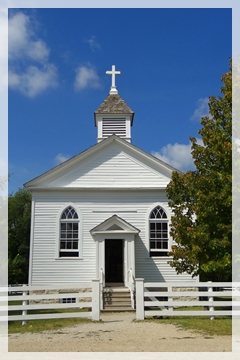 It is said that John Wesley (the founder of the Methodist movement) once dreamt of visiting the gates of Hell. Curious, he asked the gatekeeper how many in Hell were Presbyterians, Episcopalians, and Baptists. “We have many,” was the gatekeeper’s answer regarding each denomination. Nervously, Wesley then asked if there were any Methodists and was disheartened to learn there were plenty of them there, as well.
Dismayed, Wesley proceeded to the gates of Heaven. The preacher asked how many in Heaven were Presbyterians, Episcopalians, and Baptists. To each question, the gatekeeper replied, “Not a one.” After Wesley asked how many Methodists were there, his heart dropped at the gatekeeper’s reply of, “None!” Perplexed, the concerned preacher asked who was in Heaven. The angel at the gate replied, “The only ones here are those who love the Lord and the only name by which they are known is that of Christian!”
From that strange dream, John Wesley is said to have concluded that unity within the Christian church was essential for its mission. Nevertheless, acknowledging that there will be different points of view, he said, “Although a difference in opinions or modes of worship may prevent an entire external union, yet need it prevent our union in affection? Though we cannot think alike, may we not love alike? May we not be of one heart, though we are not of one opinion? Without all doubt we may.”
I thought of John Wesley’s dream when my husband told me how, as a boy, he refused to say the word “catholic” when reciting the Apostle’s or Nicene Creeds. Not attending a Roman Catholic church, he didn’t know how he could say he believed in it! Of course, he didn’t understand that catholic (with a small c) has never meant a specific denomination.
Etymologically, “catholic” comes from two Greek words, kata or kath (meaning “throughout”) and holos (meaning “whole”). When joined as katholikos, it means, “throughout the whole.” Meaning more than universal, “catholic” captures the dual sense of “throughout all time and in all places” while pointing to the essential unity or wholeness of Christ’s Church. When the creeds state, “I believe in the holy catholic church,” they aren’t referring to any branch of Christianity; they refer to the entirety of the whole Church, not just here and now, but everywhere in the past and future as well. First used in the early 2nd century, the adjective “catholic” didn’t mean a particular denomination; it simply described the universal scope of the Christian Church. It was not until the Reformation that the Roman church used “Catholic” (with a capital C) as a denominational title to distinguish itself from the Protestants.
To avoid confusion, many Protestant churches have replaced “catholic” with “Christian” when saying the creed. Nevertheless, the original word has a beautiful subtext because it refers to the wholeness of the entire church and the unity of all believers in the body of Christ, throughout all time and in all places. The “holy catholic church” simply refers to all true believers in the Lord Jesus Christ—people like the ones John Wesley found in heaven! Indeed, we won’t all think alike nor will we worship alike but we all can love alike!
Where Jesus Christ is, there is the catholic church. [Ignatius of Antioch]
 A.W. Tozer’s words remind me of Jesus’s parable about the Pharisee and tax collector who prayed in the Temple. Acting as if God should feel grateful to receive his prayers, the Pharisee didn’t understand that he should be grateful that God listens! Rather than express thanks for God’s righteousness, power and majesty, the proud Pharisee thanked God for his own righteousness and then listed his virtues! Although it wasn’t required, he fasted twice weekly and was so fastidious about tithing that he tithed not just what was earned but also anything he acquired. If he were unsure that a farmer had tithed his produce, the Pharisee would tithe it again! Standing before God and proclaiming both his good works and his contempt for others (like the tax collector), the Pharisee is a perfect illustration of a man “who believes that he is worthy of heaven.” How wrong he was! Perhaps the Pharisee’s refusal to recognize his own self-righteousness was his biggest sin of all.
 The story is told of a minister who made this announcement just before passing out the offering plates: “The good news is that God has all of the funds necessary to fund His church’s ministry.” As the congregation started to return their checks and cash to their wallets, the pastor added, “But the bad news is that it’s still in our pockets!”
 John Wesley had an excellent alternative to making a New Year’s resolution that’s unlikely to be kept. Believing that Christians should reaffirm their covenant with God, in 1755, he introduced a covenant service to the Methodist Societies. By 1775, this service was usually held on New Year’s Eve (and called a Watch Night Service) or New Year’s Day. This was a service of renewal in which believers would gather for self-examination and reflection and then renew their covenant with God by dedicating themselves wholly to Him. The practice of a covenant renewal service held on the Sunday nearest January 1st continues in some Methodist churches today and is a practice that has crossed denominational lines.
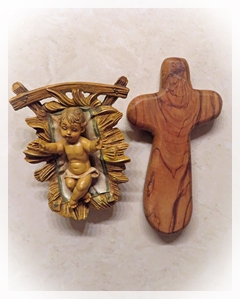 Pew Research reports that while 90% of Americans celebrate Christmas, more than half of them celebrate it only as a cultural holiday! While they’ll decorate their house with lights and wreaths, trim a tree, send cards, and exchange gifts, Christmas is just an excuse for good food, parties, family gatherings, and presents. While they’re not indifferent to Santa, gifts, merriment, or decorations, like the people of 1st century Palestine, they are indifferent to the Christ child. The shepherds saw the star and sought the babe in the manger and a caravan from the East brought Him gifts, but we don’t read of any townspeople visiting Joseph and Mary. What of the priests and scribes who told Herod where the Messiah would be born? They knew the prophecies but didn’t join the Magi in their quest to find the One who would fulfill those prophecies. Lowly shepherds and men from a faraway land recognized Jesus as the Messiah but most of God’s chosen people ignored the greatest event in all of history.
