
Your house and your kingdom will continue before me for all time, and your throne will be secure forever. [2 Samuel 7:16 (NLT)]
You will conceive and give birth to a son, and you will name him Jesus. He will be very great and will be called the Son of the Most High. The Lord God will give him the throne of his ancestor David. And he will reign over Israel forever; his Kingdom will never end! [Luke 1:31-33 (NLT)]
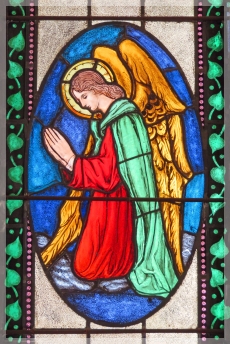 Sunday, we will light our Advent wreath’s fourth candle—the purple one known as the angel or love candle. We’ll read Nathan’s prophecy in 2 Samuel that David’s kingdom would continue forever. Although we know that David’s earthly dynasty ended some 400 years after Nathan’s words, God’s promise was fulfilled in Jesus—David’s direct descendant who now reigns forever. Jesus is tied to the Old Testament prophecies in two selections from Luke 1 in the angel’s words to Mary that her son, a descendant of David, would reign over Israel and His kingdom would never end and Mary’s beautiful song of praise known as the Magnificat in which she expresses her understanding that God is fulfilling His promises with the birth of her son.
Christmas celebrates the fulfillment of the promises God made to the people of Israel. Jesus’ birth, life, death, and resurrection initiated the new age promised by the prophets in the Hebrew Bible. The message of Advent, however, is that the story is not finished. Jesus must come again before the fullness of all that God promised will be realized.
We’re caught in what some theologians call the time of “already-and-not-yet.” The Kingdom of God that arrived with Jesus is a present reality that we can experience right now but it also is the future reality for which we hope! Although the decisive battle against Satan, sin, sickness, and death has been fought and won, the enemy hasn’t surrendered and the war is not yet over. We must continue to fight Satan, resist sin, and endure sickness and death until the time Jesus returns! The King has come and His Kingdom is here but, even though His Spirit is within us and His joy and peace are ours, the story isn’t complete. Got Questions Ministries explains it this way: “The present spiritual reality does not yet match up with the future, physical reality. One day, the two will be in sync.” As we light this fourth candle of Advent, we will eagerly look forward to celebrating the birth of God’s Son, all the while remembering that the best is yet to come! “Christ has died; Christ is risen; Christ will come again.”
We may say that in the possession of the Spirit we who are in Christ have a foretaste of the blessings of the age to come, and a pledge and guarantee of the resurrection of the body. Yet we have only the firstfruits. We look forward to the final consummation of the kingdom of God, when we shall enjoy these blessings to the full. [Anthony Hoekema]
 When we moved to southwest Florida several years ago, everything was new and strange—we didn’t know which farmer’s market had the finest produce, the best routes to avoid traffic, the amenities of each beach, the fun activities available, or where to hike or bike. Rather than be confused and discouraged, we got out the guidebooks and maps and enthusiastically started exploring—churches, parks, theaters, markets, beaches, and museums. Every day became an adventure and, as we got to know our community, we came to love it.
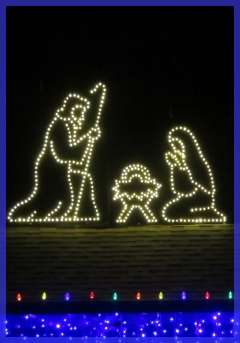 Two nights ago, we joined a long line of vehicles slowly wending their way through a nearby neighborhood famed for its over-the-top holiday light display. Each street follows a theme and over 300 homes are brightly decorated. The streets were aglow with meteor shower, icicle, garland, fairy, net, star, blinking, ball and laser lights along with illuminated blow molds, inflatables, and cut-outs of everything from Santa exiting an outhouse to the Grinch, igloos to elves, and candy canes to Olaf and the Minions. As bright as that neighborhood’s display was, it pales in comparison to one done by the Gay family in Lagrangeville, NY. Holders of the Guinness world record for holiday lights on a residential property, their 2020 display uses more than 670,000 lights that are choreographed to 256 songs.
 Colors have been used to differentiate liturgical seasons since the 4th century and, by the 12th century, Pope Innocent systemized their use in the church. Originally Advent was about penance, prayer and fasting in preparation for baptism so purple (the color associated with sacrifice and repentance from sin) was its liturgical color. Like the Advent wreath, however, liturgical colors are merely traditions and have no basis in Scripture. Most denominations have added more colors to the original five.
 When I was in college, most of the girls in my sorority house played bridge. After watching a few games, newcomers would sit in and learn from the more experienced players as they played. We novices lost a lot of games in the process but, eventually, we became good players. One friend, however, wanted to start as an expert. She sat alone in her room with a deck of cards and a bridge book trying to teach herself. Unwilling to make rookie mistakes, she wouldn’t play a hand until she was a skilled player; that day never came. She wasn’t much different from the people who say they’ll join a gym once they’ve gotten in better shape; rarely does that day come either.
 Last Sunday, my husband and I lit the candle of hope on our Advent wreath. This Sunday, we’ll re-light that one along with a second candle, the one we call the peace or Bethlehem candle. Because the Advent wreath custom has been adapted in a variety of ways through the years, there are several names for the candles and explanations for their symbolism that probably have more to do with the selling of wreaths, candles, and devotional booklets than with church tradition. There are no official names, meanings or rituals because an Advent wreath isn’t based on Scripture. It’s merely a tradition to help make this season more meaningful.
