UH-OH!

Consider it a sheer gift, friends, when tests and challenges come at you from all sides. You know that under pressure, your faith-life is forced into the open and shows its true colors. So don’t try to get out of anything prematurely. Let it do its work so you become mature and well-developed, not deficient in any way. [James 1:2-4 (MSG)]

double rainbowThe most obvious way God speaks is through the Bible. Sometime, however, He whispers to us in the “Aha!” moments. Serendipitous, they are God’s love notes that gently remind us of His presence, His love for us, and the magnificence of His creation. While they vary from person to person, I tend to find them in things like butterflies dancing among the flowers or a double rainbow after a spring storm.

God speaks louder with those wonderful “Oh, yes!” moments—the joyful times when all seems right with the world. We recognize His voice when the healthy baby arrives, the surgeon says the word “benign,” or the prodigal returns home. Along with the welcome “Oh, yes!” moments are the unwelcome “Oh, no!” ones—times when the bottom falls out of our world. They come with words like “malignant” or “inoperable,” a phone call in the middle of the night, or in the ICU. In all of these occasions, we quickly seek God with either our incredible feelings of thanks and praise or in our deep sense of desperation and need. The only way we can make sense of either the awe or the awfulness of life is to believe and trust in our all-powerful and loving God who knows exactly what He’s doing.

While I can find God in the “Aha,” awesome and awful, my problem comes with God’s ”Uh-oh!” moments—the unexpected and unasked for minor frustrations of life. It seems easier to turn to God in the extremes than in the routine detours, roadblocks, and nuisances of everyday life. We all have them—waiting on hold for ten minutes only to get disconnected, losing the car keys, anything that involves technical support or the DMV (and possibly the post office), waiting all day for the repairman who never shows or engaging in wrap rage while trying to open a child-proof package! These are the moments when my fruit looks far more like impatience, peevishness, self-pity, childishness, and rudeness than anything produced by the Spirit.

We often talk about the joy and peace we have as Christians but rarely about how we deal (or fail to deal) with irritation and frustration. While the emotion isn’t sinful, often how we act in response to it is. The enemy doesn’t have to tempt us with a cannon when an annoying barrage of pellets from his BB gun will make us forget who we are and in whose arms we are held!

I doubt that I’m the only one who has difficulty maintaining perspective and patience in the face of the little aggravations that are part and parcel of living in our world. Perhaps it’s because we think those minor annoyances are solely our concern when, in actuality, like everything else, they belong to God! Focusing on whatever is upsetting us simply makes it grow in importance but focusing on God shrinks it back to size. Let us remember that our God listens—not just to our praise, thanks and heavy-duty pleas, but also to our prayers for perspective, patience and peace. It’s by focusing on God that we can turn those “Oh-oh” moments into “OK!” ones!

So if you’re serious about living this new resurrection life with Christ, act like it. Pursue the things over which Christ presides. Don’t shuffle along, eyes to the ground, absorbed with the things right in front of you. Look up, and be alert to what is going on around Christ—that’s where the action is. See things from his perspective. [Colossians 3:1-2 (MSG)]

Copyright ©2019 jsjdevotions. All rights reserved.
 

THE GOOD OLD DAYS

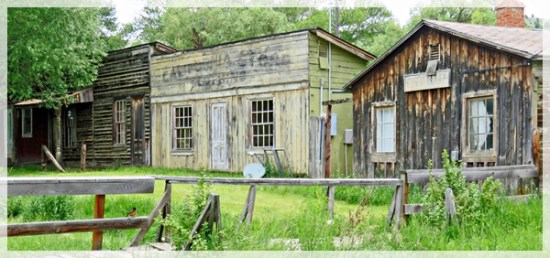
Virginia CityDon’t long for “the good old days.” This is not wise. [Ecclesiastes 7:10 (NLT)]

When talking with my centenarian mother-in-law, we often spoke of the “good old days.” She sometimes indulged in what I came to call “wishful remembering” and her past became more like a Hallmark movie than reality. I suppose, to some extent, we all do the same. The sledding hill grows steeper, the house bigger, the friends nicer, the grades better, the paycheck larger, and the success greater while any failure, disappointment, blame, pain, or drudgery diminishes. Not every memory we have, however, is a correct one; rather than an accurate record, our memories are actually what we tell ourselves about the past. Given the choice, it’s far nicer to have wishful good memories than ones of bitterness, regret and sorrow and I never corrected my mother-in-law’s. Nevertheless, we must be cautious of becoming too attached to our memories, especially if our less than accurate version of yesterday keeps us from moving into tomorrow.

Less than a month after God’s parting of the Red Sea and their song of victory and triumph at the defeat of Pharaoh, the Israelites had a serious case of wishful remembering and started to grumble. Instead of recalling the slaughter of baby boys and the back-breaking labor of Egyptian slavery, they remembered sitting around in comfort eating all the bread and stew they desired. Months later, they again complained about their hardships while recalling free fish, fruit and vegetables instead of the price they paid in sweat for that food. Rather than oppression, they remembered the “good old days” of Egyptian provision.

Sodom was the place where a gang of men wanted to attack Lot, sexually abuse his guests, and, for reasons beyond our understanding, Lot offered his virgin daughters to a mob of depraved men. When Lot’s family was told that Sodom was to be destroyed, they were urged to flee immediately and specifically warned to neither stop nor look back. Nevertheless, stopping and turning back is exactly what Lot’s wife did. According to the Moody Bible Commentary, the Hebrew word used for her looking back (vathabbet) has a very specific meaning of looking at something with desire or approval. Lot’s family left their home, possessions, friends, and even their sons-in-law behind. Choosing not to recall the evil, Lot’s wife turned, remembered the “good old days,” and longed for what had been and was no more.

When we follow God, we’re not promised an easy journey; in fact, Jesus pretty much promises we’ll encounter hardships. Stepping out in faith often means moving from comfort, convenience, and familiarity into the disruption, trials and vulnerability of the unknown. In light of new challenges and burdens, it’s easy to repaint the past with wishful memories of “the good old days.” As bad as the past may have been for either the Israelites or Lot’s wife, for them it seemed preferable to their unknown tomorrows. Those wishful memories, however, cost the Israelites an extra 38 years and Lot’s wife her life!

While wishful memories can make the past more palatable, they also can prevent us from experiencing the blessings of the future. We must never remember the good old days at the expense of failing to trust God with the new ones.

This means that anyone who belongs to Christ has become a new person. The old life is gone; a new life has begun! [2 Corinthians 5:17 (NLT)]

But I focus on this one thing: Forgetting the past and looking forward to what lies ahead, I press on to reach the end of the race and receive the heavenly prize for which God, through Christ Jesus, is calling us. [Philippians 3:13-14 (NLT)]

Copyright ©2019 jsjdevotions. All rights reserved.

IN PREPARATION FOR THE JOURNEY

We broke camp at the Ahava Canal on April 19 and started off to Jerusalem. And the gracious hand of our God protected us and saved us from enemies and bandits along the way. So we arrived safely in Jerusalem. [Ezra 8:31-32a (NLT)]

Bryce - Losee CanyonAfter years of exile, the Jews were finally returning home from their captivity in Babylon. Ezra assembled a group of 1,500 men and their families and led the second emigration back to Jerusalem. It would take about four months for the over 5,000 people to make the 900 mile journey across the desert. Since they were transporting about 30 tons of silver, gold, and bronze along with wheat, wine, olive oil, and salt, there was serious danger from marauding bandits.

When Persia’s King Artaxerxes offered Ezra an armed escort, he refused. Having assured the king that God’s hand of protection was all they needed, it would have been embarrassing and hypocritical to then accept military help. The Judeans couldn’t just “talk the talk” about the Hebrew God, they had to “walk the walk” and live as if they truly believed Ezra’s words and God’s promises.

Instead of trusting in soldiers, Ezra chose to trust in God. Although he was confident in God, Ezra did not take His protection for granted. He gave orders for the people to fast and earnestly pray that God would take care of them. Knowing the trip could be disastrous without God’s protection, they committed themselves to trusting in God alone. This choice was a strong test of everyone’s faith. It’s remarkable that two chapters in the book of Ezra are written about their preparation for the trip, but just a few sentences tell about the journey itself and their safe arrival. Perhaps, if we spent more time in prayer and faith preparing for our life’s journeys, they would be as free of difficulty as Ezra’s.

Prayer is the key to Heaven,
But faith unlocks the door;
Words are so easily spoken,
Prayer without faith is like a boat without an oar.
Have faith when you speak to the Master,
That’s all he asks you for.
Prayer is the key to Heaven,
But faith unlocks the door.
[Samuel T. Scott & Robert L. Sande]

But when you ask him, be sure that your faith is in God alone. Do not waver, for a person with divided loyalty is as unsettled as a wave of the sea that is blown and tossed by the wind. Such people should not expect to receive anything from the Lord. [James 1:6-7 (NLT)]

Copyright ©2019 jsjdevotions. All rights reserved.

LIVING WITH AMBIGUITY

For we live by faith, not by sight. [2 Corinthians 5:7 (NIV)]

Lowdermilk Park rainbowAn early morning rainstorm left a rainbow over the Gulf. “Oh, thank you, Lord,” I said, “That’s just what I needed.” You see, I was suffering from a serious case of the glums and gloomies. Having recently undergone foot surgery, I knew some of my blues had to do with pain, poor sleep, the nuisance of immobility, undone tasks, and “cabin fever.” Nevertheless, that didn’t seem to fully explain my melancholy. Struggling to discern its underlying cause, I’d prayed that God would lead me to the root of the problem. In my darkness, I’d also asked Him to give me a little sign that He heard my pleas. God is big on rainbows—just ask Noah—and it felt like He hung that rainbow out just for me and hope was on the horizon.

Later that day, I came across an article listing the qualities of the prodigal son’s father. It included “willing to live with ambiguity” which struck a chord with me. Perhaps my prayers had been answered with that simple phrase. Preferring certainty to ambiguity, I knew that several unresolved issues, unanswered questions, and unclear courses were troubling me. Perhaps, my sadness was because, wary of living with the unknown, I wanted to walk by sight rather than faith!

Out of curiosity, I took an on-line test as to whether or not I’m a risk taker (someone willing to live with ambiguity). By this point in life, I knew the answer and the test results concurred with my assessment. “While you may take risks on rare occasions, you usually choose the well-traveled path,” it said while adding that I prefer a “stable environment in which changes are made gradually and with ample warning.” Telling me that I rarely seek out situations with uncertain outcomes was just another way of saying I don’t like to live with ambiguity. I’m not comfortable unless I know what’s around the next corner!

If I’d been Elisha, before joining Elijah as a prophet, I would have asked a neighbor to care for my plow and oxen rather than cooking the oxen over a plow-fueled fire. If I’d been Peter, I might not have stepped out of the boat. If I’d been Mary, I would have asked Gabriel a whole host of questions before saying I’d be the Lord’s servant. If I’d been Ruth, rather than go to Judah, I probably would have stayed in Moab. And, if I’d been Moses, I would have asked God for a detailed itinerary and map to the Promised Land. All of these people lived with ambiguity and answered God’s call without being given a step-by-step plan or knowing the outcome. They could live with ambiguity because they wholly trusted in the Lord.

Life is filled with unanswered questions and unknown outcomes. While I tend to think of risk and uncertainty as leading to things like loss, sorrow, weakness, insufficiency, insecurity, sickness, trouble, and failure, they also can lead to gain, joy, strength, plenty, confidence, health, opportunity, and success. Elisha, Peter, Mary, Ruth, and Moses all took risks and were blessed for it! Wanting a divine road map, I’d forgotten that I already have one in my Bible where I’m told to trust in God’s plan and reassured that He’s always with me.

Rather than seek to know what the future holds for us, we can seek God’s will and let Him show us where to go. We may not know what tomorrow brings but we know the One who holds our tomorrows in His hands. We can’t control every situation but, by the grace of God, we can control our attitude in every situation and learn to embrace the ambiguity of life.

It is not the cares of today, but the cares of tomorrow, that weigh a man down. For the needs of today we have corresponding strength given. For the morrow we are told to trust. It is not ours yet. It is when tomorrow’s burden is added to the burden of today that the weight is more than a man can bear. [George Macdonald]

May the God of hope fill you with all joy and peace as you trust in him, so that you may overflow with hope by the power of the Holy Spirit. [Romans 15:13 (NIV)]

Copyright ©2019 jsjdevotions. All rights reserved.

WHAT HAPPENED TO THE GREAT COMMISSION?

And then he told them, “Go into all the world and preach the Good News to everyone. Anyone who believes and is baptized will be saved. But anyone who refuses to believe will be condemned. [Mark 16:15-16 (NLT)]

Masai - TanzaniaYesterday’s devotion made me do some hard thinking about my commitment to Christian missions. Unfortunately, there are large segments of the world’s population that have never heard of Jesus. According to the Joshua Project (an organization that gathers, integrates and shares information to facilitate the implementation of the Great Commission), 41.6 % of the world’s population is considered “unreached,” meaning they have little or no history of Christianity and the number of native Christians and available resources are so minimal that outside assistance is necessary if the Gospel is going to be heard.

Most of the people untouched by the Gospel live in what’s called the “10/40 Window:” an area of land stretching across Africa, the Middle East, and Asia that is approximately between 10 and 40 degrees north latitude. Two-thirds of the world’s people live here; 61% of them are “unreached” and 90% are considered “unevangelized,” defined as having minimal knowledge of the gospel with no valid opportunity to respond to it.

When I looked at some of the figures, I began to wonder how committed we are to saving souls. In 2015, out of the $700 billion given to Christian causes (which is about what we Americans spend on Christmas), only $45 billion (6.4%) of that went to missions! That’s less than what we spend on gym memberships and weight-loss programs. Most of that money went to churches and missions in Christian nations. Only a little over $2.5 billion (less than .4%) of those funds went to serve the unevangelized and unreached peoples of the world.

In March of 2018, the Barna Group (a research organization focused on the intersection of faith and culture) released a rather shocking finding. When asked if they’d ever heard of “the Great Commission,” 51% of church-goers were completely unfamiliar with the term. Sadly, the other 49% weren’t much better! 6% weren’t sure if they’d heard the term and 25% said that, while it “rang a bell,” they didn’t know what it was. Only 17% actually knew what it said! Sadly, even knowing what the Great Commission is doesn’t necessarily equate with a commitment to it.

We all don’t have to pack up and go on a mission trip but I don’t think we can continue to do as little as we are doing. Because of government restrictions, open evangelism from the US and Europe is difficult in many 10/40 Window countries. Christian missionaries from South American and Africa, however, often are welcome in those nations. There are other ways to reach these people, as well. We can minister to refugees as a young woman from our church will do this fall. She is going to Germany to serve the 3.2 million unreached Arab, Kurd, Turk, Assyrian and other refugees from the Syrian civil war. Like most other missionaries, she is expected to raise 100% of her expenses. With one million international students coming to the US every year (64% of whom are from the 10/40 Window and will be returning to their homelands), campus ministries are another way to spread God’s word to the unreached. At least 1.5 million people are without a full Bible in their first language, one-third of the world can’t read the language they speak, and another third learn best through non-written methods.

Yes, we support missionaries with our prayers but now is the time to look closely at how we support them with our finances. We must start supporting mission ministries that reach out to the unreached and unevangelized and support Bible translation and oral learning Bible projects.  Moreover, since 85% of those living in the 10/40 Window are among the poorest of the world’s poor, we must also support efforts to provide health care, safe water, food, and clothing to them.

Rather than expressing concern over the exclusive claims to salvation found in Christianity, perhaps we could better use our energy and resources to reach those who are unreached! We have been called to care for the poor, strengthen other believers, and save the lost. I’m not sure Christians in the free world have done a very good job of any of those tasks. When we come face to face with God, the onus for so many people never hearing about Jesus will fall on us: the people who failed to live out the Great Commission.

Christ has no body on earth but yours, no hands but yours, no feet but yours. Yours are the eyes through which Christ’s compassion for the world is to look out; yours are the feet with which He is to go about doing good; and yours are the hands with which He is to bless us now. [Teresa of Avila]

Don’t fail to do something because you can’t do everything. [Bob Pierce (World Vision founder)]

Jesus came and told his disciples, “I have been given all authority in heaven and on earth. Therefore, go and make disciples of all the nations, baptizing them in the name of the Father and the Son and the Holy Spirit. Teach these new disciples to obey all the commands I have given you. And be sure of this: I am with you always, even to the end of the age.” [Matthew 28:18-20 (NLT)]

Copyright ©2019 jsjdevotions. All rights reserved.

IT CONTINUES [THE HOLY WAR – Part 2]

The thief comes only to steal and kill and destroy; I came that they may have life, and have it abundantly. [John 10:10 (RSV)]

Lucerne - city wallMankind falls within the first few pages of Genesis as does Mansoul within the first few pages of John Bunyan’s allegory The Holy War. Resembling real life, Bunyan’s King Shaddai sends his son, Prince Emmanuel, to rescue the fallen city. Under Diabolus and his minions Lord Will-be-will and Misters Lustings, Forget-good, No-truth and Unbelief, Mansoul refuses to listen to Shaddai’s captains. The gates to the city are double-locked and Mr. Prejudice and his band of Deafmen guard Ear-gate (the most likely place the King’s forces will try to enter). Nevertheless, Prince Emmanuel delivers Mansoul from the tyranny of Diabolus, Mansoul repents, and Emmanuel forgives. The story, however, is far from over because Diabolus is not done with Mansoul.

Just as the Israelites failed to rid the land of Canaanites and idolatry, Mansoul failed to rid the city of the many Diabolonians who remained in strongholds after Emmanuel’s victory. Lords Blasphemy, Adultery, and Mischief along with Misters Profane and Deceit plot Mansoul’s destruction. Mr. Self-secure misleads Mansoul into thinking it is strong and invincible, beyond the reach of any foe, and not dependent on Emmanuel. Diabolus returns with his army of Doubters and assaults Ear-Gate with incessant drumming. Captains Brimstone and Sepulcher are placed at Nose-Gate; the grim faced Past-Hope at Eye-Gate; and Captains Cruel, Torment, and No-Ease at Feel-gate. Diabolus seeks to fill Mouth-gate, the voice of prayer, with dirt. The town resists but its gates are weak. Diabolus and his Doubters again take possession of the city; this time, however, they cannot take the castle, the heart of Mansoul. On the third day, Emmanuel returns to them and Diabolus and his Doubters are routed from the town. The city again seeks to rid itself of any remaining Diabolonians such a Misters Mistrust, Flesh, Sloth, Legal-life, and Self-love. Mister Unbelief, however, is far too nimble to be caught and Carnal-sense escapes from prison.

Bunyan’s allegory is more than a story of man’s fall and redemption; it tells of the continuing conflict between good and evil for the possession of man’s soul. Starting with innocence, followed by temptation, sin, and repentance, the story doesn’t end there. Sadly, there is more temptation and sin followed by more repentance. With Unbelief and Carnal-sense still at large, the reader is left to believe that will not be the last time temptation and sin rear their ugly heads.

In Emmanuel’s final commission to Mansoul, he warns them not to live by their senses but by his Word. When explaining why Diabolonians are allowed to exist, he says, “It is to keep you awake, to test your love, to make you watchful… My design is that they should drive you, not further off, but nearer to my Father, to teach you war, to make petitioning desirable to you, and to make you little in your own eyes.” He adds, “Love me against temptation, and I will love you notwithstanding your infirmities … I have taught you to watch, to fight, to pray, and to make war against my foes, so now I command you to believe that my love is constant to you.”

For though we live in the world we are not carrying on a worldly war, for the weapons of our warfare are not worldly but have divine power to destroy strongholds. We destroy arguments and every proud obstacle to the knowledge of God, and take every thought captive to obey Christ, being ready to punish every disobedience, when your obedience is complete. [2 Corinthians 10:3-6 (RSV)]

Copyright ©2019 jsjdevotions. All rights reserved.