The 8th Day – NAMING HIM

All of this occurred to fulfill the Lord’s message through his prophet: “Look! The virgin will conceive a child! She will give birth to a son, and they will call him Immanuel, which means ‘God is with us.’” [Matthew 1:22-23 (NLT)]

reddish egret

In the first century, the prescribed time for a Jewish boy to be circumcised and officially receive his name was eight days after birth. Joseph and Mary brought their baby boy to be circumcised on the eighth day of His life; at that time, they named him Jesus. As with his cousin John (whose name meant “the Lord is gracious”), Jesus’s name was not chosen by His parents but was directed by a visiting angel.

Even if the God hadn’t chosen it, Jesus was the prefect name for this boy. In Hebrew, “Jesus” means “to deliver or to rescue” or “the Lord saves” and the angel told Joseph the child would save His people from their sins. The message in Jesus’s name was that God would deliver mankind. But, truth be told, the baby’s name wasn’t really Jesus! There was no letter J in either the Hebrew or Greek alphabets so our Savior’s name actually would have been Yeshua (a shortened form of Yehoshua) which translates from Hebrew to English as “Joshua.” The New Testament, however, was written in Greek and the Greek translation of Yeshua is Iesous which translates into English as “Jesus.”

While true meaning came with Jesus’s name, that’s not true of all names. My husband’s, for example, is Robert, which comes from the German Hrodebert. Although it means “bright fame,” he’s not famous and I’ve never seen his name in bright lights. He has other, more descriptive names, as well. I call him “honey,” our children call him “Dad,” the grands call him “Poppie,” his mother calls him “son,” his best buddies call him “friend,” and his employees called him “boss” (and maybe other things behind his back).

Just as my husband can be called many names, Jesus had other designations. Both Joseph and Mary were told that the baby would be called “Immanuel,” meaning “God with us,” but “Immanuel” wasn’t His only other name. Mary also was told that her child would be called both “the Son of the Most High” and the “Son of God.” Jesus referred to himself as “the bread of life, the good shepherd, the light of the world, the resurrection and the life, the true vine” and “the alpha and omega.” At Jesus’s baptism, John the Baptist called Him “the Lamb of God” and God called Him “my dearly loved son.” I imagine the Pharisees had several much less pleasant names for Him. Perhaps my favorite titles given to Jesus are from the book of Isaiah. They are the names we recently heard sung so joyfully from Handel’s Messiah: “Wonderful Counselor, the Mighty God, the Everlasting Father, the Prince of Peace.” Jesus is, indeed, all of that and much more!

There are two hundred and fifty-six names given in the Bible for the Lord Jesus Christ, and I suppose this was because He was infinitely beyond all that any one name could express. [Billy Sunday]

For a child is born to us, a son is given to us. The government will rest on his shoulders. And he will be called: Wonderful Counselor, Mighty God, Everlasting Father, Prince of Peace. His government and its peace will never end. He will rule with fairness and justice from the throne of his ancestor David for all eternity. The passionate commitment of the Lord of Heaven’s Armies will make this happen! [Isaiah 9:6-7 (NLT)]

Copyright ©2019 jsjdevotions. All rights reserved.

THE BEST CHRISTMAS EVER

And while they were there, the time came for her baby to be born. She gave birth to her first child, a son. She wrapped him snugly in strips of cloth and laid him in a manger, because there was no lodging available for them. [Luke 2:6-7 (NLT)]

red roseIn honor of that first Christmas, the one without decorations, piles of gaily wrapped presents or a feast, let’s try to keep it simple today and tomorrow. It’s not too late to change our plans and readjust our expectations. I’m sure Joseph and Mary didn’t plan on birthing in a stable, but their Christmas was a blessed one even though life didn’t go as they’d intended. Accept in advance that some things are certain to go wrong: guests won’t arrive on time, a gift will disappoint, food will burn, a drink will spill, toys will break, tears will be shed, directions will get thrown away, someone’s feelings will be hurt, and we’ll miss those who are absent. That’s as much a part of this holiday as church, carols, family, prayers, candy canes, laughter, a Christmas tree, and pine-scented candles.

We’re all anxious about Christmas. No one, however, was more anxious than Mary on that first Christmas. She had plenty of reasons to be apprehensive and nervous. She’d conceived miraculously, endured an eighty-mile journey from Nazareth to Bethlehem, and was in labor in a strange place with no women nearby to reassure or help her. There were no prenatal classes, birthing coaches, monitors, epidurals, fancy birthing rooms, comfy pillows, soft music in the background, warmed blankets, or medical care. Without a doubt, with the sheep and cows as her midwives, she was a frightened young girl. Yet, somehow, through God’s grace, she managed quite well. She had the simplest and most meaningful Christmas celebration ever! Things may not have gone right but they went perfectly—just as God planned!

Thank you, Lord, for the salvation brought to us by a baby in a manger. Tonight, as we celebrate Christ’s birth, please replace our apprehension with anticipation, our anxiety with hope, our chaos with peace, and our stress with serenity. Let there be joy, not sorrow; generosity, not selfishness; and love, not rancor.

This Flow’r, whose fragrance tender With sweetness fills the air,
Dispels with glorious splendor The darkness everywhere.
True man, yet very God, From sin and death He saves us,
And lightens every load. [“Lo, How a Rose E’re Blooming” (Friedrich Layritz)]

All who heard the shepherds’ story were astonished, but Mary kept all these things in her heart and thought about them often. [2 Luke 2:18 (NLT)]

Copyright ©2018 jsjdevotions. All rights reserved.

NICODEMUS

Then I will sprinkle clean water on you, and you will be clean. Your filth will be washed away, and you will no longer worship idols. And I will give you a new heart, and I will put a new spirit in you. I will take out your stony, stubborn heart and give you a tender, responsive heart. And I will put my Spirit in you so that you will follow my decrees and be careful to obey my regulations. [Ezekiel 36:25-27 (NLT)]

impatiens flowerWhen we think of the Pharisees, we usually think of their hypocrisy and self-righteousness but they started out with good motives. Like us, they simply wanted to avoid sin. I have no doubt that some were well meaning, with high standards and pure motives. Since Jesus was teaching in the Temple, it was only right that these interpreters of the law would want to examine His teachings.
The Pharisee Nicodemus came to visit Jesus one night. Since Jesus seemed to spend his days surrounded by a crowd, the dark of night may have been the only time the Pharisee could meet one-on-one with the rabbi. On the other hand, perhaps he was afraid that others might see him talking to this teacher who challenged the behavior and beliefs of his sect. Nicodemus may have come as a seeker of truth or, possibly, as a spy who was hoping to catch Jesus in some sort of blasphemy. We don’t know his motives, only his questions, the most famous of which was, “How can an old man go back into his mother’s womb and be born again?”

When Jesus speaks of being born of water and the Spirit, this concept should not have been new to a scholar like Nicodemus. Jesus probably was referencing the above words found in Ezekiel 36 and the Pharisee should have been familiar with them. Yet, the man did not seem to understand that the Messiah would bring spiritual cleansing and a new heart—a new nature—to the people. I can imagine Jesus’s frustration as He rebuked the scholar for not recognizing that Scripture taught the necessity of a new birth by the Spirit. Their conversation ends with Jesus speaking of God’s light and people preferring darkness to light. Still not understanding, Nicodemus leaves in the darkness both of night and of spirit.

The next time we hear of Nicodemus, he’s in a meeting with the Sanhedrin. The Temple guards had been sent to arrest Jesus but, amazed at His teachings and unable to find any cause, they come back empty-handed. As the Pharisees condemn and curse the crowd following Jesus, Nicodemus speaks up: “Is it legal to convict a man before he is given a hearing?” [John 7:51] Could it be that Nicodemus reread the Messianic prophecies and was beginning to understand the meaning of Jesus’s words?

The last time we meet Nicodemus, he is with Joseph of Arimathea. A member of the Sanhedrin and Nicodemus’s friend, Joseph was probably a Pharisee; yet we read that he also was a secret disciple of Jesus. It was Joseph, not the disciples, who asked Pilate for permission to take down Jesus’s body and it was his tomb that became the brief resting place for Christ’s body. Nicodemus brought seventy-five pounds of myrrh and aloe with which he and Joseph prepared the Lord’s body for burial. No longer secret believers, it would seem that both Nicodemus and Joseph moved from the darkness into the light.

The Apostle John tells us that other Jewish leaders believed in Jesus but, fearing they’d be expelled from the synagogue, they kept silent. [12:42] Are we secret believers, keeping silent in the shadows or, like Nicodemus and Joseph, Peter and John, will we boldly proclaim our faith?

So they [the high council] called the apostles back in and commanded them never again to speak or teach in the name of Jesus. But Peter and John replied, “Do you think God wants us to obey you rather than him? We cannot stop telling about everything we have seen and heard.” … Then they preached the word of God with boldness. [Acts 4:18-19,31b (NLT)]

Copyright ©2018 jsjdevotions. All rights reserved.

NEITHER ADD NOR SUBTRACT 

Jesus replied, “You hypocrites! Isaiah was right when he prophesied about you, for he wrote, ‘These people honor me with their lips, but their hearts are far from me. Their worship is a farce, for they teach man-made ideas as commands from God.’ For you ignore God’s law and substitute your own tradition.” [Mark 7:6-8 (NLT)]

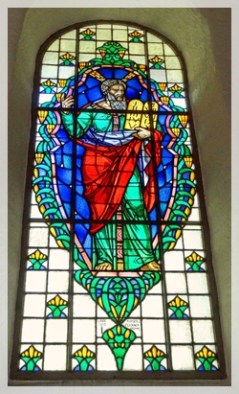
Moses - Meiringen - MichaelskircheThroughout Scripture, we find Jesus at odds with the Pharisees, one of the most important Jewish sects of the day. Not priests, the Pharisees were laymen (mostly merchants and tradesmen) who zealously followed Mosaic Law, often by adding non-Biblical traditions to it. Considered interpreters of the law, they were known for their austere life style and vast knowledge. The Pharisees accepted the oral explanations and additions of earlier generations to be equally inspired and authoritative as the written words of the Torah (the first five books of the Bible).

These oral traditions consisted of highly specific rules and regulations that were based on the belief that, when God gave Moses the written law on Mt. Sinai, He also elaborated on how those laws were to be kept. Unwritten, those explanations became oral tradition. This devotion to oral law developed during Judah’s Babylonian captivity. Jerusalem’s destruction and their exile was God’s punishment for the neglect of His law so it’s understandable that no one wanted to endure God’s wrath again. Restrictions evolved that were designed to “build a hedge” around the Torah and guard against any possible breach of the law, whether by ignorance or accident.

With their detailed laws regarding nearly every aspect of life, the Pharisees were legalists. Jesus didn’t approve of the way they’d replaced God’s simple law with complex man-made laws that placed a heavy burden on the people—a burden that God hadn’t given them. Although work on the Sabbath clearly was prohibited, the Pharisees determined that meant a tailor could not carry a needle stuck in his coat, someone couldn’t carry ink enough to write two letters of the alphabet, and no one could spit on the ground because that might make a hole, which would be digging, which would be work! It was the Pharisees who said the disciples had sinned by reaping and preparing food on the Sabbath when they picked heads of grain off their stalks!

Jesus criticized the Pharisees’ devotion to the letter of the law while ignoring the spirit of the law: love of God and love of neighbor. Some of the Pharisees’ man-made rules, such as a loophole allowing people to renege on promises, actually helped them get around God’s law. If someone swore by the Temple or the altar, the oath wasn’t binding but, if someone swore by the gold of the temple or the offerings on the altar, it was! Because of their inability to be consistent in their interpretation of oral and written laws, Jesus compared the Pharisees to the blind leading the blind.

For many Pharisees, there was a disparity between what they professed (righteousness) and what they put into practice (self-righteousness). Jesus certainly didn’t like the gap between what they proclaimed and what they actually practiced and frequently called them out for their pretense and hypocrisy.

There’s much we can learn from the Pharisees: not to be pompous, hypocritical, judgmental prigs is perhaps the most obvious. That we shouldn’t think we can earn heaven by following a false gospel of salvation through works is another. The hardest lesson is probably the most subtle: never to confuse human dogma for Godly doctrine. When we give our personal preferences or denominational rules and traditions equal billing to God’s law, as did the Pharisees, it’s easy to become pompous, hypocritical, judgmental prigs.

Do not add to or subtract from these commands I am giving you. Just obey the commands of the Lord your God that I am giving you. [Deuteronomy 4:2 (NLT)]

Copyright ©2018 jsjdevotions. All rights reserved.

COME IN AT THE GATE

Such people claim they know God, but they deny him by the way they live. They are detestable and disobedient, worthless for doing anything good. [Titus 1:16 (NLT)]

enter by the gateI’ve been reading The Pilgrim’s Progress by John Bunyan. I vaguely remember reading some of this 1678 allegory in senior English class but that time it was in the original Middle English (the language of the King James Bible) and difficult to read. Although I thought myself a Christian, I was unfamiliar with most of the biblical references and concepts. In reality, all I wanted to do was to get through it (along with Beowulf, Canterbury Tales, and Ulysses). With less pressure, more biblical knowledge, and an annotated modern version, I’m actually enjoying the tale of Christian: a man who leaves his home in the City of Destruction in search of the Celestial City.

Even without footnotes, I recognized the gate when Christian arrived there and understood Goodwill’s welcoming words: “In spite of everything people have done before they come here, we make no objections against anyone. No one will ever be driven away.” After warning him about other paths that are wide and crooked, Christian is told he can distinguish the right path because it is straight and narrow.

While on the path, Christian encounters two men who have climbed over the wall. Named Hypocrisy and Formality, they think they’ve found a short-cut to the Way. Hypocrisy, of course, is someone who puts on a mask and pretends to be what he is not. He acts the Christian in public but is an entirely different person in private. He may bring food to the needy on Sunday but beat his wife on Monday. Formality is the man whose religion is based on ritual and rests on outer form. Although he faithfully attends church, fasts, kneels, tithes, takes communion, and wears a cross, He’s only going through the motions. Neither man has a spirit of godliness or a relationship with Christ. With no true faith or repentance, they have built their lives on pride and pomp, appearances and rituals. Coming from the land of Boasting (Vain-Glory in the original), their religion is empty. Thinking that God is as impressed by external appearances as are they, the proud men are going to Mount Zion for praise: not to praise God but rather to be praised!

Satisfied with the appearance of godliness and unwilling to pay the cost of repentance, the two have taken the easy way by climbing over the wall. When Christian tells them that entering that way means the Lord of the Way will consider them thieves, they tell him to mind his own business; no one likes being confronted about their superficial professions of faith. When the men come to the hill called Difficulty, the narrow path leads straight up the hill. Seeing how steep it is, Formality and Hypocrisy choose the easy paths that seem to go around the hill while Christian climbs it. Having chosen the paths of Danger and Destruction, unlike Christian, those two will not reach the Celestial City.

This part of Bunyan’s tale hit home because we just finished a sermon series about the “cultural” Christian or what Craig Groeschel calls the “Christian atheist.” Like Hypocrisy and Formality, the cultural Christian believes in God but doesn’t know Him, lives as if He doesn’t exist, won’t recognize his deceptive and shallow faith, and follows laws and ordinances without following the Way. Bunyan’s is a cautionary tale as are Jesus’s words about the gate and narrow path. There are no shortcuts to salvation and the narrow road is not one of ease; nevertheless, the journey is worth it!

You can enter God’s Kingdom only through the narrow gate. The highway to hell is broad, and its gate is wide for the many who choose that way. But the gateway to life is very narrow and the road is difficult, and only a few ever find it. [Matthew 7:13-14 (NLT)]

I tell you the truth, anyone who sneaks over the wall of a sheepfold, rather than going through the gate, must surely be a thief and a robber! … Yes, I am the gate. Those who come in through me will be saved. They will come and go freely and will find good pastures. [John 10:1,9-10 (NLT)]

Copyright ©2018 jsjdevotions. All rights reserved

LET ME BE YOUR SERVANT

And since I, your Lord and Teacher, have washed your feet, you ought to wash each other’s feet. [John 13:14 (NLT)]

Whoever wants to be a leader among you must be your servant, and whoever wants to be first among you must be the slave of everyone else. [Mark 10:43-44 (NLT)]

crab appleAs she sang, “Will you let me be your servant, let me be as Christ to you; pray that I may have the grace to let you be my servant too,” I reached over to take my husband’s hand. I contemplated the road we’ve traveled together for over half a century as the soloist continued: “We are pilgrims on a journey, we are trav’lers on the road; We are here to help each other walk the mile and bear the load.” As I listened to the rest of Richard Guillard’s beautiful song, I thought it was the perfect choice for a wedding.

I will hold the Christ light for you, In the night time of your fear;
I will hold my hand out to you, Speak the peace you long to hear.
I will weep when you are weeping. When you laugh, I’ll laugh with you;
I will share your joy and sorrow, Till we’ve seen this journey through.
[“The Servant Song” by Richard Guillard]

During last week’s worship, however, I realized Guillard’s song applies to Christian fellowship as much as it does to marriage. His words describe the church or, at least, what the church is supposed to be. We comfort and support, encourage and enlighten, pray for and serve one another. We share good times and bad, walk together, go the extra mile, and help carry one another’s burdens.

“Will you let me be your servant?” That’s what Jesus was asking when he stripped off his robe, wrapped a towel around his waist, and knelt to wash the disciples’ feet. That servant, on his hands and knees and holding a wash rag, was God! When Jesus came to Peter, the man protested and only relented when told, “Unless I wash you, you won’t belong to me.” Whether Jesus meant that Peter’s sins had to be washed away by the cross or that Peter needed to humbly submit to Jesus, I’m not sure. Either way, Jesus taught a valuable lesson both about servanthood and accepting God’s grace.

It’s important to serve but equally important to graciously accept the gift of service that comes with Christian love. Jesus washed the disciples’ feet but He also allowed a woman to wash his feet with her tears and wipe them with her hair. Servanthood in Christ’s church involves both the giving and accepting of grace but, for many of us, giving comes far easier than accepting.

How can we wash one another’s feet if we won’t take off our shoes because someone might know we have athlete’s foot or see the ugly bunion, corn, bruised toe, or blister? Let’s not be afraid to share our vulnerability, expose our failings, acknowledge our doubts, admit our fear, or disclose our needs. Let us love and serve one another as did Christ and let us accept that love and kindness as did His disciples.

Will you let me be your servant, let me be as Christ to you;
Pray that I may have the grace to let you be my servant too.
[“The Servant Song” by Richard Guillard]

Don’t just pretend to love others. Really love them. Hate what is wrong. Hold tightly to what is good. Love each other with genuine affection, and take delight in honoring each other. … When God’s people are in need, be ready to help them. Always be eager to practice hospitality. … Be happy with those who are happy, and weep with those who weep. [Romans 12:9-10,13,15 (NLT)]

Copyright ©2018 jsjdevotions. All rights reserved.