
She fell at his feet and said, “I accept all blame in this matter, my lord. Please listen to what I have to say.” [1 Samuel 25:24 (NLT)]
 While visiting my son last summer, I was walking in his neighborhood when a car raced out of a blind driveway and, without even slowing to look for cars or people, sped down the street. If I hadn’t paused briefly by the gate to get a flower photo, I would have had an intimate encounter with the vehicle. After thanking God that I hadn’t become road kill, I continued down the road and turned onto the walking path. I was a little disconcerted when a car approached and stopped but, when the driver lowered his window and called out to me, I realized it was the driver of the speeding car. After offering an earnest apology, he explained he’d been late for a meeting but added that his tardiness was no excuse for his recklessness. Ashamed of his behavior, he’d returned to make sure I was OK. Assuring him I was fine, I wished him well. I was both shocked and touched by the unexpected apology. While unnecessary, it was much appreciated since I knew the driver probably lost another ten minutes by turning around to find me and apologize.
The story of David, Nabal, and Abigail highlights the importance of apologies. David and his men were hiding from King Saul in the wilderness when they came across Nabal’s shepherds and flock of sheep. Rather than stealing any animals for themselves (as might be expected by a hungry army), David’s men formed a line of protection around the flock so that no harm would come to them or the shepherds.
When sheep shearing time arrived, David sent ten men to Nabal to request provisions for David’s troops. This was not an inappropriate request. By accepting David’s protection, Nabal’s shepherds had obligated their master to make provision for the men. With 3,000 sheep and 1,000 goats, Nabal was a wealthy man and some of that wealth was because David’s men had guarded it! Moreover, Israelite law and tradition demanded that hospitality be offered to travelers. While an honorable man would have met his obligations, Nabal (whose name meant “fool”) lived up to his name and refused the request with rudeness and contempt. When the men reported Nabal’s boorish response, the angry David gathered 400 of his men and set out to kill every man in Nabal’s household.
In the meantime, a servant reported his master’s rashness in offending David to Nabal’s wife Abigail. Knowing an apology can do a lot to diffuse a difficult situation, the wise woman quickly packed up an enormous quantity of food and wine and went to meet David. After humbly apologizing for her husband’s boorish behavior, she offered the provisions to David’s men. Considering Nabal’s personality, this probably was not the first time Abigail had to apologize for her husband’s foolish and offensive conduct. Her heartfelt apology averted the senseless tragedy that would have occurred had David carried through his attack. Upon learning of his wife’s generosity, Nabal suffered a stroke and died ten days later. In what could be called poetic justice, David ended up marrying the lovely and wise widow.
An apology isn’t just saying we’re sorry, especially when, as often is the case, it includes justification for our poor behavior. A true apology is like the driver’s and Abigail’s. It is offered with a humble heart, admits being in the wrong, expresses regret, and makes restitution for any offense. “Blessed are the peacemakers,” said Jesus; one of the ways we make peace is with an apology!
Never ruin an apology with an excuse. [Benjamin Franklin]
 A pastor friend who’s led dozens of mission trips used to evaluate his mission’s success by the number of new believers gained during the trip. If the latest mission’s altar call stats did not exceed the previous mission’s numbers, he felt it was a failure. Like him, we tend to be number people who measure our success or failure quantitatively. Business success is gauged by the balance sheet, bottom line, and price-earnings ratio; financial success by income, the value of our investment portfolio, and the size of our house or the price of our car. Regardless of the sport, with their assorted BAs, RBIs, Yds, Gs, PPRs, FT%s, and GOAT points, stats seem to evaluate every athlete’s success. Social success is assessed by the number of holiday cards we send or receive, how many “friends” we have on social media, and how many “likes” we got on our latest post. Intellectual success is measured by IQ, SAT, ACT and GPA numbers. A pastor assesses his success by Sunday’s attendance (or the offering), the teacher by the standardized test results of her students, and the author by his book’s ranking on the best seller list. I’m no different; I often check my website’s stats to see the number of followers, visitors, and views.
 When speaking to the Pharisees, Jesus delivers what could be called the ultimate good news/bad news scenario. The good news is that, no matter how evil, vicious or long-lasting the sin, any sin (even blasphemy) is forgivable. The good news, however, comes with a “but” when Jesus says blasphemy against the Spirit will never be forgiven.
 Since my 18-year-old grand is a new driver, I was surprised when her parents purchased a new car for her. Remembering the many dings, scrapes, and dents our teens left on their cars, I asked why they’d replaced the 15-year-old car on which she learned to drive with a new one; “safety features” was their simple and logical explanation. This new car offers things like forward collision warning, automatic emergency braking, adaptive cruise control, blind spot monitoring, lane departure warnings, lane-keeping assist, backup cameras, active park assist, rear cross traffic alert, and a whole variety of air bags (front, side, seatbelt, knee, foot, and curtain along with rollover sensors to deploy them.) Knowing that accidents happen to even the best drivers, damage to a new car is far more acceptable than any damage done to their daughter!
 We’d gathered for coffee when the conversation turned to tipping. Several who had been servers at one time or another mentioned what notoriously bad tippers church people seem to be. Rather than a tip, some only leave a religious tract. A barista admitted removing any she finds in the tip jar because her fellow workers find them incredibly offensive. Rather than bringing anyone to Jesus, they serve to further distance non-believers from any church!
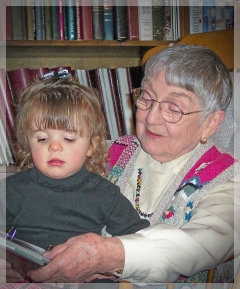 Growing up, one of my favorite hymns was, “I Sing a Song of the Saints of God.” Its author, Lesbia Scott, wrote hymns for her children as expressions of the family’s faith. Not originally intended for publication, she wrote this song to emphasize that saints lived not just in the distant past but also in the present day. My favorite verse was the final one and I recall singing it loudly with childlike enthusiasm: “The world is bright with the joyous saints who love to do Jesus’ will. You can meet them in school, on the street, in the store, In church, by the sea, in the house next door; They are saints of God, whether rich or poor, and I mean to be one too.”
 Devotions of the Heart