ADVENT LOVE

This, you see, is how much God loved the world: enough to give his only, special son, so that everyone who believes in him should not be lost but should share in the life of God’s new age. After all, God didn’t send the son into the world to condemn the world, but so that the world could be saved by him. [John 3:16-17 (NTE)]

While we’re busy decorating our homes, planning holiday menus, finding the perfect gift for everyone on our list, and stressed about supply chain issues and shipping delays affecting the receipt of those gifts, let’s not forget that we’re in the season of Advent. This is a time for us to prepare for the second coming of Christ and to ponder the gifts of hope, love, peace, and joy we received with His first coming.

Although the observation of Advent has no Biblical mandate and its traditions vary throughout various denominations and nationalities, many churches observe this season with an Advent wreath and candles. At our northern church, last Sunday’s candle was the Prophet’s Candle, the candle of hope. This Sunday’s candle will be the Bethlehem candle, the candle of love. It was on that holy night in Bethlehem long ago that God’s love for His fallen children took on human form. When thinking about this amazing gift of love, the words of Christina Georgina Rossetti’s beautiful poem come to mind. “Love came down at Christmas, love all lovely, love divine; love was born at Christmas, star and angels gave the sign.”

God is love and that baby born in Bethlehem so very long ago was God! When love was made manifest in Jesus, we saw that love is far more than an abstract idea or emotion. We not only saw how much God loved us, but we also saw what real love looks like, and it has nothing to do with expensive gifts, gaily wrapped boxes, beautifully decorated cookies, or wreaths, colored lights, and tinsel. It has to do with serving others, humility, patience, compassion, forgiveness, generosity, mercy, and sacrifice.

In a season marked by materialism, stress, shopping, over-eating (and drinking), travel, and entertaining, let us reflect upon the love of a God who, rather than giving up on his sinful rebellious children, loved us enough to sacrifice his only Son for our salvation. That Son was “love incarnate, love divine” as He put on the flesh of humanity, was born of a woman, suffered and died for us just so He could redeem us with His own blood! Born in Bethlehem over two thousand years ago, He loved us enough to become flesh and blood, not so that He could be with us, but so that we could be with Him!

It’s been pointed out that, while it’s easy to believe in Christmas and even easier to celebrate it, it’s much harder to live Christmas. “Love incarnate, love divine” is the true meaning of Christmas. As God loved us, may we love others in the same way, not just in this season, but all year long.

Love came down at Christmas,
Love all lovely, love divine;
Love was born at Christmas,
Star and angels gave the sign.
Worship we the Godhead,
Love incarnate, love divine;
Worship we our Jesus:
But wherewith for sacred sign?
Love shall be our token,
Love shall be yours and love be mine,
Love to God and to all men,
Love for plea and gift and sign. [Christina Georgina Rossetti]

The one who does not love has not known God, because God is love. This is how God’s love has appeared among us: God sent his only son into the world, so that we should live through him. Love consists in this: not that we loved God, but that he loved us and sent his son to be the sacrifice that would atone for our sins. Beloved, if that’s how God loved us, we ought to love one another in the same way. [1 John 4:8-11 (NTE)]

Copyright ©2021 jsjdevotions. All rights reserved.

PRAY FOR THEM – Part 2

So Peter was kept in prison. But the church prayed earnestly to God on his behalf. … Suddenly an angel of the Lord stood there, and a light shone in the cell. The angel hit Peter on the side and woke him up. “Get up quickly!” he said. The chains fell off his hands. [Acts 12:5,7 (NTE)]

black-crowned night heronIn the early church, it was common for believers to gather together for prayer and, when Peter was imprisoned, they gathered to pray for his release at the home of Mary, the mother of John Mark. For a people who believed in prayer, it’s ironic that Peter thought the angel that freed him to be a mere vision until he found himself free on the city streets and that the church was astonished when he showed up at Mary’s house! Amazing things can happen when the church prays for its leaders. Prayers broke Peter’s chains, imagine what they can do for our pastors!
Charles Spurgeon (1834-1892), known as the “Prince of Preachers,” is said to have had a voice so strong that he could be heard (without amplification) in a crowd of 23,000. His church, the Metropolitan Tabernacle was the largest of his day. Even though it seated 5,000, his powerful preaching drew such crowds that he would ask some of his members to attend other churches to make room for newcomers the next week. In his lifetime, Spurgeon preached to over ten million people and his collected work fills at least 49 volumes. Apparently unstoppable, he also founded 66 parachurch ministries, including two orphanages, seventeen homes for widows, and a free seminary. From where did Spurgeon get the power to accomplish so much for the Lord?

The story is told that one day the legendary preacher was giving some people a tour of the Tabernacle before service began. After asking if they’d be interested in seeing the huge church’s “power plant,” he took them into the basement and led them into a room. While Spurgeon seemed the unstoppable “Energizer Bunny” of preachers, his power didn’t come from batteries or the furnace room. Spurgeon’s power came from prayers—the prayers said by the hundreds of people who gathered in that room before church every Sunday and fervently prayed for their pastor while asking God to bless his preaching!

Behind every healthy church is a commitment to prayer and, behind every good pastor is a commitment to pray for him. Will we be the “power plant” needed by our pastors today?

At the same time, pray also for us, that God may open to us a door for the word, to declare the mystery of Christ, on account of which I am in prison—that I may make it clear, which is how I ought to speak. [Colossians 4:3-4 (ESV)]

Copyright ©2021 jsjdevotions. All rights reserved.

PRAY FOR THEM – Part 1

Dear brothers and sisters, I urge you in the name of our Lord Jesus Christ to join in my struggle by praying to God for me. Do this because of your love for me, given to you by the Holy Spirit. [Romans 15:30 (NLT)]

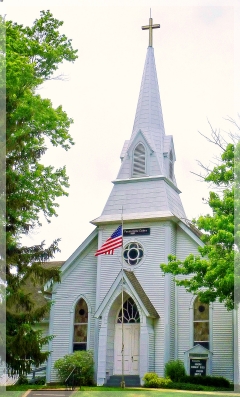
Zion Presbyterian - Schapville IllinoisThe story is told about a pastor who was shaking hands with his congregation after church one Sunday morning when a little boy handed him a dollar. After thanking him, the pastor asked what it was for. The youngster replied, “It’s for you, because I heard my daddy say that you were the poorest preacher that we ever had.” How easy it is to criticize our pastors when, instead, we should be praying for them.

Have we given thought to the fact that our pastors are people just like us and prone to the same physical, emotional, and spiritual challenges? Expected to produce inspiring sermons every week, their family lives in a fish bowl, they’re on call every hour of every day and, unlike Superman, are vulnerable to far more than kryptonite! Like the rest of us, they get sick, lonely, tired, disappointed, discouraged, angry and can feel inadequate, depressed, overworked, and under-appreciated. A clerical collar does not protect our pastors from the hazards of living in our fallen world; like you and me, they endure illness, injury, family problems, loss, financial hardship, and temptation yet, for some reason, we find it easier to criticize them than to pray for them!

Ministry never has been and never will be a one-man show! The Apostle Paul understood he couldn’t conduct his ministry alone and, knowing he needed God’s power, frequently asked the church for their prayers. Although Paul asked for prayers, our pastors frequently don’t. Just because they don’t ask, however, doesn’t mean they’re not in need of them!

Rather than complaining to his son about the minister’s poor preaching, the man could have asked God to refresh the pastor’s call to preach so that his sermons would inspire and revive the congregation. Prayers for our pastors, however, aren’t limited to complainers; along with praying for their preaching, we should pray for their spiritual discernment, evangelism opportunities, ministry effectiveness, leadership, wisdom, courage, and spiritual protection. As we pray for our pastors’ physical, spiritual, and mental health, let us remember to pray for their families. Our churches seem to have councils, altar guilds, prayer chains, small group leaders, hospitality committees, and worship, set-up and evangelism teams, but do they have anyone who regularly prays for the pastors?

Evangelist, author, and radio host Woodrow Kroll said that, “Pastors need your grace, not your gripes.” I would suggest they need our prayers, as well.

And pray for me, too. Ask God to give me the right words so I can boldly explain God’s mysterious plan that the Good News is for Jews and Gentiles alike. I am in chains now, still preaching this message as God’s ambassador. So pray that I will keep on speaking boldly for him, as I should. [Ephesians 6:19-20 (NLT)]

Copyright ©2021 jsjdevotions. All rights reserved.

GOD DOESN’T COUNT

But don’t just listen to God’s word. You must do what it says. Otherwise, you are only fooling yourselves. For if you listen to the word and don’t obey, it is like glancing at your face in a mirror. You see yourself, walk away, and forget what you look like. [James 1:22-24 (NLT)]

Physostegia virginiana - obedient plantFriends recently watched their young grandson while his parents enjoyed a much needed “adults only” vacation. Accustomed to the permissive parenting of today, the youngster wasn’t overly familiar with obedience. One of the first things he learned during his visit was that, “Grandpa doesn’t count.” Apparently, his parents give him a count of three (or more) to decide whether or not to obey them; Grandpa, however, did not!

The youngster could have learned about obedience from one of summer’s wildflowers: the Physostegia virginiana. Better known as the obedient plant, when an individual flower is lightly pushed in a direction, it doesn’t wait for a count of three before immediately responding to that touch and turning that way. It really is an obedient flower and a beautiful one at that.

While obedience is not a well-liked or widespread concept nowadays, my Bible has 518 specific references to man’s obedience or disobedience, so it appears that obedience is important to God. In fact, it appears to be a mandatory part of our lives. Abraham’s life is a lesson in immediate obedience. When God told him to pack up his family and move to a place he’d never known, the 75-year-old didn’t ask for a map and travel plan; he obeyed without question or delay. When God told Abraham that all the males in his household (along with all of his male descendants) had to be circumcised, Abraham didn’t question God’s command and every man was circumcised that very day. Circumcision was known among the people of that region so Abraham’s unquestioning obedience is easier to understand than his unhesitating obedience when God told him to sacrifice his precious son Isaac. Rather than doubt God’s wisdom, negotiate, or delay, Abraham and Isaac set out for the mountains the very next morning. Abraham continued to obey right up to the moment he held the knife to his son’s neck and the angel of the Lord intervened. That’s obedience!

Sadly, when it comes to whole-hearted obedience to God, we’re less like Abraham and far more like the Israelites who frequently delayed and disobeyed. When they balked at entering Canaan, their disobedience questioned both God’s authority and His power to defeat their enemies. Although they eventually obeyed and entered Canaan, their delayed obedience cost all the adults (except Joshua and Caleb) their lives. Delayed obedience is no different than disobedience and always comes at a cost!

As Christians, we don’t get to delay our obedience to God until a more convenient time or He’s counted to three! If He doesn’t tell us to do something in a specific timeframe, God means right now—not when we get around to it or feel like doing so. Our immediate obedience to Him proves our love and demonstrates our faith. Like disobedience, delayed obedience is an insult to God because it tells Him we don’t trust His plan or that we have better things to do!

Like that little boy, we’d prefer thinking that we are the ones in control, but we aren’t! Grandpa was in charge of his grand and God is in charge of us. We are to submit to God as readily as we expect a four-year-old to submit to us. Like that willful little boy, we need to emulate the obedient plant and follow God’s nudge immediately, willingly, and beautifully. Remember, Grandpa doesn’t count and neither does God!

The bottom line is the Christian faith is obedience and most people don’t even like the word. [Charles Stanley]

So why do you keep calling me “Lord, Lord!’ when you don’t do what I say? I will show you what it’s like when someone comes to me, listens to my teaching, and then follows it. It is like a person building a house who digs deep and lays the foundation on solid rock. When the floodwaters rise and break against that house, it stands firm because it is well built. But anyone who hears and doesn’t obey is like a person who builds a house right on the ground, without a foundation. When the floods sweep down against that house, it will collapse into a heap of ruins.” [Luke 6:47-49 (NLT)]

Copyright ©2021 jsjdevotions. All rights reserved.

GIVING AND RECEIVING

Don’t store up treasures here on earth, where moths eat them and rust destroys them, and where thieves break in and steal. Store your treasures in heaven, where moths and rust cannot destroy, and thieves do not break in and steal. Wherever your treasure is, there the desires of your heart will also be. [Matthew 6:19-21 (NLT)]

For it is in giving that we receive. [St. Francis of Assisi]

It’s less than a month until Christmas and I’m awaiting the family’s Christmas wish lists. Six years ago, when my son was helping his daughter compose her Christmas list, he told Mali she could ask for anything. A bit overwhelmed by such free rein, she questioned, “Anything?” While warning Mali that she may not get everything, he reassured her that she could ask for anything. To his surprise, the sweetheart asked for a sleeping bag for her little brother and explained that if he had one like hers, they both would be snug and cozy while watching their half hour of TV at night. Just four at the time, she had the right idea—giving truly is better than receiving.

Now that Mali is a worldly ten-year-old in fifth grade, I doubt that her Christmas list will reflect the same naïve generosity. Since she now has an American Girl doll, I suspect this year’s list will be more like the one her cousin made when she was the same age. That list was so long that it would have been easier if she’d just sent the American Girl catalog with the few things she didn’t want crossed out. Overwhelmed by the plethora of doll accessories available, she wanted everything. Fortunately, as she’s matured, she’s become more discerning and sensible in her requests.

Two extremes—wanting nothing for oneself or everything. How do we find balance? Although Christmas is about just one gift—the Christ child—the traditions surrounding this holy day tend to be ingrained in those colorful bags and gaily wrapped packages sitting beneath our Christmas trees. How do we keep things in perspective, not just during this season of giving and getting, but all year long? Perhaps we need to think more about filling our homes and the homes of others with love, peace, joy, and happy smiles rather than boxes, wrapping paper, and ribbons.

Father, as we prepare to celebrate the Savior’s birth, help us to share your love and blessings, to hold your Word in our hearts, and to properly set our priorities by keeping Christ as the focus of our Christmas.

The giving of gifts is not something man invented. God started the giving spree when he gave a gift beyond words, the unspeakable gift of His Son. [Robert Flatt]

You should remember the words of the Lord Jesus: “It is more blessed to give than to receive.” [Acts 20:35b (NLT)]

Copyright ©2021 jsjdevotions. All rights reserved.

GOD-INCIDENCES

Remember the things I have done in the past. For I alone am God! I am God, and there is none like me. Only I can tell you the future before it even happens. Everything I plan will come to pass, for I do whatever I wish. [Isaiah 46:9-10 (NLT)]

monarch butterfly - milkweed

I suspect that most of us live rather ordinary and somewhat predictable lives that are occasionally interrupted by major life events (some of which are welcome and other which are not). For us, it is life’s little surprises—its happenstance and serendipity—that keep our lives from becoming humdrum.

We probably have no problem crediting God with the big blessings of life—things like the birth of a healthy child, a benign biopsy, a successful surgery, 10 years of sobriety, 50 plus years of marriage, the grand’s graduation, the better paying job, or God’s gifts of salvation and forgiveness. On the other hand, we tend to think of the little unexpected blessings—the butterfly or bluebird, the chance meeting, the out-of-the-blue phone call from an old friend, the sermon that spoke directly to our need, making the tight connection at the airport, or the humorous email that arrived when we were in the dumps—as mere coincidence or luck. After all, it seems that our Almighty God must be far too busy running the universe to deal with the minutiae of our everyday lives. Absolutely nothing, however, is unimportant to a God who sees every sparrow fall, knows the number of hairs on our heads, and has etched our names on the palms of His hands. Just as the universe is not run by random chance, neither are our lives!

God can multitask better than a one-armed paper-hanger or a mom with triplet toddlers! While God was keeping the stars and planets aligned back in 470 BC, He also orchestrated Persian King Xerxes’ insomnia and his attendant’s choice of what part of the king’s chronicles was read to him. For that matter, He is the one who placed the villains plotting the Xerxes’ death within ear shot of Mordecai. Rather than coincidences, all of the events in the book of Esther were part of God’s finely crafted plan!

Although we speak to God in prayer, we often chalk up His answer to luck or coincidence. God can speak audibly but He also speaks through seemingly random things—the day’s Bible verse, a chance meeting, a song on the radio, a casual comment, a wrong number, words in a book we accidentally open, and even a bout of insomnia. When we credit the little blessings of life to coincidence, we’re happy. When we credit them to their orchestrator, however, we become thankful. While we’re surprised by these seemingly random or capricious events, our God never is! Everything in our lives has passed through His hands!

Yesterday, we gave thanks for our food, family, health, homes, and all the major blessings of our lives. Today, let’s give thanks for the little blessings, the godsends, that make our ordinary lives so extraordinary—the things that encourage us when we want to give up, put smiles on our faces, fill our hearts with joy, answer our questions, or remind us how much we’re loved. Along with all the big things, let’s be sure to give God credit for the little ones—the God-incidences—that He scatters throughout our days. His fingerprints are everywhere we look!

You can make many plans, but the Lord’s purpose will prevail. [Proverbs 19:21 (NLT)]

And we know that God causes everything to work together for the good of those who love God and are called according to his purpose for them. [Romans 8:28 (NLT)]

Copyright ©2021 jsjdevotions. All rights reserved.