
 Our fight is not against people on earth. We are fighting against the rulers and authorities and the powers of this world’s darkness. We are fighting against the spiritual powers of evil in the heavenly places. [Ephesians 6:12 (ERV)]
This morning, I quietly read my Bible, some Billy Graham, and prayed. Over coffee, I looked through the newspaper and watched the news. I laughed at a political cartoon, read editorials that both praised and criticized our president, and heard politicians from opposite sides of the aisle disagree about taxes and health care. Once at my computer, I checked my calendar (Bible study tonight) and read about Tuesday’s election. In my email, along with news from friends and Christian devotions, I got an action alert from a local conservation group asking me to contact my representative about a proposed bill. I also received several Veteran’s Day advertisements.
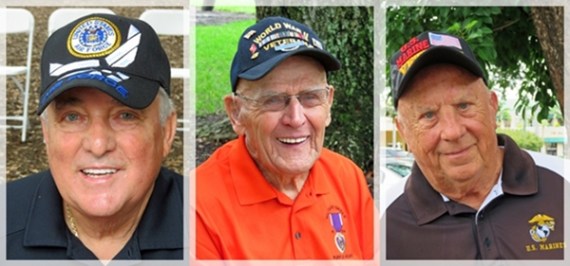
Veteran’s Day wasn’t meant to be another reason to go shopping. Originating in 1919 as Armistice Day, it celebrated the end of World War I — said to be the “war to end all wars” until WW II proved that wrong. In 1954, Armistice Day became Veteran’s Day — and a day to honor all military veterans for their service, patriotism, and willingness to sacrifice for the good of our nation.
Within the first two hours of my day, I’d experienced an incredible amount of freedom, in large part because of those veterans we’ll honor this weekend. We are comfortable and secure in our homes, able to speak openly, vote, run for political office, read without restrictions, gather together freely, and worship openly. We can even safely complain both about and to the government. We can do all that and much more because of the men and women who took a stand against evil—not just with their votes, voices, prayers, or money—but with their service. In many cases, they returned home with scars both visible and hidden. In some cases, they returned in body bags.
I came of age in an era of anti-war/anti-military sentiment and I continue to abhor the thought of weapons and warfare. Nevertheless, time has taught me that sometimes fighting evil means real soldiers and an actual battlefield. As the character Ransom learned in C.S. Lewis’ novel Perelandra, when reasoning fails to defeat Satan, one may have to resort to actual combat. The struggle against the enemy is not always a spiritual one; sometimes it is physical and the hands God uses belong to real men and women. Until the day when our weapons can be turned into agricultural tools, we will continue to need people who will put their lives on the line to fight evil. While we continue to pray for peace, may we also pray for the members of our armed forces (both past and present) and thank God for their service. Let’s remember to express our deep and lasting gratitude to them, as well.
 Although more people prefer to believe in heaven than in hell, the Bible tells us that hell is as real as heaven. It exists whether or not someone likes the idea of a place of eternal punishment or refuses to believe in its actuality. The Bible uses words like fire, brimstone, pits of darkness, torment, anguish, weeping and gnashing of teeth to describe it. I won’t pretend to know what hell is like but, based on Scripture’s description (whether literal or figurative), hell doesn’t sound like any place I (or anyone I know) would deliberately choose to be.
 I walked into the university workout facility and was greeted by a large sign telling me the school says no to hate. I was surprised that a Christian University felt the need to say what should be obvious. Has hate become so much a part of our everyday lives that we have to be reminded not to do it? There wasn’t a sign telling us not to pee in the pool, have fist fights, or swear. Evidently, certain acceptable behavior was assumed but not hating wasn’t! Apparently, the sign is necessary because people feel freer to express their prejudice, intolerance, and bias than do any of those other things.
 In the Sunday school stories we learned as children, the Bible’s heroes were larger than life. When we read about them as adults, however, we read the parts skipped in Sunday school and realize they were real people with feet of clay. Yet, it’s their sins and weaknesses that make their lives as relevant today as they were centuries ago. No matter how great, all except Jesus were flawed. Peter denied knowing Jesus, Matthew was a dishonest tax collector, Thomas doubted Jesus’ resurrection, Noah and Lot got drunk, Abraham lied to protect himself, David was an adulterer and murderer, Rahab was a prostitute, Jacob deceived his father, Jonah refused and fled, Sarah doubted and grew impatient, Samson allowed lust to lead him, Paul persecuted Christians, Elijah got so depressed he wanted to die, Gideon dared to question God, and, in spite of his great wisdom, Solomon disobeyed Him. The disciples argued amongst themselves and deserted Jesus, Isaac played favorites with his sons, and both Eli and Samuel tolerated the shameful behavior of their boys. Nevertheless, flawed as they all were, there is much to learn from their stories. We see the possibility of transformation and redemption. The prostitute was instrumental in an Israelite victory and became one of Jesus’ ancestors. The corrupt taxman became a disciple and turned his record keeping skills into gospel writing. The Pharisee became Christ’s messenger throughout the Roman Empire and the fisherman who denied Christ became the leader of the disciples. In spite of their faults, all of them were saints of God.
 The Bible gives us plenty of instances of God directly speaking to His people—Noah, Moses, and Joshua were all given specific directions before building the ark, liberating the Israelites, or crossing into the Promised Land. On the other hand, there are many people who furthered God’s plan without His specific instructions. As far as we know, God didn’t tell Moses’ mother to place her son in a basket and lay him among the reeds of the crocodile infested Nile, yet she did just that. What caused a mother to literally send her beloved baby down the river? Yet, that very action furthered God’s plan; as the son of an Egyptian princess, Moses received a royal upbringing and an excellent education, all of which he needed in his later confrontations with Pharaoh.
 Peer pressure—as youngsters we succumbed to it because we wanted friends. When trying to explain why we couldn’t stay out past curfew, go to an unchaperoned party or date while still in junior high, our parents would say something like, “If your friends jumped off a cliff (or ran through traffic), would you do it too?” If you were like me, you relentlessly assured them that all of your friends were doing whatever it was and that all of their parents allowed them to do it. They probably responded with a serious warning about the dangers of peer pressure and dubious friends.
