
But the Holy Spirit produces this kind of fruit in our lives: love, joy, peace, patience, kindness, goodness, faithfulness, gentleness, and self-control. [Galatians 5:22-23a (NLT)]
 The culture of the 1st century was agrarian in nature so the analogies used by Jesus and the evangelists often were those of agriculture – seeds, soil, fruit, and vines. For example, when writing about the characteristics in the lives of those who follow Jesus, Paul spoke of the fruit of the Spirit. But, if Paul were writing to modern industrial society, he might have used a different metaphor. Instead of the fruit of the Holy Spirit, we might have the Spirit’s toolbox. Rather than fruit, we’d have God’s tools to help us to build His Kingdom. The saw in the box would be God’s peace that cuts worry and fear out of our lives. The sandpaper would be kindness as it smooths out life’s rough edges. Protective gear like safety goggles and steel-toed shoes would be the self-discipline that protects us from sin. Duct tape and WD-40 would be as essential as love, a flashlight would shine our joy, and we’d have clamps to hold us tight to the faith. God’s word would be our blueprint and, instead of being connected to a vine, the power tools would be plugged into the Holy Spirit’s power. Regardless of the metaphor, the Holy Spirit provides us with what we need to be more like Christ.
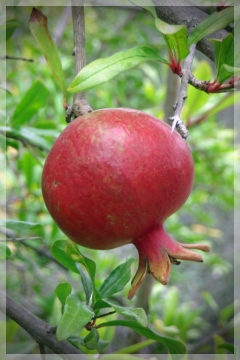
My son has a variety of fruit trees on his property but, when he moved to his new home, he wasn’t sure what they all were. It wasn’t until the large tree with the pretty red-orange blossoms and shiny green leaves bore fruit that he knew it was a pomegranate and, until the bushes with the oval leaves and small white flowers bore their fruit, he didn’t know he had lemons. Just as a tree is identified by its fruit, a good builder can be identified by his house. Someone could claim to be a master builder but, if the shutters on his house are hanging from the hinges, the windows shattered, the roof tiles missing, the wooden steps broken, the paint peeling, and the walls collapsing, we’d know his claim was false. Just as trees are identifiable by their fruit and builders by their work, it is our behavior that should identify us as Jesus’ followers. The fruit of the Spirit should be evident in everything we do and say and in the attitude we have when we say or do it.
If you were a fruit tree, would anyone recognize the fruit you bear as coming from the Spirit? If you were a builder, would your work resemble that done by a Jewish carpenter’s son from Nazareth? Whether we think of the characteristics of a Christ follower as fruit or tools, the important thing is to let His Spirit make those characteristics a part of our lives so that we end up looking more and more like Jesus! That’s the way we can build His Kingdom!
 Before going grocery shopping, smart shoppers take an inventory of their cupboards to see what is missing. That’s fine when going to market, but it’s not a wise policy when we assess our lives. It’s far too easy to spend time thinking about what we don’t have instead of being thankful for what we actually do possess.
 The book of Daniel begins with the arrival of the first set of Judean captives in 605 BC and the first six chapters describe the events occurring in Babylon until around 536 and the beginning of the Persian empire. In contrast, chapters seven through twelve are filled with visions and dreams. As part of the Jewish and Christian canon, the traditional view is that this book is a factual recounting of Daniel’s life and a record of supernatural predictions written during the late 6th century BC. Skeptics, however, call its author a fraud and the book fiction because of the mention of Belshazzar as the last king of Babylon, Darius the Mede as the one who took over Babylon, and the incredible accuracy of Daniel’s fulfilled prophecies. They claim that the book had to have been written (or amended) 400 years later in the 2nd century BC by someone claiming to be Daniel.
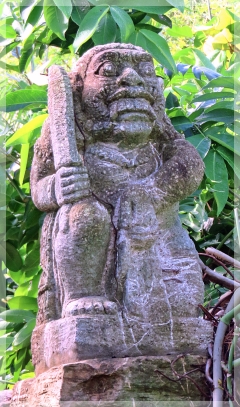 The Israelites were surrounded by various pagan peoples who worshipped foreign deities. Baal ruled over Canaan and Phoenicia, Chemosh over Moab, and Marduk/Bel and Nebo over Babylonia. The Philistines’ had Dagon and the Ammonites worshipped Molech. These gods usually had a domain over which they ruled. For example, Baal’s domain was rain, storms, and the harvest. Moab’s Chemosh presided over war and mountains. As patron deity of Babylon, Marduk/Bel was supposed to protect the city and rule over storms while Nebo’s purview was wisdom and science. The Philistines’ chief god Dagon presided over death, the afterlife, war, and agriculture while Ammon’s Molech reigned over the underworld, which may explain his association with child sacrifice in the Old Testament.
 In 538 BC, in fulfillment of Isaiah’s prophecy, Persia’s King Cyrus issued a proclamation allowing the first group of Judean exiles to return home with the purpose of rebuilding the Temple and inhabiting Jerusalem. In fulfillment of another prophecy, he then did what to any other conqueror would be unthinkable by returning the “plunder of tyrants”: 2,499 gold and silver sacred utensils taken by King Nebuchadnezzar when he ransacked the Temple. Cyrus permitted those who returned to take any wealth they’d accumulated during exile and encouraged those choosing to remain in Babylon to support their returning brethren with gifts, supplies, and food offerings. As a result, a total of 5,400 articles of gold and silver were taken back to Judah with the exiles.
 By the time of Isaiah, the Neo-Assyrian empire was the largest one the world had known. Famed for their incredible military strength, tactics, and ruthlessness, the Assyrians were a thorn in the side of both Israel and Judah and both kingdoms lived in fear of them. Assyria’s defeat of Samaria in 722 meant the end of the northern kingdom of Israel and Assyria remained a threat to Judah in the years that followed.
 Devotions of the Heart