
“Tell everyone to sit down,” Jesus said. So they all sat down on the grassy slopes. (The men alone numbered about 5,000.) Then Jesus took the loaves, gave thanks to God, and distributed them to the people. Afterward he did the same with the fish. And they all ate as much as they wanted. After everyone was full, Jesus told his disciples, “Now gather the leftovers, so that nothing is wasted.” So they picked up the pieces and filled twelve baskets with scraps left by the people who had eaten from the five barley loaves. [John 6:10-13 (NLT)]
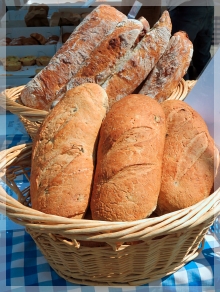 In all probability, you’re not having more than 5,000 guests for dinner today and they won’t be dining al fresco on a hillside. Nevertheless, John’s description of that miraculous meal sounds a bit like Thanksgiving dinner at any number of homes today. There will be lots of people and more than enough to eat but, instead of all the leftovers being gathered in baskets, we’ll pack them into storage containers made by Rubbermaid, Glad, Tupperware, and Pyrex.
After dinner, some people might take a stroll around the block to work off a few of those extra calories while others will settle into comfortable chairs and probably snooze a bit while watching football. Although “I can’t eat another bite!” will be repeated at tables far and wide, sooner or later, our stomachs will empty and start rumbling. Our brains will pick up the message that it’s time for our next meal and we’ll be hungry again. Regardless of much we eat today, just like those people on the hillside nearly 2,000 years ago, we’ll get hungry and want to eat again tomorrow. No matter how much turkey, gravy, and potatoes we eat at our Thanksgiving feast, today’s meal won’t satisfy tomorrow’s hunger.
After Jesus fed the multitude, the crowd followed after Him. More interested in perishable food for the body than everlasting food for the soul, they asked for another miracle—one like the manna Moses gave their ancestors. Correcting them, Jesus said that bread wasn’t from Moses, it was from His Father and that He now was offering them, “the true bread from heaven.” When the people said they wanted it, Jesus identified Himself as “the bread of life…the living bread that came down from heaven.” Seeing Jesus only as a carpenter from Nazareth, they protested His claim to divinity. [John 6:30-58]
Unlike the manna their ancestors ate in the wilderness, the bread of which Jesus was speaking was not physical, temporal, or perishable. While the bread Jesus offers won’t ease our tummy’s hunger pangs, it will the ease the hunger in our souls—not just for today but forever. As the true bread of life, Jesus offers us a meal that is more than satisfying. We won’t ever feel stuffed or need to unbutton our pants to enjoy His bread because it is free of calories, fats, carbohydrates, gluten, and allergens. Rather than offering sustenance for a day, the Bread of Life offers us eternal life! As you pass the basket of rolls today, remember that Jesus is the true Bread of Life and give Him thanks.
Farmers everywhere provide bread for all humanity, but it is Christ alone who is the bread of life…Even if all the physical hunger of the world were satisfied, even if everyone who is hungry were fed by his or her own labor or by the generosity of others, the deepest hunger of man would still exist…Therefore, I say, Come, all of you, to Christ. He is the bread of life. Come to Christ and you will never be hungry again. [Pope John Paul II]
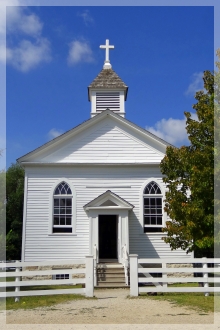 When a friend won a trivia contest because she knew the day and year Elvis Presley died, I asked how she recalled the exact date. She replied, “I remember because August 16, 1977, was the day I traded one king for another one—it’s the day I accepted Jesus!” Indeed, it is an important date for her to remember. I don’t know when my mother-in-law became a Christ follower but my father-in-law marked his acceptance of Jesus with his baptism at the age of 17 (in 1925). I only know this because my in-laws kept a certificate attesting to his baptism in their safe deposit box along their birth certificates, passports, voter registrations, social security cards, and marriage certificate.
 When writing about nitroglycerin recently, I realized there’s something else in our lives much like this strange chemical that is both helpful and harmful. Like nitroglycerin, man’s capabilities are a dichotomy between good and evil, constructive and destructive, and beneficial or detrimental. The same mind capable of creating a vaccine that saves thousands of lives is capable of creating a nuclear bomb that can take those lives. James speaks of this incongruity when writing about the way we use our words, “We use our tongues to praise our Lord and Father, but then we curse people, whom God made like himself. Praises and curses come from the same mouth! My brothers and sisters, this should not happen.” [3:9-10]
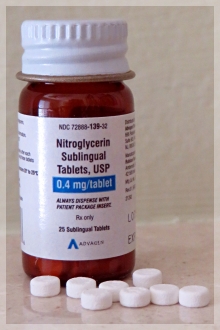 Back in the days before coronary artery bypass surgery and angioplasty, my father had heart disease and often suffered from the burning chest pain of angina. When that occurred, he would stop briefly, place a nitroglycerin tablet under his tongue, and his pain would ease. Medical nitroglycerin acts as a vasodilator by dilating or expanding the blood vessels so the heart doesn’t have to work as hard to pump blood through those vessels.
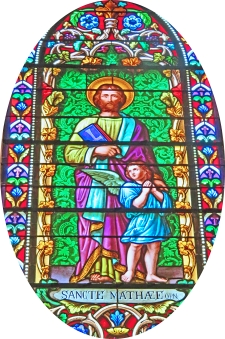 Proof of the truth is no substitute for our faith; nevertheless, it is important to know the truth of what we believe. At some point, we will ask ourselves how we can believe the validity of what we’re reading in our Bibles. Fortunately, we have Christian apologists to help us see its truth. Rather than offering apologies for the wrongs committed by evil people in the name of Jesus, apologists share the objective reasons and evidence that Christianity is true and should be believed. The Apostle Paul was probably the first apologist when he showed that Jesus’ fulfillment of Scripture’s prophecies proved He was the Messiah. Paul knew that the truth could stand up to scrutiny and it still does today. As for those prophecies: by conservative estimate, Jesus fulfilled at least 300 prophecies while on earth.
 I came across an article questioning whether we have to believe certain things to be a Christian or is it enough just to trust God. The author believed that Christians don’t have to “assent intellectually” to the facts of traditional Christian teaching or agree with the Christian creeds. “Faith” to the author is simply placing one’s confidence in “Spirit” (not the Holy Spirit) and following Jesus’ teaching is more important than believing certain things about Him. Having nothing to do with dogma or creeds, Christianity was seen as a wisdom tradition and way of life rather than a belief. Claiming they were “man-made” and date from the 4th century and Emperor Constantine, the author believed Christianity’s creeds should be disregarded.
 Devotions of the Heart