
 Can an Ethiopian change his skin or a leopard its spots? Neither can you do good who are accustomed to doing evil. [Jeremiah 13:23 (NIV)]
What words of despair from Jeremiah! Yet, why would God send him to the people of Judah with the call to repent if there was no hope of change? Surely, He didn’t send His prophet on a fool’s errand!
We all have issues with sin. While it may not be theft or adultery, chances are it’s something like anger, envy, impatience, bigotry, hostility, selfishness, pessimism, or pettiness. “It’s just the way I’m built,” we say in way of excuse. While we may justify ourselves by saying our faults are simply our nature, they aren’t! Having recently gone through genetic testing, I didn’t see any genes for things like lust, short-temper, worry, nitpicking, intolerance, arrogance, discontent, or stinginess. When we confuse our learned behavior with innate behavior, we excuse the inexcusable. While we can’t change our skin color or blood type, we can change our habits.
The gift of habit is God given; indeed, we’re blessed that we can go through life without having to deliberately think through the details of every action. If we had to consciously consider how to brush our teeth, get dressed, tie our shoes, make coffee, or start the car, we’d never get anywhere in the morning. The gift of habit, however, can also be a curse when our habitual responses are not godly—when they entail things like bigotry, anxiety, deceit, pride, anger, self-centeredness, or jealousy. 19th Century preacher Charles Spurgeon likened the force of habit to a cobweb: at first, it’s easily broken. When it grows into a thread, however, it restrains us a bit and, when the thread changes into a cord, we find ourselves in a net. As the net hardens into iron and the iron into steel, we’re shut up in a cage of our own making with no way of escape.
In discussing Jeremiah’s question, Spurgeon emphatically states that the Ethiopian cannot change his skin but, he adds as emphatically, an Ethiopian’s skin can be changed. He explains that the God who turned “primeval darkness into light” and “changed chaos into order” can do everything and, should He choose to do so, He could easily change skin color and leopard spots. Far more important than changing appearances, however, God can transform human nature! The God who designed our hearts can make them new again. After all, change or re-birth is what Jesus is all about!
Jeremiah called the people to repent; the call to put off our old sinful nature and replace it with the new continues today. Although we can’t do it by ourselves, God doesn’t ask anything of us that we are incapable of doing. When we accept Jesus, the Holy Spirit produces fruit in our lives: love, joy, peace, forbearance, kindness, goodness, faithfulness, gentleness and self-control. [Galatians 5:22-23] We may have to dig deep to find it but God’s fruit is there! Granted, it’s difficult to put away ingrained habits; change is neither easy nor fast. Nevertheless, though the power of the Holy Spirit, change is possible; we can take off the old and put on the new!
The God who made us also can remake us. [Woodrow Kroll]

 Last week, when Brandt Jean chose to offer his forgiveness and embrace the woman who killed his brother, he did it out of Christian love. Judge Tammy Kemp, moved by Brandt’s example, then handed the convicted murderer one of her personal Bibles and encouraged her to forgive herself. When the defendant asked her for a hug, the judge remembered a recent sermon about love and compassion and couldn’t deny her. Nevertheless, many people were outraged and turned their simple acts into political statements. They saw issues of race, civil rights, proselytizing, and something called “post-traumatic slavery syndrome” where there was only love, kindness, and forgiveness. Neither brother nor judge excused or absolved Amber Guyger of her crime; they simply extended compassion and forgiveness. Let us not forget that their actions were also in obedience to Christ!
 The fellow looked at me and apologized: “I’m sorry; I know I can be a real #@!%* at times!” I debated as to my response. While the polite thing would have been, “It’s OK, I understand,” that wouldn’t have been honest. His behavior wasn’t OK. We’re told in Proverbs 27:6 that wounds from a friend are better than an enemy’s kisses and, since he’d left the door wide open, I agreed with him. “I know you are. But you don’t have to be,” I gently added. “It’s your choice!” Apparently preferring an enemy’s kisses to my honest assessment, he shrugged his shoulders and left the room.
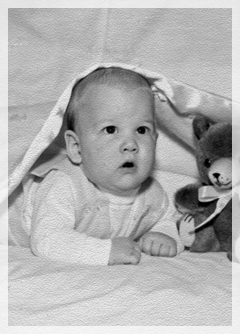 On the night He was betrayed, Jesus forewarned the disciples of the grief and fear they’d encounter in the days ahead. In his short parable about labor and delivery, Jesus prepared the remaining eleven disciples for the emotions they would encounter over the next three days: their anguish and despair as He hung upon the cross, died, and was buried. For His followers, those three days would feel like an eternity of hopelessness. But, as happens when a woman beholds her newborn baby after hours of painful labor, their despair would turn to joy when they saw the resurrected Christ!
 I’m continually amazed that, for someone who claims to believe in the power of prayer, I so rarely exhibit my belief! Our distressed friend had come over for advice and encouragement. The three of us brain-stormed various ways to meet her many challenges. When she departed several hours later, my husband and I promised to keep her family in our prayers. As she walked down the driveway, I realized that, while we pray daily for her, her family and their difficulties, we hadn’t bothered to pray with her! During our long discussion, we’d never paused to pray together and ask God for His guidance. Yes, my husband and I are a good source of information and encouragement, but it was God’s direction and His gift of courage that our friend needed far more than ours. We should have started the conversation with a prayer for God’s guidance rather than ending it with a promise to pray!
 Devotions of the Heart