
You should know that your body is a temple for the Holy Spirit who is in you. You have received the Holy Spirit from God. So you do not belong to yourselves, because you were bought by God for a price. So honor God with your bodies. [1 Corinthians 6:19-20 (NCV)]
 Although Elijah had just won an amazing victory over Baal and his prophets, we find the prophet running for his life in 1 Kings 19. The journey of over 120 miles left him physically exhausted and, having endured so many setbacks and challenges, the disheartened prophet was emotionally exhausted, as well. Wanting what he saw as a hopeless situation to end, He begged the Lord for death and he’s not the only one of the Bible’s heroes to do so. Overwhelmed by the heavy burdens he carried, Moses cried to God, “If you are going to continue doing this to me, then kill me now. If you care about me, put me to death, and then I won’t have any more troubles.” [Numbers 11:15] A discouraged and frustrated Jonah told God it would be better for him to die than to live. Job, in his despair and agony, and Jeremiah, in his disappointment after decades of prophesying with no appreciable results, were so miserable that they cursed the day they were born! Even the Apostle Paul admitted having been nearly overwhelmed by his troubles. Yet, as hopeless at their situations seemed, none of them died when they wanted to and none took their own lives. God did not abandon them and they did not abandon life.
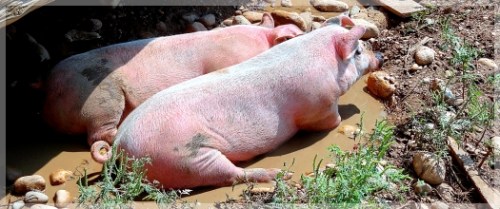
One week ago, in a Maryland hospital, 57-year-old terminally ill David Bennett, Sr. underwent open heart surgery and received a genetically modified pig’s heart as a replacement for his own severely damaged one. That same day, in Cali, Columbia, 60-year-old Victor Escobar chose to die by euthanasia. While Escobar suffered from intense pain, his condition was not terminal and he fought for two years in Columbian courts for the privilege of ending his life on his own terms. “I do not think God will punish me for trying to stop suffering,” he said. In stark contrast, Bennett, whose condition was terminal, said, “It was either die or do this transplant. I want to live. I know it’s a shot in the dark, but it’s my last choice.” One chose to die while the other (who was well aware of the risks) chose to continue living for as long as possible.
I’m not going to enter into the controversy regarding assisted suicide, euthanasia, or the use of animal organs in transplants. There’s nothing I can add to what theologians, ethicists, physicians, and lawyers have already said. Nevertheless, I can’t help but ponder the choices made by these two men. If I were in Bennett’s shoes, knowing the risks and low probability of long-term survival, would I make such a last-ditch effort in hope of gaining of few more days, weeks or months? On the other hand, were I confined to a wheelchair and suffering from diabetes, heart disease, chronic obstructive pulmonary disease, and spasms as was Victor Escobar, would I beg God for death? If I felt like I were living in a torture chamber, would I consider suicide or euthanasia?
Looking to Scripture, we have Paul’s words that we belong to the Lord, body and soul. Just as we have no right to tear down our neighbor’s house no matter how dilapidated it may be, we have no right to destroy our broken-down bodies; they are not ours to destroy. We are the Holy Spirit’s temple, were purchased with Christ’s blood, and our bodies belong the Lord! While we may long to depart this world, the where, when and how of that departure is God’s choice, not ours. Although I’m not sure I would make Bennett’s choice of such radical surgery, I do know I will never make Escobar’s of euthanasia.
I suspect that, like those Biblical heroes, there will be times in every believer’s life when we dread waking up to another day—there certainly have been in mine. Wanting whatever is plaguing us to be over with and gone, we might even cry, “I wish I were dead!” Yet, as desperate and despondent as were Elijah, Moses, Jonah, Job, Jeremiah, and Paul, none of them took their lives. God heard their cries of despair just as he hears ours.
A Christian will part with anything rather than his hope; he knows that hope will keep the heart both from aching and breaking, from fainting and sinking; he knows that hope is a beam of God, a spark of glory, and that nothing shall extinguish it till the soul be filled with glory. [Thomas Brooks]
 And I will give you a new heart, and I will put a new spirit in you. I will take out your stony, stubborn heart and give you a tender, responsive heart. And I will put my Spirit in you so that you will follow my decrees and be careful to obey my regulations. [Ezekiel 36:26-27 (NLT)]
 In immersion baptism, a person is completely submerged in the water and, every time I witness a full immersion baptism done in the Gulf of Mexico, I think of what it must have been like when John baptized Jesus and the Holy Spirit descended on our Lord. Since the Greek word used to describe this event was baptizo, meaning to dip, sink, or submerge, we can safely assume His was a full immersion baptism.
 When we pray about a decision, we often set the desired outcome we want rather than ask God to reveal His will to us. Instead of trusting our decision to Him and bending our will to His, we want God to bend His will to our desires. If His response to our pleas isn’t the one we want, we refuse to recognize it or complain that He never answered our prayers! Until we’re willing to step back and say, “Thy will be done,” we can’t truly discern God’s will.
 “They are to be pitied, not….” Not what? Author C.S. Lewis did not complete the sentence and I don’t think the omission was by accident. When I read the above passage, I thought of the words I (as a Christian) should use to replace the ellipsis; they are not to be reviled, hated, judged, condemned, berated, scorned, abused, or despised. Regretfully, my initial reaction upon running across the scum of the earth—the rapists, molesters, traffickers, exploiters, extorters, attackers, murderers, deceivers, hate-spewers, and tyrants that seem to populate our world—is more likely to be the exact opposite. Rather than a feeling of pity, compassion, mercy, forgiveness, or love, it’s one of outrage, loathing, and disgust.
 The Bible is filled with evidence of God’s goodness and the great (and miraculous) things He’s done for His people. Daniel emerges unscathed from a lion’s den, David defeats Goliath and the shepherd boy becomes a king, wisdom and riches are given to Solomon, and Shadrach, Meshach, and Abednego aren’t even scorched from a fire. Water is parted more than once, the walls of Jericho collapse, jail doors miraculously open, and storms cease at a word. Armies are led to victory, manna falls from heaven, fish and bread multiply, the barren give birth, the sick and lame are healed, and the dead rise. The Bible is full of marvelous accounts of miracles, majesty, and triumphs.
 Devotions of the Heart