
I will walk with integrity of heart within my house; I will not set before my eyes anything that is worthless. I hate the work of those who fall away; it shall not cling to me. [Psalm 101:2-3 (ESV)]
 While writing about curiosity yesterday, I thought about our insatiable curiosity concerning the lives of others. Some people think nothing of prying into other people’s lives by asking how much it cost, how much you’re paid, what the grade was, and more. The number of followers of the various social media platforms and fans of tell-all books, gossip magazines, tabloids, and reality TV tells me plenty of people want to know all that and more. Whether we know them or not, we seem to have a voracious appetite for the lives of other people, especially the lives of celebrities, former celebrities, one-time-wonders, housewives, bachelors, bachelorettes, the rich and privileged, and just about everyone else. We have talk shows where the more salacious the content the better and people come to blows after revealing sordid betrayals. We have assorted judge shows where in-law problems, unknown paternity, infidelity, and other poor choices reign. Private disagreements, personal relationships, and shocking secrets are openly aired for the curious world.
As much as I struggle to understand why any of us are interested in other people’s private lives, I find it even harder to comprehend why people choose to make public spectacles of themselves. Reality TV, of course, isn’t real and those “real housewives” aren’t really “housewives.” Knowing that circumstances are contrived to guarantee crisis, conflict, and drama, I wonder why people deliberately allow themselves to be manipulated for their five minutes of fame (or infamy). Considering the number of people who have an incredible willingness to freely share the most intimate details of their lives with the world, it appears as if curiosity and braggadocio are two sides of the same coin.
Perhaps it’s conceit, egotism, or a weird sort of arrogance that leads people to think that, no matter how appalling, their every thought, feeling, experience, meal, or intimate moment is worth sharing with the world. People have become so immodest that they will bare their souls and just about everything else to complete strangers. They are like exhibitionists who leave the curtains half open to dance in front of the window and their curious audience is like the voyeur who peeks through those curtains. Sadly, our curiosity has turned people parading their private lives into a lucrative business (apparently the more dysfunctional the better.)
It’s almost malevolent the way people want to see others at the worst. Perhaps we’re drawn into this tabloid culture so we can congratulate ourselves on being nicer, saner, smarter, more moral, and less superficial. Pride puffs us up because we don’t hoard, commit adultery, spend excessively, or keep having needless plastic surgery. Self-righteously, we pat ourselves on the back for not living vicariously through our talented children, exploiting our families, brawling in public, or letting cameras into our bedrooms. We feel superior because we’re better behaved, pay our debts, and know who fathered our children.
Granted, there is a difference between watching chefs contend for top honors, brainiacs compete for money, super athletes vie for a title, or pickers search for rare artifacts and watching people engage in attention-grabbing, immoral, inappropriate, or self-destructive behavior. Nevertheless, there is a fine line between innocent interest and prurient curiosity and crossing that line leads us into sin’s territory of judgment and pride.
To rework Jeff Foxworthy’s quote about going to the state fair: “If you ever start feeling like you have the goofiest, craziest, most dysfunctional family in the world, all you have to do is watch reality TV because pretty soon you’ll be going, ‘You know, we’re alright. We are dang near royalty!’” Perhaps people’s bad behavior, excessive alcohol consumption, emotional outbursts, humiliation, tears, and turmoil became entertainment simply to make us feel like saints in comparison to them. Let’s not fool ourselves; we’re not! Perhaps it’s time to check our curiosity and rethink how we spend our time and with what we fill our minds.
Men compare themselves with men, and readily with the worst, and flatter themselves with that comparative betterness. This is not the way to see spots, to look into the muddy streams of profane men’s lives; but look into the clear fountain of the Word, and there we may both discern and wash them; and consider the infinite holiness of God, and this will humble us to the dust. [Robert Leighton (A Puritan Golden Treasury)]
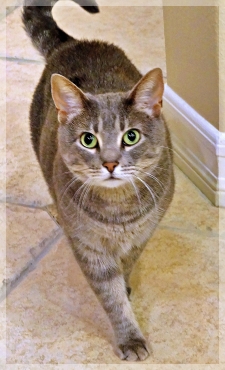 I often wonder why Eve ate that forbidden fruit and why Adam so foolishly followed suit. Of course, we have the clever, devious and deceitful serpent to blame. Assuring Eve that God lied to her, he said she wouldn’t die if she ate the apple. He promised that she’d be just like God with the knowledge of good and evil. God hadn’t given Adam and Eve any reason to doubt His word, so why did they succumb so easily to Satan’s temptation?
 An old Chinese parable tells of a poor farmer whose only horse runs away. His friends commiserate over his bad luck and ask how he’ll plow his field. The farmer answers, “Who knows? We shall see.” Two days later, the horse returns along with several wild horses. When the farmer’s friends congratulate him on the good fortune of now having a stable full of horses, the farmer replies, “Who knows? We shall see.” The following week, while trying to tame the horses, the farmer’s son breaks his leg in three places. The farmer’s friends offer condolences and wonder how he’ll get his work done with his son unable to walk and help. The farmer answers, “Who knows? We shall see.” When a war breaks out, the emperor’s men arrive and conscript all the young men in the village. With his leg in a cast and needing crutches, the farmer’s son is considered unfit for battle and remains in the village. As his neighbors watch their sons leave home, they congratulate the farmer on his stroke of luck. He replies, “Who knows? We shall see.” Although the son’s leg eventually heals, he has a bad limp. The farmer’s neighbors express their sympathy for such trouble. “Who knows? We shall see,” he again replies. By the time the war is over, all of the village’s boys have died in battle but, with his several horses and a son now able to help, the farmer can plow several fields and has grown wealthy. When the villagers congratulate him on his good fortune, the farmer replies, “Who knows? We shall see.”
 A sin of commission is the willful act of doing something that violates God’s commands in Scripture. With a little self-examination, our sins of commission are pretty easy for us to spot because they’re blatant and (more often than not) deliberate. While we may try to rationalize our actions, we know when we’ve lied, cheated, coveted, stolen or worse.
 In one of those viral, supposedly true but probably not, inspirational stories, a wealthy man is said to bend over and pick up any and every coin he spots on the ground. When asked why he bothered to collect mere pennies, the man explained he didn’t pick up coins for their monetary value; he picked them up for the value of the message on them: “In God We Trust.” He believed the penny’s words to be God’s way of reminding him to trust the Lord rather than his wealth and considered every coin he found an opportunity to acknowledge his faith in prayer.
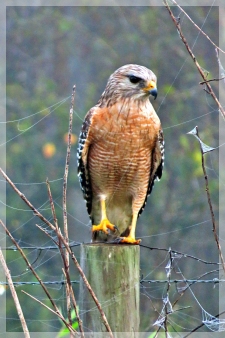 In the late 1970s, psychologists Suzanna Imes and Pauline Rose Clance developed the concept of what is known as the “imposter syndrome.” Loosely defined as doubting one’s abilities and feeling like a fraud, it is believing that you are not as competent as others perceive you to be. The impostor syndrome manifests in failing to realistically assess our competence and skills, self-denigration, a fear of not living up to expectations, and attributing any of our successes to someone or something else, like luck.
 Devotions of the Heart