MIRRORS

Check up on yourselves. Are you really Christians? Do you pass the test? Do you feel Christ’s presence and power more and more within you? Or are you just pretending to be Christians when actually you aren’t at all? [2 Corinthians 13:5 (TLB)]

little blue heron

Writing about Paul’s flawed bronze mirror yesterday reminded me of the mirror I have at the end of our hallway—the one mirror in the house I actually like! Unlike ancient mirrors with their fuzzy image, this mirror is quite clear but, like those ancient mirrors, the image it reflects is misleading. Some defect in it makes a person look slightly taller and slimmer. Unlike a fun house mirror, however, it’s a minor distortion and so subtle that it takes a while to realize that the reflection isn’t quite true.

I’m not sure any of us truly like mirrors. In actuality, most of us would prefer the ancient bronze ones to those unforgiving three-way mirrors we find in changing rooms! No matter how beautiful we might be, the reflection in a good mirror is brutally honest. I may be able to edit away blemishes, wrinkles, and even pounds with Photoshop but any mirror tells me they’re still there! As much as most of us would prefer not looking too closely at our bodies, we are even less likely to enjoy examining our spiritual nature.

Unfortunately, we’re usually more willing to look closely at other people’s behavior than our own. We’ll use a magnifying glass for them but, when scrutinizing ourselves, we would prefer a mirror like the one in my hall—one that makes us look better than we are—to one that provides a frank and candid assessment. The words “mirror” and “miracle” share the same Latin root of mirari, meaning “to wonder at or admire.” While we’d prefer looking in our spiritual mirrors to admire what we see, at least for me, there is much that isn’t attractive, let alone admirable. One’s spiritual mirror should be as accurate and blunt as those make-up mirrors with lights and magnification! Nevertheless, when we take a deep look at ourselves, we’re tempted to minimize our spiritual flaws by excusing the inexcusable, rationalizing the unjustifiable, defending the indefensible, or just plain ignoring the obvious.

Although diet, exercise, cosmetic surgery, make-up, and Spanx can make some changes in our appearance, there really isn’t a lot we can change about our bodies. No matter what I do, I never will have the added height and long slender legs I see in my hall mirror. There is, however, much that can be done about our spiritual imperfections and shortcomings—things like anger, vanity, bitterness, hardness of heart, bigotry, pride, scorn, resentment, greed, and lust. To do that, however, we need to take a good hard look at ourselves in our spiritual mirrors!

Forgive us, Father, when we fail to take a thoughtful and honest look at ourselves. Examine us, O Lord, and tell us what is there! Give us eyes willing to see what you see, commitment to making the necessary changes, and the power of your Holy Spirit to do it.

O Lord, you have examined my heart and know everything about me. … Search me, O God, and know my heart; test my thoughts. Point out anything you find in me that makes you sad, and lead me along the path of everlasting life. [Psalm 139:1,23-24 (TLB)]

And why worry about a speck in the eye of a brother when you have a board in your own? Should you say, “Friend, let me help you get that speck out of your eye,” when you can’t even see because of the board in your own? Hypocrite! First get rid of the board. Then you can see to help your brother. [Matthew 7:3-5 (TLB)]

Copyright ©2022 jsjdevotions. All rights reserved.

THROUGH A GLASS, DARKLY

For now we see through a glass, darkly; but then face to face: now I know in part; but then shall I know even as also I am known. And now abideth faith, hope, charity, these three; but the greatest of these is charity. [1 Corinthians 13:12-13 (KJV)]
variegated fritillary butterfly

At my age, I think I’d prefer a hazy mirror and blurred reflection to my bathroom mirrors that seem cruel with the clarity of what they reveal. Mirrors in Biblical times, however, were usually made of polished bronze and their reflections were blurred. In 1 Corinthians 13, the Apostle Paul wrote of seeing an unclear reflection in a mirror. When the first Bibles were translated into English, the words “glass” and “looking glass” were commonly used for the word mirror. Both words, however, are anachronisms since glass mirrors were not introduced until well after Paul’s letter was written. Nevertheless, as a result of the early translators’ use of glass, several later Bible translations turned that flawed mirror into a blurry window or a clouded windowpane. The Greek words Paul used, however, were dia spektrou which meant “by means of a mirror.”

Initially, I thought the proper translation was necessary to understand that verse. After all, when looking in a mirror, we are seeing ourselves; when looking through a glass window, we are seeing others. Then I looked at the more important (yet easily overlooked) word: “darkly.” Rather than speaking of a poorly lit room that would make it difficult to see in any sort of mirror, Paul was speaking of our human limitations. The literal translation of the Greek words used, in aenigmate, mean “in a riddle” or “an enigma.” Regardless of the translation, whether we’re looking at an imperfect mirror or through a smoky window, what we’re seeing is incomplete and distorted. Like an unfinished jigsaw puzzle, it is incomplete. What we’re able to perceive is just an outline, a hint, a rough sketch, of what is to come.

Although God revealed Himself to us through His word and in Jesus, what we know of Him is neither easily explained nor clearly understood. Like the picture on a puzzle’s box, we have an idea of what it will be like once done but we don’t know exactly how it fits together. In spite of having numerous translations of the Bible and countless scholars through the ages who’ve offered interpretations, commentary, and clarifications, much is still left to conjecture. Because God and His plan are an enigma, there is a great deal we will never know, much less comprehend, this side of heaven. With our limited comprehension and flawed eyesight, we only catch a fleeting glimpse of Him now. Someday, however, we will see Him face to face and what was obscure will become clear when the darkness becomes light.

So, what do we do until then? How do we get through this puzzle called life with our incomplete knowledge and understanding? We do it with faith, hope and love!

The heavens shall be open, and I shall see the Son of man, the Son of God, and not see him at that distance…but see him, and sit down with him. I shall rise from the dead…for I shall see the Son of God, the sun of glory, and shine myself as that sun shines…and be united to the Ancient of Days, to God Himself. …No man ever saw God and lived. And yet, I shall not live till I see God; and when I have seen him, I shall never die. …As he that fears God, fears nothing else, so he that sees God, sees everything else. [John Donne]

We don’t yet see things clearly. We’re squinting in a fog, peering through a mist. But it won’t be long before the weather clears and the sun shines bright! We’ll see it all then, see it all as clearly as God sees us, knowing him directly just as he knows us! But for right now, until that completeness, we have three things to do to lead us toward that consummation: Trust steadily in God, hope unswervingly, love extravagantly. And the best of the three is love. [1 Corinthians 13:12-13 (MSG)]

The Throne of God and of the Lamb is at the center. His servants will offer God service—worshiping, they’ll look on his face, their foreheads mirroring God. Never again will there be any night. No one will need lamplight or sunlight. The shining of God, the Master, is all the light anyone needs. [Revelation 22:4-5 (MSG)]

Copyright ©2022 jsjdevotions. All rights reserved.

SHIFTING SANDS

Dome house - Cape RomanoAnyone who listens to my teaching and follows it is wise, like a person who builds a house on solid rock. Though the rain comes in torrents and the floodwaters rise and the winds beat against that house, it won’t collapse because it is built on bedrock. But anyone who hears my teaching and doesn’t obey it is foolish, like a person who builds a house on sand. When the rains and floods come and the winds beat against that house, it will collapse with a mighty crash. [Matthew 7:24-27 (NLT)]

5-miles south of Marco Island, Florida, the remains of the Cape Romano dome house are a perfect illustration of Jesus’ parable about building on a solid foundation. When completed in 1982, the 2,400 sq. ft. house was on Tice Island and about 100 feet from the water. Consisting of six interconnected dome-shaped modules, it was eco-friendly and state-of-the-art. Completely self-sustaining, it had solar panels, generator, satellite TV, a 23,000-gallon cistern that collected water runoff, a water filtration system, and even air conditioning. While its rounded domes survived the hurricane force winds of Andrew in 1992, in the years following, water levels began to rise and destabilize the house’s foundation. After 2005’s Hurricane Wilma, the domes began leaning as the shifting sands eroded their foundation. As the beach retreated, the domes appeared to be marching into the Gulf and, by 2013, they were standing in 6-feet of water. After Hurricane Irma in 2017, two of the domes collapsed into the sea. The remaining domes now sit about 300 feet offshore. When the house was built in the 1980s, two other large houses stood on the island. But, like the dome house, they were no match for Florida’s storms that sucked the sand beneath them right back into the Gulf of Mexico; they, too, are a thing of the past!

Before erecting this house, the owner built a prototype in Tennessee to test his design and it still is standing. Since sand from the beach was used for the concrete, the sand was analyzed to make sure it had the proper aggregate for construction. The problem, however, wasn’t with the concrete or the domes’ unique design; the problem was with the choice of foundation! Rather than bedrock, it was sand!

The Sermon on the Mount concludes with the parable of The Wise and Foolish Builders. Israel is known for torrential rains that cause floods and, when the winter rains came, the Jordan River would pour into the sea causing it to overflow its banks. While the sand around the Sea of Galilee was hard on the surface during the hot summer months, a wise builder would not be fooled those conditions. He’d dig down as far as ten feet below the surface to reach the bedrock for the foundation of the house. The foolish builder, however, takes the easy way and doesn’t dig down to the bedrock. Like the homes on Tice Island, both homes would look secure in good weather. It was only when the storms hit that the difference would become obvious. Houses built on the bedrock can withstand floods and erosion while those built on sand won’t.

Having been raised by a builder, Jesus knew His topic well but He wasn’t giving a lesson in construction. Many of His listeners had built their lives on surface righteousness—one of cursory adherence to the letter of the Law without actually building a deep faith in and obedience to God. No matter how carefully they observed the outward rituals of Judaism, without an inner relationship with the Lord, they had no foundation. They’d built something that looked good on the outside but was weak on the inside and would not stand strong during life’s tempests and turmoil.

It’s inevitable that one or more storms will pummel us and challenge our foundation and this parable still applies to us. Foolish builders choose to build their lives on worldly things like the false gods of wealth, status, looks, power, and self. However, their lives will crumble and collapse when those things disappear. As with the dome house, it may not occur all at once but it will happen. Because wise builders build their lives on faith in the unchanging Lord and His Word, they can withstand life’s challenges. If our foundation is laid in the bedrock of Jesus and Scripture, while battered and bruised, we will remain standing.

When the homes on Tice Island originally were built, they looked sturdy—but looks are deceiving. Without a firm foundation, they couldn’t stand; neither can we! How firm is your foundation?

Therefore, this is what the Sovereign Lord says: “Look! I am placing a foundation stone in Jerusalem, a firm and tested stone. It is a precious cornerstone that is safe to build on. Whoever believes need never be shaken. [Isaiah 28:16 (NLT)]

Copyright ©2022 jsjdevotions. All rights reserved.

SEEING ISN’T BELIEVING

Then Jesus told them, “A prophet is honored everywhere except in his own hometown and among his own family.” And so he did only a few miracles there because of their unbelief. [Matthew 13:57-58 (NLT)]

kurrajong hybridAlthough Jesus performed many miracles, when compared to the illusions performed by various well-known magicians, they aren’t all that impressive. Jesus emerged from the tomb on the third day but David Blaine buried himself alive in a plexiglass coffin under a 3-ton water-filled tank for seven days and nights! Calling Lazarus out of the tomb after several days was impressive but only his family and some mourners were there to see it. When David Blaine emerged from the 6-ton block of ice in which he’d been encased for over 63 hours, thousands in Times Square were there and even more watched it on television. Granted, Blaine fell short of his 72-hour goal but the man knows how to draw crowds! Couldn’t Jesus have done something similar?

The disciples saw Jesus walk on water but magician Criss Angel did the same thing on national TV. Jesus appeared in a locked room after His resurrection but Criss Angel has passed through a glass window (without breaking it) and both a metal door and an iron gate. Jesus had Peter take a coin out of a fish’s mouth but David Blaine turned a cup of coffee into a cup of money. Feeding several thousand with a boy’s lunch pales in comparison to David Copperfield making the 225-ton Statue of Liberty disappear. Quietly transforming water into wine isn’t nearly as impressive as illusionist Cyril Takayama removing his head or David Copperfield making an airplane disappear.

Of course, the difference between Jesus and those magicians is that the men are mere illusionists and Jesus was God. Those magicians and their tricks only seem miraculous because we don’t understand how they’re done. Miracles done by Jesus had nothing to do with misdirection, deception, trickery, or sleight of hand. Without worldly explanation, they truly were supernatural. Nevertheless, wouldn’t Jesus have gathered more followers if He’d been more of a showman?

Couldn’t Jesus have done something more dramatic and remarkable in Nazareth than a few healings and a display of wisdom in the synagogue? People unimpressed by his background might have been awestruck if He’d made a camel disappear, pulled shekels from children’s ears, or cut a disciple in half. No matter how spectacular the miracles, however, the people’s skepticism would have blinded them to His message. The lack of belief in Nazareth didn’t mean Jesus couldn’t perform miracles; it simply meant He wouldn’t because there was no point. Some people are unwilling to believe no matter what they see.

The magician’s end purpose is to create illusions for money, fame, and entertainment—none of which were Jesus’ purpose. He performed miracles only out of compassion, to illustrate a lesson, or to establish his credentials as God. Frequently, He even asked people to say nothing about them. Miracles were a small part of His ministry because Jesus knew that miracles alone make a poor basis for faith.

Jerusalem was filled with people that Passover week some 2,000 years ago. Surely some of the populace there had been fed by Him, received his healing touch, or witnessed Him perform a miracle or two. If they hadn’t been eyewitnesses, many more had heard about His miracles. Nevertheless, on that Friday when Pilate asked if he should release Barabbas or Jesus “who is called Christ,” we don’t read of anyone in the crowd trying to drown out those who called for the release of Barabbas. They weren’t calling for Jesus because seeing was not enough to make them believe.

Men can see the greatest miracles and miss the glory of God. What generation was ever favored with miracles as Jesus’ generations was? Yet that generation crucified the Son of God! [Tom Wells]

Jesus asked, “Will you never believe in me unless you see miraculous signs and wonders?” [John 4:48 (NLT)]

Copyright ©2022 jsjdevotions. All rights reserved.

JUST ASKING

Jesus replied, “I tell you the truth, you want to be with me because I fed you, not because you understood the miraculous signs. But don’t be so concerned about perishable things like food. Spend your energy seeking the eternal life that the Son of Man can give you.” [John 6:26-27 (NLT)]

Although people flocked to Jesus, many came for His miracles and what He could do for them rather than for His message. After all, He gave sight to the blind, calmed storms, gave excellent fishing instructions, cured the paralyzed, freed people from demons, healed the sick, raised the dead, turned water into wine, made money appear in the mouth of a fish, and fed thousands with next to nothing. After Jesus fed the multitude, the people recalled the Messianic prophecy of Deuteronomy 18:18 that God would raise up a prophet like Moses and they wanted to make Him king. They didn’t understand that the kingdom of the Messiah would be a spiritual, not a political, one. Rather than seeing Jesus’ miracles as God’s stamp of approval on Him and coming to Jesus out of faith, they came to Him looking for more. As if feeding lunch to over 5,000 hadn’t been enough, they wanted an even greater miracle on a par with the manna Moses provided for the Israelites. Even though Jesus fed 5,000 men for a day, Moses fed millions for decades!

Jesus, however, corrected them. The manna wasn’t from Moses—it was from God. Moreover, that manna only lasted one day—the true bread from heaven, the bread Jesus offered, would last for eternity. Jesus wasn’t there to sustain life with something perishable but to give life with something everlasting!

Seeing Jesus as a miracle worker and a political king, the crowd followed Him. How do we see Him and why do we come to Him? Do we come for spiritual reasons or worldly ones? We may not expect Jesus to provide the food and drink for our next party but are we seeking Him for other things we think we can get from Him? By joining a church, are we seeking friends, contacts, or status? Do we have a personal agenda like politics, business relationships, or help from the parish? Are we motivated to seek Jesus in pursuit of wealth, success, comfort, emotional experience, or a miraculous fix of a problem?

Do we look to Jesus for our advancement or to advance His kingdom? Do we want to be glorified for what we do or glorify Him with what we do? Do we want to feel loved and or do we want to love Him and His children? Are we seeking an emotional high rather than spiritual growth? Do we seek power, influence, or recognition rather than a life of service and humility? Do we want His joy without our obedience or His forgiveness without our repentance?

Like the woman at the well, do we want His water so we don’t have to walk to the well and fill our jugs? Like the people who followed Jesus to Capernaum, do we want Him to miraculously satisfy our daily physical needs? Are we little better than Judas and following Him for the pieces of silver preached in the prosperity gospel? Are we looking for material possessions and wealth or spiritual gifts and the Fruit of the Spirit? Do we seek Him for what He can do for us or for who He is? Do we look to Jesus to take whatever is in His hand or do we come to offer Him what is in ours? Just asking…

True Christianity is to manifest genuinely Christ-like behavior by dependence on the working of the Spirit of God within, motivated by a love for the glory and honor of God. [Ray C. Stedman]

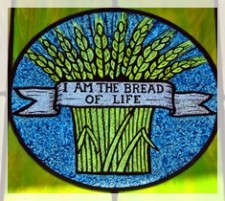
I tell you the truth, anyone who believes has eternal life. Yes, I am the bread of life! Your ancestors ate manna in the wilderness, but they all died. Anyone who eats the bread from heaven, however, will never die. I am the living bread that came down from heaven. Anyone who eats this bread will live forever; and this bread, which I will offer so the world may live, is my flesh. [John 6:47-51 (NLT)]

Copyright ©2022 jsjdevotions. All rights reserved

FEEDING THE MULTITUDE – Part 2

At this they began to argue with each other because they hadn’t brought any bread. Jesus knew what they were saying, so he said, “You have so little faith! Why are you arguing with each other about having no bread? Don’t you understand even yet? Don’t you remember the 5,000 I fed with five loaves, and the baskets of leftovers you picked up? Or the 4,000 I fed with seven loaves, and the large baskets of leftovers you picked up?” [Matthew 16:7-10 (NLT)]

white ibisMatthew and Mark tell of a second time Jesus fed a multitude. Jesus had been north of Galilee in Tyre and Sidon before going south to the Sea of Galilee and on to the region of the Ten Towns or Decapolis. Once there, a huge crowd assembled and set up camp around Jesus as He healed and preached. After three days on the hillside, the crowd ran out of provisions and Jesus voiced His concern. Just like the first time they were faced with a hungry crowd, the disciples don’t know what to do, even though the solution was standing right in front of them. After they found seven loaves and a few fish, Jesus miraculously turned that into a feast for 4,000 men (plus women and children) with seven large reed baskets of food remaining!

Why would Matthew and Mark include two almost identical stories to their gospels?  Perhaps the reason is found in the location of these miracles. While the setting of these miracles seems unimportant to us in the 21st century, it wasn’t when the miracles occurred and the words were written. Located on the north shore of the Galilean Sea, the Bethsaida region was Jewish, and most (if not all) of the recipients of that first miraculous meal were Jews. When Jesus was in Tyre and Sidon, however, He was in a Gentile region and at least 35 miles north of the Sea of Galilee. To get to the Decapolis, He had to go east, cross the Jordan, and then proceed south to the southern end of the Sea. Since he was on His way back to Judea, it’s evident that Jesus deliberately went out of His way to minister to this Gentile and largely pagan region.

With their addition of Jesus feeding the multitude in the Decapolis, Matthew and Mark made it clear that Jesus came for both Jew and Gentile. Let this story be a reminder that, whether Jew or Gentile, good church-going people or idol worshippers and pagans, deserving or undeserving, all of God’s children deserve to be fed both spiritually and physically.

It also seems that Jesus’ miracles of provision needed repeating for His disciples. Even though He previously turned a boy’s lunch into a banquet for well over 5,000 hungry people, the disciples stood around not knowing what to do when faced with another hungry crowd of 4,000 men (plus women and children)! Instead of seeing an opportunity, they saw an impossibility. Rather than asking Jesus where they’d find enough food in the wilderness, they immediately should have offered what they did have to Jesus and asked Him to make it enough! It seems the disciples were slow learners!

Even though Jesus turned seven loaves and a few fish into an al fresco picnic for thousands, the disciples still didn’t understand. Shortly after this miracle, Jesus and the disciples were in a boat and crossing the lake. When the disciples realized they had only one loaf of bread between them, they argued about the lack of food! They sat there quarreling about bread while the Bread of Life sat in the boat with them. For the One who could multiply seven loaves to feed a multitude, turning one loaf into enough for thirteen men was child’s play, but they were blind to who He was and what He could do!

May we always remember that God can do things that exceed our wildest imagination. If we just bring Him what we have—no matter how little or insignificant it may seem—God will make it enough. As the old hymn goes: “Little is much when God is in it.”

Now all glory to God, who is able, through his mighty power at work within us, to accomplish infinitely more than we might ask or think. [Ephesians 3:20 (NLT)]

Jesus replied, “I am the bread of life. Whoever comes to me will never be hungry again. Whoever believes in me will never be thirsty.” [John 6:35 (NLT)]

Copyright ©2022 jsjdevotions. All rights reserved.