TALISMANS [1 Samuel 4 to 6 (Part 1)]

You must not have any other god but me. You must not make for yourself an idol of any kind or an image of anything in the heavens or on the earth or in the sea. You must not bow down to them or worship them, for I, the Lord your God, am a jealous God who will not tolerate your affection for any other gods. [Exodus 20:3-5 (NLT)]
During the time of the judges, the Israelites were at war with the Philistines. Following their loss of 4,000 men, they questioned why God had allowed their defeat but never bothered asking Him. Instead, they decided that carrying the Ark of the Covenant into battle would guarantee a future victory. Perhaps they remembered the story of Israel entering the Promised Land—how the Jordan River stopped flowing when the feet of the priests carrying the Ark touched the water and the entire nation crossed the dry riverbed into Canaan. They may have recalled Jericho’s defeat when Israel’s priests carried the Ark around the walled city for seven days and the city’s seemingly invincible walls collapsed. Maybe they thought it was the Arks’ presence that caused those miracles; in any case, they brought the Ark to their camp in Ebenezer.

Rather than put their faith in God’s power to save them, the men put their faith in a powerless box that held revered artifacts. While sacred, the Ark had no more power to bring victory than would a scarab amulet. Nevertheless, Israel put their trust in this talisman instead of God. I wonder if they blamed the Ark rather than their sacrilege when the Philistines defeated them, captured the Ark, and took it into their territory.

Israel failed to remember that, in the 400 years since crossing the Jordan and defeating Jericho, the Ark never had been taken into battle and, in both of those instances, God specifically commanded the action. Worse, the men had broken the first commandment by putting their faith in something other than God.

The Philistines may have thought themselves lucky to have captured the Ark but that quickly changed. Although they placed it in their temple next to their chief deity Dagon, the next morning, Dagon was found on the ground before the Ark, face down in a position of humility and worship. After the idol was returned to its place, it was found face down again the next day. Decapitation of foes and the severing of hands was a common practice in the ancient world and Dagon’s head and hands were broken off and lying in the temple’s doorway. Jehovah’s message was clear: Dagon was a powerless god who couldn’t even prevent his own execution in his temple!

Still, the Philistines failed to return the Ark and, when God sent an illness of tumors (possibly something like bubonic plague), they played a deadly game of “hot potato” for the next seven months by moving the Ark from town to town. Wherever it landed, however, the plague of tumors followed. When a cry went through the land, the Philistines finally returned the Ark to Israel. Like Israel, they made the mistake of attributing power to the Ark rather than to the great God Jehovah!

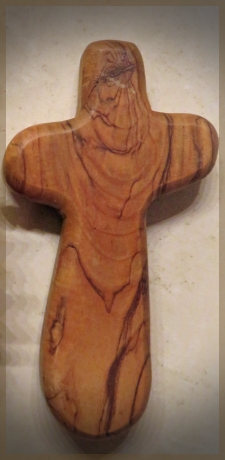
As did the Israelites, we must never put our trust in things—whether it’s lucky coin, crystal, rabbit’s foot, or cross on a necklace. Although a rosary dangling from the rearview mirror, an olivewood cross in your purse, a fish symbol on the trunk, a St. Christopher medal on the dash, or an angel pin on your lapel may serve as visual reminders of our powerful God, they are powerless to keep us from being lost, injured, ill, or getting into an accident, or having some other trouble. God cannot be manipulated to bring about good fortune! Treating any object (secular or religious) as a talisman or good luck charm turns it into an idol!

In the same way, we must never live in fear of things like the number 13, not forwarding a chain letter, or seven years of bad luck after breaking a mirror. Those things are as powerless as was the Philistine’s god Dagon. At its simplest, superstition simply is fear. As Paul told Timothy in his second letter, “God has not given us a spirit of fear and timidity, but of power, love, and self-discipline.” [1:7] Rather than fearing superstitions or symbols, we should fear God with a fear that manifests itself in our respect, obedience, submission, and worship of Him.

Divine protection and victory come from God alone, not from pictures, jewelry, talismans, or even the Ark. There is a fine line between respecting an object and idolatry. Philistine and Israelite alike crossed that line; let’s be sure we never do.

The idols of the nations are merely things of silver and gold, shaped by human hands. They have mouths but cannot speak, and eyes but cannot see. They have ears but cannot hear, and mouths but cannot breathe. And those who make idols are just like them, as are all who trust in them. [Psalm 135:15-18 (NLT)]

Copyright ©2023 jsjdevotions. All rights reserved.

WHOSE SIDE?

When Joshua was near the town of Jericho, he looked up and saw a man standing in front of him with sword in hand. Joshua went up to him and demanded, “Are you friend or foe?” “Neither one,” he replied. “I am the commander of the Lord’s army.” [Joshua 5:13-14 (NLT)]

spiderwortThe Israelites had just crossed the Jordan River and were preparing to conquer Canaan when Joshua came upon an armed man. Joshua was a stranger in a foreign land and, as Israel’s general, he may have been scrutinizing Jericho’s defenses to determine his plan of attack. I wonder if Joshua brandished his sword (while shaking in his sandals) as he queried, “Friend or foe?” The man, however, was neither ally nor adversary. Identifying himself as the commander-in-chief of the Lord’s army, his loyalty was to neither side. His allegiance was to God and the only side he was on was God’s! God wasn’t on Israel’s side any more than He was on Canaan’s. Israel, however, was on God’s side because their conquest of Jericho was part of His master plan of redemption. It was because they were on God’s side that the fortified city’s walls collapsed.

Jump ahead some 500 years to King Asa of Judah. In 2 Chronicles, we find the people of Judah under attack by an Ethiopian army of tens of thousands equipped with 300 chariots. Asa turned to God for guidance. Rather than ask God to be on their side, he prayed that Judah’s side was God’s and confirmed that it was in God’s name that they fought. In spite of overwhelming odds, Judah’s army was victorious, not because God was on their side but because they were on God’s. Asa then committed his kingdom to seeking God with all their heart and soul.

Unfortunately, twenty-one years later, the King forgot whose side he was on when Israel invaded Judah. Rather than turning to God, he committed himself to an alliance with the pagan Ben-hadad of Aram. Although the alliance at first appeared to be a success, the prophet Hanani rebuked the king for violating his covenant to seek the Lord’s side. Sadly, Asa’s foolhardiness meant that Judah would continue to be at war for generations.

When addressing a joint session of Congress in 1984, President Ronald Reagan noted that America was founded by men who believed God was their rock of safety. The President then added, “We must be cautious in claiming that God is on our side, but I think it’s all right to keep asking if we’re on His side.” 120 years earlier, in the midst of the Civil War, one of Abraham Lincoln’s advisors said he was grateful God was on their side. Lincoln replied, “Sir, my concern is not whether God is on our side; my greatest concern is to be on God’s side, for God is always right.” Being on God’s side should be our concern, as well. Our all-powerful God does not choose sides; there only is one side and it is His.

Whether the dispute or disagreement is religious, political, familial, among neighbors or nations, we tend to get behind one side or another. Before taking sides, drawing lines in the sand, making threats, burning bridges, creating alliances, waging battle, or championing a cause, we must prayerfully determine which side is God’s. In many of our disputes, there’s a fair chance that neither side is God’s! While we may not be sure where God stands on every question, we do know He’s on the side of things like love, peace, forgiveness, truth, mercy, compassion, salvation, justice, healing, generosity, humility, decency, righteousness, and kindness. Let His Spirit and Word be our guide. Remember, it doesn’t matter whose side we’re on, if it isn’t God’s!

They always win who side with God. [Frederick W. Faber]

The Lord will stay with you as long as you stay with him! Whenever you seek him, you will find him. But if you abandon him, he will abandon you. [2 Chronicles 15:2b (NLT)]

Don’t copy the behavior and customs of this world, but let God transform you into a new person by changing the way you think. Then you will learn to know God’s will for you, which is good and pleasing and perfect. [Romans 12:2 (NLT)]

Copyright ©2023 jsjdevotions. All rights reserved.

WHATEVER IT TAKES

But you will receive power when the Holy Spirit comes upon you. And you will be my witnesses, telling people about me everywhere—in Jerusalem, throughout Judea, in Samaria, and to the ends of the earth. [Acts 1:8 (NLT)]

Church of Columba - Spiez

“We will do anything short of sin to reach those who don’t know Christ,” was frequently said by the pastor of the mountain church at which we worshiped during our Colorado winters. His passionate words reflect the sort of zeal that mountain church has for reaching the unreached.

In Mark’s gospel, we find four men willing to do anything (short of sin) to bring someone to Christ. Jesus was in Capernaum where he previously healed the sick and demon-possessed. Upon hearing the news that Jesus had returned, these four men placed their paralyzed friend on a mat and carried him to the house where the Lord was preaching. Unfortunately, but the house was so mobbed that they couldn’t even get in the door! Unwilling to let a crowd of people keep their sick friend from Jesus, the men carried him up to the roof. While they didn’t sin, I’m not so sure they didn’t break the law when they dug up the thatch and dry mud, removed the tiles, and made a hole in the roof through which they lowered their paralyzed friend to Jesus’ feet.

Timothy certainly went “the extra mile” when the young man underwent circumcision just to become a more effective evangelist to the Jews. In obedience to the Spirit’s direction to go south to the Gaza road, Philip actually walked an extra 42 miles before even getting to that desert road and finally meeting the Ethiopian! His miles, however, pale in comparison to Paul’s! New Testament scholar Dr. Eckhard Schnabel estimates that Paul logged over 15,500 evangelism miles before arriving in Rome in 60 AD. 6,800 of those miles were by sea and another 8,700 were on land (presumably done on foot). Along with the blisters and callouses resulting from all that walking, Paul endured things like imprisonment, shipwrecks, being adrift at sea, whippings, beatings, imprisonment, and being stoned along with bandits, hunger, thirst, bad weather, and attacks from Jews, Gentiles, and false believers. Nevertheless, even when imprisoned, the Apostle relentlessly continued to spread the gospel of Christ in his letters.

Even after Herod ordered James’ death “by sword,” the first believers never stopped doing all they could to bring people to Christ. When Stephen was called before the high council, he knew his words would provoke them. Nevertheless, he courageously witnessed for Jesus until his last breath. Although Peter and John were beaten, imprisoned, and told to stop preaching, they continued to lead people to Jesus. The early church was determined to bring people to the Lord.

Jesus gave us a “great” commission (not a small one) when he told us to go into the world and preach the good news of God’s grace and love. Rather than a suggestion, that was an order and meant to be obeyed! When fulfilling His command, we’re not likely to endure things like circumcision, beatings, imprisonment, bandits, shipwreck, breaking through rooftops, or martyrdom. We don’t have to log over 15,000 travel miles or even walk 42 miles out of the way. Philip didn’t go far to bring Nathanael to the Lord and the woman at the well just ran back into town to bring people to Jesus!

The first believers were willing to do whatever it took to bring people to the Lord. Are today’s believers willing to do the same? Are we willing to leave our own personal comfort zone to bring light into darkness? Great things happened when Andrew invited his brother (Simon Peter) to meet Jesus. Are we even willing to ask our neighbors to church?

Evangelism is not a professional job for a few trained men, but is instead the unrelenting responsibility of every person who belongs to the company of Jesus. [D. Elton Trueblood]

Jesus came and told his disciples, “I have been given all authority in heaven and on earth. Therefore, go and make disciples of all the nations, baptizing them in the name of the Father and the Son and the Holy Spirit.” [Matthew 28;18-19 (NLT)]

Copyright ©2023 jsjdevotions. All rights reserved.

WAS IT HYPOCRITICAL? 

Timothy was well thought of by the believers in Lystra and Iconium, so Paul wanted him to join them on their journey. In deference to the Jews of the area, he arranged for Timothy to be circumcised before they left, for everyone knew that his father was a Greek. [Acts 16:2-3 (NLT)]

green heronIn Acts 16, we meet Timothy, the son of a Greek Gentile and a devout Jewish woman. Paul probably met him several years earlier when he preached in Lystra or Derbe. Both Timothy and his mother were Christ followers and it was from his mother that Timothy became knowledgeable in the Hebrew Scriptures. By the time Paul returned to Lystra, Timothy was a young man who was well-regarded by the churches in Lystra and neighboring Iconium. Seeing his potential, Paul asked the young man to join him on his second missionary journey. Before departing, however, Paul asked Timothy to be circumcised.

Considering the Apostle’s vehement disagreement with the legalists in Antioch, his appeal to the Jerusalem Council, and his letter to the Galatians that clearly stated his opposition to making circumcision a requirement for salvation, Paul’s strange request seems the height of hypocrisy to a 21st century Christian. It certainly did to me until I considered Paul’s request from a 1st century Jewish point of view.

Making the transition from an exclusive group united by blood, language, Torah, tradition, and circumcision into a group that was expansive and inclusive could not have been easy for the Jewish believers. Mosaic law purposely set apart Israel from the pagan nations around them. The Torah regulated what could be eaten, how it was to be butchered, what could be done on the Sabbath, and designated what was clean and unclean. Unlike Gentiles, Jews had mezuzahs on their doorposts, were to recite the Shema twice a day, and say grace after meals. Most important, as the outward physical sign of the eternal covenant between God and Abraham, circumcision was seen as essential to being one of the covenant people.

Finding it difficult to set aside their Hebrew heritage, most new Jewish believers continued to observe Jewish customs and laws after becoming followers of Christ. A problematic group were the legalists and Judaizers with their false doctrine that circumcision and observance of the Law were necessary for salvation. Other new believers, however, were separatists. While not insisting that Gentiles observe the law, they continued to faithfully observe it themselves and distanced themselves from Gentile believers. There also were traditionalists among these new believers. Although they associated with Gentile believers, they continued to observe the familiar customs of Judaism. Even Paul, who mixed with and preached to Gentiles, continued to live as an observant Jew and urged others to “remain as you were when God called you.” [1 Co. 7:17] For Paul, being a good Christian didn’t mean he had to be a bad Jew!

As a believer, Timothy was saved, so Paul’s request wasn’t a matter of his salvation; it was a matter of Timothy’s ability to evangelize. The young man was the product of a mixed marriage—something frowned upon by Jews. Although his father was a Gentile Greek, his mother was a Jew which meant Timothy was a Jew and, as a Jew, he should have been circumcised! Without this rite, other Jews would view Timothy as an apostate Jew or a Gentile. Paul often preached in synagogues where neither apostate Jew nor Gentile would be welcome. Paul’s request wasn’t theological; it was pragmatic. Out of dedication to his calling and respect for the Jews, the young man was circumcised so that he could witness for Christ in the synagogues. Timothy became a “Jew” to the Jews so that he could bring the Jews to Jesus!

Even though I am a free man with no master, I have become a slave to all people to bring many to Christ. When I was with the Jews, I lived like a Jew to bring the Jews to Christ. When I was with those who follow the Jewish law, I too lived under that law. Even though I am not subject to the law, I did this so I could bring to Christ those who are under the law. When I am with the Gentiles who do not follow the Jewish law, I too live apart from that law so I can bring them to Christ. But I do not ignore the law of God; I obey the law of Christ. [1 Corinthians 9:19-21 (NLT)]

Copyright ©2023 jsjdevotions. All rights reserved.

UNITY, LIBERTY, AND CHARITY

“For the Lord gave us this command when he said, ‘I have made you a light to the Gentiles, to bring salvation to the farthest corners of the earth.’” When the Gentiles heard this, they were very glad and thanked the Lord for his message; and all who were chosen for eternal life became believers. So the Lord’s message spread throughout that region. Then the Jews stirred up the influential religious women and the leaders of the city, and they incited a mob against Paul and Barnabas and ran them out of town.  [Acts 13:47-50 (NLT)]

swamp lilyI think Satan chuckles every time he sees another division in Christ’s church. He probably shouted with glee when the Southern Baptist Convention recently expelled five congregations (including the mega Saddleback church) and when the no-longer-united United Methodists lost 1,800 congregations and found themselves embroiled in lawsuits with many of those congregations. Although Methodist Bishop Tom Berlin sadly noted that, “The path of anger and hostility is not the Christian way,” it seems to have become the way of Christ’s church in the 21st century! While today’s issues are different, they are no less divisive than an issue that threatened the very existence of the early church.

The book of Acts opens with the apostles witnessing “throughout Judea, in Samaria, and to the ends of the earth” (or at least as far as Galatia). Philip preached in Samaria as did Peter and John. After converting an Ethiopian and sending the gospel message south beyond Egypt, Philip brought the gospel north to the mixed population of Caesarea. Peter brought the Good News to the Gentile household of Cornelius in Caesarea and believers who fled Judea after Stephen’s death brought the word of God as far as Phoenicia, Cyprus, and Antioch of Syria. While some preached only to the Jews, Paul and Barnabas preached the gospel to both Jews and Gentiles in Antioch of Pisidia and throughout Pamphylia before returning to Antioch of Syria.

Although the new church accepted the conversion of the Gentiles, not everyone was happy about it. Some Jewish believers saw the inclusion of Gentiles as a dilution of Judaism rather than an expansion of Christ’s church. While Paul and Barnabas were in Antioch, a group of legalists arrived. Sometimes called Judaizers, they taught that Mosaic law must be followed by Gentiles and insisted upon circumcision as a requirement for the Gentiles’ salvation. Paul and Barnabas vehemently disagreed. This wasn’t a simple matter of life-style or manner or worship in which the two sides could agree to disagree. It was a matter of doctrine! Setting adherence to Mosaic law and circumcision as prerequisites for salvation was a denial of God’s grace! This issue threatened to divide and possibly defeat the new church.

Paul and Barnabas came to Jerusalem to settle the matter around 49 or 50 AD and the Apostles and church leaders held the Jerusalem Council. Peter got down to basics by pointing out where they all agreed—all are saved by “the undeserved grace of the Lord Jesus.” After Paul and Barnabas confirmed the presence of the Spirit in the new Gentile believers, James reminded the Council of the words of Amos and his prophecy of a Messianic kingdom that would include Gentiles. Understanding that God’s plan of redemption included all nations, the Council agreed that unnecessary burdens should not be laid on the Gentiles.

While the Council rejected the view of the legalists, they also understood that some of the Gentiles’ practices were particularly offensive to their Jewish brethren. James suggested a letter to the Gentile believers asking them to refrain from previous pagan practices such as eating food sacrificed to idols, sexual immorality, drinking blood, and eating the meat of strangled animals. Those requests, however, had nothing to do with doctrine or the Gentiles’ salvation; they were about refraining from customs that kept the Gentiles and Jews from eating together. Although Gentiles were not bound by the law of Moses, all believers are bound by Christ’s law of love for one another and for Him.

Two simple lessons are found in Acts 15. The first is that while there are many opinions, there is only one truth. Concession is never right when it compromises the essential truth of God’s Word! Refusing to bend to the opinion of the legalists, the new church held firmly to the truth that salvation is by grace alone, through faith alone, in Christ alone. Second, when it is a matter of opinion or preference, there is plenty of room among believers for concession and compromise. A small concession on the part of the Gentiles kept the church united as both Jewish and Gentile believers broke bread together.

Today’s church continues to be bound by Christ’s law of love. Let us remember that tolerance of one another’s preferences and opinions, as long as they don’t compromise doctrine, is as essential in today’s church as it was in the 1st century.

In essentials unity, in non-essentials liberty, in all things charity. [Rupertus Meldenius]

Always be humble and gentle. Be patient with each other, making allowance for each other’s faults because of your love. Make every effort to keep yourselves united in the Spirit, binding yourselves together with peace. For there is one body and one Spirit, just as you have been called to one glorious hope for the future. There is one Lord, one faith, one baptism, one God and Father of all, who is over all, in all, and living through all. [Ephesians 4:1-6 (NLT)]

Copyright ©2023 jsjdevotions. All rights reserved.

OUR HEAVENLY FATHER (Father’s Day 2023)

And I will be your Father, and you will be my sons and daughters, says the Lord Almighty. [2 Corinthians 6:18 (NLT)]

See how very much our Father loves us, for he calls us his children, and that is what we are! [1 John 3:1 (NLT)]

I lost my first father the same year I gained my second one. I only had my birth father for twenty years, but I was blessed to have my father-in-law for thirty-seven! Dad J lived his life well—with vigor, enthusiasm, joy, laughter, and a whole lot of love. Compassionate and generous, responsible and helpful, good-humored and resourceful, he was a man of faith and integrity (with a large dose of mischief on the side). The Bible might describe him as a man after God’s heart.

Nineteen years ago, my father-in-law died as the result of a car accident. His severe injuries necessitated him being air-lifted to a distant trauma center and, by the time any family got there, he was gone. Initially, it troubled me that, in his final hours, Dad was alone in a strange place. There was no one to tell him that my mother-in-law (who’d been taken to another hospital) had survived the crash and there were no loved ones to hold his hand or pray with him. Then I realized that Dad was never alone; his Heavenly Father was right there with him, protecting, comforting, and leading him home.

If, at any point in his ninety-six years, Dad had been told that he had only one day left in which to live, I think he would have lived that last day in the same way he lived every other one. He had no regrets, no grudges, no scores to settle, and no debts to repay. There was no one to whom he owed an apology, no amends that had to be made, no deeds left undone, and no loving words left unsaid. He was an example of how life should be lived and an inspiration to us all. In the words of Will Rogers, Jr., “His heritage to his children wasn’t words or possessions, but an unspoken treasure, the treasure of his example as a man and a father.” Indeed, he was as close to an ideal husband and father that any mortal man could be. I enjoy the benefit of his example in my husband and our boys because there’s a beautiful bit of Dad J in them all.

For me, Father’s Day is a day of celebration and thanks because I was blessed by the fathers in my life. Sadly, not every earthly father is worthy of a place in the Dad’s Hall of Fame. While cars and washing machines come with instruction manuals, fatherhood doesn’t. It’s a learn-as-you-go role and even the best fathers make mistakes.

Nevertheless, we must never allow a dysfunctional relationship with our earthly fathers to distort our view of God, our Heavenly Father. Earthly fathers can be untrustworthy and deceitful, but God is faithful and never lies. Earthly fathers might withhold love, but God is love. Earthly fathers can be emotionally or physically absent, but God is every-present. Earthly fathers can be condemning, enraged, and bad-tempered, but God is forgiving, merciful, and patient. Earthly fathers can be brutal and harsh, but God is kind and compassionate. Earthly fathers may play favorites, but God has no favorites! Even the best earthly father is imperfect and temporary, but our heavenly Father is perfect and everlasting.

For those fathers who failed to live up to their roles, may we offer them the same grace and forgiveness our Heavenly Father offers us. Let us leave any bitterness behind and move forward into tomorrow with peace, courage, faith, and humility—confident in the knowledge that we are unconditionally loved by our Father in Heaven!

It is easier for a father to have children than for children to have a real father. [Pope John XXIII]

The Lord is like a father to his children, tender and compassionate to those who fear him. [Psalm 103:13 (NLT)]

God is our merciful Father and the source of all comfort. [2 Corinthians 1:3 (NLT)]

Even if my father and mother abandon me, the Lord will hold me close. [Psalm 27:10 (NLT)]

Copyright ©2023 jsjdevotions. All rights reserved.