
For both of you betrayed me with the Israelites at the waters of Meribah at Kadesh in the wilderness of Zin. You failed to demonstrate my holiness to the people of Israel there. So you will see the land from a distance, but you may not enter the land I am giving to the people of Israel. [Deuteronomy 32:51-52 (NLT)]
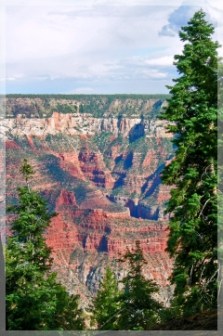 The Israelites had been away from Israel for less than two months when they arrived at Rephidim. With no water to drink, the people complained, questioned whether the Lord was with them, criticized Moses, and then threatened him. Fearing for his life, Moses asked God what to do. Instructing him to strike a rock with his staff, God promised that water would come gushing out and, as promised, it did. The miracle was memorialized by the name given to this location, Massah (meaning testing) and Meribah (meaning quarreling.) Unfortunately, that was not the last time the Israelites tested the Lord and quarreled with Moses.
While still at Rephidim, Israel was attacked by Amalekites. Joshua led the men against their foes and Moses, Aaron, and Hur watched from a hill while holding that same staff high for Israel to see. Israel was victorious that day. In acknowledgement that their victory actually belonged to God because He was the source of their strength and courage, Moses built an altar and named it Yahweh-Nissi, meaning the Lord is my banner.
Nearly forty years later, a new generation of Israelites arrived in the wilderness of Zin to camp at Kadesh. As happened at Rephidim, there was no water. Apparently forgetting that their 38 extra years of wandering were because of their and their parents’ testing and quarreling, the people rebelled against Moses and Aaron. The brothers wisely took the problem to God who again gave them specific instructions. This time, however, Moses was to take the staff, speak to the rock, and watch as the water poured out. Rather than follow God’s directions, however, Moses angrily spoke to the people, “Must we bring you water from this rock?” and then struck the rock twice with his staff. Despite his disobedience, God graciously provided water and the people drank their fill. But, because Israel quarreled again with the Lord, this place also became known as the waters of Meribah.
Because Moses and Aaron had defied a direct command from God, they were punished and neither man was allowed to enter the Promised Land. Granted, Moses was tired, frustrated, and annoyed. He’d spent a third of his life leading over two million of these “stiff-necked people” and now, with the end in sight, they again complained, protested his leadership, and doubted the Lord. Perhaps it was his frustration and anger that led him to disobey God.
On the other hand, perhaps it was his pride. Nearly forty years had passed since bringing forth water from the rock at Rephidim and Moses may have forgotten whose power brought about that miracle as well as their victory over the Amalekites. In those decades of leading the people through the wilderness, had Moses forgotten who actually provided forty years’ worth of guidance and miracles? Had he mistakenly come to think that he and his staff held the power? By saying that he and Aaron would bring the people water, Moses appears to have thought the miracle would come from him rather than God! Once in sight of the finish line, the men showed too much faith in themselves and too little faith in God.
God is quite direct when telling us what to do and how to do it. He expects us to do it His way and we break faith with Him whenever we disobey. We also break faith with Him when we fail to acknowledge His presence and power. “To God be the glory,” are not to be empty words. God told Isaiah, “I will not give my glory to anyone else, nor share my praise with carved idols.” [42:8] He’s certainly not about to share it with mere mortals either!
Although Moses saw Canaan from a distance, he and Aaron missed the blessing for which they had waited forty years. We don’t want just to view the Promised Land; like Moses, we want to enter it! Let’s never forget who actually provides us with the guidance, wisdom, strength, and ability to attain whatever success we have on our journey through life. Like Moses’ staff, we are merely God’s instruments; both the power and glory belong to Him.
 At first, it seems that the “Parable of the Unforgiving Servant” should be called the “Parable of the Forgiven Servant.” After all, the king forgave his servant’s debt of 10,000 talents—the equivalent of billions of dollars. While the first part of the parable illustrates the value and extravagance of God’s forgiveness, it takes a dark turn in the second part when illustrating the reciprocal nature of His forgiveness—something the servant learned the hard way!
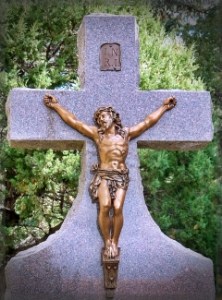 Jesus told several parables about the Kingdom of Heaven and, in Matthew 18, He compared it to a king who wanted to bring his accounts up to date with the servants who owed him money. The parable is pretty straight-forward; the king symbolizes God, the servant each one of us, and the debt our sins. One servant owed the king ten thousand talents but was unable to pay. There were serious consequences for not paying debts so the king ordered that the servant’s home and possessions be sold off and that the man and his family be sold into slavery until the debt was paid.
 I suspect we would prefer a eulogy that shines a light on our victories and accomplishments but the man known as “the father of modern missions” chose otherwise. When William Carey [1762-1834] was asked what text he wanted for his funeral sermon, he chose today’s verse. The humble man wanted to shine a light on God’s lovingkindness and great compassion rather than his personal accomplishments.
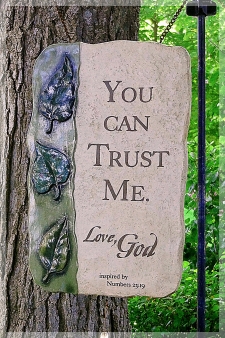 The Israelites were camped on the east side of the Jordan River, in view of Canaan, when Moses addressed them. After spending the last forty years as nomads in the wilderness of the Sinai Peninsula, can you imagine their excitement at the thought of finally having a place to call their own and their eagerness for a new beginning in a new land? There must have been some apprehension, as well. They weren’t naïve; they knew there would be conflict, battles, and even loss before Canaan was conquered.
 Along the road to the Serengeti, somewhere near the Olduvai Gorge in Tanzania, is a crescent-shaped sand dune. Measuring about 30-feet in height and 328-feet long along its curves, it is known as the Shifting Sands. Rich in iron and highly magnetized, the sand sticks to itself when tossed in the air. When the wind blows, its particles fall back on the dune rather than get carried away by the breeze. The dune, however, is constantly on the move as the prevailing winds slowly move the entire thing across the land. Moving about 50-feet a year, it’s believed that the Shifting Sands have been traveling the savannah for more than three thousand years, sometimes changing both shape and direction. Of course, the dune moves so gradually that you don’t see its motion. Nevertheless, stakes in the ground indicate its location in previous years.
 Devotions of the Heart