
 Even Satan disguises himself as an angel of light. So it is no wonder that his servants also disguise themselves as servants of righteousness. In the end they will get the punishment their wicked deeds deserve. [2 Corinthians11:14b-15 (NLT)]
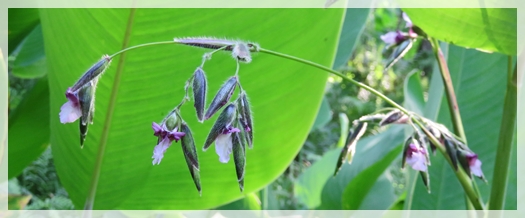
With its enormous leaves and delicate purple flowers, one of my favorite native Florida plants is the Thalia geniculata; its common name is Fireflag. The plant can be as tall as ten feet and its huge leaves are visible from a distance. Since it grows in standing water, the leaves can indicate or “flag” an area where one might find safety in case of fire. Fireflag has another name, as well: Alligator-Flag. Anyplace in Florida where there is enough standing water for Thalia geniculata to grow also has enough standing water for alligators! If one is ever caught in a fire in the Everglades, it would be wise to remember both names of this plant before seeking refuge amidst its leaves! We wouldn’t want to jump out of the frying pan into the fire or, in this case, out of the fire into a gator’s mouth!
This plant reminds us that we need to be cautious when a firestorm of trouble descends. In an effort to escape our problems, it’s easy to jump into even more difficulty. It’s not just alligators that lurk in what appears to be a safe refuge; Satan does too! He knows when we are most vulnerable and he’s right there to offer his version of safety and comfort. As we attempt to flee from our trouble, there will be temptations to seek solace in the wrong people, listen to poor advice, compromise our morals or abandon our faith. That “angel in disguise” offering comfort, assistance or easy answers may well be a fallen angel!
Rather than taking refuge in alligator infested waters or other treacherous places, we must turn first to God. With Him at our side, we are never alone nor is there a need to run away from our problems. He will comfort and guide us so we can face our troubles with confidence, hope, and even thanks.
Trust is not a passive state of mind. It is a vigorous act of the soul by which we choose to lay hold on the promises of God and cling to them despite the adversity that at times seeks to overwhelms us. [Jerry Bridges (Trusting God: Even When Life Hurts)]
 Yesterday, I wrote about finding the 1967 church program from the day my in-laws joined their church. The mimeographed bulletin insert for that day included a story about a little boy, barefoot and dressed in rags, who was walking home from church. A neighbor fellow asked where he’d been and, when the boy said he’d been at church, the man asked what he’d learned there. The boy joyfully replied, “Jesus loves me!” The fellow responded disdainfully, “If Jesus loves you so much, why didn’t he tell somebody to give you some decent clothes and a pair of shoes?” The boy confidently answered, “Jesus did tell someone, but I think they forgot!”
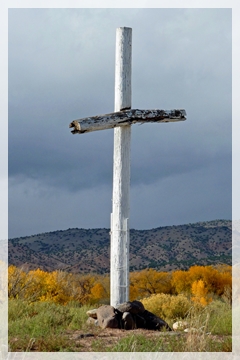 Once a pampered prince, forty years later, Moses was living as a Midianite shepherd. When speaking to him from the burning bush, God laid out His plan for freeing the Israelites from Egyptian slavery and the pivotal role Moses would play in it. Protesting, Moses made excuse after excuse but God countered every excuse with a solution. Provided with a shepherd’s staff and Aaron as his mouthpiece, Moses reluctantly accepted God’s charge. Before approaching Pharaoh, however, he first met with Israel’s elders to convince them that he was on a mission from God.
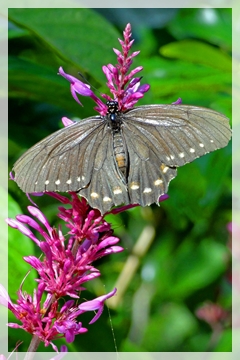 For the Israelites, 1526 B.C. was a terrible year to have a baby boy. Fearing the growing strength of the Jewish nation in Egypt, Thutmose I ordered that all Hebrew male babies be killed. Fifteen hundred years later, the Jewish historian Josephus would explain that Pharaoh’s counselors gave him this warning: “There would be a child born to the Israelites, who, if he were reared, would bring the Egyptian dominion low, and would raise the Israelites; that he would excel all men in virtue, and obtain a glory that would be remembered through all ages.”
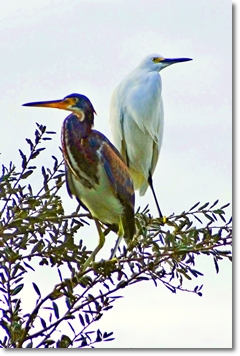 It’s easy to have misconceptions about Scripture. If you were to ask someone the identity of the forbidden fruit, chances are the answer would be an apple. Scripture, however, never names the fruit. The Hebrew word used was peri which is a generic term for “produce,” “results,” or “reward.” We probably got the idea that it was an apple from later translations of Scripture into Latin since the Latin word “evil” is mălum, a word quite similar to the Latin word for “apple,” which is mālum. Renaissance painters continued to perpetuate the myth with their depiction of an apple at the temptation. Scripture, however, never identifies the fruit because its identity is not important; the evil wasn’t in the fruit but rather in Adam and Eve’s disobedience.
 I prayed for Pearl for over a year. This beautiful toddler had Stage-4 cancer and her bones, brain, and internal organs were riddled with the disease’s treacherous cells. Her prognosis was bleak and there were times she nearly lost her life to the effects of the various remedies rather than the cancer. That Pearl is alive and cancer free today is nothing short of a miracle. Nevertheless, she and her family went through a very dark valley to get to this place of victory. I’m sure, if given a choice, they would have preferred God to have miraculously healed her prior to the long battle she fought for over a year.
 Devotions of the Heart