NO SCISSORS ALLOWED

And I solemnly declare to everyone who hears the words of prophecy written in this book: If anyone adds anything to what is written here, God will add to that person the plagues described in this book. And if anyone removes any of the words from this book of prophecy, God will remove that person’s share in the tree of life and in the holy city that are described in this book. [Revelation 22:18-19 (NLT)]

lilyThere is much in Scripture, such as the subjugation of women, that I find troubling and would just as soon skip reading . For example, there’s no mention of their handmaid slaves’ consent when Sarah, Rachel or Leah offer them as surrogates to their husbands! Scripture may call them righteous because of their faith but Lot readily offered up his virgin daughters to a crowd of lustful men and Abraham twice gave Sarah to another man to save his own skin and benefitted financially both times he did it! There’s a word for a man who does that and it isn’t usually righteous. Then there was the Levite who pushed his concubine out the door to be raped by a gang of men. Many would consider David’s tryst with Bathsheba to be rape and even he tolerated the rape of his own daughter!

The amount of blood shed throughout the Old Testament is disturbing as well; picture the Levites killing 3,000 of their fellow Israelites at God’s command or Simeon and Levi killing all the men in Shechem because of one man’s crime and then plundering the city and taking the women and children captives. It’s difficult to read about Israelites killing everyone in Jabesh-gilead (except for 400 virgins) just to provide wives for the tribe of Benjamin or of the wholesale slaughter of people in places like Jericho and Amalek. Nevertheless, as much as I’d like to skip over these and other troubling passages, they are part of Jewish history and our faith’s roots.

Apparently, one of our nation’s founding fathers, Thomas Jefferson, found parts of the New Testament equally disconcerting. Instead of struggling to understand and praying to believe, he simply eliminated anything he found “contrary to reason.” Believing the gospels’ authors to be untrustworthy reporters, Jefferson wrote his own gospel by taking a penknife to his Bible, cutting up passages, and then pasting them together with other ones on a blank piece of paper. Leaving behind the parts he didn’t believe or like in mutilated Bibles, Jefferson created his own version of Christ’s life and philosophy. By including Christ’s death and burial but omitting His resurrection, rather than the Son of God, Jesus became little more than an altruistic philosopher. Titling it The Life and Morals of Jesus of Nazareth, Jefferson believed his version of the New Testament collected “the most sublime and benevolent code of morals which has ever been offered to man.” Boston University professor Stephen Prothero has a more accurate description of Jefferson’s Bible: “scripture by subtraction.”

Unlike Jefferson, we must never make the mistake of subtracting those parts of Scripture we don’t like and yet nearly all of us do. We tend to read only those parts we find comforting, believable, or easy to understand. I certainly prefer reading Psalms or John to the carnage of Judges or deciphering the cryptic visions in books like Revelation, Ezekiel, and Daniel. While we don’t take a scissors and glue to our Bibles, we do read selectively which, in actuality, is not much different than what Thomas Jefferson did with his penknife and paste.

Echoing the warning found in Deuteronomy, the book of Revelation has some pretty stern words about adding to or subtracting from Scripture’s words. Every word in the Bible is there for a purpose: to explain, convict, correct, and train. Let’s treat them all with the respect they deserve and never use either literal or figurative scissors on God’s holy word.

We must not select a few favorite Bible passages to the exclusion of others. Nothing less than a whole Bible can make a whole Christian. [A. W. Tozer]
All Scripture is inspired by God and is useful to teach us what is true and to make us realize what is wrong in our lives. It corrects us when we are wrong and teaches us to do what is right. God uses it to prepare and equip his people to do every good work. [2 Timothy 3:16-17 (NLT)]

Copyright ©2019 jsjdevotions. All rights reserved.

HATTIE’S ADVICE

Instead, be kind to each other, tenderhearted, forgiving one another, just as God through Christ has forgiven you. [Ephesians 4:32 (NLT)]

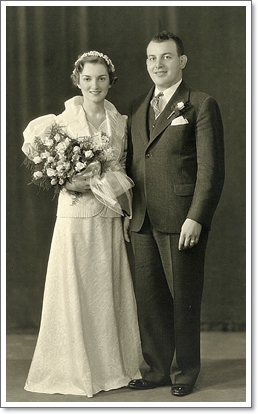
As I sorted through the papers that my mother-in-law had saved through the years, I came to a letter written to her in 1936 by her soon to be mother-in-law, Hattie. Hoping the young couple liked the mixer she’d given them, Hattie sent best wishes for a “long happy wedded life.” Wondering why such a mundane letter had been saved for 83 years, I read on. “May there be lots of love, joy and contentment in your home,” she continued, “forgiving each other as God forgives you.” Praying that my in-laws would have a long and “sweet contented life,” Hattie signed the letter “One who wishes you well in everything, Mother.”
Hattie’s prayers were answered; my in-laws were together for 68 years and, at least from my view-point, they did, indeed, live a “sweet contented” life. Could the secret to their marriage be hidden in Hattie’s advice to be forgiving? Is that why my mother-in-law had saved the letter?

I think of the story of a man who, when told by the doctor that he had an incurable case of rabies and but a few days to live, immediately got out paper and pen and started writing. When asked if he was composing his last will and testament, the man said he was making a list of everyone he wanted to bite! With an attitude like that, if the rabid man were married, I doubt that his was a happy marriage or that he lived a “sweet contented life.”

As I pondered my ability to forgive, I began to wonder how willing I was, not just to offer forgiveness, but also to ask for it. I’m not one to serve “cold shoulder and hot tongue” for dinner, give the “silent treatment,” or bring up past offenses but (and that’s a really big “but”), I also am not one who readily admits her failings. When I’ve committed the relationship sins of sharpness, impatience, pettiness, or indifference, I tend to assume forgiveness rather than apologize. Although my husband and I readily forgive one another, I think our relationship suffers if one or the other of us falls short and doesn’t admit it and apologize.

When we accept Jesus, all of our sins (past, present and future) are forgiven on a judicial or “positional” basis which means we will not suffer eternal damnation. Nevertheless, we should never take God’s forgiveness for granted or treat it as something we deserve. We must confess our sins for what could be called “relational” forgiveness in order to restore our relationship with Him.

Author and theologian Frederick Buechner calls unconfessed sins an abyss between us and God, adding that, once confessed, they become the bridge. I think Buechner’s abyss/bridge metaphor applies to our earthly relationships, as well. The prodigal’s father had already forgiven his son before the boy’s return but it was not until his son admitted the error of his ways that their relationship was restored. A certain amount of forgiveness is assumed in a family—husbands and wives forgive one another as do parents and children simply because love forgives. But, we must never take either the grace of God or the gift of forgiveness lightly.

Lord, give us forgiving and humble hearts. May we always be as willing to apologize and admit our errors as we are to accept both your forgiveness and that of others.

Few things accelerate the peace process as much as humbly admitting our own wrongdoing and asking forgiveness. [Lee Strobel]

If we claim we have no sin, we are only fooling ourselves and not living in the truth. But if we confess our sins to him, he is faithful and just to forgive us our sins and to cleanse us from all wickedness. If we claim we have not sinned, we are calling God a liar and showing that his word has no place in our hearts. [1 John 1:8-10 (NLT)]

Copyright ©2019 jsjdevotions. All rights reserved.

NO LOST CAUSES

And while he was still a long way off, his father saw him coming. Filled with love and compassion, he ran to his son, embraced him, and kissed him. [Luke 15:20 (NLT)]

lambI was re-writing and updating my prayer list when I came to the names of several prodigals. Some of their names have been on that list for nearly two decades; during that time, they’ve been in and out trouble, jail, and rehab. Having wasted most of their lives, each one of them one would qualify as the poster child for lost causes. I thought of not adding their names to my new list. “After all, what’s the point?” I wondered.

I then thought of the parable of the prodigal son—a young man with plenty of opportunities who squandered his money and broke his father’s heart. When life got really tough and the pigs were living better than he, the boy finally repented and returned home to the welcoming and forgiving arms of his father. Like the prodigal son, when they were in financial or legal difficulties, the prodigals on my prayer list often returned home for a warm bed, financial and legal assistance, and even another trip to rehab. Unlike the prodigal son, however, they never managed to truly repent and always returned to their old friends and way of life.

What if there was another chapter to Jesus’s story of the prodigal son? What if, after cleaning up, getting some good meals in his belly, and obtaining a few coins in his pocket, the boy had returned to his life as a wastrel? How would his father have reacted? What would his father have done if his son, after wasting everything again, had returned home a second time? Would his father have rejoiced and thrown his arms around the boy? What if it happened again and again? Would his father eventually have stopped looking for his lost son? In anger, would he eventually have barred the gates and turned his back on his child?

I think not. Jesus’s parable was about forgiveness and hope, God’s grace and mercy, and His lavish love for his children. I think the father would have continued to run to his child and welcome him back every time he returned. Although God won’t enable His prodigals in their sinful ways, I believe He will receive them every time they come home, forgive them when they repent, and shed tears if they relapse and return to their old ways.

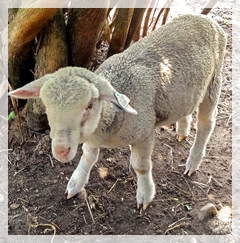
Our Heavenly Father will continue to forgive and welcome them (and us) back again and again until they (and we) finally get it right. With God there are no lost causes, only lost children. If God hasn’t given up hope, neither will I. For all of His lost sheep, I will continue to pray that they eventually find their way home and into the arms of their loving Father.

I’ve wandered far away from God, Now I’m coming home;
The paths of sin too long I’ve trod, Lord, I’m coming home.
I’ve wasted many precious years, Now I’m coming home;
I now repent with bitter tears, Lord, I’m coming home.
I’m tired of sin and straying, Lord, Now I’m coming home;
I’ll trust Thy love, believe Thy Word, Lord, I’m coming home.
Coming home, coming home, Nevermore to roam,
Open wide Thine arms of love, Lord, I’m coming home.
[“Lord, I’m Coming Home” by William J Kirkpatrick]

He does not punish us for all our sins; he does not deal harshly with us, as we deserve. For his unfailing love toward those who fear him is as great as the height of the heavens above the earth. He has removed our sins as far from us as the east is from the west. The Lord is like a father to his children,    tender and compassionate to those who fear him. For he knows how weak we are; he remembers we are only dust. [Psalm 103:10-14 (NLT)]

Copyright ©2019 jsjdevotions. All rights reserved.

GOD’S GOT IT!

Oh, God, my Lord, step in; work a miracle for me—you can do it! Get me out of here—your love is so great!—I’m at the end of my rope, my life in ruins. [Psalm 109:21-22 (MSG)]

Kandersteg - SwitzerlandIn her book Almost Everything, Anne Lamott describes a young mother who, after surviving a grueling battle with cancer, saw its return a few years later. As her friends tried to reassure her with cancer survival stories, the woman cheerfully announced, “Oh, God’s got it!” Whether figuratively or literally, Lamott says she now wears those words on a necklace. I know that if I ever got a tattoo, I might choose the same words: “God’s got it!”

A story is told of a mountain climber who decided to make a solo ascent of the Aconcagua in Argentina. As the day wore on, a storm threatened. Although the thunder rumbled and the sky grew dark, the man was determined to continue rather than seek shelter. Suddenly a dense fog rolled in and it began to hail. Losing all visibility, the climber slipped on a ridge and fell. As he dropped through the air, he was sure that he’d die until the rope he’d secured caught and stopped him with a jolt. As the frightened man swung in the darkness, suspended he knew not where, he called out, “God, help me!”

A booming voice answered: ”What do you want me to do?” Swaying in the frigid night air, the man said, “Save me, please.” When God asked if the climber really believed He could save him, the man said, “Of course, I do. You’re God!” The man, however, changed his mind about trusting God when the voice in the darkness said, “Then cut the rope that is holding you up!” Refusing to let go, he just clung to his rope and swung over what seemed to be a bottomless abyss. After the weather cleared the following day, a group of climbers found the frozen man hanging from a rope, suspended just a few feet from a ledge and a recess that would have offered him safe shelter during the storm. That climber didn’t believe that, “God’s got it.”

When we’re at the end of our rope, it’s not enough to believe there is a God. We must believe in Him—in His word, promises, love, faithfulness, goodness, and power. Trusting Him with our lives, we must be willing to step out in faith, even if it means cutting a rope. If we want peace, we must believe that God’s got it!

“Please, God!” I cried out. “Save my life!” God is gracious—it is he who makes things right, our most compassionate God. God takes the side of the helpless; when I was at the end of my rope, he saved me. [Psalm 116:4-6 (MSG)]

You’re blessed when you’re at the end of your rope. With less of you there is more of God and his rule. [Matthew 5:3 (MSG)]

Copyright ©2019 jsjdevotions. All rights reserved.

TRUSTING THE OUTCOME

This is what the Lord says: “Cursed are those who put their trust in mere humans, who rely on human strength and turn their hearts away from the Lord. They are like stunted shrubs in the desert, with no hope for the future. They will live in the barren wilderness, in an uninhabited salty land.” [Jeremiah 17:5-6 (NLT)]

Our pod is missing! Well, not exactly missing but no one can tell us where it is! We only know that the large box holding our precious possessions is no longer sitting in our driveway back in Illinois nor is it sitting in our driveway here in Florida. While the company promises us that it will arrive by September 29, their responses to our inquiries don’t inspire much confidence. How can they know when it will arrive if they don’t know where it is? Moreover, no one can tell us why it will take four weeks to travel 1,378 miles! Although I keep reminding myself that it’s just stuff, it is our stuff—the stuff we cared about enough to keep and move.

My impatience and frustration at not knowing where the pod is, what condition it is in, and how close it is to arriving make me think of my impatience in prayer, and I don’t think I’m alone in this. Not only do we want to dictate the manner, timing, and outcome of our prayers but also we’d like God to provide us with regular updates as to His progress on our requests. While God is far more trustworthy than any moving company, He usually is as silent about the particulars of our prayers’ outcomes.

It really comes down to trust. Do I trust the movers? Well, I trusted them enough to fill their box with things that were important to me and have them haul it away. At this point, I can trust them to keep their delivery promise or worry about it. Since worry isn’t going to get it here any faster (if at all), I have no choice but to surrender the outcome to them (while praying for its safe and speedy arrival).

It comes down to trust in our prayers, as well—trust in God (and He has a far better track record than any moving company!) Trust has to fill the gap between our heartfelt request and His response. It’s found in that space between our telling God the what, how, where and when of what we want and our ceding the outcome and all of its details to Him. Not everything we ask for will be received; we’re not the customer and God isn’t our celestial vending machine. We don’t get to dictate the terms of our agreement or the end result. We can’t threaten to take our business elsewhere and, unlike the proverbial customer, we are not the ones who are always right. There is only one God and, as the One in charge, He is not at our mercy; we are at His!

When Jeremiah spoke his words of condemnation to the people of Judah, the people had trusted in false gods and military alliances instead of God. In effect, they’d trusted in their own wisdom rather than God’s promises. We may not be erecting Asherah poles, sacrificing to Baal, or making alliances with pagan nations but, when we dictate the outcome of our prayers, we’re little different; we’re trusting in our wisdom and strength rather than God’s.

“The great act of faith is when man decides that he is not God,” said Oliver Wendell Holmes. Indeed, it is. When we turn our concerns Godward, we must trust that our Heavenly Father, the omnipotent creator of the universe, actually knows what He’s doing. Recognizing that God is God (and we are not), we must surrender the outcome and all of the particulars (including the timing) to Him. He is our hope and confidence, our strength and our shield!

“But blessed are those who trust in the Lord and have made the Lord their hope and confidence. They are like trees planted along a riverbank, with roots that reach deep into the water. Such trees are not bothered by the heat or worried by long months of drought. Their leaves stay green, and they never stop producing fruit.” [Jeremiah 17:7-8 (NLT)]

The Lord is my strength and shield. I trust him with all my heart. He helps me, and my heart is filled with joy. I burst out in songs of thanksgiving. [Psalm 28:7 (NLT)]

Copyright ©2019 jsjdevotions. All rights reserved.

OUR CALL IS IMPORTANT TO HIM

When they call on me, I will answer; I will be with them in trouble. I will rescue and honor them. [Psalm 91:15 (NLT)]

mockingbirdWhen we moved to our small Midwestern town over fifty years ago, we paid our utility bills at the local drugstore and I longed for the “good old days” when we sold our northern home recently. Trying to update our information and go completely paperless, I attempted to access our various accounts on line, meaning I had to remember (or create) a wide variety of user names and passwords. If I managed to sign in, I’d get to the security questions and discover that my favorite color or dessert is not what I thought it was! Once past that hurdle, I had to prove I wasn’t a robot by deciphering those squiggly letters and numbers (a near impossibility)!

When I couldn’t accomplish my task on line, I’d resort to a phone call. It would be answered with a computerized voice offering a list of options, none of which ever seemed quite right. Another robotic voice would then ask a series of questions (“to better serve your need.”) Eventually, after being put through several programmed interrogations, I’d be put on hold. When I wasn’t being told how important my call was, I was subjected to a loop of horrible music and advertisements for additional services (along with the helpful suggestion that I go to the company’s website which, of course, I had already tried.) Occasionally, a voice would tell me how much longer I would be in the queue before an operator would be available. When I took the option of having them call me back, the call never came! Once, after holding for what seemed an eternity, I got disconnected! When I finally spoke with a real person, it was often someone in a distant land whose accent baffled me as much as mine baffled his.  We’ve all been in similar situations. We cry out, “Is there no one there who can hear me, who understands my problem, who cares, or who can help?”

Thank you, God, for never requiring me to log on to your heavenly site. Thank you for not requiring an account number, a user ID, a password, or a security question. You always know who I am, where I am and what it is that I need. Thank you for being available 24/7, never putting me on hold, and always returning my call. Thank you for understanding me, even better than I do myself. Thank you for speaking softly yet clearly to me. Thank you for never passing me off to someone else and, most especially, thank you, God, for never dropping my call!

And He knows my name. Every step that I take,
Every move that I make, Every tear that I cry,
He knows my name. When I’m overwhelmed by the pain
And can’t see the light of day, I know I’ll be just fine
‘Cause He knows my name – He Knows my Name! [The McRaes]

I will answer them before they even call to me. While they are still talking about their needs, I will go ahead and answer their prayers! [Isaiah 65:24 (NLT)]

Copyright ©2019 jsjdevotions. All rights reserved.