
Live like free people, but don’t use your freedom as an excuse to do evil. Live as those who are serving God. [1 Peter 2:16 (ERV)]
 “Get Fuzzy,” a comic strip drawn by Darby Conley, chronicles the life of Rob and his somewhat eccentric pets: Bucky Katt, a temperamental feline with “cat-attitude,” and the gentle Satchel Pooch who frequently is the butt of Bucky’s jokes and the target of his bullying. In one comic, Satchel pondered the concept of free will. “Having free will means you also have the freedom to not,” says the dog, who then resolves, “I choose to exercise free won’t and not get mad.”
In studying the human brain, neuroscientists have discovered that there is a brief instant between when the brain tells the body to get ready to act and the action itself. That nanosecond is when our mind can implement its veto power—when it truly can exercise “free won‘t”!
We are usually so busy touting all of the things we’re free to do, that it is refreshing to consider the things we’re free not to do. Unfortunately, we don’t exercise that freedom nearly enough. Eve and Adam tasted the forbidden fruit, the Israelites worshipped a golden calf, David pursued Bathsheba, Jacob stole his inheritance, Judas betrayed Jesus, and Lot’s wife took a last look. Sadly, they didn’t exercise their freedom to say “No!” Admittedly, I frequently fail at implementing my “free won’t.”
The ability to not choose a thought or action is as important as the ability to choose them. We don’t have to indulge our every notion or whim. Remembering that we can veto as easily as we can approve, all of our choices should be conscious ones—ones where we deliberately choose between will or won’t.
Unfortunately, by the end of the comic strip, Satchel, who had been sorely vexed by Bucky, exclaims that, “I’m starting to get a little free maybe-the-*@#!-I-will after all!” His frustration sounds a bit like us when we try to exercise self-control solely on our own. Fortunately, unlike Satchel, we have a secret weapon: the Holy Spirit. Through God’s power, when tempted, we can exercise the freedom to not respond and make our free will become free won’t!
 When I sit in front of my computer to start writing, I often wonder what makes me think I am qualified to spread the good news of the Gospel. I take comfort in the Apostle Paul’s similar feelings of inadequacy. Of all the people we meet in Scripture, Paul’s credentials (other than those of Jesus) seem to be the most impressive. Fluent in Hebrew, Aramaic, and Greek, from the tribe of Benjamin, and a second-generation Pharisee who had studied and trained under the respected Gamaliel, Paul was well-versed in the Hebrew Bible and passionate for Jesus. Yet, we know that even he sometimes felt inadequate to the task. Although extremely knowledgeable, by his own admission, his preaching ability left much to be desired.
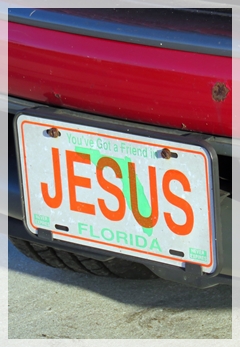 Dorian has departed and we Floridians are taking down hurricane shutters and removing plywood from our windows. Some people avoided that task by having high-impact windows and doors that combine specially glazed impact-resistant glass with heavy duty frames that keep the glass from breaking away from its frame; while the glass may crack from a direct hit, it will not break. In theory, when a home or business has such glass installed, no additional shutters, screens, or plywood are necessary to protect it from the ravages of a hurricane.
 Look, I am sending you out as sheep among wolves. So be as shrewd as snakes and harmless as doves. [Matthew 10:16 (NLT)]
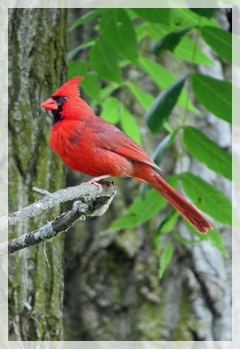 The story is told of a circuit-riding preacher who never failed to thank God for the day’s weather. One Sunday, after battling through wind and sleet to his preaching appointment in a distant town, the congregation wondered how he could be thankful in such dreadful weather. When it came time for prayer, however, he said, “This is a wretched day, dear Lord, no doubt about it. But, we thank Thee, Lord, that every day isn’t as bad as this one!”
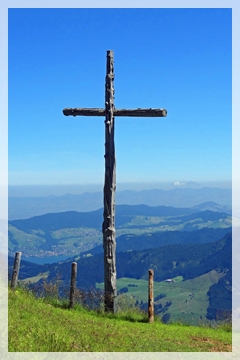 Yesterday’s devotion about Indiana Jones and the Ark of the Covenant raises the questions of what was in it and what became of it. Constructed by the Israelites during the exodus, the Ark held the unbroken tablets of the Ten Commandments (representing God’s law), a golden pot of manna (representing God’s love and provision), and Aaron’s rod that miraculously budded (representing God’s power and leadership). Built in Mt. Sinai and carried all the way to Canaan, nearly 500 years passed before it finally found its home in Solomon’s temple. By the time the temple was built and Solomon brought it into the innermost chamber, only the stone tablets remained.
 Devotions of the Heart