
Those who are righteous will be long remembered. … They share freely and give generously to those in need. Their good deeds will be remembered forever. [Psalm 112: 6,9 (NLT)]
Live so that when the final summons comes you will leave something more behind you than an epitaph on a tombstone or an obituary in a newspaper. [Billy Sunday]
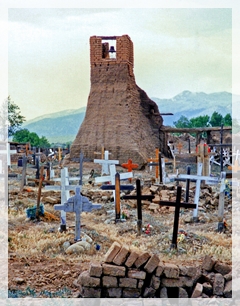
 More than thirty years ago, a friend confided that she wanted her obituary to be a good one. A few years ago, explaining that she wanted an updated photo in case it was needed for her obituary, she asked me to take her picture. Although she was in excellent health at the time, this woman clearly understood the fragility of life. Sadly, she died unexpectedly just a few days ago.
When considering a “legacy,” we usually think in monetary terms, but a legacy can be anything given by or received from an ancestor, predecessor, or the past. It’s the body of work we leave behind when we’re gone and, in actuality, my friend was far more concerned with leaving a legacy of service and love than with the words of her obituary! She wasn’t trying to impress others, pad her resume with good works, or serve her way into heaven. A woman of deep faith, she knew she was saved by grace not works. Nevertheless, she served the Lord she loved by loving and serving His people. Although she’d expressed concern about some of her denomination’s doctrine, she had no doubts about Jesus. The Holy Spirit was present in her life and she never missed an opportunity to be a blessing to others.
My friend was no saint—she was just another imperfect Christ follower struggling to make it through each day the best she could. Her life wasn’t easy and she had more than her share of heartbreak and disappointment. Nevertheless, as her obituary read, “She began and ended each day with the intent of making people smile and laugh. She accomplished that every day of her life. … In her wake, she left a trail of smiles, heartfelt laughter and love.” Indeed, the world was a better place because of her and, as she had hoped, her obituary was filled with glowing words and the picture was a recent one. Her obituary’s words, however, will soon be forgotten. It is the humble way she served her neighbor and the seeds of faith, love, and joy she scattered wherever she went that will live on in the many lives she touched.
Our true legacy has nothing to do with wills, trusts, bank accounts or property titles; it begins with our relationship with God and ends with our relationship to His children. What we leave behind when we’re gone is determined by how we choose to live today! Do you want to be remembered with a long obituary or a legacy of love?
What does love look like? It has the hands to help others. It has the feet to hasten to the poor and needy. It has eyes to see misery and want. It has the ears to hear the sighs and sorrows of men. That is what love looks like. [Augustine]
 In a letter to his brother, C.S. Lewis said that ”thanking the Giver” was the “completion of a pleasure” and expressed his sorrow that unbelievers had no place for the “steam” or “spirit…given off by experiences to go.” As I walked early this morning and watched the sun come up over the pond, it looked like steam was rising off the water. It’s not really steam; called steam fog or evaporation fog, it has something to do with the warm moist layer of air over the water mixing with the cooler air from the land. Nevertheless, it made me think of Lewis’ words as I pictured our prayers of thanksgiving rising up like steam to God.
 We know little about Jesus’ childhood and young adulthood. Born in Bethlehem, He was circumcised and given His name eight days later. Forty days after His birth, Mary and Joseph took Him to the Temple in Jerusalem in accordance with the command to consecrate every firstborn male to God. Sometime after that, He received gifts from the Magi, His family fled to Egypt, and they returned to Nazareth after Herod died. That’s all we know of His childhood until He was twelve and the precocious youngster stayed behind in Jerusalem to discuss spiritual matters with the teachers there. After Mary and Joseph found Him in the Temple courts, He dutifully returned home to Nazareth with them. Although we know that Jesus learned Joseph’s construction trade and that he started his ministry around thirty, we know nothing of the years between twelve and thirty except that He was obedient to His parents and “grew in wisdom and stature and in favor with God and all the people.” [Luke 2:52]
 Every Tuesday, we begin our afternoon Bible study with prayer and by saying the Pledge of Allegiance to the Bible. The words we use are attributed to Homer Grice, a Southern Baptist minister, who wrote them for Baptist Vacation Bible Schools in 1925. He combined two verses from Psalm 119 into this simple vow and versions of it continue to be used by Vacation Bible and Sunday Schools, Christian homeschoolers, and even adult Bible studies. Because it reminded me of elementary school and standing by my desk with my hand across my heart, starting class with this pledge seemed rather childish at first. Once I carefully considered the words, however, I realized that saying this pledge always reminds me that the Bible is at the center of a Christian’s devotion to Jesus Christ. It was in Him that the Word became flesh and, through Scripture, God continues to speak to us today.
 As I offered prayers for a good biopsy report, it occurred to me that my prayer was too late. Already excised, the tissue had been sent to a pathologist; for all I knew, the report was written and waiting to be read by my physician. Was God going to rewrite the report? Any troublesome cells in my body had been there awhile. Most likely, the biopsy result was decided months ago so I probably should have been praying about it long before anyone knew a biopsy was needed. Since the pathologist’s report was determined long before my prayers, “Why bother to pray at all?” was the whisper of doubt in my mind.
 In an attempt to avoid the day’s heat, I went walking immediately after breakfast, leaving the bed unmade and the dishes on the counter. Thinking I would tend to the bedroom and kitchen later in the day, I cleaned the lanai when I returned home. Just as I was finishing up, the gate house called: I had unexpected guests! One of my visitors is a “neatnik” and nothing about me or the house (except for the lanai) was neat or clean. In the few minutes between the gate’s call and their arrival, I managed to pull up the bedspread, throw the dishes in the sink, wipe the counter, slip on a fresh t-shirt, put on lipstick and don a baseball cap. I was thankful for the advance call that gave me just enough time to make things semi-presentable.
 Devotions of the Heart