THE ARTIST

And yet, O LORD, you are our Father. We are the clay, and you are the potter. We all are formed by your hand. [Isaiah 64:8 (NLT)]

What sorrow awaits those who argue with their Creator. Does a clay pot argue with its maker? Does the clay dispute with the one who shapes it, saying, “Stop, you’re doing it wrong!” Does the pot exclaim, “How clumsy can you be?” [Isaiah 45:9 (NLT)]
horseSeveral years ago, while spending the winter in the mountains, our morning walk took us by an art gallery. We frequently stopped to chat with the owner, look at the latest acquisitions and watch the progress of a local sculptor who had set up shop in the gallery. Working in clay, he was crafting the model for what would eventually be a cast bronze sculpture. As the final shape began to emerge, the artist continued to tweak it with small changes, a little pinch here or a small adjustment there, each time making it a better representation of a cowboy and his string of horses. Envisioning the final product and assured that it was nearly ready for casting, my husband and I made a pre-cast purchase of the piece.

We returned to our Midwest home and waited for the bronze to be completed. Nearly a year later, the gallery informed us that the piece remained a work in progress. They offered us a refund and, impatient and unsure of ever seeing the completed work, we accepted. Two years later, we walked into another mountain gallery and saw the finished piece. While the original concept was still recognizable, the beautiful final product was different (and better) than what we’d expected (and we regretted our impatience).

Works of art rarely are created overnight; they require time and fine-tuning. God, like the unhurried sculptor, doesn’t rush as He works on us. Wanting a masterpiece, He isn’t going to complete us in a few months and the process of sanctification goes on for a lifetime. There is always something in us that needs some modification, even if it means a little squeezing, twisting or pulling one way or another. Just as my husband and I couldn’t visualize exactly how the completed sculpture would look, we’re never quite sure what it is God has in plan for us or how He is going to accomplish it.

Although we didn’t trust the sculptor’s skill, we must trust in God’s heavenly artistry as His expert hands do their holy work on us. While the artist eventually was satisfied enough to cast his work in bronze, God is never quite finished with us; we remain a work in progress until our very last day.

Let us be clay in His hands!
And I am certain that God, who began the good work within you, will continue his work until it is finally finished on the day when Christ Jesus returns. [Philippians 1:6 (NLT)]

For we are God’s masterpiece. He has created us anew in Christ Jesus, so we can do the good things he planned for us long ago. [Ephesians 2:10 (NLT)]

Copyright ©2020 jsjdevotions. All rights reserved.

WOULD ANYONE NOTICE?

But you are not controlled by your sinful nature. You are controlled by the Spirit if you have the Spirit of God living in you. (And remember that those who do not have the Spirit of Christ living in them do not belong to him at all.)… For his Spirit joins with our spirit to affirm that we are God’s children. [Romans 8:9,16 (NLT)]

canna - bandanna of the evergladesIt was obvious we had ceiling fans in all three bathrooms but, because all their bulbs were burned out when we moved here, we didn’t know they also had lights. Never having seen how bright the bathrooms could be with working fan lights, we didn’t notice their absence. It was only when we had some electrical work done that we discovered the dead bulbs. Now that we’ve put in new LEDs, we’ll be sure to notice if any stop working in the future!
I bring up the fan lights because this question was asked: “If the Holy Spirit withdrew from your church, would anybody be able to tell?” That question forces us to ask whether our church is more of a social club than a spirit-powered community. Is it centered on Sunday’s service or serving others? Is it about entertainment or enlightenment, conversation or conviction? Does it believe more in the power of networking than the power of prayer? Is it about growing bigger or becoming better, pleasing people or glorifying God, filling pews or fulfilling God’s purpose?

As thought provoking as that first question is for pastors and church councils, it raises another and far more personal question. If the Holy Spirit were to withdraw from you, would anybody notice?

When we accept Jesus, we’re not given a membership card, pin, or secret handshake. Underwriters Laboratories doesn’t certify us and there’s no symbol like the OU from the Orthodox Union to indicate we’re kosher. The only thing attesting to our salvation is the presence of the Holy Spirit in our lives. He regenerates and guides us, convicts us of our sins, teaches us to live in Christ’s righteousness, equips and empowers us to do all that God asks us to do, and helps us discern between truth and falsehood, right and wrong. It is the power of the Holy Spirit that changes us so that we can grow and more and more like Christ and the only evidence of His presence is found in our changed lives.

We didn’t notice the missing lights in the bathroom because we’d never seen them on. In the same way, no one would notice that we’re no longer connected to the light of the Holy Spirit if we’ve never previously reflected “the glory of the Lord” in our lives. Life with the Spirit should look vastly different than life without!

While the Holy Spirit guides us, He doesn’t control us; we can ignore Him. Sin, like a burned out light bulb, can cause us to be unresponsive to the power of His presence. Although the Spirit will never abandon a true believer, the hypothetical question is one worth asking. Would anyone notice if the Spirit took a sudden leave of absence from our lives?  The answer to that will be found in another question: When we look into our hearts, do we see ourselves or the Holy Spirit?

O Holy Spirit, descend plentifully into my heart. Enlighten the dark corners of this neglected dwelling and scatter there Thy cheerful beams. [Augustine]

Trying to do the Lord’s work in your own strength is the most confusing, exhausting, and tedious of all work. But when you are filled with the Holy Spirit, then the ministry of Jesus just flows out of you. [Corrie Ten Boom]

So all of us who have had that veil removed can see and reflect the glory of the Lord. And the Lord—who is the Spirit—makes us more and more like him as we are changed into his glorious image. [[2 Corinthians 3:18 (NLT)]

Copyright ©2020 jsjdevotions. All rights reserved.

CARKING CARE

Give your burdens to the Lord, and he will take care of you. He will not permit the godly to slip and fall. [Psalm 55:22 (NLT)]

The Valley of Vision is a collection of Puritan prayers spanning from the sixteenth through the late nineteenth centuries. Having grown up with the King James Bible, its antiquated thees and thous along with verbs forms like wilt, didst, and makest don’t bother me. Their formality actually adds to the beauty and charm of the prayers. Although context usually explained outdated words like nethermost, subserve, and extenuations, I had to look up a few new words like peradventure.
Although I’d never seen the word carking, I immediately knew what the author meant when writing, “Deliver me from carking care…” Sounding like a crow’s unpleasant cry, the phrase “carking care” sounds as disagreeable as what it describes: oppressive worry!

The word cark comes from the Old North French carkier (to load, burden) from the Late Latin carcare (to load a wagon or cart). Carcare is also the source of the word cargo. In English, carking literally means putting on a load or burden and carking cares are concerns that have become burdensome. It’s as if we’ve loaded all of our worries into a wagon and are carting around that troubling cargo. Although we grow weary of the heavy burden, we continue carrying it in our hearts and souls.

Right now, I imagine we all have some major concerns. We fret about children who have missed out on school and family members who must fly, care for the sick, or meet the public in their jobs. We’re in another unpleasant season of politics and the media is filled with incidents of mask rage, protests, civil unrest, and financial woes. If we’re not out of work, we have friends or family who are. Loved ones remain isolated in retirement and nursing homes, bills are piling up, supply chains are broken, businesses are closing, and some people still haven’t gotten their unemployment checks. Vacations, weddings, reunions and even memorial services have been put on indefinite hold, no one knows how schools will function safely, and the COVID dashboards seem to have nothing but bad news. Here in Florida, with hurricane season upon us, we also have the dubious honor of being called the “epicenter” of the latest coronavirus surge. We find ourselves weighing the risks before having a repair man in the house, getting carry-out, or venturing out to the beach or grocery. We’re moving into our fifth month of this pandemic and, with no end in sight, people everywhere are feeling assaulted on all sides. Regardless of their faith, I doubt that anyone feels completely free of cares.

Living in a fallen world, we always will have troubles and concerns. The good news is that they don’t have to be carking ones—we don’t have to carry that cart of cares because God will carry them for us. For that to happen, however, we have to unload our wagon of cares and give them to God through prayer. John Calvin wrote of believers relieving “themselves of their anxieties by pouring them into his bosom…that they may declare that from him alone they hope and expect, both for themselves and for others, all good things.” As we pour our concerns into God’s bosom, let us join with the anonymous writer in his prayer: “Deliver me from carking care, and make me a happy holy person….Teach me to laud, adore, and magnify thee, with the music of heaven, And make me a perfume of praiseful gratitude to thee.”

Perhaps what our Father would have us learn is that worry is not for Him to take away, but for us to give up. [Kathy Herman]

Give all your worries and cares to God, for he cares about you. [1 Peter 5:7 (NLT)]

And I am convinced that nothing can ever separate us from God’s love. Neither death nor life, neither angels nor demons, neither our fears for today nor our worries about tomorrow—not even the powers of hell can separate us from God’s love. [Romans 8:38 (NLT)]

Copyright ©2020 jsjdevotions. All rights reserved.

RATS

Search me, O God, and know my heart; test me and know my anxious thoughts. Point out anything in me that offends you, and lead me along the path of everlasting life. [Psalm 139:23-24 (NLT)]
The human heart is the most deceitful of all things, and desperately wicked. Who really knows how bad it is? [Jeremiah 17:9 (NLT)]

Last week, my foot accidentally made unfortunate contact with an unmovable and incredibly hard piece of furniture. The intense jolt of pain that radiated from my toes through my foot caused words to come spewing out of this church lady’s mouth that had no business being there. While icing my bruised and swollen foot that evening, I recalled C.S. Lewis’ observation that provocation isn’t really what makes us “ill-tempered;” it simply shows us how ill-tempered we really are.

When our immediate response to something or someone is positive—the sort of thing Jesus would do—we’re more than willing to acknowledge our bravery, patience, compassion, or generosity. But, when our instant response to something (or someone) is less than stellar, rather than owning up to our sinfulness, we tend to blame the situation or other person. Justifying ourselves, it was the extenuating circumstance, problematic person, excessive demands (or table leg) that provoked, taxed, perturbed or goaded us into behavior unbecoming of a Christ follower. We, however, can’t have it both ways! Our emotions—our gut reactions, knee jerk responses, and unthinking words—reveal who and what we truly are deep inside.

In Mere Christianity, Lewis likens the sins that are usually revealed only when we’re taken by surprise to “rats in the cellar.” Not seeing the rats when we turn on the light and noisily stomp down the stairs doesn’t mean they’re not there. Most likely, those rats (like our hidden sins), will be seen only when they’re taken by surprise.

It isn’t life’s ambushes—the grueling day, a salesclerk’s rudeness, impossible deadlines, unreturned phone calls, a co-worker’s spitefulness, the vicious tweet, or even broken toes—that cause us to sin; those ambushes just reveal how sinful we actually are. When James and Peter wrote about considering our trials a reason for joy because they help us mature, I thought they were referring only to the significant and often long-lasting challenges of life. Lewis’s words made me consider that those trials include the small, often inconsequential, aggravations and vexations of life that come without warning. They are God’s way of shining a light on the rats in our cellars!

What a man does when he is taken off guard is the best evidence for what sort of man he is. [C.S. Lewis]

Dear brothers and sisters, when troubles of any kind come your way, consider it an opportunity for great joy. For you know that when your faith is tested, your endurance has a chance to grow. So let it grow, for when your endurance is fully developed, you will be perfect and complete, needing nothing. [James 1:2-4 (NLT)]

So be truly glad. There is wonderful joy ahead, even though you must endure many trials for a little while. These trials will show that your faith is genuine. It is being tested as fire tests and purifies gold—though your faith is far more precious than mere gold. [1 Peter 1:6-7a (NLT)]

Copyright ©2020 jsjdevotions. All rights reserved.

BAKING A PRAYER

Once Jesus was praying in a particular place. When he had finished, one of his disciples approached. “Teach us to pray, Master,” he said, “just like John taught his disciples.” [Luke 11:1 (NTE)]

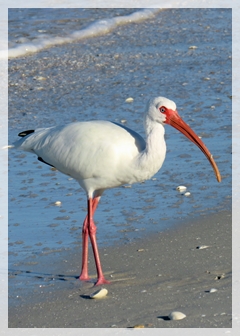
ibisI used to look forward to our occasional stops in the bank where a tray of homemade cookies always was laid out for their customers. I admit to having no will-power when it came to their white chocolate chip/macadamia nut cookies. With a hint of lemon, they were so delicious that I searched the internet to find the recipe so I could skip the bank visit. Several recipes came close but none were quite right so, using those as a guide, I developed a recipe that met the taste test!
When the disciples asked Jesus to teach them how to pray, He recited what we call “The Lord’s Prayer.” It’s important to remember that the disciples asked how to pray but not what exact words to use. Being a good teacher, instead of a lecture on praying, Jesus gave them a model prayer, but certainly not the only prayer to be said.

My recipe search told me the basic ingredients I needed for the cookies: flour, baking powder, brown and granulated sugars, butter, eggs, and lemon extract. Jesus’ model prayer included basics like praise, an acknowledgement of God’s holiness, acceptance of His will, confession, forgiveness, and petitions for daily provision and protection from evil. I found other recipes that included ingredients like cornstarch, lemon zest, nuts, and vanilla extract. If we look at other prayers said by Jesus, we find things like thanksgiving, a desire to bring God glory, and pleas for others and for the church.

When Jesus showed the disciples how to pray, He gave them an outline (or a basic recipe) rather than a comprehensive list of components. Like a recipe, it’s up to us to put them all together. Some days, I give God an extra cupful of thanks and praise because, unlike salt, we can never overdo those ingredients. It’s often easy to skip the confession and forgiving but, like forgetting the baking powder in cookies, prayers don’t seem to come out right without them. While it’s possible to add too much flour to a cookie recipe, our prayers seem to improve the more we pray for the needs of others. God, however, probably won’t find our prayers very appetizing if we spend more time mixing in petitions for ourselves than for others! Unlike a cookie recipe, there is no set amount of time for baking the perfect prayer; that’s a judgment call. As for me, I often find it necessary to bake my prayers a long time before acceptance of God’s plan forms in my heart.

When we grow bored with the food we’ve been preparing, we create new recipes or tweak the old ones by adding something extra like dried cherries or cinnamon chips to oatmeal cookies. The same goes for our prayers. If prayer seems boring, we need to change it up by gathering the ingredients and presenting them to God in a different way. Just as there are countless ingredients with which to bake delicious cookies, there are countless components that can go into our prayers. Regardless of the recipe, my grands are pleased whenever I bake; I think God feels the same way about our prayers!

Believers do not pray, with the view of informing God about things unknown to him, or of exciting him to do his duty, or of urging him as though he were reluctant. On the contrary, they pray, in order that they may arouse themselves to seek him, that they may exercise their faith in meditating on his promises, that they may relieve themselves from their anxieties by pouring them into his bosom; in a word, that they may declare that from him alone they hope and expect, both for themselves and for others, all good things. [John Calvin]

“So this is how you should pray: Our father in heaven, may your name be honoured may your kingdom come may your will be done as in heaven, so on earth. Give us today the bread we need now; and forgive us the things we owe, as we too have forgiven what was owed to us. Don’t bring us into the great trial, but rescue us from evil.” [Matthew 6:9-13 (NTE)]

Copyright ©2020 jsjdevotions. All rights reserved.

THE HALLEL

Praise the Lord! Yes, give praise, O servants of the Lord. Praise the name of the Lord! Blessed be the name of the Lord now and forever. Everywhere—from east to west—praise the name of the Lord. [Psalm 113:1-3 (NLT)

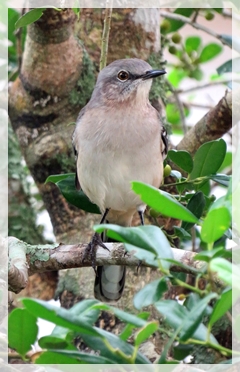
Southern MockingbirdSeveral years ago, our mountain church hosted a concert sponsored by the small Jewish congregation in town. I vividly remember the end of the program as Jews and Gentiles sang Hava Nagila, joined hands, and danced the hora around our large sanctuary. Impressed by the performer’s energy, passion, and love of God, I purchased one of his recordings. Yesterday, after sorting through some old books and CDs, I listened to it for the first time in over 10 years. The music was composed and performed by a man who still performs today but the Hebrew words he sang were those of the Hallel and over 2,000 years old.

Hallel means “praise” and the Hallel is a liturgical prayer found in Jewish prayer books today that consists of all or parts of Psalms 113 through 118. Considered the cornerstone of Jewish liturgy, it testifies to the glorious miracles performed by God. Except for the solemn days of Rosh Hashanah and Yom Kippur, the jubilant Hallel is said or sung on all major Jewish holidays.

The author or authors of the six psalms of the Hallel are unknown but the psalms share a common theme: the events surrounding the exodus, God’s covenant with Israel, and the people’s obligation of praise and thanksgiving for God’s loving-kindness and sovereignty over Israel and all nations.

It opens with the simple song of praise found in Psalm 113 which begins and ends with “Hallelu yah” meaning “Praise the Lord.” Psalm 114 follows with a poetic description of the exodus and all of nature reacting in dance to God’s great work. Psalm 115 is an appeal for God’s assistance, not for Israel’s sake, but to bring honor and glory to God’s name among the pagan nations. The next psalm is one of gratitude by someone who, in a time of trouble, called upon God and was saved. Ending with a commitment to serve the Lord, it is followed by the shortest of all the psalms with a call for all nations to praise the Lord. The final psalm, 118, begins with thanksgiving followed by recounting God’s salvation in troubled times. It echoes the words Moses and the people sang after crossing the Red Sea: “The Lord is my strength and my song; he has given me victory.” [Exodus 15:2] This last psalm ends as it began—with thanksgiving.

Until now, I don’t think I appreciated the psalms as what they are: an ancient hymnbook. Reciting or singing the Hallel was a well-established part of the Jewish Passover, Pentecost, and Sukkoth celebrations by the first century. When I’ve sung or spoken the psalms in unison at church, I didn’t think about Jesus singing or saying those very same words (in Hebrew, of course). That Jews continue to sing the same hymns of praise sung by Jesus and the disciples when they worshiped—the same songs they sang together during the seder on the night He was betrayed—is mind boggling. That we still have those beautiful words of praise and thanksgiving, words we can say or sing any time, is a blessing. Praise the Lord!

Praise the Lord, all you nations. Praise him, all you people of the earth. For his unfailing love for us is powerful; the Lord’s faithfulness endures forever. Praise the Lord! [Psalm 117]

Copyright ©2020 jsjdevotions. All rights reserved.