
Lift up your hands in the sanctuary and praise the Lord. [Psalm 134:2 (NIV)]
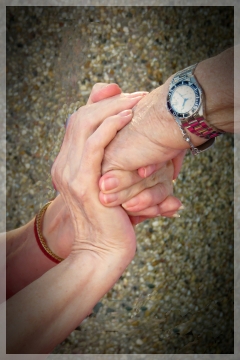 While social distancing has put an end to breaking bread with friends and holding hands while sharing a table blessing, I recall a dinner several years ago when I held the hand of our pastor’s wife during grace. For a small woman, her hands were larger and stronger than I expected. After grace, I looked at them and, comparing her youthful hands with mine, admit to feeling a twinge of envy. Like her, I played the piano but, unlike her, I could barely span an octave. Her sturdy hands had incredible reach and, unhampered by arthritis, there was power in her touch on the keyboard. I was overwhelmed by the strength of her hands and the beautiful way she uses them to praise the Lord as the worship leader at our mountain church.
As I pondered hands, I thought of a friend who used her hands to sign for the hearing impaired, the men whose hands set up chairs for Bible study, people who use their hands to pack meals for the food bank, and the ones serving soup at the homeless shelter. Some people’s hands warmly greet people as they enter church, bake cookies for Bible study (and lonely neighbors), fold programs or pass out communion. I thought of the preschoolers’ hands acting out “Zacchaeus” or “This Little Light of Mine” and the adult hands making a joyful noise in the bell choir and band. I thought of the calloused hands that mow the lawn and shovel the snow at our northern church, the patient hands that help the church’s children create sheep from cotton balls and tongue depressors, and the little hands that make those crafts. I thought of the hands that comfort the sick and hospitalized, baptize new believers, are raised in praise during worship, or enthusiastically clap during a spirited song. I considered the hands that prepare meals for families in need, hold babies in the church nursery so their mothers can have a few quiet minutes during worship, and fold in intercessory prayer for their church family. I thought of the hands that knit or crochet for the prayer shawl ministry and those that went from sewing colorful pillowcases for hospitalized children to making masks during the pandemic. What of the hands that so freely drop money into the offering baskets and those that carefully count the money and keep the books? They may not be leading worship while playing a keyboard or strumming a guitar but those hands are doing God’s work in their own unique way.
Today I looked at my wrinkled hands with their short fingers and knobby knuckles—hands that ache at night, are stiff in the morning, struggle to open jars and no longer fly over the piano’s keys. Nevertheless, they are hands that still can serve God. Mother Teresa often defined herself as “a little pencil” in the hand of the Lord. Indeed, we all are pencils in God’s hands and leave his mark on those we touch.
Thank you, God, for our hands; show us what you want us to do with them so they bring glory to your name. While this pandemic means we can’t hold hands with one another, show us how we can use our hands and hearts to reach out to your children. Bless our hands, O Lord, to do your holy work.
I don’t claim anything of the work. I am like a little pencil in His hand. That is all. He does the thinking. He does the writing. The pencil has nothing to do with it. The pencil has only to be allowed to be used. [Mother Teresa]
 When researching their genealogy, most people hope to lay claim to ancestors who were nobility, war heroes, statesmen, historical figures or people who performed note-worthy deeds. Nevertheless, every tree has a few bad apples and we all probably have a few scoundrels in our line. For those seeking infamous rather than famous ancestors, several web sites provide access to court records, outlaw and criminal biographies, and lists of prisoners, convicts, executions, “pirates and buccaneers,” and inmates of asylums.
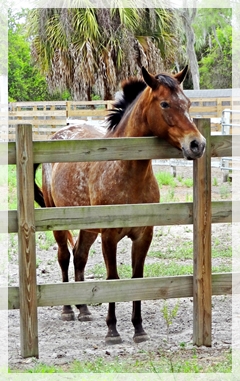 Several years ago, while spending the winter in the mountains, our morning walk took us by an art gallery. We frequently stopped to chat with the owner, look at the latest acquisitions and watch the progress of a local sculptor who had set up shop in the gallery. Working in clay, he was crafting the model for what would eventually be a cast bronze sculpture. As the final shape began to emerge, the artist continued to tweak it with small changes, a little pinch here or a small adjustment there, each time making it a better representation of a cowboy and his string of horses. Envisioning the final product and assured that it was nearly ready for casting, my husband and I made a pre-cast purchase of the piece.
 It was obvious we had ceiling fans in all three bathrooms but, because all their bulbs were burned out when we moved here, we didn’t know they also had lights. Never having seen how bright the bathrooms could be with working fan lights, we didn’t notice their absence. It was only when we had some electrical work done that we discovered the dead bulbs. Now that we’ve put in new LEDs, we’ll be sure to notice if any stop working in the future!
 The Valley of Vision is a collection of Puritan prayers spanning from the sixteenth through the late nineteenth centuries. Having grown up with the King James Bible, its antiquated thees and thous along with verbs forms like wilt, didst, and makest don’t bother me. Their formality actually adds to the beauty and charm of the prayers. Although context usually explained outdated words like nethermost, subserve, and extenuations, I had to look up a few new words like peradventure.
 Devotions of the Heart