SON OF DAVID (Part 1 – Mark 10:46-52)

When Bartimaeus heard that Jesus of Nazareth was nearby, he began to shout, “Jesus, Son of David, have mercy on me!” [Mark 10:47 (NLT)]

columbine

Jesus and his followers were among the crowd of pilgrims passing through Jericho on their way to Jerusalem to celebrate Passover and the city was teeming with people. Picture the scene as pilgrims, donkeys, carts, and even sheep slated for sacrifice moved along the road. With people talking, animals bleating and braying, children running back and forth, and beggars calling out for alms, it was difficult for those following Jesus to hear Him speak.

Sitting by the road, in the midst of this confusion, was the blind beggar Bartimaeus. When he heard that Jesus was in the crowd, Bartimaeus stopped begging for alms and pled for mercy, crying out, “Son of David! Jesus! Take pity on me!” When people tried to quiet him, the beggar just shouted louder. Over the din of the crowd, this man’s desperate cry was enough to make Jesus stop. Of course, Jesus made it a practice to stop for the lost, outcast, and hurting. Just as He halted for the bleeding woman desperate for his healing touch and the tax man desperate enough to climb a tree, Jesus stopped for Bartimaeus and called the beggar to Him.

Throwing his cloak aside, the blind man stumbled his way through the crowd to find Jesus. When Jesus inquired what he wanted, Bartimaeus immediately asked for his sight. It was restored instantly and Mark’s gospel tells us the once blind beggar followed Jesus down the road toward Jerusalem.

One thousand years earlier, God had promised David that one of his descendants would be the Messiah: the one who would reign forever as the head of God’s kingdom. By Jesus’ day, the term “Son of David” was a title for the Messiah. Other Messianic prophecies promised that the Messiah would heal the sick, bring hearing to the deaf, make the lame walk, and give sight to the blind. Bartimaeus may have been blind but he recognized Jesus as the Messiah when he called Him “Son of David” and without hesitation asked for his sight. Acknowledging the man’s blind faith, Jesus said, “Your faith has saved you.” Indeed, had he not called out in faith, he would have remained a blind beggar until his dying day.

The blind man who received sight contrasts with the sighted religious leaders Jesus would soon meet in Jerusalem and call “blind guides” and “blind fools.” It’s ironic that a blind beggar, sitting in the dirt by the road, understood the prophecies and recognized the Messiah when the sighted couldn’t even see who was right in front of them!
The scroll of Isaiah the prophet was handed to him [Jesus]. He unrolled the scroll and found the place where this was written: “The Spirit of the Lord is upon me, for he has anointed me to bring Good News to the poor. He has sent me to proclaim that captives will be released, that the blind will see, that the oppressed will be set free, and that the time of the Lord’s favor has come.” He rolled up the scroll, handed it back to the attendant, and sat down. All eyes in the synagogue looked at him intently. Then he began to speak to them. “The Scripture you’ve just heard has been fulfilled this very day!” [Luke 4:17-21 (NLT)]

Copyright ©2020 jsjdevotions. All rights reserved.

THE POSSIBILITY OF FAILURE

For I can do everything through Christ, who gives me strength. [Philippians 4:13 (NLT)]

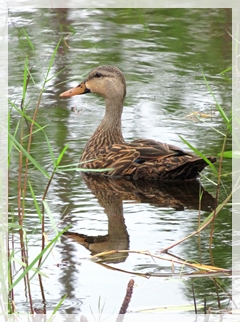
mottled duck“What would you do if you knew you could not fail?” the bumper sticker asked. That’s the sort of query that used to be posed to beauty pageant contestants. Their answers typically had to do with curing cancer, attaining world peace, or solving the problems of illiteracy, poverty and hunger. Of course, we’d all like to be able to wave a magic wand and solve the world’s difficulties. Unfortunately, it’s not that easy.
The question, however, continued to intrigue me. Is there something I would do if there was absolutely no possibility of failure? Would I even want to? Would there be joy in achievement if there were no struggles, no hurdles to jump and no problems to solve? There’s no sense of victory in playing a game when the opponent doesn’t present a challenge. The value of a diploma would be cheapened if we never had to study for final exams. The sense of satisfaction at a job well done would be diminished if we never had the possibility of failure. Failure is part of God’s training plan. The risk of failure brings us closer to God and reminds us that we can do nothing without faith in Him.

When Paul wrote the Philippians that he could do all things through Christ, did he mean he would be successful in every endeavor? Rather than a statement of self-reliance or guaranteed success, Paul was declaring his reliance on Christ. He wasn’t denying the possibility of adverse circumstances or failure; he was affirming his faith.

If we knew we couldn’t fail in an endeavor, we’d have no need for faith. Furthermore, the possibility of success or failure should never keep us from obediently following God’s direction. While the risk of failure should never stop us, lack of faith will.  As long as His Spirit is in us and we are walking in His footsteps, whether we succeed or fail, we will not fail the test of faith!

What would I do if I knew I couldn’t fail? Exactly what I’m doing now—sometimes successfully and other times not, but always in obedience to Him.

Our greatest fear should not be of failure but of succeeding at things in life that don’t really matter. [Francis Chan]

Examine yourselves to see if your faith is genuine. Test yourselves. Surely you know that Jesus Christ is among you; if not, you have failed the test of genuine faith. [2 Corinthians 13:5 (NLT)]

Three different times I begged the Lord to take it away. Each time he said, “My grace is all you need. My power works best in weakness.” So now I am glad to boast about my weaknesses, so that the power of Christ can work through me. That’s why I take pleasure in my weaknesses, and in the insults, hardships, persecutions, and troubles that I suffer for Christ. For when I am weak, then I am strong. [2 Corinthians 12:8-10 (NLT)]

Copyright ©2020 jsjdevotions. All rights reserved.

THE BUTTERFLY EFFECT

Remember the things I have done in the past. For I alone am God! I am God, and there is none like me. Only I can tell you the future before it even happens.  Everything I plan will come to pass, for I do whatever I wish. [Isaiah 46:9-10 (NLT)]

For want of a nail the shoe was lost, For want of a shoe the horse was lost, For want of a horse the rider was lost, For want of a rider the battle was lost, For want of a battle the kingdom was lost, And all for the want of a horseshoe nail. [Poor Richard’s Almanack (1758)]

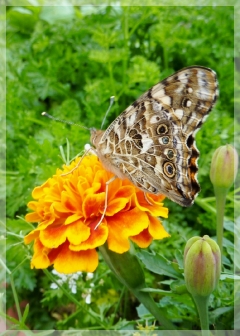
painted lady - marigoldOf course, in another time or place, a missing nail might have better consequences. Without the nail, horseshoe and rider, the horse wouldn’t have been on the road, reared at the sight of a snake, and thrown off his rider (who died from his injuries)! Life is unpredictable.
Theorizing that weather prediction models are inaccurate because knowing the precise starting conditions is impossible and a tiny change can throw off the results, meteorology professor Edward Lorenz posed this question in 1972: “Does the flap of a butterfly’s wings in Brazil set off a tornado in Texas?” Of course, a single act like the butterfly flapping its wings won’t cause a cyclone but Lorenz’s point was that nature’s interdependent cause-and-effect relationships are too complex to resolve. Small variations in conditions can have massive, minor, or imperceptible consequences and it is impossible to predict which will be the case.

As if the magnitude of this pandemic isn’t proof enough, Lorenz’s “butterfly effect” reminds us that life is amazingly unpredictable. We often pray that God will fix, heal, repair, reverse, or resolve situations or people and are disappointed when it seems that God has turned a deaf ear to us. The answers to our prayers, however, are not up to us—they are up to Him and the people and situations we want God to change are frequently the people and circumstances that God is using to change us!

As weather forecasters have learned with the “butterfly effect,” we mortals can’t possibly see all of the consequences of the changes we request in our prayers. God is the only one capable of knowing the repercussions of any alteration. While we have a limited concept of what the future will bring, His view is all-encompassing; He sees not just our lives, but all of the lives before us, with us, and those yet to come. God knows exactly what will happen if He grants our prayers, not just to us but also to everyone else. Our faith is not that God will give us what we want but that God will give us what is best!

In retrospect, I can only offer thanks that God, in His infinite wisdom and love, didn’t give me everything for which I asked. When Garth Brooks thanked God for unanswered prayers, he was wrong. God always answers prayers; it’s just that sometimes He answers with a “No!”

Sometimes I thank God for unanswered prayers.
Remember when you’re talkin’ to the man upstairs
That just because he doesn’t answer doesn’t mean he don’t care.
Some of God’s greatest gifts are unanswered prayers. [Garth Brooks]

Oh, how great are God’s riches and wisdom and knowledge! How impossible it is for us to understand his decisions and his ways! For who can know the Lord’s thoughts? Who knows enough to give him advice? [Romans 11:33-34 (NLT]

Copyright ©2020 jsjdevotions. All rights reserved.

BLOWING KISSES

Since we are receiving a Kingdom that is unshakable, let us be thankful and please God by worshiping him with holy fear and awe. [Hebrews 12:28 (NLT)]

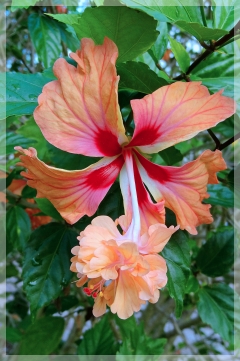
hibiscusIn the New Testament, the Greek word commonly translated as “worship” is proskyneō. While it came to mean kneeling down, prostrating oneself, showing reverence toward, and worshiping, its roots are thought-provoking. Coming from the Greek pro (to or toward) and kyneō (to kiss), its literal meaning is “to kiss towards!” Knowing his Greek, a pastor said of proskyneō: ”I like to think of our worship in church as being sons and daughters of God blowing kisses to our Father.” I thought of his words when I welcomed the kisses my children and grands blew to me on our recent Zoom call.
The way we worship has changed drastically since March. For some people, it involves sitting in their cars in the church parking lot, tuning their radios to a specific station, and drive-by communion. For others, worship requires reservations, temperature checks, face masks, assigned seats, roped off pews, and restrictions on singing. Many of us, however, find church on the screen of our computers, tablets, smart phones, or TV. Our worship is virtual.

The live streaming from most churches really isn’t “live.” Having found that wide shots of the sanctuary and recreating the traditional Sunday service doesn’t transfer well to a small screen, many churches now pre-record. Early in the week, the pastor videos his part at home or in the empty church. At a different time, the worship leader and musicians video their parts, often from different locations. The tech team then pieces together the separate recordings and adds words for the songs and relevant Bible verses before posting the now cohesive video to their chosen platform. There’s a good chance that, even though the pastor “led” the worship service, even he doesn’t know what the finished product looks like until it is streamed on Sunday. That’s the case for a pastor I know who watches worship service with the rest of his congregation when it goes live on Sunday mornings.

This pastor mentioned getting an email from one of his parishioners thanking him for the inspiring on-line services. After telling her pastor that she still rises early Sunday mornings so she can get dressed and do her make-up and hair, the woman said she sets up her home “pew” with a lit candle and a Bible (so she can follow along during the lessons). Adding that she always stands for the Creed, Gospel and hymns, the woman said it almost feels like she’s worshiping inside the church! Hers were words of conviction for the pastor who reluctantly admitted to being unshaven and still in his pj’s while sitting on the sofa, feet resting on the coffee table, drinking coffee and eating a Danish as he views the service on his television. After confessing that the only time he stands is to get another cup of coffee from the kitchen, he realized he was watching rather than worshiping.

It’s not easy to stay engaged while worshiping on-line. People who normally wouldn’t talk during music now chat on-line during worship songs. I wouldn’t think of checking my phone, texting, or getting up for coffee during the sermon, but I did it during last week’s virtual worship! We don’t have to put on make-up or wear our Sunday best to worship in this COVID world but we might want to examine our worship behavior. The Essential Bible Dictionary defines worship as, “The honor, reverence, and homage that we should pay to God for his perfection, greatness, and goodness.” Does our worship reflect our love, respect, gratitude, dedication, and deference to God? Whether we’re worshiping in a kitchen, car, park, or pew, may our worship be so reverent, single-minded, and heartfelt that God receives it with the same joy a grandma would when her children and grands blow her kisses!

And so, dear brothers and sisters, I plead with you to give your bodies to God because of all he has done for you. Let them be a living and holy sacrifice—the kind he will find acceptable. This is truly the way to worship him. [Romans 12:1 (NLT)]

For God is Spirit, so those who worship him must worship in spirit and in truth. [John 4:24 (NLT)]

Copyright ©2020 jsjdevotions. All rights reserved.

ASSERT ONLY LOVE

And further, submit to one another out of reverence for Christ. [Ephesians 5:21 (NLT)]


While being in lockdown for months may have given some couples a chance to reconnect, that connection wasn’t welcomed by all. Once their mandatory 10-week lockdown was lifted, Italian lawyers reported a 30% surge in couples starting divorce proceedings and both China and Saudi Arabia showed a similar rise when couples emerged from quarantine. For some couples, 24/7 togetherness for weeks on end exacerbated typical martial issues like money, housework, drinking, child care, screen and phone time, and dirty dishes in the sink. With the additional stressors of homeschooling, job loss or working at home, apprehension about the future, and trying to navigate safely in a COVID-19 world, even the best marriages have been tested.

We may have married our spouses for better and worse, in sickness and health, but none of us expected this much togetherness for such an extended time. Before we complain, let’s remember our friends who live alone. With the exception of the pizza delivery man or the cashier behind a plastic shield at Walgreen’s, their contact with the outside world has been from a 6-foot distance. FaceTime or Zoom replaced visits from friends and family and it’s been months since they’ve gotten hugs from anyone. Their isolation puts our petty spousal complaints in perspective!

There always will be disputes in any relationship but, in a good relationship, both parties understand the importance of negotiation and concession. Unfortunately, we live in an increasingly polarized society and the world’s divisiveness seems to have crept into our homes. Lines get drawn in indelible marker (or even cement) and people often think of compromise, trade-offs, finding the middle ground and deference as signs of weakness.

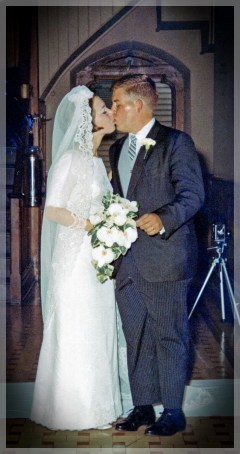
Today, my husband and I celebrate our anniversary. Rather than the traditional romantic dinner, weekend getaway, or family party, we’ll celebrate with a Chicago-style pizza our children sent us and a feel good movie on Netflix. The one tradition we’ll keep, however, is reading 1 Corinthians 13: the same words that were read at our wedding 53 years ago. Paul wasn’t writing about romantic or eros love. As delightful as romantic love is, that’s not what gets people through cancer, job loss, financial worry, Parkinson’s, a disabled spouse, an addicted child, or months of sheltering in place. Paul was writing of agape love—sacrificial unconditional love: the kind of love that carries people through pandemics (and decades of marriage)!

We’re often told to assert ourselves. What if, instead of asserting ourselves, we asserted our love? What if we remembered (and followed) Paul’s words: “love does not demand its own way.” Our love for one another is far more important than almost anything about which we disagree. When faced with disputes, let’s allow love and God to be our guides.

 What counts in making a happy marriage is not so much how compatible you are, but how you deal with incompatibility. [Leo Tolstoy]

Love is patient and kind. Love is not jealous or boastful or proud or rude. It does not demand its own way. It is not irritable, and it keeps no record of being wronged. It does not rejoice about injustice but rejoices whenever the truth wins out. Love never gives up, never loses faith, is always hopeful, and endures through every circumstance. [1 Corinthians 13:4-5 (NLT)]

Copyright ©2020 jsjdevotions. All rights reserved.

THE ONE HE LOVED

One of them, the disciple whom Jesus loved, was reclining next to him. [John 13:23 (NIV)]

blue jayWhile Matthew, Mark, and Luke mention the Apostle John several times in their gospels, the gospel that bears John’s name doesn’t mention his name once. Instead, the author refers to an unnamed witness and a disciple described only as the one “whom Jesus loved.” Since John is conspicuously absent from his gospel, it would seem that he was both the witness and this much loved disciple.

While the gospel of John may have been written any time between 55 and 95 AD (with 80 to 85 AD most likely), there isn’t much dispute about its author. We might wonder why the Apostle hid himself in the gospel by referring to himself simply as another unnamed disciple or as that specially loved one. John may have chosen to remain incognito simply because he knew the good news wasn’t about him and his relationship with a man named Jesus. It was about the Messiah Jesus and His relationship with mankind. By remaining nameless, the story stayed centered on Jesus as opposed to its author.

But why would John choose to designate this unnamed disciple as especially beloved by Jesus? Did he want to point out (possibly even flaunt) the special relationship he enjoyed with Christ—a relationship not enjoyed by the other disciples? In a gospel filled with examples of Christ’s love, integrity, righteousness, humility, and sacrifice, a Messiah who blatantly favored one over others seems unlikely and a disciple who would boast of his special status seems equally implausible.

Perhaps John was simply engaging some word play. In Hebrew, the disciple’s name was Johanan. The first part of his name was Yah, a shortened version of YHWH, the name of the Lord. The last part was from the verb hanan which meant to be gracious. John’s name literally meant Yahweh is Gracious (or the one whom Jehovah loves)!

The five times this nameless disciple is mentioned as being so loved by Jesus all occur during the events surrounding Jesus’ death and resurrection—a time it became abundantly clear to all of the disciples just how much Jesus loved not just them but all of mankind! Perhaps John used this designation because it represented what is true of all of Christ’s disciples: each person who follows Jesus is a disciple loved by Jesus!

If you were asked, “Who are you?” how would you answer? While you might provide your name, marital status, profession, or background, any one of those could be changed and you would still be you (slightly different but still you). Regardless of circumstances, or even whether you’re alive or dead, the one thing about you that won’t change is your identity as a child of God and, if you are a believer, that you are a disciple of Christ. The highest honor John could claim was that Jesus loved him and yet it is an honor to which we all can lay claim! Who are you? As for me, I am the disciple Jesus loves!

For God so loved the world that he gave his one and only Son, that whoever believes in him shall not perish but have eternal life. [John 3:16 (NIV)]

Copyright ©2020 jsjdevotions. All rights reserved.