IMITATING CHRIST

Instead, clothe yourself with the presence of the Lord Jesus Christ. And don’t let yourself think about ways to indulge your evil desires. [Romans 13:14 (NLT)]

rue anemoneBecause of the Jewish prohibitions about images, I understand why no pictures of Jesus were drawn by His followers. Nevertheless, any decent author gives a minimal word picture of his characters but the gospels’ writers give us nothing. With Melville’s description of Captain Ahab’s gray hair, scarred face, and whale-bone peg-leg, we know more about the fictional whale hunter’s looks than we do about the real Jesus! The most we know about His exterior is found in Isaiah’s prophecy: “There was nothing beautiful or majestic about his appearance, nothing to attract us to him,” [53:2] which describes most of us! Adjectives are few and far between in Scripture but the Bible isn’t a novel and its words were God-breathed not writer created. If God wanted us to know about Jesus’s appearance, He would have told us. After all, if we knew what Jesus looked like, wouldn’t we focus more on His looks rather than His words? Rather than wanting to emulate His character, we’d probably want to match His features—after all, He was God!

When Paul told the Romans to “put on” or clothe themselves with Christ, he wasn’t speaking of robes, sandals, beard or haircut. He was speaking of spiritual clothing—to take off our “dark deeds like dirty clothes, and put on the shining armor of right living.“ [13:12] While we know nothing of Jesus’ physical appearance, the New Testament writers gave us more than enough description of Jesus’ words and behavior to clearly picture the “shining armor of right living.” When we put on Christ, our minds and behavior transform so that our lives imitate His—so that, when people see us, they should see Him.

Below is an excerpt from the Epistle to Diognetus. While not part of the Christian canon, it is a valuable document. Written around 130 AD, the author calls himself Mathetes (meaning “disciple” in Greek) and claims to be a student of the apostles. Yesterday, I wrote of the misconceptions surrounding the early followers of Jesus. In Mathetes’ letter, he defends the doctrines of Christianity and describes Christian behavior to the “most excellent Diognetus.” In one chapter, Mathetes explains that, while Christians follow the ordinary customs of clothing, food and conduct, “they display to us their wonderful and confessedly striking method of life.” The lifestyle to which Jesus calls us has not changed since Mathetes’ time and yet, when reading his words, I wonder if anyone would describe today’s followers of Christ in the same way.

They dwell in their own countries, but simply as sojourners. As citizens, they share in all things with others, and yet endure all things as if foreigners. Every foreign land is to them as their native country, and every land of their birth as a land of strangers. They marry, as do all [others]; they beget children; but they do not destroy their offspring. They have a common table, but not a common bed. They are in the flesh, but they do not live after the flesh. They pass their days on earth, but they are citizens of heaven. They obey the prescribed laws, and at the same time surpass the laws by their lives. They love all men, and are persecuted by all. They are unknown and condemned; they are put to death, and restored to life. They are poor, yet make many rich; they are in lack of all things, and yet abound in all; they are dishonoured, and yet in their very dishonour are glorified. They are evil spoken of, and yet are justified; they are reviled, and bless; they are insulted, and repay the insult with honour; they do good, yet are punished as evil-doers. When punished, they rejoice as if quickened into life; they are assailed by the Jews as foreigners, and are persecuted by the Greeks; yet those who hate them are unable to assign any reason for their hatred.

To sum up all in one word—what the soul is in the body, that are Christians in the world. The soul is dispersed through all the members of the body, and Christians are scattered through all the cities of the world. The soul dwells in the body, yet is not of the body; and Christians dwell in the world, yet are not of the world.  [Epistle to Diognetus – translated by Alexander Roberts and James Donaldson]
Put on your new nature, and be renewed as you learn to know your Creator and become like him. [Colossians 3:10 (NLT)]

Put on your new nature, created to be like God—truly righteous and holy. [Ephesians 4:24 (NLT)]

Copyright ©2021 jsjdevotions. All rights reserved.

ALEXAMENOS

“I’ve said these things to you,” Jesus went on, “to stop you from being tripped up. They will put you out of the synagogues. In fact, the time is coming when anyone who kills you will suppose that they are in that way offering worship to God. They will do these things because they haven’t known the father, or me. But I have been talking to you about these things so that, when their time comes, you will remember that I told you about them.” [John 16:1-4 (NLT)]

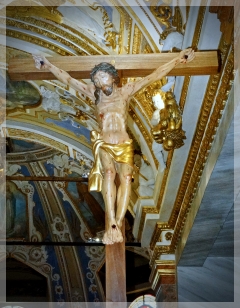
Locarno-Madonna del SassowIn any cathedral or art museum, we’ll find many pictures of Jesus and even rather graphic depictions of Him on the cross. None of them, however, tell us anything about His appearance because they were created long after His time. Still, in a world where we seem to memorialize everything with pictures, you’d think one of Jesus’ followers would have sketched Him while blessing the children, giving the Sermon on the Mount, or feeding the multitude! 1st century rabbis in Judah, however, vehemently objected to the depiction of human figures because the second commandment prohibited making a “graven image.” With its Jewish roots, this prohibition carried into the early church and inhibited early Christian art.
At first, Jesus was represented indirectly by symbols such as the peacock, lamb, dove, and anchor. One of the most common was the ichthus (fish) because the Greek word served as an acronym “Jesus Christ, Son of God, Savior.” While making the sign of the cross dated from sometime in the second century, because of its connection with the horrific death of criminals, the cross did not became a symbol of Christianity until the 4th century; crucifixes and other depictions of the crucifixion did not occur until the 6th.

One earlier depiction of Jesus’ crucifixion, however, does exist. Crudely scratched into a stone wall, it was discovered in 1857 during an excavation of the Paedagogiumon (a school for the training of slaves) on Rome’s Palatine Hill. Dating from around 200 AD, it shows a man (or boy) worshiping a figure on a cross; the figure, however, has the head of an ass. The inscription reads, “Alexamenos worships his God.” This derisive graffiti gives us an idea of the way early Christians were ridiculed for worshiping a man who had been executed as a criminal.

Along with claims of onolatry (donkey worship), the early Christians had to deal with several other disparaging, malicious, and false accusations such as incest, cannibalism, and drinking the blood of infants. Roman orator Marcus Cornelius Fronto (c. 100-160) wrote that Christians were “initiated by the slaughter and the blood of an infant” and that Christianity was “foolish” because, “they worship a crucified man, and even the instrument itself of his punishment” and “are said to worship the head of an ass.”

This was the world—a world that misunderstood, slandered, ridiculed, hated and persecuted them—of the early Christians. And yet, they proceeded in faith and spread the gospel. I wonder how the 21st century church would do in similar circumstances! As for Alexamenos, the fellow mocked by that ancient graffiti—more graffiti was found on a wall in an adjacent room. In Latin it said, “Alexamenos is faithful.”  In the face of opposition, we must be the same!

Think back on those early days when you first learned about Christ. Remember how you remained faithful even though it meant terrible suffering. Sometimes you were exposed to public ridicule and were beaten, and sometimes you helped others who were suffering the same things. You suffered along with those who were thrown into jail, and when all you owned was taken from you, you accepted it with joy. You knew there were better things waiting for you that will last forever. So do not throw away this confident trust in the Lord. Remember the great reward it brings you! [Hebrews 10:32-35 (NLT)]

Copyright ©2021 jsjdevotions. All rights reserved.

THE CAMEL AND THE NEEDLE (Part 2)

Jesus said to his disciples, “I’m telling you the truth: it’s very hard for a rich person to get into the kingdom of heaven. Let me say it again: it’s easier for a camel to go through the eye of a needle than for a rich person to enter God’s kingdom.” [Matthew 19:23-24 (NTE)

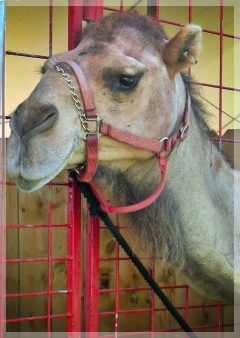
camel-GCParadegrounds2wAfter the rich young ruler departed, Jesus compared the difficulty of a rich man entering heaven to a camel trying to squeeze through the eye of a needle. Because of its impossibility, people find this metaphor troubling. To rationalize it, some scholars speculate that a narrow gate called “The Needle” was located in the wall surrounding Jerusalem. Supposedly used after dark when the main gates were closed, it was so small that a camel had to be unburdened of rider and cargo before getting down on its knees to pass through the gate. They interpret the metaphor as meaning that people must leave behind their baggage, repent, and humble themselves to get through the gate to God’s kingdom. While that’s correct and their explanation makes an excellent Sunday school lesson, no historical or archeological evidence exists that such a gate existed.



Other scholars conjecture that the original word was kamêlos, meaning cable or rope, and a copying error caused it to be written kamilos, meaning camel. They prefer an interpretation that, while it may be extremely difficult to get a rope through a needle, it wouldn’t be impossible, especially if Jesus meant a large carpet needle. Be that as it may, it seems improbable that three gospels would have the same transcribing error.

Rather than trying to reason away the difficulty of getting a camel through a needle, perhaps we should take this hyperbole at face value and accept it for what it is—an impossibility! In fact, in the Babylonian Talmud, there is a Persian metaphor about the impossibility of an elephant going through the eye of a needle. Jesus’ listeners may well have been aware of the Persian saying and, since a camel was the largest animal known in Palestine, it would make more sense to Judeans than would an elephant! If we stopped at this verse, it really would seem that the wealthy are automatically barred from God’s Kingdom. But, if wealth blocked us from God, why would He return twice his original wealth to Job? When Zacchaeus gave away half of his wealth, why didn’t Jesus tell him to give away all of it?

The disciples would have been incredulous at Jesus’ metaphor. In their 1st century Jewish world, if anyone could enter God’s Kingdom, it would be a rich man. After all, he could buy all the sacrificial lambs he needed to atone for his sins, easily pay his Temple tax, freely drop money into one of the many Temple receptacles, and even give alms to the poor. If a rich man couldn’t enter the Kingdom, they asked who could.

It is in Jesus’ answer that we begin to understand the fullness of God’s grace: “Humanly speaking, it’s impossible. But everything’s possible with God.” [Matthew 19:26] What the rich young ruler couldn’t understand and the disciples needed to know was that, rich or poor, there is nothing any of us can do to buy our ticket to the Kingdom because God’s Kingdom doesn’t operate on a works or financial system. Salvation on our own terms is impossible.

When Jesus gave His “Sermon on the Mount,” He said, “Blessings on the poor in spirit! The kingdom of heaven is yours.” [5:3] He wasn’t speaking of those who were penniless. Jesus was speaking of those who recognize their spiritual bankruptcy—those who know they have nothing of their own to offer God—those who know how poor they are regardless of their bank balances or investment portfolios.

No man can purchase or earn God’s favor—the most we can do is receive God’s grace with a humble and contrite heart! Thinking that we are rich, however, will keep us from reaching out for that grace.

For you know the grace of our Lord, King Jesus: he was rich, but because of you he became poor, so that by his poverty you might become rich. [2 Corinthians 8:9 (NTE)]

 You say, ‘I’m rich! I’ve done well! I don’t need anything!’ – but you don’t know that you are miserable, pitiful, poor, blind and naked. [Revelation 3:17 (NTE)]

Copyright ©2021 jsjdevotions. All rights reserved.

THE RICH YOUNG RULER (Part 1)

Someone came to Jesus with this question: “Teacher, what good deed must I do to have eternal life?” [Matthew 19:16 (NLT)]

Most of the Jews in Jesus’ day believed that God would never bestow wealth on a sinner so the rich young ruler presumed he’d inherit eternal life. Nevertheless, he asked Jesus what good deed was needed to guarantee it. While we might expect Jesus to give an answer about faith in Him, He tells the man to obey the commandments. When the man wants to know which ones, Jesus lists several of the commandments dealing with man’s relationship with man. The man, unable to recognize his own sinfulness, proudly claims to have obeyed every one since childhood. Assuming Jesus will tell him he’s done all that is necessary, he asks if there is anything else he needs to do. Thinking his prosperity is evidence of God’s favor, he’s stunned when Jesus tells him to sell all he owns, give the money to the poor, and then come follow Him. Unwilling to part with his possessions, the rich young man sadly departs.

Jesus, however, isn’t establishing a universal principle that, to be saved, we must all be penniless. After all, God never told Abraham, Isaac, Jacob, David, or Solomon to give away their wealth. Martha, Mary and Lazarus appeared to be people of means and Joseph of Arimathea was wealthy, but Jesus never told them to sell their possession and give everything away.

Although the rich man’s wealth obstructed his discipleship, the issue wasn’t his wealth: it was his heart! He loved and trusted in money more than God. Without even realizing it, this man who claimed to obey the commandments had violated the first and greatest one of all: “You shall have no other gods before me.” The man couldn’t put his faith in God and follow Jesus until he stopped having faith in and following his money! We can have only one God and He must take precedence over everything else in our lives!

While it was wealth that deterred the young man from following Jesus, their exchange was about more than wealth and applies to every one of us. Indeed, wealth can be a hindrance to our salvation, but so can a number of other things—things like reputation, appearance, status, security, family, education, profession, comfort, drink or drugs, science, sex, or self. Like the rich young ruler, do we love something more than God? What would He ask you to give away?

You must not have any other god but me. [Exodus 20:3 (NLT)]

No one can serve two masters. For you will hate one and love the other; you will be devoted to one and despise the other. You cannot serve God and be enslaved to money. [Matthew 6:24 (NLT)]

Copyright ©2021 jsjdevotions. All rights reserved.

IN ALL CIRCUMSTANCES

Be thankful in all circumstances, for this is God’s will for you who belong to Christ Jesus. [1 Thessalonians 5: 18 (NLT)]

With his words, the Apostle Paul doesn’t give us any exceptions—we are to give thanks in all circumstance (rather than some or most and certainly not just in the ones we like)! Right now, however, I’m not feeling particularly thankful. In the span of a week’s time, two dear friends died—men that were like brothers to us. Distance and COVID meant that we couldn’t even grieve in person with their families. As I sit here tearfully, I realize that in the past eighteen months a dozen people who were important parts of our lives are no longer with us. Grief weighs heavy on my heart. When I consider my prayer list and the people on it who are struggling with the devastating aftereffects of a stroke or suffering from cancer, Parkinson’s, chronic pain, dementia, and heart failure, I realize that number will soon grow. I want to stomp my feet and shout at God that it’s not fair and ask Him how He expects me to give thanks!

As a Christian, I know I should be in a permanent state of thanksgiving for God’s grace in my salvation and I am thankful for that. It’s things like the suffering and loss in life that pose the problem for me. I should be reassured by the words of Romans 8:28 that, “We know that God causes everything to work together for the good of those who love God and are called according to his purpose for them.” In theory, I know that even in the worst of circumstances, God can take a bad thing and make it work for a good purpose. I know He is in full control of all of life’s happenings and that He can put all of those horrible events together to achieve a beautiful God-designed purpose. Nevertheless, that knowledge is of little comfort to those who mourn. Finding comfort in Paul’s words is a great deal harder than repeating them.

That David could say he was “worn out from sobbing” and his vision was “blurred from grief,” [Psalm 6:7-6] tells me that neither grief nor calling out to God in sorrow means a loss of faith; sorrow is an unavoidable part of life. One thing that frequently keeps us from giving thanks in our grief is that pesky question of “why?” I’ve written enough about Job to know that I have no business asking why and that I’ll never know the answer. Yet, even knowing God’s reasons wouldn’t take away the sense of loss or make the grief disappear.

Where do we find the ability to give thanks? Perhaps by looking more closely at the Apostle’s words. Paul tells us to be thankful in everything not for everything. While there’s a fine line between the two, we don’t have to be thankful for things like heart attacks, strokes, car accidents, COVID, or cancer but we do need to have a grateful heart in the midst of those afflictions.

Giving thanks in all circumstances requires a change of heart. Without that change, we might stop crying, start smiling, and even laugh at times but something sour will begin growing in our hearts—bitterness, anger, resentment, or self-pity. Giving thanks is the only way out of the pit of grief; yet it seems impossible until I remember the simple truth that God is good. Regardless of the circumstances, He remains the same loving, wise, and good God that He always has been.

Pauls’ admonition to give thanks in all circumstances follows two other directives—to rejoice always and to pray continually. In prayer, I asked the Spirit for guidance, strength and peace and then listed the names of those for whom I mourn. Thinking of each one by name, I rejoiced in the privilege of having those beautiful people in my life—to have talked, worked, agreed, and disagreed with them—to have touched and been touched by them—to have both taught and learned from them—to have shared good times and bad, gain and loss, secrets, sorrow, and laughter with them—to have loved and been loved by them. As I thanked God for the blessing of bringing each and every one them into my life, I found that I am, indeed, thankful in even this circumstance!

Give thanks to the Lord, for he is good! His faithful love endures forever.… You are my God, and I will praise you! You are my God, and I will exalt you! Give thanks to the Lord, for he is good! His faithful love endures forever.  [Psalm 118:1, 28-29 (NLT)]

And let the peace that comes from Christ rule in your hearts. For as members of one body you are called to live in peace. And always be thankful. [Colossians 3:15 (NLT)]

Copyright ©2021 jsjdevotions. All rights reserved.

KEYSTONES – EARTH DAY (April 22)

God spoke: “Earth, generate life! Every sort and kind: cattle and reptiles and wild animals—all kinds.” And there it was: wild animals of every kind, cattle of all kinds, every sort of reptile and bug. God saw that it was good. [Genesis 1:24-25 (MSG)]

When the grands visit, we usually take them to a nearby preserve where we walk the boardwalk and hope to catch sight of one of the more than 150 gopher tortoises living there. We watch them lumber through the sand, munch on prickly pear cactus, or sun on the apron of their burrows.

The gopher tortoise is what’s called a “keystone species,” meaning it plays a unique and crucial role in holding together a habitat. A keystone species can be a plant, animal, fungi, or even bacteria. It isn’t necessarily the largest or most plentiful species in an ecosystem but, if it were to disappear, the ecosystem would be dramatically different or cease to exist altogether.

Gopher tortoises are considered keystones because they are ecosystem engineers capable of digging tunnels forty feet long and ten feet deep. Their burrows provide refuge for some 350 to 400 other species, including snakes, rodents, armadillos, rabbits, lizards, worms, spiders and bugs. Some animals use the burrows as homes and others hide there from predators. In the case of fire, animals can escape the blaze in the deep tunnels.

Although these prehistoric looking creatures have lived on the earth millions of years, their survival is now endangered by predators, herbicides, and habitat destruction (better known as “progress”). Their population has declined by 80% in the last century and the gopher tortoise’s extinction is a real possibility. Sadly, its disappearance would lead to the disappearance of those other species that share its habitat. The gopher tortoise carries more than a carapace on his back—he carries the future of his ecosystem!

Other keystone species include sea otters, mangroves, prairie dogs, wolves, salmon, saguaro cactus, and bees. Not all are ecosystem engineers like the gopher tortoise but each is essential to its specific habitat and fulfills a critical ecological role that no other species can accomplish. It’s amazing how intricate God’s creation is and how interdependent various species are. Every living thing seems to uniquely mesh with others, much like the pieces of a jigsaw puzzle. When a piece goes missing, however, the puzzle ceases to come together as it should.

Although mankind clearly has a huge impact on the environment, we’re not a keystone species. In fact, some scientists argue that, if we were to disappear, the environment would improve! With the cessation of so many human activities because of COVID lockdowns, greenhouse gas emissions reduced, water quality improved, noise pollution lessened, air quality improved, and nature began healing. The break, however, was short-lived and now that many restrictions have been lifted, pollution has returned to pre-pandemic levels in most areas.

After God created the world and everything in it, He found it all to be good. He then gave mankind the responsibility for His beautiful creation. I wonder if He is as pleased with the state of our world today as he was when He turned its care over to us. Let us remember that each one of God’s creatures (whether bee, gopher tortoise, or mangrove) is His handiwork and precious to Him. Today (and everyday), let us consider what we can do to keep His creation functioning as He meant it to do!

Father of all, Creator and ruler of the universe, You entrusted your world to us as a gift. Help us to care for it and all people, that we may live in right relationship—with You, with ourselves, with one another, and with creation. [From the United States Conference of Catholic Bishops]

God spoke: “Let us make human beings in our image, make them reflecting our nature So they can be responsible for the fish in the sea, the birds in the air, the cattle, And, yes, Earth itself, and every animal that moves on the face of Earth.” God created human beings; he created them godlike, Reflecting God’s nature. He created them male and female. God blessed them: “Prosper! Reproduce! Fill Earth! Take charge! Be responsible for fish in the sea and birds in the air, for every living thing that moves on the face of Earth.” [Genesis 1:26-28 (MSG)]

Copyright ©2021 jsjdevotions. All rights reserved.