BE ON THE LOOKOUT – ST. PATRICK’S DAY

That night Paul had a vision: A man from Macedonia in northern Greece was standing there, pleading with him, “Come over to Macedonia and help us!” So we decided to leave for Macedonia at once, having concluded that God was calling us to preach the Good News there. [Acts 16:9-10 (NLT)]

hope cloverI can’t say that I’ve ever had a dream or vision as clear cut as was Paul’s. If I ever did, I’m not sure I’d be as quick as he and his companions were to trust it. In Paul’s case, however, the dream helped him understand why the Holy Spirit previously prevented the men from preaching in the provinces of Asia and Bithynia (modern day Turkey). After hearing the Macedonian man’s plea, Paul finally had a clear sense of God’s direction. Paul, Silas, Timothy, and Luke headed west to Troas, set sail across the Aegean Sea, and made their way to Philippi in the Roman province of Macedonia (northern Greece). Paul’s obedience to that call took the gospel west toward Europe and changed Western civilization forever!

Nearly 300 years later, Irish history was changed when the man we know of as St. Patrick had a similar dream. Born Maewyn Succat around 387 in Roman Britain (Scotland), Patrick was kidnapped by Irish marauders at the age of sixteen. Taken to Ireland, the boy was sold into slavery and labored at herding and tending sheep. According to his memoirs, as Patrick prayed several times a day during his captivity, his faith grew and he felt the presence of the Holy Spirit. After six years of enslavement, he had a dream in which God told him, “Your ship is ready.” The young man escaped, walked 200 miles to the coast, and found some sailors who took him back to Britain. Once home, Patrick had another dream in which he was given a letter titled “The Voice of the Irish.” Upon opening it, he heard the voices of the people who’d once enslaved him calling, “We appeal to you, holy servant boy, to come and walk among us.” Initially reluctant to answer the call because of his lack of education, Patrick began religious training. He returned to Ireland about 15 years after his dream and the man known for explaining the Trinity with the three-leaved single stalk shamrock evangelized all over the land for the next thirty plus years. Patrick is said to have converted over 135,000 people, established 300 churches, and consecrated 350 bishops.

While we’re not likely to have such vivid dreams as Paul and Patrick, we should listen for the “Voice of the Irish” and be looking for a “man from Macedonia” in the people who cross our paths every day. They’ll probably look and sound much like everyone else and yet they’ll have a pressing need to know Jesus. May we respond as readily as did Paul and Patrick. We probably won’t change the world as did they, but we surely can change the world for someone.

God’s plan for enlarging his kingdom is so simple – one person telling another about the savior. Yet we’re busy and full of excuses. Just remember, someone’s eternal destiny is at stake. The joy you’ll have when you meet that person in heaven will far exceed any discomfort you felt in sharing the gospel. [Charles Stanley]

For “Everyone who calls on the name of the Lord will be saved.” But how can they call on him to save them unless they believe in him? And how can they believe in him if they have never heard about him? And how can they hear about him unless someone tells them? And how will anyone go and tell them without being sent? That is why the Scriptures say, “How beautiful are the feet of messengers who bring good news!” [Romans 10:13-14 (NLT)]

Copyright ©2021 jsjdevotions. All rights reserved.

BEING A SLAVE

This letter is from Paul and Timothy, slaves of Christ Jesus. I am writing to all of God’s holy people in Philippi who belong to Christ Jesus, including the church leaders and deacons. [Philippians 1:1 (NLT)]

great blue heronRather than introduce himself as an apostle, Paul often identified himself as a slave of Christ Jesus. In the New Testament, the Greek word doúlos is often translated as servant or bondservant but it clearly meant slave. Of course, with our 21st century mindset, we find the word “slave” abhorrent, especially when applied to us! The word’s use by Jesus and the epistle writers, however, was never an endorsement of involuntary servitude or thinking of people as chattel. Used as a metaphor, doúlos was an honorable word that applied to believers who, as devoted followers of Jesus, willingly lived under His authority.

Slavery was deeply rooted in the economy and social structure of the Roman Empire. With more than half the population either enslaved or having been slaves at one time, 1st century listeners and readers would have understood the metaphor in a far different way than we do today. Slavery could be voluntary and people often sold themselves into slavery to pay debts or simply because life as a slave was better than struggling to exist on one’s own. Hebrew Scripture even made provisions for an Israelite to sell himself (or a child) to pay off a debt. The law of manumission, however, allowed a slave to be freed once the debt was paid. As objectionable as the concept of slavery is to us, it was an everyday reality in the ancient world.

Rather than being repulsed at the concept of being a slave, let’s look at what Christian slavery means. Before becoming believers, we were slaves to sin. Jesus paid a ransom to God—one that freed us from sin, death, and hell. Rather than purchasing our freedom with silver or gold, it was purchased with His blood. Instead of becoming a slave to the redeemer who paid our financial debts (as would happen in the 1st century), we become slaves to the One who redeemed us by paying the price for our sins. In his use of the word doúlos in his letter to the Philippians, Paul is acknowledging that he and Timothy had been purchased with Christ’s blood and, as His slaves, they surrendered their will, time and interests to Him. Completely devoted to their Master—Jesus Christ—they were obedient to Him and subject to His command.

Belonging to his master, the slave has no time, will or life of his own and is totally dependent upon his master for his welfare. He is to be unquestioningly loyal and obedient and is obligated to do his master’s bidding with no regard to his own well-being. If that master were a man, such a situation would be horrendous. When the master is God—the One who made us and loves us as His own children—it is a good thing!

No Christian belongs to himself—we belong to our Redeemer. As His slaves, we choose to willingly live under Christ’s authority. We’ve been told that no one can serve two masters so we have a simple choice: be a slave to sin or a slave to Christ. Which will it be?

Now you are free from your slavery to sin, and you have become slaves to righteous living. … Previously, you let yourselves be slaves to impurity and lawlessness, which led ever deeper into sin. Now you must give yourselves to be slaves to righteous living so that you will become holy. … But now you are free from the power of sin and have become slaves of God. Now you do those things that lead to holiness and result in eternal life. For the wages of sin is death, but the free gift of God is eternal life through Christ Jesus our Lord. [Romans 6:18,19b, 22-23 (NLT)]

Copyright ©2021 jsjdevotions. All rights reserved.

EROSION

Joyful are people of integrity, who follow the instructions of the Lord. Joyful are those who obey his laws and search for him with all their hearts. They do not compromise with evil, and they walk only in his paths. [Psalm 119:1-2 (NLT)]

Yellowstone RiverA few miles from our Illinois home, a giant ski jump towered over the treetops. Originally erected in 1905 by Carl Howelsen and a group of Norwegian skiers living in Chicago, it’s been rebuilt over the years and is still used today. In a curious coincidence, in 1913, the man who loved the mountains and deep snow found his way to the Colorado mountain town we once called our winter home. Although Howelsen returned to Norway in 1922, he left an indelible mark on the town by introducing it to recreational skiing and ski jumping. Not far from the hill named for him, stands a statue of the man known as Flying Norseman.

Howelsen never returned to Colorado, but I heard his son, Leif Hovelsen, speak at the dedication of that statue several years ago. It was then that I learned the legacy Howelsen left his son was even greater than the one he left our mountain town. When Leif was just a boy in 1930s Norway, Carl sent him on a delivery. Upon his return home, it was discovered that the boy had been short-changed. When his father insisted that he return and get the proper payment, the youngster balked. Not wanting to face the man who’d cheated him, the lad offered to make up the difference from his own savings. His father, however, insisted that he return to get the correct payment. It wasn’t about a few kroner, explained Carl. It was that every time we accept things like cheating, thievery, hate, depravity and deception, a little bit of our integrity erodes until none remains.

From Leif Hovelson’s life, it’s obvious that he took his father’s words to heart. Unable to accept the evils of Nazism during World War II, 19-year old Leif smuggled radio parts out of Oslo to members of the resistance fighting the Nazi occupation. Betrayed by a friend, he was captured by the Gestapo in 1943. As he was dragged from his home by soldiers, his mother’s parting words were, “Leif, never forget Jesus!” It seems that he never did!

Although he’d been placed in solitary confinement in a concentration camp, threatened with death, regularly interrogated, and tortured badly enough to lose much of his hearing, Hovelsen set his heart on reconciliation rather than revenge. After the war, he spent years in Germany working to help that country rebuild its moral and spiritual foundations. Choosing to love rather than hate, Hovelsen dedicated his life to Moral Re-Armament, an international movement with Christian roots and based around the “Four Absolutes:” absolute honesty, absolute unselfishness, absolute purity and absolute love. One of the core ideas of the movement was that changing the world begins with making changes in oneself. For Hovelsen, that change began when his father warned him of spiritual and moral erosion.

When I think of Carl Howelsen, I don’t think of the legacy he left to the sport of skiing and to the town that now boasts of 98 winter Olympic athletes. I remember the advice he gave his son and the impact it had on him.

Let us remember that, every time we accept that which is unacceptable, a little part of our soul wears away. While it takes water centuries to eat away at rock, it only takes one bad decision to start eroding our souls. We live in a world where immorality, prejudice, greed, selfishness, corruption, and dishonesty constantly assault us. If we are to be people of integrity, it is God’s standards, rather than the world’s, that must be our standards. Moreover, we can’t maintain the absolutes of honesty, unselfishness, purity, and love on our own; for that we need the power of the Holy Spirit.

Sow a thought, reap an act. Sow an act, reap a habit.
Sow a habit, reap a character. Sow a character, reap a destiny.
[Attributed to both Charles Reade and Ralph Waldo Emerson]

I will lead a life of integrity in my own home. I will refuse to look at anything vile and vulgar. I hate all who deal crookedly; I will have nothing to do with them. I will reject perverse ideas and stay away from every evil. [Psalm 101:2-4 (NLT)]

Copyright ©2021 jsjdevotions. All rights reserved.

SHARPENING and SPURRING

As iron sharpens iron, so one person sharpens another. [Proverbs 27:17 (NIV)]

And let us consider how we may spur one another on toward love and good deeds, [Hebrews 10:24 (NIV)]

plumariaIn ancient times, when an iron tool became dull, another iron implement was used to give it a finer polish and sharper edge. It’s not just tools that can become dulled—so can minds and spirits. Good Christian friends who act as whetstones can make us accountable, keener, stronger, and more enthusiastic and valuable. Rather than allowing us to grow dull and settled in our comfort zones, they sharpen us with challenges that make us better disciples for Christ.
The Greek word translated as spur in Hebrews 10:24 was paroksysmós. Often translated as motivate or stimulate, the NIV’s use of spur seems most accurate. Paroksysmós was a noun meaning a provocation which literally jabbed into someone so sharply they had to respond (as a spur does to a horse). As with a stubborn mule, sometimes we need to apply the spurs to get someone moving and, sometimes, we’re the stubborn ones who need that extra encouragement or motivation!

Whenever I read Proverbs 17:17 or Hebrews 10:24, I think of a special friend who both sharpened and spurred me! One of a small group receiving daily email devotions from me in 2014, she doggedly insisted that I have a devotional website. I didn’t claim to be the least qualified and from the weakest clan as did Gideon, but I came close by pointing out my lack of computer skills and religious training. Like Moses, I protested and offered several reasons why I wasn’t the woman for the job but she had an answer for every one of my objections! Then, instead of giving me Aaron as God did for Moses, she gave me her technical skill, designed the site, loaded several older devotions, and patiently walked me through the steps required to prepare photos, post devotions, and maintain the site. She sharpened and spurred me as a good Christian friend should!

Today marks my 2,073rd post on “Devotions of the Heart.” Staring with about 20 followers from my email group, I now have 576 followers. The site has been viewed over 48,500 times by over 28,700 people from 162 countries. That’s a drop in the bucket when it comes to celebrity influencers whose followers and views number in the millions but these devotions aren’t about numbers, fame, product endorsements, or me. They’re simply about sharing the Word of God and the only thing I endorse is Jesus! All the glory belongs to God but the thanks go to my iron-sharpening friend who wasn’t afraid to apply the spurs! Without her, you wouldn’t be reading this!

Friendship isn’t about what we get from it; it’s about how we serve God through it. My friend did what we all should do for our Christian brothers and sisters—she sharpened and spurred me by challenging, motivating, inspiring, helping, and encouraging me to become a better disciple for Christ. When iron is used to sharpen iron, both pieces improve and, by sharpening me, my friend sharpened herself, as well! Discipleship is not about maintaining the status quo—it’s about moving forward. Let us sharpen and spur on one another in Christian love.

Therefore encourage one another and build each other up, just as in fact you are doing. [1 Thessalonians 5:11 (NIV)]

Preach the word; be prepared in season and out of season; correct, rebuke and encourage—with great patience and careful instruction. [2 Timothy 4:2 (NIV)]

Copyright ©2020 jsjdevotions. All rights reserved.

CASTING CARES

Cast your cares on the Lord and he will sustain you; he will never let the righteous be shaken. [Psalm 55:22 (NIV)]

Cast all your anxiety on him because he cares for you. [1 Peter 5:7 (NIV)]

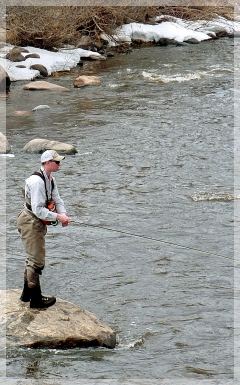
yampa river fishingEven though I’m not an angler, whenever I read about casting my cares, I picture using a fly rod and casting my concerns out into the river so the fast moving water can carry them away to God. When we lived in the mountains, one of our favorite walking trails ran alongside the Yampa River and we often paused to watch as the fishermen (and women) cast their lines into the water. Fly fishing is all about the art of casting and a bit like poetry in motion. It was fascinating to watch an angler flick the rod back and forth, gradually increasing the speed of the motion, before finally casting the line forward so the fly would land in the perfect spot. Masquerading as a water insect, the fly is made of things like fur, feathers, fabric and tinsel and secured to a hook. Rather than purchasing flies, many fishermen spend hours tying their own flies. Not wanting to lose either fly or fish in the river, anglers use at least five different knots to securely connect the reel to the backing, fly line, leader, and tippet before finally tying on the fly.
There is an art to fly casting and fly fishermen spend years perfecting their technique, especially since no one cast is ideal for every situation. Christians, however, aren’t casting flies—they’re casting things like fear, problems, anxiety, and worry—the cares every believer faces in this fallen world. While there’s no special technique to casting those cares, like fly fishing, it’s often easier said than done. Just as a fly fisherman may labor over tying his flies and fret about choosing the perfect ones for the day’s conditions, we often spend a great deal of time focusing on our worries rather than casting them into God’s river. Just as the fisherman ties those five knots to keep from losing his fly, we tie ourselves up in knots when we’re reluctant to give up our cares to God!

The anglers casting their lines in the river want to catch and land a fish but, when we cast our cares, we want to bring in an empty line. They catch, we release! Our cares are not for God to take away from us but for us to release to Him. Because the flies on the end of a fishing line are nearly weightless and our cares often seem as heavy as boulders, casting cares seems harder than casting a fly in the river. Nevertheless, it can be done and is far more rewarding than a trophy-sized trout.

Fishermen go to the river with an empty creel and hope to return home with a full one but we go to God with a creel full of cares so we’ll end up with an empty one. Our creels may be empty but we’ll be filled with the peace of God!

He that takes his cares on himself loads himself in vain with an uneasy burden. I will cast my cares on God; he has bidden me; they cannot burden him. [Joseph Hall]

Peace I leave with you; my peace I give you. I do not give to you as the world gives. Do not let your hearts be troubled and do not be afraid. [John 14:27 (NIV)]

Do not be anxious about anything, but in every situation, by prayer and petition, with thanksgiving, present your requests to God. And the peace of God, which transcends all understanding, will guard your hearts and your minds in Christ Jesus. [Philippians 4:6-7 (NIV)] 

Copyright ©2021 jsjdevotions. All rights reserved.

CONCEIT AND COMPARISON (Galatians 6:2-5 – Part 3)

Carry each other’s burdens; that’s the way to fulfill the Messiah’s law. If you think you’re something when you are not, you deceive yourself. Every one of you should test your own work, and then you will have a reason to boast of yourself, not of somebody else. Each of you, you see, will have to carry your own load. [Galatians 6:2-5 (NTE)]

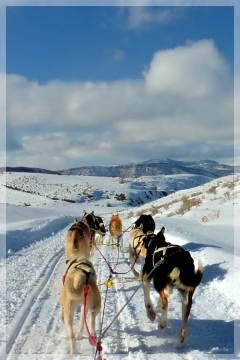
sled dogs mushingThese last few days, I’ve been discussing Paul’s instructions both to carry one another’s burdens and to carry our own loads. In between those two directives, we find a warning about the things that can prevent us from doing that: conceit and comparison.

Conceit is thinking we’re better than we are. In carrying another person’s burden, we must never think ourselves too good to help nor should we think ourselves morally or spiritually superior to someone in their weakness and need. Comparison can lead to competition as we try to determine who is the better Christian by carrying his load better! The Lord has given each of us a task and equipped us with a specific set of skills and spiritual gifts to achieve it. The load given us is our responsibility just as the tasks and talents given to others are theirs. Moreover, we must never compare our virtues with other’s imperfections (leading to pride) or our flaws with others’ accomplishments (leading to jealousy). If we’re going to compare ourselves to anyone, it should be to Jesus!

Oddly, this reminds me again of the Alaskan huskies I wrote about on Monday. Like us, each dog on the team has his own strengths (and weaknesses) and is assigned a position and a specific task that fit his attributes. Because they must follow the musher’s commands, set the pace, and keep the gangline taut, the lead dogs are the most intelligent on the team. No less important, however, are the swing dogs behind them. After the lead dogs make a turn, their critical task is to pull the sled in an arc that keeps the other dogs on the trail. They’re responsible for getting the musher and sled safely around curves and corners. Next are the team dogs—the brawn of the team who pull the sled and maintain the speed. Last, but hardly least, are the wheel dogs. Often the largest members of the team, as the first to take on the sled’s weight when starting out or going uphill, they play a crucial role in pulling and steering the sled.

Like us, each dog has a different skill set and position. Nevertheless, regardless of their position, no dog is more important than another and each is essential to the team. Just as the dogs’ responsibility is to the musher, ours is to God. The Apostle Paul tells us to examine ourselves (not others) to make sure we’re doing the work given to us by God. Like the sled dogs, we must be committed to doing our task well without conceit or comparison, Let us faithfully carry our own phortions and always be willing to carry one another’s baros.

Don’t think of yourselves more highly than you ought to think. Rather, think soberly, in line with faith, the true standard which God has marked out for each of you. As in one body we have many limbs and organs, you see, and all the parts have different functions, so we, many as we are, are one body in the Messiah, and individually we belong to one another. [Romans 12:3-5 (NTE)]

Copyright ©2021 jsjdevotions. All rights reserved.