FIGHT THE GOOD FIGHT

For I am already being poured out as a drink-offering; my departure time has arrived. I have fought the good fight; I have completed the course; I have kept the faith. What do I still have to look for? The crown of righteousness! The Lord, the righteous judge, will give it to me as my reward on that day – and not only to me, but also to all who have loved his appearing. [2 Timothy 4:6-8 (NTE)]
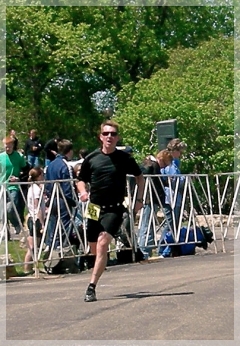
Although the Apostle Paul seems to have mixed figures of speech by referring to the military with “fought” and “fight,” athletics with “race,” and religion with “faith,” all three references relate to athletics. The word used for fought was agónizomai (the root word for the English word “agonize”) which meant “to contend for a prize” or “struggle.” The word translated as “fight” was agōna, meaning “a gathering, contest, struggle.” Rather than a conflict or dispute, it referred to a gathering to see contests like the ancient games held at Olympia or the games themselves. Paul’s audience would have understood that he meant something grueling and, in their 1st century world, athletic competitions were so fierce and brutal that even the winners usually carried scars.

Continuing the theme of athletics, the word usually translated as race or course, was dromos and literally meant a race course or track and the word translated as faith, pistis, referred to a guarantee or warranty that the contender fulfilled his obligations honorably. When Paul spoke of the crown awaiting him, rather than diádēma, meaning a royal crown made of gold and precious stones, he used stephanos which was the circular wreath or garland awarded to victors in ancient athletic games. We could paraphrase Paul’s words as “I have competed well in the struggles of life. I followed the course God set before me, wasn’t disqualified, faithfully finished what I began, and won the victor’s wreath.”

When reading Paul’s words, I remembered the story of John Stephen Akhwari, a marathon runner representing Tanzania in the 1968 Olympics in Mexico City. Having come from a nation with an average altitude of 2,769 feet, the over 7,300-foot altitude of the city caused the runner to cramp up early in the race. Nevertheless, Akhwari kept going. When jockeying for position at the 19K mark, however, he collided with another runner, fell down, injured his shoulder, and cut and dislocated his knee. Seeing his injuries, spectators assumed he would quit (as 18 of the original 75 runners eventually did). The Tanzanian runner, however, chose to fight the good fight and complete the course. After getting his leg bandaged, in spite of the altitude, heat, pain, and knowledge that he couldn’t even place in the race, Akhwari continued.

More than an hour after the winner had crossed the finish line and the medals had been awarded, when the sun had set and the stands were nearly empty, John Stephen Akhwari hobbled into the stadium to complete the 42K race he’d begun nearly three-and-a-half hours earlier. With the few spectators remaining in the stadium cheering him on, Akhwari stepped up his pace and finished the race by running the last hundred meters. When asked why he finished the course, he simply replied, “My country did not send me 5,000 miles to start the race; they sent me 5,000 miles to finish the race.”

Akhwari didn’t receive a medal or a wreath at the 1968 Olympics, but he was the real hero of that race because he did more than start—he finished what he’d begun in spite of overwhelming obstacles. He kept the pistis. Do we have that same kind of determination to fight the good fight—against Satan, disappointment, discouragement, discomfort, and pain? Are we as determined as were the Apostle and Akhwari to finish the course that God has set before us? Will we keep the faith by finishing our course without fouling out or quitting? Of course, in an athletic contest, there’s only one winner—only one gold medal or wreath to place on the victor’s head. The crown of righteousness, however, is available for all who fight the good fight, finish the race, and keep the faith!

Just as coaches use Akhwari’s story to inspire their runners, Paul is encouraging young Timothy to let the Apostle’s story inspire him. May both of their stories inspire us!

Life is a fight, and only the faithful will finish strong. [Brian Tome]

Don’t you know that when people run on the race-track everybody runs, but only one person gets the prize? Run in such a way that you’ll win it. Everyone who goes in for athletics exercises self-discipline in everything. They do it to gain a crown that perishes; we do it for an imperishable one. Well then: I don’t run in an aimless fashion! I don’t box like someone punching the air! No: I give my body rough treatment, and make it my slave, in case, after announcing the message to others, I myself should end up being disqualified. [1 Corinthians 9:25 (NTE)]

Copyright ©2021 jsjdevotions. All rights reserved.

TEACH THE CHILDREN (FATHER’S DAY- 2020)

And you must think constantly about these commandments I am giving you today. You must teach them to your children and talk about them when you are at home or out for a walk; at bedtime and the first thing in the morning. Tie them on your finger, wear them on your forehead, and write them on the doorposts of your house! [Deuteronomy 6:6-9 (TLB)]

elkIn 2018, a woman posted a video on Facebook that was shared over 400,000 times in the next six days. It was of a little boy who had a unique way of reciting his ABCs—each letter was followed by a Bible verse that began with it. Rather than “A is for apple,” the youngster started with “Ask and it will be given to you; seek and you will find,” [Matthew 7:7] and finished with “Zion hears and rejoices.” [Psalm 97:8] In spite of the boy’s dark brown hair and East Texas drawl, the woman mistakenly identified him as blond-haired Prince George, third in line to the British throne. Originally posted in October of 2016, the video actually was of  four-year-old Tanner Hemness from Tyler, Texas.

After the youth minister at Tanner’s church challenged the congregation to learn Bible verses for every letter of the alphabet as a family, Tanner’s dad wasn’t sure his then three-and-a-half-year-old could do it; nevertheless, the family gave it a try. Every week they worked on another letter and verse. Seven months later, Tanner was able to recite his ABCs in Bible verses. We had enough trouble convincing our children that they couldn’t use “Jesus wept” as their personal Bible verse at their confirmations and this little guy learned twenty-six far longer verses! Instead of “Jesus wept,” for J, the youngster learned Hebrews 13:8, “Jesus Christ is the same yesterday and today and forever.”

Although there were many positive responses to seeing this little boy happily reciting God’s word, there also was criticism. Among other things, Tanner’s father was accused of brainwashing, psychological indoctrination, and child abuse. Yet, if he’d spent seven months successfully teaching his son how to hit a baseball or make a basket, those same people probably would have applauded his dedication to the boy. Tanner’s father did exactly what Scripture told him to do: teach God’s word to his child. After all, the Israelites were told to talk about God’s word from morning to night, tie it on their hands, wear it on their foreheads, and post it on their doorways, so writing a different Bible verse on a chalkboard each week doesn’t sound that extreme! It speaks of a father’s dedication to and love for both his family and the Lord! Sadly, if we don’t teach our children to follow Jesus, the world will teach them not to!

The Bible is the basis for our faith; all of our doctrine and practices are guided by God’s word. Unfortunately, many of us are at a loss when it comes to knowing what the Bible actually says. That four-year old boy is further ahead than many adults I know. Of course, Tanner’s dad knows that many of those verses don’t have the same meaning to a child that they do to an adult. Realizing his work is not done, he and his wife will continue sharing God’s word and the meaning of those verses with their son. “The hard part,” said Tanner’s father in an interview, comes with “being the kind of dad who helps him live these words.” He’s made a great start!

Sunday is Father’s Day but, sadly, not all of us had fathers as dedicated to their families and God as does Tanner Hemness. Unfortunately, it is far easier to father a child than to be a father to a child. Some of us never may have known our fathers, can barely remember them, or would prefer not remembering them, at all. Nevertheless, we probably all had men in our lives who inspired, taught, nurtured, guided, and corrected us. If we can’t honor our fathers this day, let us honor them.

Thank you, God, not just for our fathers but for all of the men in our lives who took the time to share your message and teach us your word. Thank you for the men who have shown us what it means to live in God’s light. Fill them with your Holy Spirit so they may continue in your good works.

Teaching kids to count is fine, but teaching them what counts is best. [Bob Talbert]

And now a word to you parents. Don’t keep on scolding and nagging your children, making them angry and resentful. Rather, bring them up with the loving discipline the Lord himself approves, with suggestions and godly advice. [Ephesians 6:4 (TLB)]

Copyright ©2021 jsjdevotions. All rights reserved.

JUST DOING OUR DUTY

When a servant comes in from plowing or taking care of sheep, does his master say, “Come in and eat with me”? No, he says, “Prepare my meal, put on your apron, and serve me while I eat. Then you can eat later.” And does the master thank the servant for doing what he was told to do? Of course not. In the same way, when you obey me you should say, “We are unworthy servants who have simply done our duty.” [Luke 17:7-10 (NLT)]

swamp lilyWhen one of his congregation suddenly stopped coming to church, a pastor friend asked him about his absence. The man angrily explained that he’d stopped attending because the pastor hadn’t suitably (and publicly) recognized his large donation to the church’s building fund. My friend assured the miffed man that, had the money been given to the pastor for his personal use, he would have thanked him profusely. But, he added, the money hadn’t been given to him; it was given to God! While the church truly appreciated it (and had acknowledged it in his contribution statement), the issue of both the donation and any recognition or thanks really was between the donor and God. A similar experience was shared by a friend who is in charge of the care ministry for her church. One of her volunteers quit because she felt the church had failed to sufficiently appreciate and publicize her service.

To avoid such complaints, perhaps, along with official greeters, we need official “thankers” in our churches. Of course, if the church had members whose official job was to thank everyone for their service, who would they get to thank the thankers? I can see the makings of a Dr. Seuss book in which the last little Thankaroo, whose job is to thank you and you, after asking who’d thank him, gets in a snit and declares he’s through! Who will thank the last Thankaroo?

It’s only human to want to feel appreciated and acknowledged but, if we’re looking for recognition and honor from people, we’re bound to become disappointed and disillusioned. Let’s remember that we don’t serve mankind; we serve God. Our service does not put Him in our debt because we are saved by grace not works.

Jesus addressed this very issue in His parable about the master and the servant. At first His words seem somewhat harsh, but He wasn’t demeaning the work of a servant; He was emphasizing the correct servant attitude. Servants of Jesus are believers who willingly live under His authority. A good servant knows it’s an honor to serve, willingly does one task after another, and doesn’t expect thanks, praise, or recognition for doing his duty. His obedience to his master is not commendable; it is expected!

We serve God out of love, not out of expectation of public recognition or reward. We certainly should not feel self-righteous about anything we’ve done in His name because all we’ve done is what is expected of us!

As God’s servants, we serve inconspicuously, willingly, and joyfully. Humbly admitting we’ve done no more than is our duty, we don’t serve to get thanks but rather to give thanks to God for the blessings of this world. Not expecting to be singled out for praise by our fellow man, we are thankful to serve. Hearing the Lord say, “Well done, you good and faithful servant!” will be far better than any other recognition given to us in the here and now!

“Watch out! Don’t do your good deeds publicly, to be admired by others, for you will lose the reward from your Father in heaven. When you give to someone in need, don’t do as the hypocrites do—blowing trumpets in the synagogues and streets to call attention to their acts of charity! I tell you the truth, they have received all the reward they will ever get. But when you give to someone in need, don’t let your left hand know what your right hand is doing. Give your gifts in private, and your Father, who sees everything, will reward you. [Matthew 6:1-4 (NLT)

Copyright ©2021 jsjdevotions. All rights reserved.

THAT’S NOT ALL BAD (Part 2)

And the Lord said to Moses, “I have seen this people, and behold, it is a stiff-necked people.” [Exodus 32:9 ESV)]

And he [Moses] said, “If now I have found favor in your sight, O Lord, please let the Lord go in the midst of us, for it is a stiff-necked people, and pardon our iniquity and our sin, and take us for your inheritance.” [Exodus 34:8-9 (ESV)]

great egretFor the most part, being a “stiff-necked people” is a pejorative label, but could there be occasions when that’s exactly what we should be? Are there times we should be intractable, stubborn, and uncompromising—even instances we should disregard the law?

After noting “the natural innate obstinacy of the race,” Rabbi Samson Raphael Hirsch (1808-1888) believed that very quality is what, “made Israel the most suitable for the revelation of the Divinity of His Torah.” In spite of their willfulness and disobedience to God, would anyone but a stiff-necked people have managed to retain their belief in Jehovah and His word during seventy years of captivity in idolatrous Babylon? Would anyone but a stiff-necked people have insisted on returning to the ruins of Jerusalem to rebuild their Temple so they could worship the one true God? Would anyone but a stiff-necked person have refused to bow down to Haman (an Amalekite and ancient enemy of Israel), as did Mordecai? Wouldn’t you have to be stiff-necked to be hungry and yet refuse to eat “unclean” Babylonian food as did Daniel and his friends; to face death by staunchly refusing to worship Nebuchadnezzar’s gold statue as did Shadrach, Meshach, and Abednego; or to blatantly break the law by praying to God rather than King Darius as did Daniel? As troublesome as their stiff-necked nature was at times, it allowed our Jewish brothers and sisters to persevere more than 3,400 years through captivity, diaspora, pogroms and the Holocaust.

As for being stiff-necked and obstinate (even contumacious), let’s look at the early church. Peter and the apostles were so stiff-necked that even after being arrested and ordered by the Sanhedrin to stop speaking of Jesus, they boldly continued  to do so. Stephen, Christianity’s first martyr, was so stiff-necked that he openly debated with the Jews, stood his ground before the Sanhedrin, and continued to speak of Jesus until his dying breath. The Apostle Paul was stiff-necked enough to persevere for Christ through beatings, stonings, floggings, shipwrecks, trials, and imprisonment. In fact, John is the only one of the apostles believed to have died a natural death (the rest having been martyred) and church tradition holds that he’d once been boiled in oil! They all were stiff-necked when it came to following Jesus!

Ancient Rome would have been tolerant of Christians had they just been willing to make a sacrifice to the emperor as if he were divine. With their “stiff-necks,” however, the early church refused to compromise their faith and were persecuted because of their treason to the Empire. As for being contumacious (stubbornly or willfully disobedient to authority)—for most of the time between 100 and 313 AD (and the Edict of Milan), it was illegal to be a Christian and yet about a tenth of the Roman Empire were Christians! Christianity survived because of its “stiff-necked,” inflexible, and uncompromising faith in Jesus!

There is a fine line between being steadfast and obstinate but let us remember that we are called to be inflexible and uncompromising when it comes to our faith and loyalty to the Lord!

Therefore, my beloved brothers, be steadfast, immovable, always abounding in the work of the Lord, knowing that in the Lord your labor is not in vain. [1 Corinthians 15:58 (ESV)]

Blessed is the man who remains steadfast under trial, for when he has stood the test he will receive the crown of life, which God has promised to those who love him. [James 1:12 (ESV)]

 Copyright ©2021 jsjdevotions. All rights reserved.

A STIFF-NECKED PEOPLE (Part 1)

“I have seen these people,” the Lord said to Moses, “and they are a stiff-necked people. [Exodus 32:9 (NIV)]

Do not be stiff-necked, as your ancestors were; submit to the Lord. Come to his sanctuary, which he has consecrated forever. Serve the Lord your God, so that his fierce anger will turn away from you. [2 Chronicles 30:8 (NIV)]

great blue heronAlthough the Israelites often have been called the “Chosen People,” God chose a far less complimentary term early in the exodus when He called them “a stiff-necked people.” Having nothing to do with the stiff neck that comes with a long drive, sleeping in an awkward position, or hunching long hours over the computer, “stiff-necked” figuratively means stubborn, inflexibly obstinate, and even contumacious (which means flagrantly disobedient, rebellious or persistently refusing to obey a court order).

A commonly used term describing an obstinate ox, the Israelites didn’t need an explanation to know what God meant by “stiff-necked.” Ancient plows usually were drawn by a team of two oxen. While the plowman held the reins in one hand, in the other he carried an ox-goad: a pole with an iron spike on the end. The ploughman used it to prick the oxen on their back legs to increase their speed and on their necks to make them turn. A “stiff-necked” ox would keep his neck straight and refuse to turn even when poked by the goad. “Stiff-necked” perfectly described the intractable spirit of the Israelites, a people who seemed unwilling to respond to the commands of God. As the prophets later declared, it was because they were a stiff-necked people that God promised His judgment on Jerusalem.

While there are several “stiff-necked” references in the Old Testament, there is only one in the New. It occurs in Acts when Stephen spoke to the Sanhedrin. By summarizing God’s dealings with the Jews, he showed God’s faithfulness to Israel and then, calling them a “stiff-necked people,” he boldly accused them of resisting God just as their forefathers did. Instead of taking Stephen’s message to heart, the Sanhedrin grew furious. Rather than respond to God’s prod, they covered their ears, dragged Stephen into the street and stoned him. Indeed, like their forefathers, they were a stiff-necked people and not about to consider a new and better way—Jesus’ way.

Stiff-necked: stubborn, unmanageable, demanding, obstinate, headstrong, willful, pig-headed, uncooperative, uncompromising, troublesome, unaccommodating, and difficult. Do any of those words describe someone we know? At one time or another (probably more often than not), some of those adjectives could be used to describe any one of us. Are we ever so certain we’re right that we won’t even consider the possibility of error on our part? Unwilling to examine our opinions, motives, or behavior, do we ever refuse to listen to different points of view? Are we ever short on repentance and long on excuses, defensive when corrected, or unwilling to accept responsibility for our failures? Guilty, as charged! I may not be as stiff-necked as the Israelites; nevertheless, God frequently needs to use a sharp prod to get me moving in the right direction. Moreover, in spite of His prodding, I often seem bound and determined to go my way instead of His.

Father, forgive us when we are stubborn and obstinately insist on going our own way, when we’re inflexible and unwilling to adjust to circumstances, and when we defiantly refuse to listen to your truth. Keep prodding us to do your will; don’t let us be a stiff-necked people.

The Lord warned Israel and Judah through all his prophets and seers: “Turn from your evil ways. … But they would not listen and were as stiff-necked as their ancestors, who did not trust in the Lord their God. [2 Kings 17:13a,14 (NIV)]

Copyright ©2021 jsjdevotions. All rights reserved.

IT’S OKAY

Our hearts ache, but we always have joy. We are poor, but we give spiritual riches to others. We own nothing, and yet we have everything. [2 Corinthians 6:10 (NLT)]

lilac breasted rollerToday’s email contained a meme of that lovable loser Charlie Brown with the caption: “The smile on my face doesn’t mean my life is perfect. It means I appreciate what I have and what I have been blessed with. I choose to be happy.” The meme reminded me of words spoken by Jane Marczweski when she appeared on America’s Got Talent last week: “You can’t wait until life isn’t hard anymore before you decide to be happy.” Known as Nightbirde, the 30-year-old vocalist sang an original song called “It’s Okay” and received the “golden buzzer” from judge Simon Cowell. She said she wrote the song as a reminder that, “You can be happy and also be going through something really hard at the same time—you don’t have to pick one or the other.”

The young woman knows what she’s talking about. After being treated for breast cancer in 2017, numerous tumors in her lungs, liver, nymph nodes, ribs, and spine were discovered in December of 2019. The overwhelming diagnosis of terminal cancer came with the prognosis of six months to live and only a 2% chance of survival. But, as she optimistically says, “2% is not zero. 2% is something and I wish people knew how amazing it is.” Although declared “cancer-free” after her second battle with cancer, she recently was diagnosed with this terrible disease a third time. At the time of her audition, she had “some cancer” in her lungs, spine and liver. Although Jane received more treatment after the audition, it is too early to know the results. But, as she so aptly puts it, “2% is not zero!”

As Christians, we shouldn’t need a cartoon character meme or even an amazing young woman’s example to remind us that circumstances need not determine our state of mind. Regardless of what we happen to be going through, as Christians, we know we are blessed every day in every way. Faith is trusting God’s plan, as inexplicable (and unpleasant) it may be. Faith is being able to smile in the midst of pain because we know that, in spite of our anguish, God loves us. Faith is being able to rejoice in the Lord regardless of what He throws at us because we know that we are not alone. As Christians, we know that faith is not about everything turning out okay; faith is about being okay regardless of how things turn out! Faith is being able to echo the words of Job: “The Lord gave, and the Lord has taken away; Blessed be the name of the Lord.” [1:21]

But here’s one thing I do know: when it comes to pain, God isn’t often in the business of taking it away. Instead, he adds to it. He is more of a giver than a taker. He doesn’t take away my darkness, he adds light. He doesn’t spare me of thirst, he brings water. He doesn’t cure my loneliness, he comes near. … And I guess that means I have all the more reason to say thank you, because God is drawing near to me. [Jane Marczweski (Nightbirde)]

So be truly glad. There is wonderful joy ahead, even though you must endure many trials for a little while. … You love him even though you have never seen him. Though you do not see him now, you trust him; and you rejoice with a glorious, inexpressible joy. [1 Peter 1:6,8 (NLT)]

Always be joyful. Never stop praying. Be thankful in all circumstances, for this is God’s will for you who belong to Christ Jesus. [1 Thessalonians 5:16-18 (NLT)]

Copyright ©2021 jsjdevotions. All rights reserved.