
Trust in the Lord with all your heart; do not depend on your own understanding. Seek his will in all you do, and he will show you which path to take. [Proverbs 3:5-6 (NLT)]
 Every Friday, I’m emailed a “weekly wisdom” consisting of two pithy sayings like, “Don’t just trust God for things; trust Him in things,” or “You can’t enjoy today if you’re worrying about the past or the future.” Last week’s wisdom really hit home with, “Not every good idea is a God idea!” More than once, I’ve looked back with regret while saying, “It seemed like such a good idea at the time!”
When she did it, eating that forbidden fruit probably seemed like a good idea to Eve just as moving to the beautiful grazing land near Sodom seemed a good idea to Lot. David’s ideas about taking a census to know the strength of his troops and transporting the Ark on a cart might have seemed good ones at the time but he lived to regret them. Fresh from his victory over Edom, King Amaziah may have thought it good strategy to challenge King Jehoash of Israel and, anxious for a child, Sarah probably thought it a good plan to give Hagar to Abraham. Saul’s idea to make sacrifices without waiting for Samuel, Rebekah’s scheme to deceive Isaac, and Hezekiah showing off his riches to envoys from Babylon may have seemed like good ideas at the time but, like those others, they weren’t! They may have looked like good ideas but none were God’s idea and all ended badly.
What those words of wisdom should have added, however, is that not every God idea seems like a good one. In fact, many make no sense to our mortal reasoning. Even though it was God’s idea to lead the people back toward Egypt and camp facing Pharaoh’s army with their backs to the Red Sea, it probably didn’t seem like a good idea to Moses and the Israelites. Joshua probably had reservations about exhausting his troops by marching them around Jericho for seven days and Gideon must have wondered at the wisdom of reducing his army of 32,000 to 300. Being told by God to deliberately marry a promiscuous woman who would betray him probably made no more sense to Hosea than buying land occupied by the Babylonians did to Jeremiah or building an enormous boat with no water nearby did to Noah. Nevertheless, as unreasonable as God’s ideas might have seemed to them, they faithfully obeyed. Regardless of appearances, they knew that God’s ideas are good ones!
We tend to think that the ideas we like are good ones (and God’s) and the ideas we don’t like couldn’t possibly come from Him which makes it difficult to discern the difference between God’s ideas and ours. The more we know of Him and His word, however, the easier it will be to determine if our good ideas and God’s ideas are the same. Even when God’s idea doesn’t seem like a good one, rest assured that, when God tells us to do (or not to do) something, we can know that His idea is far better than any we might have!
God does not exist to answer our prayers, but by our prayers we come to discern the mind of God. [Oswald Chambers]
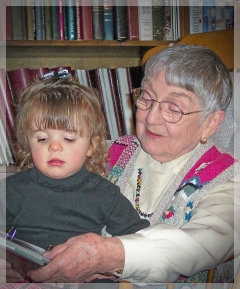 Growing up, one of my favorite hymns was, “I Sing a Song of the Saints of God.” Its author, Lesbia Scott, wrote hymns for her children as expressions of the family’s faith. Not originally intended for publication, she wrote this song to emphasize that saints lived not just in the distant past but also in the present day. My favorite verse was the final one and I recall singing it loudly with childlike enthusiasm: “The world is bright with the joyous saints who love to do Jesus’ will. You can meet them in school, on the street, in the store, In church, by the sea, in the house next door; They are saints of God, whether rich or poor, and I mean to be one too.”
 I thought of that great fixed chasm between heaven and hell again after reading C.S. Lewis’ fantasy, The Great Divorce. Lewis clearly warns his readers that the book is a fantasy, what he calls “imaginative supposal,” and should be read that way. He does, however, add that it does have a moral. The book’s unnamed narrator (presumed to be Lewis) describes what seems to be hell as a grey, dingy, and utterly joyless place where quarrelsome souls continually argue with one another and move further and further apart. Finding himself there, the narrator joins others as they take a bus ride from this grey world to a vibrant, beautiful, and substantial place that appears to be heaven.
 Shortly after accusing the Pharisees of being more concerned with appearing righteous than being righteous and warning them that God knew what was in their hearts, Jesus told them a story about a rich man (who probably appeared quite righteous) and a beggar named Lazarus. The leprous and destitute Lazarus sat by the rich man’s gate and begged for scraps from the man’s table while mangy dogs licked at his wounds. The rich man ignored the beggar; to him, Lazarus probably was a little more than a piece of trash to step over before entering his home. When Lazarus died, he was carried by angels to a heavenly banquet and seated in a place of honor beside Abraham. When the rich man died, however, he ended up in Hades or Sheol, the realm of the dead. The mention of “torment” and “flames” there indicates that the rich man was in what Jewish tradition called Gehinnom (a place of fire and anguish).
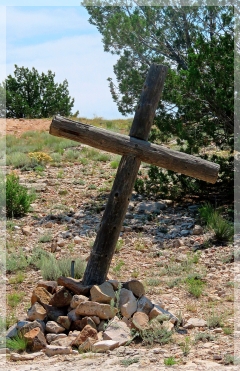 While Scripture tells us about Martha and Mary, the first mention of their brother is when his sisters sent a message to Jesus that Lazarus had taken sick. By the time Jesus returned to Bethany, Lazarus had been dead four days and placed in a tomb. After Jesus called for him to come out, the once dead man, still wrapped in his graveclothes, emerged. The next we know of Lazarus is that he was present when Martha served a dinner in Jesus’ honor. Because the testimony of those who’d witnessed his miraculous resurrection had spread like wildfire, people gathered there to see the living Lazarus and Jesus, the man who brought a dead man back to life with just a few words.
 Here I am again, with a broken ankle and wearing a knee-high air-boot for the next eight to ten weeks! We have guests visiting next Friday and, since they’re avid gardeners, we’d initially planned on taking them to the Botanic Gardens. Yesterday, I suggested a change in plans since a stroll through the gardens is beyond my walking ability. When my husband suggested pushing me in one of the garden’s wheelchairs, I began protesting until I recalled a similar situation over six years ago when my foolish pride almost prevented me from accepting the help I needed.
 Devotions of the Heart