LAS POSADAS – LODGING (1)

And while they were there, the time came for her to give birth. And she gave birth to her firstborn son and wrapped him in swaddling cloths and laid him in a manger, because there was no place for them in the inn [Luke 2:6-7 (ESV)]

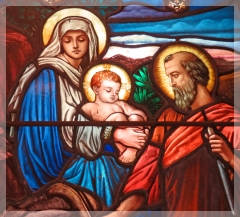
Holy FamilyTomorrow (December 16) is the first day of Las Posadas. Originally a solemn Christmas novena, it was brought to Mexico in 1587 by Spanish priests. Perhaps, because it occurred during the Aztec celebration of the birthday of their pagan god Huitzilopochtli, what began as formal nine-day prayer vigil eventually moved out of the church and into the community where it became a nine-day religious pageant.
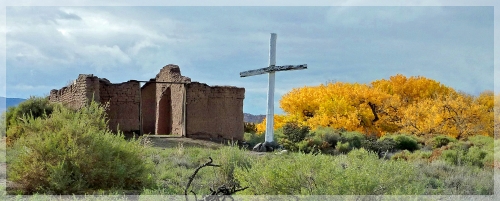
Posadas is Spanish for “lodgings” or “accommodations” and the ritual commemorated Mary and Joseph’s trip from Nazareth to Bethlehem. At dusk December 16, people dressed up as Mary and Joseph, angels, and shepherds reenacted the couple’s journey and their unsuccessful search for lodging. Going to several houses each night, the pilgrims (called Peregrinos) were sent away until the ninth night (Christmas Eve) when they finally were given shelter. People along the route decorated their homes’ entrances with luminaria to light the way. This tradition spread into our nation’s southwest when Catholic settlers migrating from Spain and Mexico came northward.

When reenacting Mary and Joseph’s quest for housing, the participants sang a carol called “Pidiendo Posada” and the verses alternated between those outside seeking lodging and those responding from behind their doors. “In the name of the heavens I request lodging from you…,” sang the pilgrims while, from inside, they’re told it’s not an inn and the door won’t be opened because they could be scoundrels. The song went back and forth as the pilgrims begged for mercy and promised God’s reward but were answered with denials, excuses, and threatened with a beating. Although the Peregrinos identified Mary as “the Queen of Heaven,” the response was doubt that a queen would travel without an entourage. Not until the last house and entrance was gained was the final verse sung: “Enter holy pilgrims. Receive this haven. That although it’s a poor dwelling I offer it to you from the heart.”

When a homeowner received the Peregrinos, they were welcomed with food and a piñata shaped like a seven-pointed star. Like everything else about Las Posadas, the star had religious significance. Representing the star of Bethlehem, each of its points represented one of the seven deadly sins, and its bright colors denoted the lure of sin. Participants were blindfolded and made to turn around 33 times before trying to hit and break the piñata with a stick. The 33 turns represented the years in Jesus’ life and the resulting dizziness denoted the disorientation caused by temptation. The blindfold signified Christians’ blind faith that good will triumph over evil, the stick represented the virtue needed to overcome sin, the breaking of the piñata symbolized the triumph of good over evil, and the candy and fruit that spilled out once the piñata broke open signified the riches of the kingdom of Heaven. The rituals of Las Posadas served as a perfect way to teach a largely illiterate population the Christmas story and the gospel message.

Through the centuries, piñatas have lost most of their religious connotation and can be found in all sorts of shapes and sizes at all times of the year. While Las Posadas celebrations continue wherever a large Hispanic population is found, its observance has changed, as well. Rather than the original nine days of  processions, it often is observed only one night. Like the piñata and many of our Christmas traditions, it even has become secularized in some places with Santa’s appearance.

Beyond its pageantry and symbolism, what does Las Posadas mean to those of us who are neither Roman Catholic nor of Hispanic origin? Since it’s about welcoming strangers in need, we might recall that this beautiful tradition was brought to our country hundreds of years’ ago by immigrants who, like the Holy Family, were seeking a place of refuge. There are parallels between Joseph and Mary’s pilgrimage to Bethlehem (and their escape from Herod into Egypt) and the challenges today’s migrant families face when they flee their countries. While Las Posadas is about the importance of finding room for Jesus in our hearts so that His Spirit can live in us, it also is about finding room in our hearts for others who, like Joseph and Mary, seek safe shelter. A local Hispanic pastor explained that Las Posadas is about “doing right by Christ.” Let us remember that Jesus made it clear what doing right by Him meant.

There was no room that night so long ago, will we make room for Him today?

Then the King will say to those on his right, “Come, you who are blessed by my Father, inherit the kingdom prepared for you from the foundation of the world. For I was hungry and you gave me food, I was thirsty and you gave me drink, I was a stranger and you welcomed me, I was naked and you clothed me, I was sick and you visited me, I was in prison and you came to me.” Then the righteous will answer him, saying, “Lord, when did we see you hungry and feed you, or thirsty and give you drink? And when did we see you a stranger and welcome you, or naked and clothe you? And when did we see you sick or in prison and visit you?” And the King will answer them, “Truly, I say to you, as you did it to one of the least of these my brothers, you did it to me.” [Matthew 25:34-40 (ESV)]

Copyright ©2021 jsjdevotions. All rights reserved.

PRAY FOR THEM – Part 1

Dear brothers and sisters, I urge you in the name of our Lord Jesus Christ to join in my struggle by praying to God for me. Do this because of your love for me, given to you by the Holy Spirit. [Romans 15:30 (NLT)]

Zion Presbyterian - Schapville IllinoisThe story is told about a pastor who was shaking hands with his congregation after church one Sunday morning when a little boy handed him a dollar. After thanking him, the pastor asked what it was for. The youngster replied, “It’s for you, because I heard my daddy say that you were the poorest preacher that we ever had.” How easy it is to criticize our pastors when, instead, we should be praying for them.

Have we given thought to the fact that our pastors are people just like us and prone to the same physical, emotional, and spiritual challenges? Expected to produce inspiring sermons every week, their family lives in a fish bowl, they’re on call every hour of every day and, unlike Superman, are vulnerable to far more than kryptonite! Like the rest of us, they get sick, lonely, tired, disappointed, discouraged, angry and can feel inadequate, depressed, overworked, and under-appreciated. A clerical collar does not protect our pastors from the hazards of living in our fallen world; like you and me, they endure illness, injury, family problems, loss, financial hardship, and temptation yet, for some reason, we find it easier to criticize them than to pray for them!

Ministry never has been and never will be a one-man show! The Apostle Paul understood he couldn’t conduct his ministry alone and, knowing he needed God’s power, frequently asked the church for their prayers. Although Paul asked for prayers, our pastors frequently don’t. Just because they don’t ask, however, doesn’t mean they’re not in need of them!

Rather than complaining to his son about the minister’s poor preaching, the man could have asked God to refresh the pastor’s call to preach so that his sermons would inspire and revive the congregation. Prayers for our pastors, however, aren’t limited to complainers; along with praying for their preaching, we should pray for their spiritual discernment, evangelism opportunities, ministry effectiveness, leadership, wisdom, courage, and spiritual protection. As we pray for our pastors’ physical, spiritual, and mental health, let us remember to pray for their families. Our churches seem to have councils, altar guilds, prayer chains, small group leaders, hospitality committees, and worship, set-up and evangelism teams, but do they have anyone who regularly prays for the pastors?

Evangelist, author, and radio host Woodrow Kroll said that, “Pastors need your grace, not your gripes.” I would suggest they need our prayers, as well.

And pray for me, too. Ask God to give me the right words so I can boldly explain God’s mysterious plan that the Good News is for Jews and Gentiles alike. I am in chains now, still preaching this message as God’s ambassador. So pray that I will keep on speaking boldly for him, as I should. [Ephesians 6:19-20 (NLT)]

Copyright ©2021 jsjdevotions. All rights reserved.

HE ALWAYS ANSWERS

Why do you accuse God of not answering anyone?  God does speak—sometimes one way and sometimes another—even though people may not understand it. He speaks in a dream or a vision of the night when people are in a deep sleep, lying on their beds. He speaks in their ears and frightens them with warnings to turn them away from doing wrong and to keep them from being proud. [Job 33:13-17 (NCV)]

monarch butterflyWhile sorting through comic strips I’d saved, I came across an old Beetle Bailey (written by Greg and Mort Walker). In it, the inept General Halftrack approaches the chaplain and says, “I’d like to talk to God like you do, but when I try to talk to him, He doesn’t answer.” Chaplain Stainglass replies, “Maybe you’ve been calling the wrong number!” Indeed, sometimes the silence seems deafening when we call on God but I don’t think it’s because we’ve called the wrong number. The general simply may have hung up too quickly! Abraham determinedly pled for the city of Sodom, Hannah untiringly prayed for a son, Elijah persisted in praying for rain, and the Syrophoenician woman stubbornly begged Jesus to heal her daughter. They continued to call and God answered them all! Then again, maybe the General was so busy talking, that he didn’t hear God answer him!

The General may have missed the answer because he didn’t recognize God’s voice. Perhaps he expected to hear an audible voice as did Moses in the meeting tent or Paul on the road to Damascus. Maybe the general imagined God’s words would come from an angel as they did to Mary and the shepherds long ago. Most of us, however, will have neither a face-to-face meeting with God nor an encounter with a host of angels. It’s more likely that God will use the voices of other believers when He talks to us as He did with the prophets to Israel and Judah, Jethro to Moses, Samuel to Saul, and Paul to Timothy.

Nature and natural events are another way God speaks. The thunder, lightning, quaking and smoke at Mt. Sinai certainly made God’s presence clear to the Israelites. He spoke through both a flood and a rainbow to Noah and a star to the Magi. Because God has a specific plan for our lives, we also will find God’s voice in our circumstances. When, like the Israelites, we find ourselves between an army and the sea or a rock and a hard place, He may be telling us to trust Him. If, like Jonah, we end up in the belly of a whale, He might be teaching us about obedience. Sometimes God’s even speaks through the supernatural as He did to Gideon with the fleece, to Moses with the burning bush, to Balaam with a talking donkey, and to King Belshazzar with writing on the wall.

Dreams and visions are another way God speaks. It was in a dream that God told Abimelech that Sarah was Abraham’s wife and a vision led Ananias to visit Paul. In one dream, Jacob saw angels ascending and descending from a ladder and, in another, God told him to return home. It was through Joseph’s dreams God spoke to him and through Pharaoh’s dreams that Joseph knew of Egypt’s future famine.

God also He speaks to us through the Holy Spirit. While some refer to Him as that “still small voice,” the Holy Spirit is anything but still or small when He points out our sins or has an assignment for us. Speaking to our hearts and often through our conscience, the Holy Spirit helps us discern God’s will, convicts us when we go astray, and gives us a sense of peace when we’ve taken the right path.

Perhaps the General forgot that God already provided him with plenty of answers in the Bible. All of scripture is God-breathed and His word is filled with wisdom and guidance. The words of Jesus are as relevant today as they were over 2,000 years ago. We, however, have to do our part by reading those words!

Like the General, we all have times when it seems God is away from his desk and ignoring our calls. The problem isn’t with God; it’s with us. We’re just not listening with our ears, eyes and hearts!

And the sheep listen to the voice of the shepherd. He calls his own sheep by name and leads them out. When he brings all his sheep out, he goes ahead of them, and they follow him because they know his voice. … My sheep listen to my voice; I know them, and they follow me. [John 10:3-4,27 (NCV)]

Copyright ©2021 jsjdevotions. All rights reserved.

SEVEN TYPES

What sorrow awaits you teachers of religious law and you Pharisees. Hypocrites! For you are like whitewashed tombs—beautiful on the outside but filled on the inside with dead people’s bones and all sorts of impurity. Outwardly you look like righteous people, but inwardly your hearts are filled with hypocrisy and lawlessness. [Matthew 23:27-28 (NLT)]

purple coneflowerJesus often took the Pharisees to task, not for their theology, but for their behavior. With the Talmud’s description of seven different kinds of Pharisees, six of whom were contemptible, we know that the Jews were not unaware of their failings. Since Jesus was well-versed in Jewish law and tradition, I wonder if He was thinking about the Talmud’s list when He pronounced seven woes upon the scribes and Pharisees.

The Talmud mentions the Shikmi or “Shoulder” Pharisee who ostentatiously wore his good works on his shoulder for all to see. Next was the Nikip Pharisee; he was the “Stumbling” or “Wait-a-Minute” fellow who could always find a good deed that needed to be done and a reason why he couldn’t do it. The Kizai was the “Bruised” or “Bleeding” Pharisee who was so sanctimonious that he kept his eyes turned away from any woman. As a result, he kept bumping into things and hurting himself. The “Hump-Backed” or “Mortar and Pestle” Pharisee pretentiously showed his extreme humility by remaining bent over and shuffling his feet. Believing that God owed Him for every good he did, the “Ever-Reckoning” or “Always-Counting” Pharisee self-righteously kept score of his good deeds and the “Timid” or “Fearful” Pharisee did good works only out of fear that God would punish him if he didn’t. The seventh type was the “God-Loving” or “God-Fearing” Pharisee who really loved God and did good deeds to please the Lord. Perhaps Nicodemus, the Pharisee who came to Jesus personally, defended Him, and brought spices to His grave was such a man.

Jesus’ words of condemnation shouldn’t be limited to 1st Century Pharisees; they hold true for all of us. What might Jesus say about some of those who profess to be His followers today? Thinking of the seven kinds of Pharisee, I replaced the word “Pharisee” with “Christian” and saw much that was recognizable in the 21st century church.

There are plenty of “Shoulder” believers who subtly manage to make sure everyone is aware of their good works. If we don’t pat them on the back, they’ll do it for us. Yet, Jesus told us not to do our good works for the admiration of others. As for the “Wait-a-Minute” believers, if you’ve ever served on a church committee, you’ve met one (or more) of these. “Yes, it needs to be done but I can’t do it now,” is their permanent response to any call. They forget that sins of omission are no less wrong than sins of commission. When I reflect on the scandals and abuse that have rocked our churches, I think of the “Bruised” believer—the one who so publicly and virtuously denounces sexual sin while secretly bumping right into it. Then there’s the “Hump-Backed” believer whose pious self-effacement and insincere humility beg for public praise. False modesty is no more attractive in a Christian than it was for a Pharisee.

We also have the “Always-Counting” believers who can list every noble thing they’ve ever done (and every ignoble one done by anyone else). Thinking their score card entitles them to preferred treatment, they get angry with God when life goes awry. Good works, however, are to be done from the heart and not as a way of warding off trouble. Moreover, God is the only one allowed to keep score and any reward will occur in in the next life, not this one. The “Fearful” believer is the one who can’t accept his salvation or believe that he’s really forgiven. Afraid of hellfire and damnation, he tries to earn his ticket into heaven with good works. Salvation, however, is God’s gift and can’t be earned. Saving the best for last, we come to the “God-loving” believer, the one who does good works, not for praise, brownie points, or to ward off trouble, but out of love for God and his fellow man.

If Jesus walked into your church today, which of the seven would you be?

But I warn you—unless your righteousness is better than the righteousness of the teachers of religious law and the Pharisees, you will never enter the Kingdom of Heaven! [Matthew 5:20 (NLT)]

Copyright ©2021 jsjdevotions. All rights reserved.

SNAP IN OUR CELERY

Now that I am old and gray, do not abandon me, O God. Let me proclaim your power to this new generation, your mighty miracles to all who come after me. [Psalm 71:18 (NLT)]

pansyEvery year, Britain’s The Oldie magazine celebrates the achievements of the “older generation’ by granting their “Oldie of the Year Awards.” According to the magazine’s founder, Richard Ingrams, it’s not enough for someone simply to be an “elderly achiever”—you also must show that you still have “snap in your celery.” This year, wanting to recognize Queen Elizabeth II for her leadership during the pandemic, the magazine offered her the honor of being their “Oldie of the Year.” The 95-year-old monarch, however, politely declined saying, “Her Majesty believes you are as old as you feel, as such The Queen does not believe she meets the relevant criteria to be able to accept, and hopes you will find a more worthy recipient.” What a great attitude; there’s a woman who still has snap in her celery!

What defines “old?” Is it a matter of years or mind? When we spent our winters in Colorado, we often saw Banana George (aka George Blair) in his signature yellow jumpsuit shredding the slopes on his yellow snowboard. In his eighties and early nineties at the time, George didn’t even learn to snowboard until he was 75. This stunt water skier and star of the Cypress Gardens water show was 40 before he even learned how to water ski! At 46, George started barefoot water skiing and became famous for skiing on one foot while holding the tow rope between his teeth (a feat he continued doing until he was 79)! George continued water skiing and snowboarding until he was 92 when, suffering from the devastating effects associated with Lewy Body Dementia, he reluctantly put away his water skis and snowboard. When speaking of George, his wife said, “He wanted to make people happy, so he did all these things and made everybody happy.” Banana George certainly had “snap in his celery!”

It’s easy for us “seniors” to consider youth a prerequisite for serving God and even easier for the younger generation to think of us as “over the hill.” After all, David was about seventeen when he defeated Goliath and Daniel and his three friends were in their mid-teens when they boldly refused to eat the king’s food. Shadrach, Meshach and Abednego were no more than thirty when they bravely chose a fiery furnace over worshiping Nebuchadnezzar’s statue. Samuel was just a lad when he readily answered God’s call, Jeremiah was only 17 when he became a prophet, Esther was barely out of her teens when she saved a nation, and Mary was barely in her teens when she chose to become mother to the Messiah. It’s believed that Timothy was around 20 when he joined Silas and Paul on the Apostle’s second tour through Asia Minor and less than 40 when he took charge of the church at Ephesus.

Youth, however, is not a requirement for doing God’s work. Abraham was 75 when he left Haran and headed for Canaan. 80 when he led the Israelites out of Egypt, Moses guided them for another 40 years. When they led the Israelites across the Jordan, we know that Caleb was 79 and Joshua was about the same age. Moreover, contrary to popular belief (and most Sunday school coloring pages), Daniel was not a young man when he faced those lions. 66 years had passed since his arrival in Babylon and, by the time he was thrown to the lions, Daniel was around 82! At that age, we’d expect a stroke or heart attack to finish him off before the hungry beasts could. Nevertheless, Daniel survived and continued to record his prophetic visions for at least three more years. Along with their faith in God, these men had snap in their celery!

We probably won’t be nominated as the “Oldie of the Year” or water ski and snowboard until our nineties but, like Queen Elizabeth and “Banana” George, we can continue to have a passion for life. Moreover, like those Biblical “oldies” we can have a passion for serving the Lord. Since none of us are old by God’s standards (after all, He’s older than time itself), our age should be determined by attitude rather than years. As Author Erma Bombeck once said, “When I stand before God at the end of my life, I would hope that I would not have a single bit of talent left and could say, ‘I used everything you gave me.’” May we all endeavor to keep the snap in our celery!

Here is the test to find whether your mission on earth is finished: If you’re alive, it isn’t. [Richard Bach]

Though our bodies are dying, our spirits are being renewed every day. For our present troubles are small and won’t last very long. Yet they produce for us a glory that vastly outweighs them and will last forever! [2 Corinthians 4:16b-17 (NLT)]

Copyright ©2021 jsjdevotions. All rights reserved.

LOST IN THE MAZE

Your word is a lamp to guide my feet and a light for my path. [Psalm 119:105 (NLT)]

scarecrowAlthough we usually visit my daughter’s family in New Mexico in October, my broken ankle canceled our plans. The only bright spot in the cancelation is that I won’t have to participate in the dreaded family tradition of navigating through the corn maze at the pumpkin farm! I say “dreaded” because I’m so directionally challenged that I’d have trouble finding my way out of a box. Actually, after our first outing, I’m surprised any of us ever again ventured into another corn maze.

For our first venture, we chose what was reported to be the best (and largest) maze in the area—a 16-acre corn field that had been transformed into an intricately designed labyrinth. Although we had a small map, we soon became convinced that it was for an entirely different maze. Between the trail’s fiendish twists and turns and its 6-foot walls of corn stalks, we soon were totally lost. We had no idea where we were, let alone where we’d been or where we were going. Hot, thirsty, and tired, the little ones started to whine and complain and we adults weren’t much better. What was supposed to be a fun family outing was turning into a miserable afternoon.

While pausing to finish the last of our water, my husband happened to glance down at the stakes placed along the pathways. Connected by twine, they kept people from taking shortcuts or straying off the convoluted trail into the corn. Seeing that some stakes had a barely noticeable tiny arrow drawn on their  ends, we tried following the markings. Finding that they never led us into dead ends or left us walking in circles, we continued following those arrows all the way to the exit. Even though the solution to our problem was right in front of us, in our frustration, we hadn’t seen it.

While wandering through that maze, we were like a flock of sheep without a shepherd—and a flock without a shepherd is just a herd of lost sheep (maybe even dead ones since they’ve been known to follow one another off cliffs or into deep water)! While we may be smarter than sheep, like them, we need guidance and our Shepherd is the Lord. While it’s easier to follow His lead when all is going well and the path seems straightforward, it grows more difficult when the path He’s laid out for us is a complicated or challenging one. In God’s world, however, there are no shortcuts and sometimes we have to navigate through what seems a hopeless maze. Think of the convoluted routes taken by the Apostle Paul on his four mission trips, the less than straightforward route to Canaan God gave Moses, and the many years and challenges encountered by David before he became king. The paths on which God placed them were filled with twists, turns, and even a few dead ends.

Although our Shepherd will never abandon us, it sometimes seems as if He has. Feeling hopelessly lost, we find ourselves unsure of where to go or what to do as we wander through a maze of difficulties or major decisions. Rather than tiny arrows drawn on wooden stakes, God guides us through our journey with His word. Without it, we can find ourselves as lost as my family was in that corn field. Whether the path God puts us on is a complex maze or a straightforward four-lane freeway, He has provided us with all the guidance we need in Scripture. Far more accurate than our useless map and easier to understand than those arrows, His word can be trusted to lead us through our troubles to hope, safety, sustenance, strength, and peace.

 All Scripture is inspired by God and is useful to teach us what is true and to make us realize what is wrong in our lives. It corrects us when we are wrong and teaches us to do what is right. God uses it to prepare and equip his people to do every good work. [2 Timothy 3:16-17 (NLT)]

Copyright ©2021 jsjdevotions. All rights reserved.