
You must not have any other god but me. You must not make for yourself an idol of any kind or an image of anything in the heavens or on the earth or in the sea. You must not bow down to them or worship them, for I, the Lord your God, am a jealous God who will not tolerate your affection for any other gods. [Exodus 20:3-5 (NLT)]
 During the time of the judges, the Israelites were at war with the Philistines. Following their loss of 4,000 men, they questioned why God had allowed their defeat but never bothered asking Him. Instead, they decided that carrying the Ark of the Covenant into battle would guarantee a future victory. Perhaps they remembered the story of Israel entering the Promised Land—how the Jordan River stopped flowing when the feet of the priests carrying the Ark touched the water and the entire nation crossed the dry riverbed into Canaan. They may have recalled Jericho’s defeat when Israel’s priests carried the Ark around the walled city for seven days and the city’s seemingly invincible walls collapsed. Maybe they thought it was the Arks’ presence that caused those miracles; in any case, they brought the Ark to their camp in Ebenezer.
Rather than put their faith in God’s power to save them, the men put their faith in a powerless box that held revered artifacts. While sacred, the Ark had no more power to bring victory than would a scarab amulet. Nevertheless, Israel put their trust in this talisman instead of God. I wonder if they blamed the Ark rather than their sacrilege when the Philistines defeated them, captured the Ark, and took it into their territory.
Israel failed to remember that, in the 400 years since crossing the Jordan and defeating Jericho, the Ark never had been taken into battle and, in both of those instances, God specifically commanded the action. Worse, the men had broken the first commandment by putting their faith in something other than God.
The Philistines may have thought themselves lucky to have captured the Ark but that quickly changed. Although they placed it in their temple next to their chief deity Dagon, the next morning, Dagon was found on the ground before the Ark, face down in a position of humility and worship. After the idol was returned to its place, it was found face down again the next day. Decapitation of foes and the severing of hands was a common practice in the ancient world and Dagon’s head and hands were broken off and lying in the temple’s doorway. Jehovah’s message was clear: Dagon was a powerless god who couldn’t even prevent his own execution in his temple!
Still, the Philistines failed to return the Ark and, when God sent an illness of tumors (possibly something like bubonic plague), they played a deadly game of “hot potato” for the next seven months by moving the Ark from town to town. Wherever it landed, however, the plague of tumors followed. When a cry went through the land, the Philistines finally returned the Ark to Israel. Like Israel, they made the mistake of attributing power to the Ark rather than to the great God Jehovah!
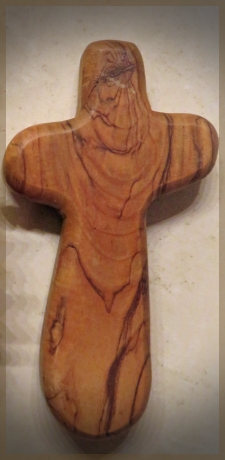
As did the Israelites, we must never put our trust in things—whether it’s lucky coin, crystal, rabbit’s foot, or cross on a necklace. Although a rosary dangling from the rearview mirror, an olivewood cross in your purse, a fish symbol on the trunk, a St. Christopher medal on the dash, or an angel pin on your lapel may serve as visual reminders of our powerful God, they are powerless to keep us from being lost, injured, ill, or getting into an accident, or having some other trouble. God cannot be manipulated to bring about good fortune! Treating any object (secular or religious) as a talisman or good luck charm turns it into an idol!
In the same way, we must never live in fear of things like the number 13, not forwarding a chain letter, or seven years of bad luck after breaking a mirror. Those things are as powerless as was the Philistine’s god Dagon. At its simplest, superstition simply is fear. As Paul told Timothy in his second letter, “God has not given us a spirit of fear and timidity, but of power, love, and self-discipline.” [1:7] Rather than fearing superstitions or symbols, we should fear God with a fear that manifests itself in our respect, obedience, submission, and worship of Him.
Divine protection and victory come from God alone, not from pictures, jewelry, talismans, or even the Ark. There is a fine line between respecting an object and idolatry. Philistine and Israelite alike crossed that line; let’s be sure we never do.
 The Israelites had just crossed the Jordan River and were preparing to conquer Canaan when Joshua came upon an armed man. Joshua was a stranger in a foreign land and, as Israel’s general, he may have been scrutinizing Jericho’s defenses to determine his plan of attack. I wonder if Joshua brandished his sword (while shaking in his sandals) as he queried, “Friend or foe?” The man, however, was neither ally nor adversary. Identifying himself as the commander-in-chief of the Lord’s army, his loyalty was to neither side. His allegiance was to God and the only side he was on was God’s! God wasn’t on Israel’s side any more than He was on Canaan’s. Israel, however, was on God’s side because their conquest of Jericho was part of His master plan of redemption. It was because they were on God’s side that the fortified city’s walls collapsed.
 I think Satan chuckles every time he sees another division in Christ’s church. He probably shouted with glee when the Southern Baptist Convention recently expelled five congregations (including the mega Saddleback church) and when the no-longer-united United Methodists lost 1,800 congregations and found themselves embroiled in lawsuits with many of those congregations. Although Methodist Bishop Tom Berlin sadly noted that, “The path of anger and hostility is not the Christian way,” it seems to have become the way of Christ’s church in the 21st century! While today’s issues are different, they are no less divisive than an issue that threatened the very existence of the early church.
 Following the Parable of the Sower and the Soils, Jesus told another parable about the coming of the Kingdom. In the Parable of the Weeds, after the farmer plants wheat, his enemy sows weeds in the same field. Jesus’ hearers would have known the weed likely was darnel. Called wheat’s “evil twin,” it looks and behaves much like wheat. When wheat is consumed it gives life but, when darnel is consumed, this inedible look-alike causes nausea and even death. Sowing weeds in a field was an act of sabotage and Roman law specifically prohibited doing so with darnel. When nations went to war, agricultural vandalism was a common practice. Olive trees were cut down, grape vines destroyed, and fields were salted so nothing would grow.
 I appeal to you, dear brothers and sisters, by the authority of our Lord Jesus Christ, to live in harmony with each other. Let there be no divisions in the church. Rather, be of one mind, united in thought and purpose. [1 Corinthians 1:10 (NLT)]
 Our sons recently visited to celebrate their father’s birthday. As I watched them work their culinary magic in the kitchen, I marveled at how the boys who once thought Kraft mac n’ cheese to be haute cuisine became gourmet cooks. For that matter, when did they get so tall or those wrinkles appear around their eyes? At what point did the tow-headed boy’s hair darken and start receding or his brother’s turn grey? The changes I observed weren’t just physical. As we talked, I wondered when my once irresponsible boys became so sensible and wise. None of it happened overnight and yet each little change was so subtle it barely was noticed. But, when I thought back to the children and young adults they once were, the change was enormous.
