
Just then a woman who had suffered for twelve years with constant bleeding came up behind him. She touched the fringe of his robe, for she thought, “If I can just touch his robe, I will be healed.” [Matthew 9:20-21 (NLT)]
 Imagine the anguish of the woman with the blood disorder. Because Levitical law declared that anyone who touched her would be considered unclean, she’d been cut off from friends and family for twelve years. Sexual union would defile her husband so she couldn’t marry and, if she’d been married, her husband would have divorced her. Because her defilement would spread to anything she touched (be it food, cups or cushions), she was isolated in her own home. While the anemia, pain, stress, and public humiliation she endured because of her disorder must have been awful, perhaps the agony of being a pariah and unable to physically connect with people was even worse. It was her responsibility to make sure she didn’t defile others by touching them so she shouldn’t have been anywhere near a crowd. She certainly shouldn’t have touched a man (or his clothing) and could have been severely punished for her previously action. No wonder she tried to sneak unnoticed through the crowd to touch Jesus’ robe.
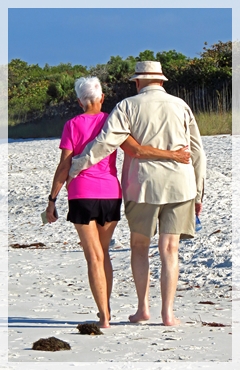
In the 1980s, AT&T urged us to “Reach Out and Touch Someone.” Granted, they meant with their phone service but now, when it is so easy to communicate with cell phones, email, texts, Facebook, Twitter, Skype, and Facetime, it is important to reach out and actually touch! Sunday mornings, there’s usually a lot of friendly touching with handshakes and hugs when we greet one another at our church in the park. Recently, after greeting Jimmy with a friendly handshake, my husband sat with him at a picnic table. (I previously wrote about Jimmy in “It Takes All Kinds.”) A man with what can be described as a colorful past, he’s been worshipping with us and joining in Bible study for the last several weeks. That morning, Merna walked over to greet the men at the table. Putting one hand on Jimmy’s back, she bent over to talk with him and casually patted his arm with her other hand. As she walked off to greet others, Jimmy broke out in a huge smile and confided to my husband that he couldn’t remember when last a lady had touched him.
As I pondered Jimmy’s words, I thought about the importance of touch; it is an essential human need. When we touch or are touched, our bodies release chemicals like oxytocin (the devotion, trust and bonding hormone) and serotonin (the happy hormone) while inhibiting other chemicals like cortisol (a stress hormone). Without a doubt, Jesus had a powerful touch and people brought their children to Him just so He could touch them. When Jesus touched Peter’s mother-in-law, she immediately recovered from her fever and, after touching Jairus’ daughter, the dead girl got up and walked. With a touch, Jesus gave sight to the blind, hearing to the deaf, speech to the mute, and made leprosy disappear. As for the woman with the blood disorder: even after the blood stopped, without waiting another seven days and undergoing a ritual bath, she was still considered unclean. I don’t think that bothered Jesus! Although the gospels don’t record it, there is no doubt in my mind that, as the trembling woman knelt at His feet, Jesus touched her when He told her to go in peace.
How many people go days, weeks, or longer without a gentle touch? Consider the many people who live alone or those, like Jimmy and the bleeding woman who feel tainted because of their past? When we touch one another, we communicate care and concern and experience oneness. Like Jesus’ touch, Merna’s touch told Jimmy that he wasn’t unclean—that he mattered both to God and to his family in Christ. The touch of Jesus has the power to heal and so does ours! Let’s reach out and touch someone today!
Each time we reach out and touch someone, we communicate the tangible truth of the gospel—that God in Christ reaches out to each of us, drawing us into intimate relationship with Him and those around us. [Rob Moll]
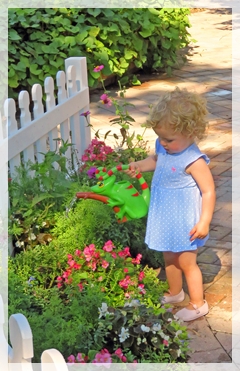 Upon retirement, many people consider their productive years over. Having been a CEO in a major corporation, a friend’s father felt worthless without his corporate identity. Prior to retirement, he could call any number of powerful people and get a meeting simply because of his position but, without his title, he felt like a nonentity. His previous business triumphs couldn’t sustain him and he saw no victories in the future. Unfortunately, many seniors who found their identity in their career, corporate title or paycheck are at loose ends when retirement comes along. Some of my friends who were homemakers aren’t much different from those in the business world. It’s just that they found their identity in motherhood and their self-esteem in their children’s achievements. Now, with an empty nest and adult children living their own lives far away, they feel unnecessary. Like my friend’s father, they are looking back at who and what they’ve been rather than forward to who and what they can be.
 “It wasn’t worth it!” I grumbled while applying cortisone over four painful red bumps on my foot. When walking around the lake at the botanic gardens, I’d spotted an osprey in a nearby tree. To get a good shot, I had to step off the paved trail into what I knew to be fire ant territory. Having had previous encounters with these stinging insects, I knew better than to stand there in sandals, but I did it anyway; the picture wasn’t worth the price I was paying for my poor decision.
 Last month, my husband and I attended a “Sweetheart” dinner at church. The men were in charge of the entire event and there were a few rough spots in the night. Then again, at the risk of being accused of political incorrectness or gender bias, most of the men probably were novices at that kind of event planning. Unlike the men, we women have had decades of organizing (and attending) school parties, PTA fund raisers, charity galas, birthday parties, showers, weddings, anniversary bashes, and other assorted celebrations. In spite of the glitches, there was much that went right and the evening was enjoyable and entertaining. Unfortunately, the woman sitting beside me kept criticizing how things were done—from name tags and table assignments to flowers and dessert. Her nit-picking comments became as annoying as the yapping of a bad-tempered dog and I thought of a bumper sticker I’d recently seen: “Wag More, Bark Less!”
 I have told all your people about your justice. I have not been afraid to speak out, as you, O Lord, well know. I have not kept the good news of your justice hidden in my heart; I have talked about your faithfulness and saving power. I have told everyone in the great assembly of your unfailing love and faithfulness. [Psalm 40:9-10 (NLT)]
 Jesus replied, “The most important commandment is this: ‘Listen, O Israel! The Lord our God is the one and only Lord. And you must love the Lord your God with all your heart, all your soul, all your mind, and all your strength.’ The second is equally important: ‘Love your neighbor as yourself.’ No other commandment is greater than these.” [Mark 1:29-31 (NLT)]
 Devotions of the Heart