
Even so, I have noticed one thing, at least, that is good. It is good for people to eat, drink, and enjoy their work under the sun during the short life God has given them, and to accept their lot in life. And it is a good thing to receive wealth from God and the good health to enjoy it. To enjoy your work and accept your lot in life—this is indeed a gift from God. [Ecclesiastes 5:18-19 (NLT)]
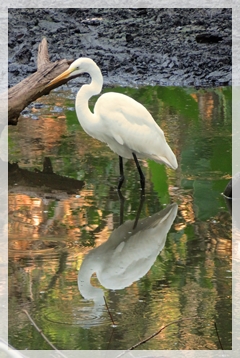 From the viewing platform at the marsh, I watched a Cooper’s hawk soar high in the sky. When I turned to leave, I looked down and saw several white egret feathers on the ground below. Whether it was the hawk, a raccoon, or some other predator, the park had one less egret in the pond. Those beautiful white feathers were a stark reminder of how precarious life is, not just for wild birds, but for us all. I was reminded of Ecclesiastes: “For people and animals share the same fate—both breathe and both must die.” [3:19]
Beginning with the words, “Everything is meaningless,” much of Ecclesiastes expresses disappointment, discontent, and a cynical world-weariness. The world is a fallen place where life is unfair: good happens to the bad and bad befalls the good. The future is unknown and filled with uncertainties and satisfaction is not guaranteed. We can strive for a goal and never reach it or attain the goal and discover it wasn’t worth the effort. The pursuit of pleasure, possessions, wealth, achievements, wisdom, or power comes to nothing. As disheartening as the author’s words are, I’m not sure we can really argue with them. Life is capricious and frequently makes no sense and the same destiny—death—awaits both the righteous and wicked. Sadly, sometimes, our efforts really do feel like an exercise in futility.
Yet, hidden in those sobering verses are nuggets of beauty and comfort. Just because life is hard and its meaning is hard to find doesn’t mean life is meaningless. Granted, some seasons of life are perplexing, challenging, or downright unpleasant but, as much as we wish we could control or understand them, they are beyond human control and understanding. The seasons of life are not in our hands but God’s. Rather than knowledge and comprehension of His plan, however, God gives us sort of a consolation prize: the ability to find enjoyment in life. While we can’t control the seasons, we can accept and find contentment in them.
Those feathers on the ground were a reminder to live life with gusto—to accept and enjoy whatever we’ve been given—to seize the day! Yet, Ecclesiastes is not an “eat, drink, and be merry because tomorrow you die!” promotion of hedonism. Woven throughout its verses is one more theme—that of fearing God. We can’t find the meaning to life apart from God and we certainly can’t live life on our own terms. The enjoyment of life neither permits us to disobey God not does it exempt us from His law. Telling us to enjoy life, Ecclesiastes also tells us to fear (i.e., obey, revere, love, serve, honor and worship) God while doing so!
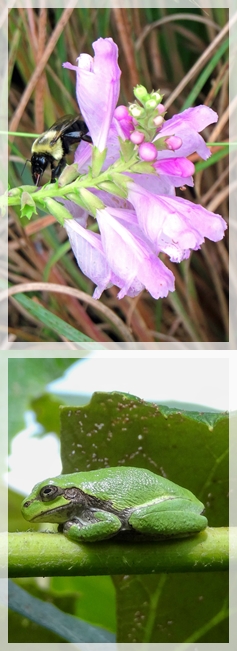 We’re sure to notice God in the Grand Canyon, the multitude of stars in the night sky, or when watching two million wildebeest, zebra and gazelles migrate through the Serengeti. We sense Him in extraordinary or exotic things like the peacock’s splendid tail, Devil’s Tower, or spectacular sunsets and sunrises. But do we notice Him in the commonplace and unremarkable?
 You will experience all these blessings if you obey the Lord your God: Your towns and your fields will be blessed. Your children and your crops will be blessed. The offspring of your herds and flocks will be blessed. Your fruit baskets and breadboards will be blessed. Wherever you go and whatever you do, you will be blessed. [Deuteronomy 28:2-6 (NLT)]
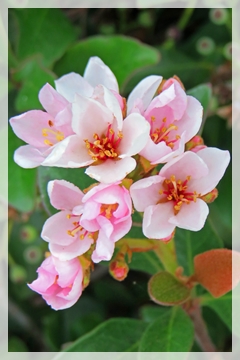 “Blessed are You, Lord our God, King of the Universe, the True Judge,” is a blessing often said by Jews when they undergo a death or tragedy. “This is all for the good,” or “Blessed is the true judge,” is often said by other Jews in response to their tragic news. Rather than being about God’s final judgment of a person, these words remind them that only God can judge whether events are good or bad. To illustrate this point, the Talmud has a story about the second century sage, Rabbi Akiva. One night, the rabbi, along with his rooster and donkey, arrived in a village. When no one would give Akiva a place to stay, the rebbe said, “All that God does, He does for the good.” He then walked to a field outside of town, set up camp, and lit his lantern. That evening, a gust of wind knocked over the lantern breaking it, a fox came and ate the rooster, and a lion came and killed the donkey. In spite of all that, Akiva said, “All that God does, He does for the good!” Just before dawn, marauders came and attacked the village but, camped in the field without light, crowing rooster or braying donkey to reveal his presence, the rabbi remained safe.
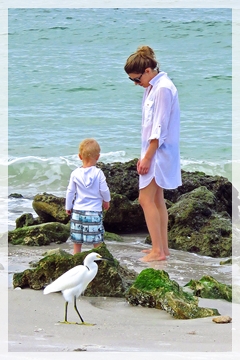 The weatherman declared it to be “one of the ten best days of summer” and I thought of his words throughout the day. How many of those ten days have we already had this summer? What if, not knowing it was one of the ten best days, I missed it? Could I have been blinded to its beauty by the routine obligations, boring chores, petty annoyances, and minor frustrations of everyday life?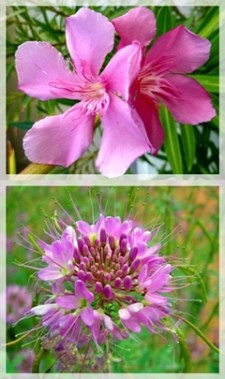
 Devotions of the Heart