DEBT FORGIVENESS

God made you alive with Christ. He forgave us all our sins, having canceled the charge of our legal indebtedness, which stood against us and condemned us; he has taken it away, nailing it to the cross. [Colossians 2:13b-24 (NIV)]
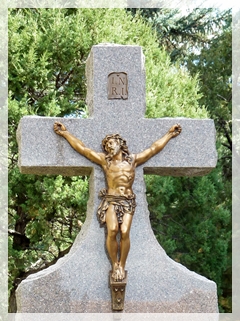
Cathedral basilica of st. francis of assisi-Santa Fe2According to the Boston Globe, the college class of 2015 graduated with an average of over $35,000 in student debt. That’s a mammoth $56 billion in student debt, giving them the dubious honor of being the most indebted class in history. It’s likely that honor will pass to the class of 2016 come June. While a few occupations may qualify for student loan forgiveness programs, one way or another, that debt must be repaid. Recent college grads aren’t the only ones in debt. According to NerdWallet, the average American household carries nearly $131,000 in debt for such things as student loans, credit cards, mortgages, and both auto and personal loans. Even if we are fortunate enough to have no personal debt, the national debt of over nineteen trillion dollars still weighs heavily on each and every one of us. With a nation that has clearly spent more than it can afford, it’s too bad we no longer follow the laws in Deuteronomy for the Israelites that prohibited charging interest and canceled all debts every seven years.

Even if this was the seventh year and all of our nation’s debt was cancelled, that financial forgiveness wouldn’t come close in comparison to the debt payment Jesus made for all of mankind. Far greater than the national debt, that debt had nothing to do with dollars and cents but everything to do with sin. No amount of work, tears, shame, guilt, or even repentance could cancel it. No matter how few or great our sins, regardless of what we did or how long we worked, none of us could do enough to make things right or pay the debt of sin to God. The good news is that, when Christ hung on that cross and triumphantly announced, “It is finished!” that debt was paid in full. When the Lamb of God was sacrificed to take away the sin of the world, His work of salvation and redemption was complete; Jesus satisfied man’s debt to God. By dying on that cross, Christ paid a debt He didn’t owe because mankind owed a debt they couldn’t pay. His payment plan isn’t based on works but rather on grace through faith. Like any payment plan, however, there are strings attached—to qualify for God’s debt forgiveness plan, we have to accept Jesus as our Lord and Savior and be willing to forgive the sins of others. That seems a small price to pay for salvation and eternal life. If someone came along and offered to make you whole with everyone to whom you owe money, you’d probably jump on that proposal. Why, I wonder, are people so hesitant to accept Christ’s offer of making us right with God?

By his death he paid our debt, in his resurrection he received our acquittance. [Matthew Henry]

For you know that it was not with perishable things such as silver or gold that you were redeemed from the empty way of life handed down to you from your ancestors, but with the precious blood of Christ, a lamb without blemish or defect. [1 Peter 1:18-19 (NIV)]

And forgive us our debts, as we also have forgiven our debtors. [Matthew 6:12 (NIV)]

Copyright ©2016 jsjdevotions. All rights reserved.

ON THE BUS

Jesus also used this illustration with some who were sure that God approved of them while they looked down on everyone else. [Luke 18:9 (GW)]

Look at it this way: At the right time, while we were still helpless, Christ died for ungodly people. Finding someone who would die for a godly person is rare. Maybe someone would have the courage to die for a good person. Christ died for us while we were still sinners. This demonstrates God’s love for us. [Romans 5:6-8 (GW)]

A pharisee is hard on others and easy on himself, but a spiritual man is easy on others and hard on himself. [A.W. Tozer]

Our Lady Cathedral, Antwerp

Our Lady Cathedral, Antwerp

The bus was loaded with skiers returning from the slopes and I took the last seat before realizing who was beside me. The man was mumbling, dirty, smelly and obviously high. Known around town as “Druggie Donnie,” he manages to survive on a small monthly stipend from his family and whatever he can scrounge up by panhandling or odd jobs. I shrank away from him in disgust. As the bus gradually emptied out, I couldn’t help but hear the words of a disheveled twentyish young woman sitting across from me as she spoke loudly into her phone. She was talking (actually boasting) to her friend about having partied the night before and waking up in an unfamiliar condo with a man she’d just met. I was shocked and sickened by her words. What a contrast these two were with the cheerful families who’d piled on the bus after a fun day of skiing. “These are my kind of people—the happy, sober, sane and moral ones; the good folks,” was my thought. “Oops!” said the Holy Spirit, “Your inner Pharisee is showing!” The town bus is filled with a cross-section of society and the Holy Spirit reminded me that, even though I may have little in common with some of the riders, they all are my kind of people.

Christ died for the ungodly—that includes Donnie and the young woman as well as me and all of those apparently nice upstanding families. Jesus didn’t die because people are good; he died because we’re bad! He wasn’t crucified for the righteous and the devout; He was crucified for the repentant thief on the cross and the Samaritan woman at the well. If we were perfect, we wouldn’t have needed to be reconciled with God. The gospel message is that all sinners (not just the nice respectable ones) who believe in Him will be saved. The loving Father welcomes His wayward children home. The Good Shepherd doesn’t stay with the ninety-nine who have obediently remained in the fold; He goes out in search of the lost sheep who went astray.

I have more in common with Donnie and that young woman than I’d care to admit: we’re all sinners. The only difference between them and me is that I have been saved by Jesus Christ. I can’t be self-righteous because I had nothing to do with that salvation; it was His gift to me. I can only pray that some day, some way, they also will accept God’s saving grace.

Mercy seeks the guilty, grace has to do with the impious, the irreligious and the wicked. The physician has not come to heal the healthy, but to heal the sick. The great philanthropist has not come to bless the rich and the great, but the captive and the prisoner. He puts down the mighty from their seats, for he is a stern leveller, but he has come to lift the beggar from the dunghill, and to set him among princes, even the princes of his people. [Charles Spurgeon]

But God is rich in mercy because of his great love for us.  We were dead because of our failures, but he made us alive together with Christ. (It is God’s kindness that saved you.) … God saved you through faith as an act of kindness. You had nothing to do with it. Being saved is a gift from God. It’s not the result of anything you’ve done, so no one can brag about it. God has made us what we are. He has created us in Christ Jesus to live lives filled with good works that he has prepared for us to do. [Ephesians 2:4-5,8-10 (GW)]

Copyright ©2016 jsjdevotions. All rights reserved.

BEATITUDES AND ATTITUDES

Blessed are the poor in spirit, for theirs is the kingdom of heaven. Blessed are those who mourn, for they will be comforted. Blessed are the meek, for they will inherit the earth.  Blessed are those who hunger and thirst for righteousness, for they will be filled. Blessed are the merciful, for they will be shown mercy. Blessed are the pure in heart, for they will see God. Blessed are the peacemakers, for they will be called children of God. [Matthew 5:3-9 (NIV)]

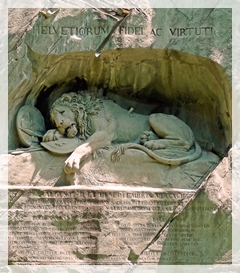
Lion Monument - Lucerne I don’t know about you, but I’m about ready to unplug the televisions until after the elections in November. It doesn’t matter which party or which candidate, the conduct and rhetoric has become nearly unbearable. Today’s Bible reading took me to Matthew 5 and the Beatitudes—those declarations of blessedness given by Jesus at the beginning of His Sermon on the Mount. I couldn’t help but contrast His words with the behavior of our politicians, their supporters and the news media. I then remembered A.W. Tozer’s observation that, if we were to take the Beatitudes and turn them inside out, we’d have the “very qualities which distinguish human life and conduct.”

Our society doesn’t seem to admire those who are modest and meek; we seem to prefer those filled with bombast and swagger. Rather than grief and heartache at our failures, we prefer witticisms, applause and celebration of our successes. Rather than meekness, humility and respectful behavior, we seem to favor assertiveness and pretentiousness. Instead of seeking justice, we pursue self-interest; instead of striving to rectify wrongs, intolerance seems to reign. Rather than compassion, there is indifference and vindictiveness instead of forgiveness. Deceit, guile and vulgarity are more prevalent than frankness, honesty, and morality and it appears that we admire instigators and agitators more than conciliators and negotiators.

Although there has been a large amount of condemnation, disparagement and attempts to discredit one another, I don’t think Jesus was thinking about that sort of mocking and persecution when he gave His message and I doubt that God is blessing anyone for their abysmal behavior just because it results in their disgrace or embarrassment. If we expect blessings for persecution, it should be for following Jesus and righteousness sake and not for pursuing power and self-righteousness.

Pride, greed, selfishness, arrogance, ruthlessness, dishonesty, bickering, and meanness—all of these are contrary to the Beatitudes. I admit that I need to remove the plank in my eye before criticizing the specks in the eyes of others and confess that much of my life is also spent on the opposite side of the Beatitudes. I imagine a part of your life is spent there as well. Let us never forget that Jesus’s words were neither His suggestions nor His opinions—they were and are God’s Truth.

Lord…Deliver me from the urge to compete with another for place or prestige or position. … Deliver me from pose and pretense. Forgive me for thinking of myself. Help me forget myself and find my true peace in beholding Thee. That Thou mayest answer this prayer I humble myself before Thee. Lay upon me Thy easy yoke of self-forgetfulness that through it I may find rest. [A.W. Tozer]

Blessed are those who are persecuted because of righteousness, for theirs is the kingdom of heaven. Blessed are you when people insult you, persecute you and falsely say all kinds of evil against you because of me. [Matthew 5:10-11 (NIV)]

Copyright ©2016 jsjdevotions. All rights reserved.

THE SLIP

But Peter said to him, “Lord, I’m ready to go to prison with you and to die with you.” Jesus replied, “Peter, I can guarantee that the rooster won’t crow tonight until you say three times that you don’t know me.” [Luke 22:33-34 (GW)]

Ballenberg SwitzerlandHaving been raised in the Episcopal Church, I’ve always observed Lent and practiced some sort of self-denial during the six weeks from Ash Wednesday to Easter. According to Christianity Today, nearly one in five Americans observed Lent in 2015. In a survey this year, more than 400,000 tweeted about their fasts and food or drink and technology were the most popular categories of denial.

In the weeks leading up to Easter, many of us choose to turn away from small pleasures, indulgences, bad habits or things that may have distracted or derailed us spiritually. Even a temporary absence of something in life can make us appreciate the abundance we have; little denials can change the way we think about things after Lent. These six weeks help me to make positive behavioral changes and to consciously turn to God as I make them. In addition to giving up three things, I’ve added two Lenten devotionals to my daily prayer and Bible study.

“Did you choose to give up something for Lent? Have you kept the commitment? What has it taught you?” were the questions asked in one of yesterday’s Lenten devotions. Sweets were one of the things I gave up for Lent and I thought they were the easy one; the other two have taken more conscious effort and prayer. Have I kept the “no sweets” commitment? I had until the other night when we had dinner guests. As I prepared my nearly world famous cherry kuchen in preparation for their arrival, I had no intention of eating (or even tasting) it. In fact, I didn’t even find it appealing. Then came dessert time and I reached into the cupboard and mindlessly pulled down dessert plates for the five of us. I cut the cake, dolloped on whipped cream and served it. It wasn’t until the guests departed and I was washing the fifth plate that I even realized I’d eaten the cake!

“What has it taught you?” asked that Lenten devotion. Oh, how easy it is to stumble! I’m not wearing sackcloth and ashes just because I ate dessert during Lent. God and I are still on good terms but my slip has reminded me how easy it is to intend one thing and do another simply because we’re over-confident and unthinking. Consider Peter, so sure that he’d never betray Jesus and, yet, he did. It wasn’t until he’d heard the rooster crow that Peter even realized he’d done it! Unfortunately, it’s as easy to reach for a plate and thoughtlessly serve up some betrayal, gossip, temper, sarcasm, arrogance, selfishness, or jealousy as it is to eat a piece of cake.

Keep your mind clear, and be alert. Your opponent the devil is prowling around like a roaring lion as he looks for someone to devour. [1 Peter 5:8 (GW)]

Be alert. Be firm in the Christian faith. Be courageous and strong. Do everything with love. [1 Corinthians 16:13-14 (GW)]

Copyright ©2016 jsjdevotions. All rights reserved.

LORDSHIP AND OBEDIENCE

Steamboat ski area
But Samuel replied, “What is more pleasing to the Lord: your burnt offerings and sacrifices or your obedience to his voice? Listen! Obedience is better than sacrifice, and submission is better than offering the fat of rams.” [1 Samuel 15:22 (NLT)]

The topic of study at SK8 church the other night was “Lordship and Obedience.” When the pastor mentioned the word “obedience” you could almost see the kids’ heels dig into the floor and their hackles rise. Submission to any higher power is difficult, especially if you’re a rebellious teen or young adult. Thinking of any restriction on us as an attack on our individuality and rights, however, isn’t limited to the younger generation.

That night, the pastor started with the easy word: “lordship” and its definition—a person who has authority, control or power over others and decides what is acceptable or not. One of the young men immediately understood exactly where the pastor was going with the lesson and shared his observation that lordship and obedience are two sides of the same coin—having a lord or master requires obedience if the relationship is going to work.

In actuality, from the very beginning of our lives, we’ve had to submit to authority of some kind. Parents say no to hitting your siblings, sticking forks into sockets, and drawing on the walls. Teachers tell us to sit at our desks, raise our hands, and study hard. Bosses require us to arrive on time, dress appropriately, and be conscientious. Landlords tell us we can’t have dogs and must pay rent promptly. Banks insist we repay our loans and not overdraw our checkbooks. Municipalities tell us to pay taxes, stop at red lights and obey parking regulations. Unfortunately, many of the young people at church that night had experienced difficulty with their earthly masters—they’d been kicked out of their homes, expelled from school, fired from jobs, evicted by their landlords or arrested by the local police. Regrettably, not all of our earthly lords and masters are worthy of unquestioning obedience—there are unstable parents, bad teachers, unethical bosses, shoddy landlords, greedy banks, corrupt governments, and dishonest cops.

There is, of course, one authority figure who is Lord and Master over all creation and worthy of our full submission: God! Unfortunately, it’s not just those young people who have trouble with this one. Many people think of obedience to our Lord and Master as an unwilling submission to an intolerant narrow-minded grouchy old man sitting on a throne in heaven rather than as our willing and eager submission to a loving father. Many picture God as restrictive rather than giving, punishing rather than encouraging, and angry instead of caring. But this is our God, a God who loved us enough to sacrifice his only son for our salvation—a God who has etched our names on the palms of His hand, knows the number of hairs on our heads, hears all of our praises and prayers and, if he had an iPhone, would have our photos on it. We have a Lord and Master, our loving Father, who wants only the best for us and knows exactly what that is!

The words succumb, submit, capitulate, acquiesce, yield, surrender, and concede all imply losing a battle of some sort but our relationship with God isn’t a battle of wills. If we turn it into one, we better understand that it is a battle we are destined to lose. God is relentless in His love for us and His determination to save us. Moreover, He is not our opponent; rather, He is our ally! When we cede control to God, we can’t lose—we can only win!

If God is the Creator of the entire universe, then it must follow that He is the Lord of the whole universe. No part of the world is outside of His lordship. That means that no part of my life must be outside of His lordship. [R.C. Sproul]

Not everyone who calls out to me, ‘Lord! Lord!’ will enter the Kingdom of Heaven. Only those who actually do the will of my Father in heaven will enter. … Anyone who listens to my teaching and follows it is wise, like a person who builds a house on solid rock. Though the rain comes in torrents and the floodwaters rise and the winds beat against that house, it won’t collapse because it is built on bedrock. But anyone who hears my teaching and doesn’t obey it is foolish, like a person who builds a house on sand. When the rains and floods come and the winds beat against that house, it will collapse with a mighty crash. [Matthew 7:21,24-27 (NLT)]

Copyright ©2016 jsjdevotions. All rights reserved.

TIME’S AWASTING

Yes, each of us will give a personal account to God. [Romans 14:12 (NLT)]

So be careful how you live. Don’t live like fools, but like those who are wise. Make the most of every opportunity in these evil days. Don’t act thoughtlessly, but understand what the Lord wants you to do. [Ephesians 5:15-17 (NLT)]

Lately, we’ve heard several politicians talk about equalizing wealth. There is, however, one precious asset that is the same for both pauper and billionaire. It can’t be bought or sold nor can it be saved for a rainy day. Unlike money, once it is lost, it can never be regained. That asset, of course, is time and it is God’s gift to us. He’s given each of us a precise (but unknown) number of hours and they are not to be wasted. Any minute we don’t use is forfeited and never seen again.IMG_1923web4

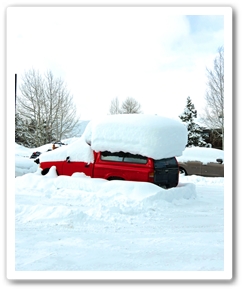
As of today, we’ve had over 275 inches of snow in this mountain valley and dealing with all that snow uses several of those minutes each day. Every time we want to go anywhere, we have to allow an extra five to ten minutes to scrape the windshield and clean off the car. Snow can pile up, as evidenced by a car belonging to one of our neighbors. That snow makes for a whole lot of weight on one car’s roof and, as it compresses, it turns to ice. Maybe our neighbor plans on waiting until spring for the snow to melt. Spring, however, is a long ways away and, with an average snowfall of 352 inches, we can expect plenty more snow in the weeks to come. At this rate, chances are the car roof could collapse long before the crocuses peek through the snow.

When we don’t use our time wisely, things stack up just like the snow on that car. Life gets overwhelming when we put off until tomorrow what needs to be done today. Tomorrow comes, the task has grown, so we put it off for another day, and so it goes until life comes crashing in on us. We procrastinate for many reasons—exhaustion, fear, obsession with perfection, anger, indecision, lack of motivation, or simple laziness. Sometimes we even convince ourselves that we’re saving time by not doing something. Sure, the car’s owner hasn’t spent several minutes removing snow each morning but taking the bus around town takes much longer. If and when he tries to clean the car, it will take him hours to chip off the accumulated snow and ice. Moreover, if the roof collapses, he won’t have a car at all! Whatever the cause for our procrastination, the work we’re avoiding won’t disappear. In fact, in most cases, like the snow on the car, it will just pile higher and higher.

When we get diverted from the task at hand and waste God’s time, the enemy loves it. He’s provided us with all sorts of new ways to do it with binge watching on Netflix, computer games, email, Xboxes, Facebook, YouTube, Twitter, Snapchat and the like. In fact, there are several websites that will link you to the best sites for wasting time! When I look at some of hyperlinks and humor emailed to me, I wonder if anybody still works. We each have been given the same twenty-four hours this day, how will we spend it? Paul tells us in Romans that we will be accountable to God for the way we have used his gifts and those hours are one of God’s most precious gifts to us.

Time is like manna from heaven. God provides exactly what we need for each day and, like manna, what isn’t used today is gone tomorrow. Barring unforeseen circumstances, we have been gifted with 1440 minutes today. Will we tend to the business of the day or will we let things pile up until some future date? God willing, we will be blessed with 24 more hours tomorrow but, then again, maybe we won’t.

Only put off until tomorrow what you are willing to die leaving undone. [Pablo Picasso]

Dost thou love life? Then do not squander time, for that is the stuff life is made of. [Benjamin Franklin] 

Teach us to realize the brevity of life, so that we may grow in wisdom. [Psalm 90:12 (NLT)]

Look here, you who say, “Today or tomorrow we are going to a certain town and will stay there a year. We will do business there and make a profit.” How do you know what your life will be like tomorrow? Your life is like the morning fog—it’s here a little while, then it’s gone. [James 4:13-14 (NLT)]

Copyright ©2016 jsjdevotions. All rights reserved.