DEVOTIONAL MOODS

Devote yourselves to prayer with an alert mind and a thankful heart. [Colossians 4:2 (NLT)]

Ghost Ranch NMIn his classic satire The Screwtape Letters, C.S. Lewis gives the reader a series of letters from a senior devil, Screwtape, to his nephew, Wormwood, advising the novice demon on ways to secure the damnation of his “patient,” an ordinary young man. Warning that the demons are defeated whenever man directs his gaze toward God, Screwtape encourages his nephew to keep the patient (a new Christian) from praying. If prayer can’t be prevented, he advises getting the fellow into a “devotional mood… since it bears a superficial resemblance to the prayer of silence as practiced by those who are very far advanced in the Enemy’s [God’s] service.” Screwtape reassures Wormwood that “lazy patients can be taken in by it for quite a long time.” It won’t be difficult to redirect the patient’s attention, he tells his nephew, since humans aren’t really as desirous of “the real nakedness of the soul in prayer” as they suppose.

We know that Jesus prayed frequently and fervently. Luke, who was a physician, tells us Jesus prayed so hard in Gethsemane that He sweat blood. This rare condition, called hematohidrosis, was reported by both Aristotle and Theophrastus more than 300 years before Christ. Under conditions of extreme physical or emotional stress, the tiny blood vessels surrounding the sweat glands can constrict and then dilate to the point of rupture; blood then flows into the sweat glands and a person can literally sweat blood. That night in Gethsemane, as Jesus agonized in the garden, there was nothing superficial or lazy about His prayer.

After reading Screwtape’s counsel to his nephew, I thought about my morning devotional time. By 5:30 AM, I am in a comfy chair, sipping a latte, and surrounded by iPad, Bibles, books, notebook and pen. During the next 90 minutes or so, I read assorted devotions and Bible commentaries, get through a few chapters in the Bible and whatever book I’m studying in small group, journal, and pray. Unfortunately, with prayer being last, it often is least and, while sincere, it can be rather generic and hurried. Screwtape’s devilish words helped me see how easy it is to mistake my “devotional mood” for prayer. Thinking about God, even spending time in His word, is no substitute for talking with the Big Guy Himself! I don’t think God expects us to pray so passionately that we sweat blood; nevertheless, I do think He expects us to bare our souls in His presence.

Establishing and reinforcing our connection with God, prayer is far more than study and reflection or telling God what it is we want. It is a concentrated, purposeful and deliberate time of worship, praise, thanksgiving, self-examination, confession, repentance, acceptance, intercession, and petition. Rather than being in a “devotional mood,” prayer is attending to God and His voice with undivided attention and submitting to His will with an undivided heart.

Satan dreads nothing but prayer. His one concern is to keep the saints from praying. He fears nothing from prayerless studies, prayerless work, prayerless religion. He laughs at our toil, he mocks our wisdom, but he trembles when we pray. [Samuel Chadwick]

Pray in the Spirit at all times and on every occasion. Stay alert and be persistent in your prayers for all believers everywhere. [Ephesians 6:18 (NLT)]

Copyright ©2018 jsjdevotions. All rights reserved.

COBWEBS

Today I have given you the choice between life and death, between blessings and curses. Now I call on heaven and earth to witness the choice you make. Oh, that you would choose life, so that you and your descendants might live! You can make this choice by loving the Lord your God, obeying him, and committing yourself firmly to him. This is the key to your life. [Deuteronomy 30:19-20a (NLT)]

black and yellow garden spiderI glanced up at the ceiling; there, yet again, was a spider web hanging across the hallway. I brushed it away along with all the others that had appeared in our absence. Nevertheless, I know they will return; they always do. I can get rid of the spiders’ webs but, without getting rid of all the spiders, they will return.

That, in a nutshell, is what happened to the Israelites. When the Israelites arrived in Canaan, God told them to rid the land of all pagan practices by driving out the inhabitants of Canaan and destroying all of their shrines, idols, and high places. Unfortunately, the Israelites disobeyed and never fully carried out God’s command. Thus began a cycle of idol worship, warnings, punishment, pleas for relief, God’s rescue, repentance, obedience, and back-sliding into idolatry that lasted until their Babylonian captivity some 800 years later. Whenever pagan shrines were destroyed, like cobwebs, they always reappeared. When King Asa removed the idols from Judah, they came back and his son had to remove them again. Having returned by Jehosaphat’s reign, the offensive shrines were removed but, by the end of his reign, they were back. After Hezekiah destroyed all the pagan temples, idols and shrines, they were rebuilt during the reigns of his son and grandson. Although his great-grandson, Josiah, tore them down again, paganism returned during the reigns of the last four kings of Judah.

Merely destroying the idols and pagan shrines was no more effective than my knocking down the spider webs. The cobwebs, of course, are only a symptom of my real problem: spiders. Like those webs, the idols and shrines were merely symptoms of a far greater problem: the people’s unfaithfulness and disobedience to God. Whenever they were eradicated, like my spider webs, they reappeared because the source of the problem was never addressed. God’s prophets were ignored, unholy alliances were made, the temple was ransacked and allowed to fall into disrepair, and the Book of Law forgotten. The problem wasn’t in the high places and stone idols—it was in the people’s faithless and disobedient hearts! The pagan images and shrines of Israel and Judah were evidence of a disobedient and faithless people who forgot the God of their fathers.

Let us remember that idolatry doesn’t require the making of an idol or the erecting of an altar in a high place; it simply involves placing ourselves before God and putting our faith in anything other than Him. Believing in their false promises of blessings and security, people now worship at the altars of things like materialism, pride and ego, power, fame, science and technology, youth and beauty, and self-indulgence. As offensive to God as were Ashtoreth poles and images of Baal, today’s false gods continue to be a symptom of a faithless and disobedient people who’ve forgotten their true God. Without Him as the center of our lives, without our faith in God and our obedience to His word, like the people of Judah and Israel, we will simply continue to discard one idol only to replace it with another.

You don’t have to go to heathen lands today to find false gods. America is full of them. Whatever you love more than God is your idol. [Dwight L. Moody]

Do not love this world nor the things it offers you, for when you love the world, you do not have the love of the Father in you. For the world offers only a craving for physical pleasure, a craving for everything we see, and pride in our achievements and possessions. These are not from the Father, but are from this world. [1 John 2:15-16 (NLT)]

Copyright ©2018 jsjdevotions. All rights reserved.

FREE TO BE…

I form the light, and create darkness: I make peace, and create evil: I the Lord do all these things. [Isaiah 45:7 (KJV)]

sunflowerWow! Now there’s a troubling verse. God creates evil? Since evil is anything that contradicts God’s holy nature, it’s hard to understand how that could happen. Even other translations like the NLT’s, “I send good times and bad times,” the ESV’s, “I make well-being and create calamity,” and the NIV’s, “I bring prosperity and create disaster,” don’t make this verse sound much better. How do we reconcile a God who is good, a God who is love, with a God who says he creates evil?
There’s certainly no mention of God creating evil in Genesis. We are told that He created the world and everything in it, that man was made in His own image, and when God was finished, He looked over everything and saw that it was good. This is where we again see the flexible nature of Hebrew verbs in Scripture. As discussed yesterday, many verbs such as create, harden, send, blind, or deceive are used in a permissive sense as well as a causative one. As a result, we frequently find God represented as doing something when, in actuality, He is only permitting it or predicting that it will be done. Reading it that way, God didn’t create evil but He does allow it. Nevertheless, how can a righteous, just, and loving God even allow evil?

Our being made in God’s image means that, like Him, we have intelligence, reason and the ability to make conscious choices. Personal volition means that we have a choice as to whether or not we love and obey God. When God gave us the ability to choose, He also gave us the responsibility to choose well. Adam and Eve didn’t choose wisely when they ate the forbidden fruit and we’re not much better. While we can choose obedience over rebellion or love over hate, we also can choose deception instead of truth or vindictiveness rather than forgiveness. Because God allows us to choose, we can abandon good for evil as easily as we can close our eyes to His light, shut our ears to His truth, and harden our hearts to His love. C.S. Lewis pointed out that “If a thing is free to be good it’s free to be bad. And free will is what made evil possible.”

Knowing we’d mess up by the third chapter in Genesis, why did our omniscient God allow us freedom to go against His will? Yet, if He compelled us to be obedient, wouldn’t He be more a puppet master than a God of love? Without freedom of choice, would we be unique individuals, made in His image, or marionettes moving only when He pulled the strings? A relationship must be voluntary to be authentic and love must be freely given to be genuine. God didn’t create evil but He did create a people who can rebel and turn from righteousness and it is that rebellion that creates evil.

I don’t understand it completely; someday, I will. I do know that our good and loving God has a good reason for allowing evil to exist. I also know that God can use evil for our good and His glory; after all, from man’s rejection and murder of His only Son, came our salvation!

If a thing is free to be good it is also free to be bad. And free will is what has made evil possible. Why, then, did God give them free will? Because free will, though it makes evil possible, is also the only thing that makes possible any love or goodness or joy worth having. [C. S. Lewis]

For God so loved the world, that he gave his only begotten Son, that whosoever believeth in him should not perish, but have everlasting life. For God sent not his Son into the world to condemn the world; but that the world through him might be saved. … And this is the condemnation, that light is come into the world, and men loved darkness rather than light, because their deeds were evil. [John 3:16-17,19 (KJV)]

Copyright ©2018 jsjdevotions. All rights reserved.


FALL PREVENTION

If you think you are standing strong, be careful not to fall. The temptations in your life are no different from what others experience. And God is faithful. He will not allow the temptation to be more than you can stand. When you are tempted, he will show you a way out so that you can endure. [1 Corinthians 10:12-13 (NLT)]

The Lord directs the steps of the godly. He delights in every detail of their lives. Though they stumble, they will never fall, for the Lord holds them by the hand. [Psalm 37:23-24 (NLT)]

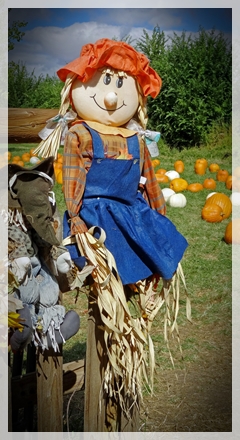
scarecrowLast week was “Fall Prevention Week” but it wasn’t about keeping summer’s flowers blooming or preventing Jack Frost from coloring the maple trees. Although accidents can happen, most falls are preventable and last week was dedicated to preventing those falls. Apparently, because my age puts me in the group most at risk of falling, my son sent me an article identifying the best ways to prevent falls. Instead of clearing walkways or installing non-slip tape and a grab bar in the tub, I ended up thinking about ways to prevent another kind of fall—the one into sin. In reality, I’m far more likely to fall that way than to stumble over my entry rug.
When most of us think of sin, we usually think of the “felony” sins: theft, murder, adultery, drug abuse, drunkenness, perjury, idolatry, bribery, extortion, wantonness, sorcery and witchcraft. Billy Graham, however, described sin as “any thought or action that falls short of God’s will.” Falling short of God’s will includes all sins, even those  “misdemeanor” ones like complaint, envy, attachment to possessions, selfishness, irreverence, laziness, arguing, hypocrisy, greed, backbiting, whining, jealousy, anger, broken promises, shortness of temper, and even gluttony. Sin isn’t just missing the target; it’s anything short of hitting the bull’s eye!

While the bathroom is the number one danger zone for slips and falls, it’s probably not our biggest danger zone for sin. That zone is harder to identify and probably varies from person to person. For some it may be the computer or refrigerator, for others the water cooler at work or an afternoon with the bridge group. It may seem as obvious as a bar, bachelor party or casino or as innocuous as the mall, TV, or the in-law’s house. It’s wise to identify our personal danger zones and either avoid them or do our best to slip-proof them. Sometimes hazards, like a child’s toy or spilled water, can be where we least expect them. Even a chat over coffee after church can turn into gossip or disparagement. No matter where we are, if we want to prevent either kind of fall, we should always be looking for hidden hazards. Keeping homes and work places tidy by cleaning up our messes is another bit of advice that works both ways. When our personal lives are in disorder and disarray, when we’re too rushed to spend time in prayer, when we’re not honest with others or ourselves, when we’re disgruntled or discouraged, sin has a way of tripping us up as easily as can a pair of shoes left in a hallway.

According to the fall prevention article, one of the best ways to prevent falls is exercise which increases flexibility, builds muscles, and improves balance. We don’t need get in our 10,000 steps or lift weights to avoid falling into sin but we do need to build up our spiritual muscles with Bible study, Christian fellowship and prayer. Using things like night lights, photocell outdoor lights, or photoluminescent tape to light the way was the final bit of advice in the article. While fine ideas, they’re not very effective when avoiding sin. A better solution is the light of Christ; He’s the light of the world and our never-ending supplier of spiritual light. His light allows us to spot temptation and step away from sin. His Holy Spirit enables us to look at life and people with godly eyes—and walk in God’s will. Stay safe!

Jesus spoke to the people once more and said, “I am the light of the world. If you follow me, you won’t have to walk in darkness, because you will have the light that leads to life.”  [John 8:12 (NLT)]

Copyright ©2018 jsjdevotions. All rights reserved.

THERE BUT FOR THE GRACE OF GOD…

The human heart is the most deceitful of all things, and desperately wicked. Who really knows how bad it is? [Jeremiah 17:9 (NLT)]

For from within, out of a person’s heart, come evil thoughts, sexual immorality, theft, murder, adultery, greed, wickedness, deceit, lustful desires, envy, slander, pride, and foolishness. [Mark 7:21-22 (NLT)]

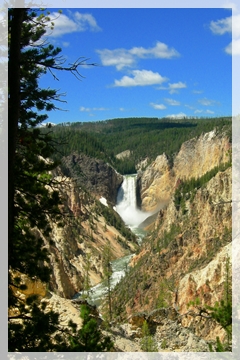
Grand Canyon of YellowstoneI recently saw a play in which the only character, Lisa, presents a monologue about her life and family. The audience learns that her father, Walter, a German-born Jew, escaped to the U.S. as part of the kindertransport effort but that the rest of his family perished at Auschwitz. During her monologue, Lisa tells of taking her then 75-year old father to visit the Auschwitz Memorial. While touring the concentration camp, Walter tells his daughter about attending school with members of the Hitler Youth. Being a Jew, he couldn’t wear one of their uniforms but another boy in his school, a Gentile, refused to wear one. Her father then tells her that, in spite of the horror of Auschwitz and the loss of his family, he is glad he was born a Jew—because he didn’t have the option of becoming a Nazi! Unlike the Gentile boy who refused to join (and suffered because of it), Walter realized that, had he not been Jewish, he might have joined the Nazis. He knew that part of him could have been as merciless and evil as the men who rounded up and exterminated his family.
After the war, Walter returned to Germany as an interrogator of German personnel. In her soliloquy, Lisa tells how he admitted to callously browbeating one prisoner into confessing that he’d rounded up Jews from the Ghetto. Rather than turn the prisoner over to the allies for trial, Walter handed him over to the Russians, men he knew would summarily execute the German in the woods. Perhaps Walter was right; in other circumstances, he might have joined the Hitler Youth.

Hearing this story made me wonder what darkness lurks in my heart. In other circumstances, could I spew hate, inflict pain, ignore my conscience, turn my back on my brothers and sisters, or close my eyes to evil? Could I ever be like Haman (who plotted to exterminate the Jews) or Abimelech (who killed his 70 brothers)? Could I have worn a Hitler Youth uniform? Sadly, in another time, in another place, perhaps my heart could have deceived me to do just that.

Just because I’m capable of evil, however, doesn’t mean I have to be evil. Rather than betray Jesus as did Judas, I could be as faithful as John. Rather than the closed minds and murdering hearts of those who stoned Stephen, I could be as holy and forgiving as the martyred man. While I could be as scheming and immoral as Herodias, I also could be as obedient and fearless as her victim John the Baptist. Yes, I could have joined the Hitler Youth, but I also could have refused to be part of such evil and willingly suffered the consequences.

There is something terribly wrong with our hearts that, if allowed to grow, can become horrendous and unthinkably evil, but there also is something beautifully right with them. We are made in the image of God; deep inside us there is something of Him and He has written his law in our hearts. He gave us the gift of free will and, with every choice, we either become more or less like the person God made us to be. Because our hearts can be deceitful, corrupt, and self-serving they can lead us astray but they don’t have to! When led by the Holy Spirit, our hearts can be so filled with good that there is no room left for evil.

For I was born a sinner—yes, from the moment my mother conceived me. … Create in me a clean heart, O God. Renew a loyal spirit within me. Do not banish me from your presence, and don’t take your Holy Spirit from me. [Psalm 51:5,10-11 (NLT)]

But the Holy Spirit produces this kind of fruit in our lives: love, joy, peace, patience, kindness, goodness, faithfulness, gentleness, and self-control. There is no law against these things! Those who belong to Christ Jesus have nailed the passions and desires of their sinful nature to his cross and crucified them there. [Galatians 5:22-24 (NLT)]

Copyright ©2018 jsjdevotions. All rights reserved.

SPINNING

Finally, I confessed all my sins to you and stopped trying to hide my guilt. I said to myself, “I will confess my rebellion to the Lord.” And you forgave me! All my guilt is gone. [Psalm 32:5 (NLT)]

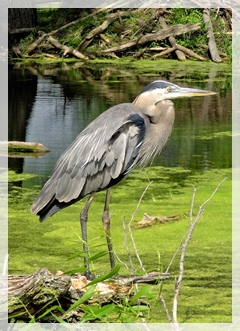
great blue heronHaving just returned from the East Coast, I had a lengthy “to do” list and thought I could fit in a few errands before picking up my mother-in-law for her doctor’s appointment. As I pushed the cart through the store, I glanced down at my watch to check the time and gasped. To my dismay, I’d lost an hour! I should have been picking her up right then; there was no way we would make it to the doctor’s on time. Leaving the cart in the aisle, I rushed to my car. Rather than think how to save the situation, my first thought was how to spin it! Other than my own carelessness and stupidity, what valid excuse could I have for my tardiness? As I started the car, I glanced at the clock on the dash and realized that hour hadn’t disappeared; I’d left it back East. While my watch was still on EST, my car, mother-in-law, the doctor and I were in CST and there was still plenty of time.;

Rather than a complete fabrication, spinning is selectively gathering facts, omitting relevant truths, and then shaping them to support our version of the story. Spinning reshapes people and events with half-truths, diversions, exaggeration, inaccuracies, emotion-laden words, attacks and euphemisms. Spinning gives us “alternative facts.” It calls bombs “lethal defensive weapons,” cheating on emissions tests “possible non-compliance,” adultery an “inappropriate relationship,” embezzlement a “personal failing,” and information we don’t like “fake news.”

Although spinning is just a nicer way of saying deceiving, we all do it. Sometimes, we spin to save someone’s feelings but, far more often, we do it to save ourselves from a reprimand, consequences, embarrassment, or humiliation. The first spinners, of course, were Eve and Adam who spun the apple story to shift the blame. Eve said it was the serpent’s fault and Adam placed the blame on both Eve and God (for giving him the woman in the first place)! Detouring around a troublesome question, Cain spun when he answered God’s question as to the whereabouts of his brother with a question of his own. We spin so we don’t have to admit our failings. Aaron spun the golden calf incident by blaming the evil Israelites rather than his weak leadership.

When we can’t make an accusation disappear, we spin it to explain that what we did wasn’t really that wrong. Told to completely destroy everything in the Amalekite nation, Saul disobeyed by sparing the king’s life. His troops destroyed only what was worthless and took the rest for themselves. When confronted by Samuel, rather than admitting his greed and disobedience, Saul spun the story. Making no mention of the monument he’d set up for himself, he claimed the prohibited plunder was to be a sacrifice to God. Sometimes, we spin when it isn’t even necessary. When Jesus asked the crippled man at Bethesda if he wanted to get well, rather than a simple yes or no, the man blamed his disability on those who wouldn’t help him to the pool.

David had a perfect opportunity to put a spin on his adultery with Bathsheba. When confronted by Nathan, the king easily could have blamed the beauty for seducing him or Joab for misunderstanding his directions regarding Uriah’s fate. Instead, David did what all of us are expected to do: confessed and said, “I have sinned against the Lord.” Although we prefer making excuses and laying the blame for our failures elsewhere, let us never forget that we, like David, must always take full responsibility for our actions.

But the tax collector stood at a distance and dared not even lift his eyes to heaven as he prayed. Instead, he beat his chest in sorrow, saying, “O God, be merciful to me, for I am a sinner.” I tell you, this sinner, not the Pharisee, returned home justified before God. For those who exalt themselves will be humbled, and those who humble themselves will be exalted. [Luke 18:13-14 (NLT)]

Copyright ©2018 jsjdevotions. All rights reserved.