
Don’t excuse yourself by saying, “Look, we didn’t know.” For God understands all hearts, and he sees you. He who guards your soul knows you knew. He will repay all people as their actions deserve. … People who conceal their sins will not prosper, but if they confess and turn from them, they will receive mercy. [Proverbs 24:12, 28:13 (NLT)]
Excuses—we all make them but I don’t think God much likes them.
 In 1 Samuel 15, after Samuel confronts Saul for disobeying God’s clear commands regarding the Amalekites, Saul makes excuses—first by denying his sin, then by justifying his disobedience, and finally by blaming others. It is only after Samuel tells him the consequences of his sin—the loss of his kingship—that Saul reluctantly admits the truth. In contrast, we have Nathan confronting David regarding his sinful behavior with Bathsheba and Uriah. Immediately after the rebuke, David confesses. It would have been easy for David to blame Bathsheba for seducing him, Uriah for hampering his cover-up scheme, or Joab for his part in Uriah’s death, but he didn’t. Acknowledging his guilt, the repentant David confessed.
In Jesus’ Parable of the Three Servants (told in Matthew 15:14-30), the master entrusts each servant with a share of his wealth proportionate to their abilities. When the master returns, he asks them for an accounting. In my NLT Bible, the reports from the two servants who faithfully fulfilled their responsibilities take only sixteen words each. The third servant, the one who buried his master’s money, uses forty words to make excuses for his failings. In fact, by calling his master a harsh man, the servant tries to cast some of the blame back on him. Nothing in the parable, however, leads us to think the master was overly demanding, hard to please, or cruel. The negligent servant was just making excuses. I wonder what would have happened if he’d simply echoed David’s words to Nathan: “I have sinned against the Lord.” [2 Samuel 13:13]
One of the hardest things for us to do is admit our sins without making any excuses. We frequently deny, minimize, refuse responsibility, cast blame, defend our motives, justify our actions, or even rationalize that it couldn’t be wrong since everyone else does the same thing. Whether we call it a momentary lapse or an error of judgment, wrong is wrong and a sin is still a sin. A sincere confession takes only six words but most excuses take forty or more! Remember—when we honestly confess, it’s not as if we’re telling God anything He doesn’t know. We confess so that we know! It’s only when we honestly acknowledge our sins as sins that we can repent of them and get right with God.
In failing to confess, Lord, I would only hide you from myself, not myself from you. [Augustine]
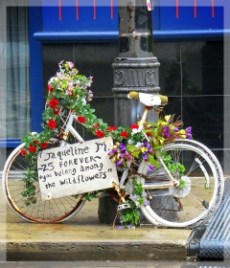 It’s often said that there are no atheists in foxholes. This maxim traces its beginnings back to 1914 and World War 1 when an English newspaper quoted a chaplain at a memorial service for a fallen soldier: “Tell the Territorials and soldiers at home that they must know God before they come to the front if they would face what lies before them. We have no atheists in the trenches. Men are not ashamed to say that, though they never prayed before, they pray now with all their hearts.” When we joined our northern church, it was during the Viet Nam War. I remember a young man in our new member class who’d drawn a low number in the draft lottery. Expecting to be in combat within the year, he confessed wanting to “get right” with God before that time came. Apparently, even the threat of a foxhole is enough to cause some people to rethink their relationship with the Almighty.
 The anchor, the Christian symbol of hope, is the most prevalent of all the Christian symbols found in the Roman catacombs. In fact, all of the symbols, paintings, mosaics, and reliefs found in the miles of labyrinth-like narrow tunnels and thousands of graves in the catacombs reflect hope in some way. Instead of the dark funereal images you might expect in an underground cemetery, the white walls of the Christian catacombs feature living things like flowers and birds along with Bible stories expressing hope in God’s plan of salvation. Prominent themes from the Old Testament include Daniel emerging untouched from the lions’ den and Shadrach, Meshach, and Abednego exiting unharmed from the fiery furnace. Frequently depicted are the stories of Noah, who escaped from the flood, and Jonah who was delivered from the sea monster. Continuing the theme of deliverance are many images of the good shepherd so frequently mentioned in Psalms. New Testament stories usually showed Jesus raising the dead (with over fifty representations of Lazarus), healing people, and feeding the multitude. The art of the catacombs is all about man’s hope in God’s deliverance, provision, and plan of salvation.
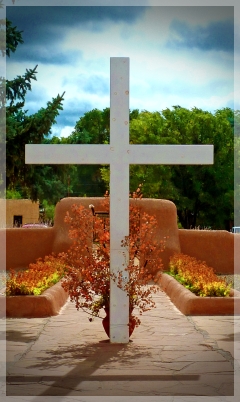 Yesterday, I wrote about Job’s lamentation. 19th century bible scholar George Granville Bradley said this about Job 3: “Where in the world will you find a sadder strain of more hopeless, uncontrolled, and unbroken lamentation and mourning? … Filled to the brim, they run over with pain.” I have to agree.
 After Satan took Job’s loved ones and wealth, the grieving man remained a pillar of patience and faith. Rather than blaming God, the stoic man acknowledged God’s sovereign authority saying, “The Lord gave me what I had, and the Lord has taken it away. Praise the name of the Lord!” [1:21]
 Devotions of the Heart