NUMBERED, WEIGHED AND DIVIDED

Yes, each of us will give a personal account to God. [Romans 14:12 (NLT)]

yellow-crowned night heronIn 539 BC, thousands of Medes and Persians were digging outside Babylon’s walls. Thinking they were futilely trying to undermine the city’s impregnable walls, Babylon’s King Belshazzar was unconcerned. While carousing with 1,000 of his nobles, he gave orders to bring out the gold and silver cups that Nebuchadnezzar had looted from Jerusalem’s temple 47 years earlier. The revelers were drinking to their false Babylonian gods with vessels dedicated to the one true God when a human hand appeared and started writing on the plaster wall. No longer so arrogant, the frightened Belshazzar called for his astrologers and diviners but, when the pagans were incapable of deciphering God’s message, Daniel was called to interpret the words.

The three words on the wall were MENE, meaning numbered, TEKEL, meaning weighed, and PARSIN, meaning divided. The words meant Belshazzar’s days as king were coming to an end, his reign had been weighed and found deficient, and that Babylon would fall and be divided. Even though I don’t rule an empire, I wondered if those three words might apply to me, as well.

Numbered—yes, our days are numbered. That we don’t know how many days are allocated to us doesn’t mean they are limitless. While Belshazzar’s number was up (he died that very night), he wasted his last day in blasphemy, idolatry, and drunken revelry. How will we choose to spend our remaining days?

Weighed—like Belshazzar, our lives will be weighed (on God’s scales, not ours). Of course, no mortal can ever balance on His perfect scales. Nevertheless, God will hold us accountable at the Judgment Seat of Christ. Have we been good stewards of His gifts? Have we served selflessly or selfishly? Belshazzar dishonored God with gold and silver goblets; have we dishonored Him with our own form of idolatry? Do we love fame, wealth, home, career, possessions or beauty more than Him? Would God find us wanting because we’ve been short on grace, forgiveness and love?

Divided—like Belshazzar’s, our personal kingdom will be divided when we’re gone. After the government and bill collectors get their share, our heirs will divide the rest. All of those possessions we worked so hard to obtain and thought so important in this life will be divided among those we leave behind. Much of what we thought so valuable will end up at flea markets, resale shops, on eBay or in a landfill.

I’m not a pagan king, hosting a drunken orgy and committing sacrilege while his nation is under attack but those three words—numbered, weighed, and divided—hit home when I read them this morning. They are a vivid reminder to look carefully at my priorities. Much of my life can be described as stuff and nonsense. How about yours? Are our days spent wisely? Do we appreciate every day with which we are blessed? Will we be found lacking? Do we honor God with our words and actions? What will remain of us when we’re gone? While things are meaningless and will disappear, memories of us and the influence we’ve had on others will continue. Will the kingdom we leave to others consist of stuff that’s divided or love that multiplies?

Numbered, weighed, and divided: what do they mean to you?
So be careful how you live. Don’t live like fools, but like those who are wise. Make the most of every opportunity in these evil days. Don’t act thoughtlessly, but understand what the Lord wants you to do. [Ephesians 5:15-17 (NLT)]

Copyright ©2019 jsjdevotions. All rights reserved.

MISTAKES HAPPEN

But if we confess our sins to him, he is faithful and just to forgive us our sins and to cleanse us from all wickedness. [1 John 1:9 (NLT)]

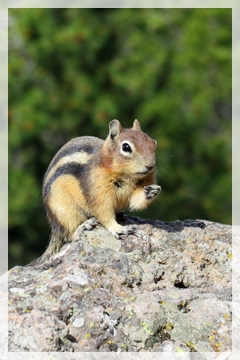
golden mantled ground squirrel - YellowstoneIt was late Saturday night when one of our pastors glanced at the next day’s church program and saw that Sunday’s sermon was titled “Epithet.” Since he wasn’t speaking about insults on social media but about the way we’ll be remembered when we’re gone, it should have read “Epitaph.” After spending the next hour trying to figure out a way to tie epithets into epitaphs, he realized it made more sense to own up to his spelling error, which he did at all three services.

Life gives us an abundance of opportunities to make mistakes and, sometimes, it seems as if we never miss one! We mishear, misinterpret, misjudge, misread, misspeak, misspell, misunderstand and, yes, we sin. We take wrong turns, say the wrong things, and believe the wrong person. Sometimes, that wrong person is an over-confident self. Overly confident, the pastor didn’t proofread, the builders of the Titanic didn’t provide enough life boats, and Napoleon thought he could successfully invade Russia in the winter.

Like the pastor, as much as we hate to do it, we need to own our mistakes and admit our responsibility for them. Sometimes, we can make the best of them, in which case they cease being mistakes. For example, while 3M’s Patty Sherman was trying to develop a rubber that wouldn’t deteriorate when exposed to jet fuel fumes, she made a mistake and spilled a few drops of one failed test batch on her shoe. Later, seeing that those spots were clean while the rest of her shoe had gotten stained and dirty, she made the most of that mistake with a product we call Scotchguard!

Sometimes, we can fix our mistakes. When KFC discovered their motto “Finger-lickin’ good!” became “Eat your fingers off!” in Chinese, they quickly corrected their clumsy translation. Sometimes, though, we just plow on ahead in the face of our errors. The Leaning Tower of Pisa started to lean five years after construction began but, rather than admit and correct the problem, building continued for another for 192 years. They kept compensating by making the uphill side shorter but, because mistakes don’t correct themselves, the tower kept leaning.

Like that learning tower, many of our mistakes are ones with which we must live. Hopefully, we learn from our errors as I imagine NASA did when they accidentally taped over their video of the moon landing. Rather than dwelling on our mistakes, we have to move out of the land of “what if” into the land of “what is.” This, however, is where we encounter the hardest part of making a mistake: forgiving ourselves.

Consider the mistakes of Judas and Peter: Judas sold Jesus for thirty pieces of silver and Peter denied Him three times. Realizing Jesus would die for his betrayal, could Judas have been trying to undo his mistake by giving back the blood money? Filled with remorse and unable to change what had been done, he killed himself. I can’t help but wonder what would have happened if only Judas had waited three days. I know Jesus would have forgiven Him. Think of the testimony Judas could have given if he’d forgiven himself and waited as did Peter. Like Judas, Peter betrayed Jesus but, unlike him, he forgave himself, lived with his mistake, and was in the room when Jesus appeared! Think of the powerful testimony Peter did give!

We have a choice about even our most grievous mistakes. Like Peter, we can live with them, forgive ourselves, accept God’s forgiveness, and move on with our lives in service to Him. Or, like Judas, we can hold on to them and refuse to forgive ourselves. Our guilt may not take our lives but it will take our peace, joy, self-confidence, hope, and even our faith in a forgiving God. We’re told we must forgive to be forgiven; it would seem that command means forgiving ourselves as much as it means forgiving others. Let our guilt be washed away!

Finally, I confessed all my sins to you and stopped trying to hide my guilt. I said to myself, “I will confess my rebellion to the Lord.” And you forgave me! All my guilt is gone. [Psalm 32:5 (NLT)]

And since we have a great High Priest who rules over God’s house, let us go right into the presence of God with sincere hearts fully trusting him. For our guilty consciences have been sprinkled with Christ’s blood to make us clean, and our bodies have been washed with pure water. [Hebrews 10:21-22 (NLT)]

Copyright ©2019 jsjdevotions. All rights reserved.


TOSS ‘EM OUT – It’s a New Year

Nothing in all creation is hidden from God. Everything is naked and exposed before his eyes, and he is the one to whom we are accountable. [Hebrews 4: 13 (NLT)]

Snow in SteamboatExplaining her years of addiction, Alice said, “It’s all because my parents moved from Illinois to Texas while I was in high school.” Was the move a contributing factor to Alice’s drug use? Maybe, but that was more than twenty-five years ago and has nothing to do with her failure to deal with her behavior today. Since high school, she’s abandoned a child, served time in prison, been in and out of a well-known residential rehab so often that she should have her own room, and is still lying, stealing, and using. Like many of us, Alice is simply blame shifting.

Yes, our experiences influence us but, as Christians, our past determines neither our present nor our future. By blaming our genes, nationality, appearance, or our over-indulgent or too strict parents, we abandon ownership of our failures and sins. We say we had too little or were given too much, that the spouse was inattentive, the judge was prejudiced, the teacher was inept, or we shouldn’t have moved. I’ve heard people blame their rudeness, stinginess, drinking, and tempers on their upbringing when they alone are responsible for their conduct today. Blaming other people or things implies that we aren’t accountable for our actions and leads us to think we aren’t responsible for changing that behavior.

Contributing factors, extenuating circumstances, and difficult childhoods may be of interest to a therapist but not to God. We may be able to deceive ourselves and others, but our excuses will never deceive Him! There will come a day when each one of us will be held responsible for our thoughts, words, and deeds and any excuses we use to justify our sins will disappear.

For both the non-believer and believer, there is judgment. No matter what the excuse, the person who has rejected Christ is doomed. When Alice meets God face to face, He will see into her and hold her accountable for her sins: the way she denied Him and wasted the precious life he gave her. While believers are saved by faith alone, they too will be judged. At the Judgment Seat of Christ, they’ll be asked to give an accounting of their lives in service to Him. When Alice’s parents (both believers) stand before God, He won’t hold them accountable for their move to Texas but He may well hold them accountable for the way they continually enabled their daughter to squander her life.

Excuses may not be outright lies but they keep us from facing the truth and, without facing the truth about ourselves, we won’t change. Our goal in life is to become more like Christ and we can’t do that by rationalizing our failings. This is a new year and a perfect time to do some serious self-examination. Are we victims of circumstance or victors in Christ? Are there any excuses we should toss out with the holiday trash?

Since you have heard about Jesus and have learned the truth that comes from him, throw off your old sinful nature and your former way of life, which is corrupted by lust and deception. Instead, let the Spirit renew your thoughts and attitudes. Put on your new nature, created to be like God—truly righteous and holy. [Ephesians 4:21-24 (NLT)]

Copyright ©2019 jsjdevotions. All rights reserved.


THE OLIVE BRANCH

Forget about the wrong things people do to you, and do not try to get even. Love your neighbor as you love yourself. [Leviticus 19:18 (NCV)]

Humility has such power. Apologies can disarm arguments. Contrition can defuse rage. Olive branches do more good than battle axes ever will. [Max Lucado]

mourning doveIn a “Baby Blues” comic strip, Zoe, the big sister approaches her brother and tells him, “About that fight we had a while ago…I would like to extend an olive branch.” With a panicked look on his face, the little brother screams, “MOM!!! Zoe’s threatening me with a stick!” Having had an older brother who delighted in tormenting me, I completely sympathized with the little boy. There were times when my brother just had to come near me and I would frantically call out, “Mom, Steve’s hitting me again!” I wanted to avoid another painful punch but, who knows, maybe one of those times he, like Zoe, was just offering an olive branch.

Long before the ancient Greeks and Romans used the olive branch as a symbol for victory and peace, the story of Noah recorded that a dove brought an olive branch back to the ark which meant the end of the flood and the earth’s rebirth. Symbolizing peace and reconciliation, the olive branch requires two things: someone to extend it and someone else to accept it. An apology and its acceptance are two sides of the same coin, as are the asking of forgiveness and the granting of it. Both are necessary for peace in our lives.

I have been like Zoe, the one extending the olive branch; I admitted my offense, apologized, and asked forgiveness but was rebuffed. Unfortunately, there are people who will never accept an apology, no matter how humbly or amiably it is offered. All we can do is keep the olive branch extended, pray that God will open their hearts, and continue to love.

Like Zoe’s little brother, however, it’s not always easy to accept that olive branch. Wanting to protect ourselves from further hurt or disappointment, we may prefer suspicion, aloofness, hostility, or anger. Forgiveness doesn’t mean we have to trust people who are untrustworthy or believe those who are dishonest. An act of love, mercy and grace, forgiveness is releasing the offense and offender to God; it is giving up our right to hurt those who’ve hurt us. Being the wronged party never gives us permission to continue the wrong with unforgiveness.

Along with an olive branch, the handshake is a gesture of peace. In ancient Greece, hands were grasped to demonstrate that neither person held a weapon. In Rome, the grasp became more of an arm grab as a way of seeing whether any weapons were hidden in someone’s sleeves. The shaking part is said to come from medieval England when knights would shake hands in an attempt to shake loose any concealed weapons.

Hopefully, we don’t need to worry about lethal weapons hiding in sleeves when we shake hands this holiday season. Nevertheless, we need to put aside the invisible weapons we carry: things like anger, gossip, blame, intolerance, pettiness, jealousy, resentment, and disrespect. Let’s extend any olive branches that need to be extended and accept any that are offered. If there can’t be peace throughout the world this holiday season (and from the news that looks unlikely), let there at least be peace and reconciliation in our homes and families.

To be forgiven is such sweetness that honey is tasteless in comparison with it. But yet there is one thing sweeter still, and that is to forgive. As it is more blessed to give than to receive, so to forgive rises a stage higher in experience than to be forgiven. [Charles Spurgeon]

When you are praying, if you are angry with someone, forgive him so that your Father in heaven will also forgive your sins. But if you don’t forgive other people, then your Father in heaven will not forgive your sins. [Mark 11:25-26 (NCV)]

Copyright ©2018 jsjdevotions. All rights reserved

A HEAVY LOAD

And we know that God causes everything to work together for the good of those who love God and are called according to his purpose for them. [Romans 8:28 (NLT)]

When troubles of any kind come your way, consider it an opportunity for great joy. For you know that when your faith is tested, your endurance has a chance to grow. [James 1:3b-3 (NLT)]

viceroy butterfly“He will deliver us from our troubles or carry us through them. Either way, we will be free of them eventually.” How easily these words can be uttered until, of course, those troubles apply to us. Had Job’s friends been Christian and said those words, I don’t think they would have been any more comforting than what was said. While true, they won’t bring back the amputated limb or cancerous breast, pay the staggering medical bills, tuck the motherless child in bed at night, change the diagnosis of Parkinson’s or schizophrenia, or bring back an abused child’s innocence. While true, those words can’t wipe the tears of a mother holding her stillborn baby, the husband watching his wife vanish into dementia, or the man whose body is in mutiny because of ALS.

The valleys I have traversed have been neither as deep nor as dark as those others are traveling. I’ve never climbed mountains as steep as the mountains they face daily. The storms that battered my soul pale in comparison to the tempests others endure. They grow weary from carrying burdens heavier that I can imagine. It’s not just the victims of life’s afflictions and misfortune that bear a burden. Everyone who loves and cares for them becomes part of their arduous journey; they shoulder heavy loads, as well. I cannot fathom the emotional and physical weight they carry nor the exhaustion they must experience on a daily basis.

I know enough not to say, “I know what you’re going through,” because I truly don’t. Even with the same diagnosis, no two people share the same circumstances. Reminding someone that God works all things for good or that we grow through suffering may be of little comfort to those who are in anguish and pain. Suffering isn’t a riddle that needs to be solved and it won’t end once we know what it is God is teaching us or what good will come from it. No matter how well meant our words may be, they can sound trite and hollow.

The kindest thing Job’s friends did was sit quietly with him for seven days; perhaps, we should follow their example. Rather than words, we can offer love: our presence, support, sympathy, compassion, patience, encouragement, ears, or even food. Rather than telling people to rejoice in all circumstances, we could find ways to bring joy into their lives. Most of all, we can offer our faithful and heartfelt prayers.

Lord, we offer prayers for the ill and infirm, the troubled, weak and helpless and for those brave souls who love, comfort and care for them. Reassure them of your loving presence. Endow them with courage and faith as they pass through dark valleys, scale steep mountains, and endure powerful squalls. Strengthen them and give them hope. Give us wisdom and show us how to lighten their burdens, lift their spirits, relieve their pain, and ease their fears. Let us know when to remain silent and what to say when we should speak.

When we honestly ask ourselves which person in our lives means the most to us, we often find that it is those who, instead of giving advice, solutions, or cures, have chosen rather to share our pain and touch our wounds with a warm and tender hand. The friend who can be silent with us in a moment of despair or confusion, who can stay with us in an hour of grief and bereavement, who can tolerate not knowing, not curing, not healing and face with us the reality of our powerlessness, that is a friend who cares. [Henri Nouwen]

Share each other’s burdens, and in this way obey the law of Christ. [Galatians 6:2 (NLT)]

I urge you, first of all, to pray for all people. Ask God to help them; intercede on their behalf, and give thanks for them. [1 Timothy 2:1 (NLT)]

Copyright ©2018 jsjdevotions. All rights reserved.

COULD IT BE TODAY?

Teach us to realize the brevity of life, so that we may grow in wisdom. [Psalm 90:12 (NLT)]

black vultureA few years ago, unaware of what the day would bring, a family friend kissed her new husband good-bye as he left for work. While riding the train that morning, the young man collapsed; he died of sudden cardiac arrest less than an hour after that tender kiss. That same year, another friend, whose wife’s body was ravaged by cancer, knew how short the time was he had with her. “While watching TV,” he confided downheartedly, “I looked over at Maureen and realized that next year her chair will be empty and I’ll be alone!” Today is Patriot Day, an annual remembrance of those who died or were injured during the terrorist attacks on September 11, 2001. Thinking about that tragic morning seventeen years ago when so many lost their loved ones unexpectedly, I remembered these two widowed friends. Which is worse: watching the one you love deteriorate and knowing that you’re running out of time for kisses or kissing a loved one in the morning and not knowing that will be the last kiss you’ll ever share?

I can’t imagine the anguish of either scenario and am thankful that God doesn’t give us a choice in this matter. But, I do know what would be more heartbreaking than either scenario. Instead of kissing one another when parting, it would be worse if our last words were angry or harsh ones. How tragic if, instead of sharing a few loving words, we spent our last moments together in heated discussion or spiteful silence. What if we squandered our last opportunity to say “I love you,” to apologize or forgive, to pray together, to laugh with one another, or to share a kiss?

Whenever we say good-bye to my mother-in-law, we always give her a kiss and express our love. Since she’s nearing her 102nd birthday, we understand that each time we see her might be the last. This day of remembrance, however, is a powerful reminder that we can’t see what the next day will bring. There is no guarantee of tomorrow or even the next hour. We don’t know when our last moments with someone may be, whether they are 102 or only 12, dying of cancer or in the prime of life. We mustn’t waste the time with which we’re blessed. Let’s fill our lives, and the lives of others, with love, peace, and joy.

Father in Heaven, may we all learn to live each day as if it is our last. Remind us, O Lord, that this could be the final day, not just for us, but for those we love. May your Spirit guide us so that we truly appreciate the time and people you’ve given us. Let us leave no forgiveness denied, no love unexpressed, no apologies unoffered, no conflicts unresolved, and no thanks unspoken.

I expect to pass this way but once; any good therefore that I can do, or any kindness that I can show to any fellow creature, let me do it now. Let me not defer or neglect it, for I shall not pass this way again. [Stephen Grellet]

Look here, you who say, “Today or tomorrow we are going to a certain town and will stay there a year. We will do business there and make a profit.” How do you know what your life will be like tomorrow? Your life is like the morning fog—it’s here a little while, then it’s gone. [James 4:13-14 (NLT)]

Copyright ©2018 jsjdevotions. All rights reserved.