
Joyful are people of integrity, who follow the instructions of the Lord. Joyful are those who obey his laws and search for him with all their hearts. They do not compromise with evil, and they walk only in his paths. [Psalm 119:1-2 (NLT)]
 A few miles from our Illinois home, a giant ski jump towered over the treetops. Originally erected in 1905 by Carl Howelsen and a group of Norwegian skiers living in Chicago, it’s been rebuilt over the years and is still used today. In a curious coincidence, in 1913, the man who loved the mountains and deep snow found his way to the Colorado mountain town we once called our winter home. Although Howelsen returned to Norway in 1922, he left an indelible mark on the town by introducing it to recreational skiing and ski jumping. Not far from the hill named for him, stands a statue of the man known as Flying Norseman.
Howelsen never returned to Colorado, but I heard his son, Leif Hovelsen, speak at the dedication of that statue several years ago. It was then that I learned the legacy Howelsen left his son was even greater than the one he left our mountain town. When Leif was just a boy in 1930s Norway, Carl sent him on a delivery. Upon his return home, it was discovered that the boy had been short-changed. When his father insisted that he return and get the proper payment, the youngster balked. Not wanting to face the man who’d cheated him, the lad offered to make up the difference from his own savings. His father, however, insisted that he return to get the correct payment. It wasn’t about a few kroner, explained Carl. It was that every time we accept things like cheating, thievery, hate, depravity and deception, a little bit of our integrity erodes until none remains.
From Leif Hovelson’s life, it’s obvious that he took his father’s words to heart. Unable to accept the evils of Nazism during World War II, 19-year old Leif smuggled radio parts out of Oslo to members of the resistance fighting the Nazi occupation. Betrayed by a friend, he was captured by the Gestapo in 1943. As he was dragged from his home by soldiers, his mother’s parting words were, “Leif, never forget Jesus!” It seems that he never did!
Although he’d been placed in solitary confinement in a concentration camp, threatened with death, regularly interrogated, and tortured badly enough to lose much of his hearing, Hovelsen set his heart on reconciliation rather than revenge. After the war, he spent years in Germany working to help that country rebuild its moral and spiritual foundations. Choosing to love rather than hate, Hovelsen dedicated his life to Moral Re-Armament, an international movement with Christian roots and based around the “Four Absolutes:” absolute honesty, absolute unselfishness, absolute purity and absolute love. One of the core ideas of the movement was that changing the world begins with making changes in oneself. For Hovelsen, that change began when his father warned him of spiritual and moral erosion.
When I think of Carl Howelsen, I don’t think of the legacy he left to the sport of skiing and to the town that now boasts of 98 winter Olympic athletes. I remember the advice he gave his son and the impact it had on him.
Let us remember that, every time we accept that which is unacceptable, a little part of our soul wears away. While it takes water centuries to eat away at rock, it only takes one bad decision to start eroding our souls. We live in a world where immorality, prejudice, greed, selfishness, corruption, and dishonesty constantly assault us. If we are to be people of integrity, it is God’s standards, rather than the world’s, that must be our standards. Moreover, we can’t maintain the absolutes of honesty, unselfishness, purity, and love on our own; for that we need the power of the Holy Spirit.
Sow a thought, reap an act. Sow an act, reap a habit.
Sow a habit, reap a character. Sow a character, reap a destiny.
[Attributed to both Charles Reade and Ralph Waldo Emerson]
 Since we tend to think of burdens as demanding and often unwelcome duties or responsibilities, we’re certainly not anxious to take on a burden, especially one that actually belongs to someone else! Yet, that is exactly what we’re told we must do if we are going to fulfill Christ’s mandate. And what is that command? To love one another in the way God loves us.
 It’s often said that there are no atheists in foxholes. This maxim traces its beginnings back to 1914 and World War 1 when an English newspaper quoted a chaplain at a memorial service for a fallen soldier: “Tell the Territorials and soldiers at home that they must know God before they come to the front if they would face what lies before them. We have no atheists in the trenches. Men are not ashamed to say that, though they never prayed before, they pray now with all their hearts.” When we joined our northern church, it was during the Viet Nam War. I remember a young man in our new member class who’d drawn a low number in the draft lottery. Expecting to be in combat within the year, he confessed wanting to “get right” with God before that time came. Apparently, even the threat of a foxhole is enough to cause some people to rethink their relationship with the Almighty.
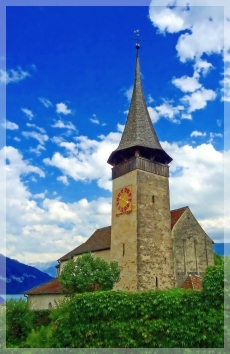 The cornerstone metaphor continues into the New Testament with both Paul and Peter referring to Jesus as the cornerstone of our faith. Nowadays, cornerstones are structurally unneeded and a growing number of commercial buildings no longer have them. Symbolic rather than functional, many serve as time capsules holding material relevant to the building and the year it was built. Because commercial buildings so frequently change hands, even the custom of inscribing the building’s name on a cornerstone is disappearing. The latest practice is a freestanding cornerstone/time capsule resting on a pedestal placed in a prominent part of the building. That way, a new stone can replace the old one every time the building’s owner changes.
 “It’s all about getting a second chance!” said the back of the man’s T-shirt. I then saw the dog paws printed on both sides of the message and realized his shirt was advertising a dog rescue organization. Nevertheless, the shirt’s words made me think of the parable Jesus told the Pharisees about two sons. The vineyard owner told his sons to go work in the vineyard. The first son rudely refused but the second son respectfully promised he’d do the work. As it turned out, the defiant son had a change of heart and went to work in the vineyard while the second seemingly dutiful son never did. Jesus then asked the Pharisees which of the two sons had done his father’s will. Of course, they had to say that the first son, in spite of his initial rebellion, was the obedient one.
 The Synsepalum dulcificum is a West African fruit better known as the “taste berry” or “miracle fruit.” This almost tasteless red berry can make lemons, Dijon mustard, Brussels sprouts, pickles and even vinegar taste sweet. A protein in the berry temporarily binds to the tongue’s taste buds and causes sour or acidic foods to taste sweet. Miracle fruit tablets, powder, freeze-dried berries and plants can be purchased from several websites. Along with suggesting using the berry as a way to get fussy eaters to eat their fruits and vegetables, sellers suggest hosting “flavor-tripping parties” where guests get a berry and a strange buffet of foods like sauerkraut, kimchi, radishes, grapefruit, cheap tequila, goat cheese, vinegar, and Tabasco sauce. Why anyone would want to alter the delicious flavors of kiwi, pineapple, strawberries, Granny Smith apples, grapes, or tomatoes is beyond me and I certainly have no desire to drink pickle juice or Sriracha chili sauce.
 Devotions of the Heart