
Who gives intuition to the heart and instinct to the mind? Who is wise enough to count all the clouds? Who can tilt the water jars of heaven when the parched ground is dry and the soil has hardened into clods? [Job 38:36-38 (NLT)]
 The Bible gives us plenty of instances of God directly speaking to His people—Noah, Moses, and Joshua were all given specific directions before building the ark, liberating the Israelites, or crossing into the Promised Land. On the other hand, there are many people who furthered God’s plan without His specific instructions. As far as we know, God didn’t tell Moses’ mother to place her son in a basket and lay him among the reeds of the crocodile infested Nile, yet she did just that. What caused a mother to literally send her beloved baby down the river? Yet, that very action furthered God’s plan; as the son of an Egyptian princess, Moses received a royal upbringing and an excellent education, all of which he needed in his later confrontations with Pharaoh.
There’s no mention of God telling Joshua’s spies how to get their information about Jericho. Granted, Rahab was a prostitute which might explain why they stopped there. Still, she probably wasn’t the only harlot in town and hers wasn’t the only house near the city wall. What made the men choose the one house where they’d find a woman who believed enough in the Israelites’ God to lie to the king’s men and save their lives?
Did the spies and Moses just catch lucky breaks? My husband often says, “Luck is better than skill!” but I don’t think luck had anything to do with it. We can’t truly comprehend God and, since we’re created in His image, it would seem that there is a part of us that also is beyond our understanding. An EEG can’t detect it and neither CT scan nor MRI can show it; nevertheless, it is what provides us with inner guidance and enables us to discern right from wrong, recognize danger, and become suspicious when things don’t seem quite right. It goes way beyond experience, aptitude, and skills. God has blessed us all with an innate intuition through which He steers our minds, changes our perspective, reveals opportunities, and helps us rethink situations so that we can choose His plan, even when we’re not sure what it is. It’s that strong inner feeling that something is the right thing to do, not just for our benefit but also for the benefit of those around us. It was what brought the spies to Rahab and caused Moses’ mother to place him in the river.
Unfortunately, not all of our inner feelings come from God; the enemy also is whispering into our ears. Being mortal, we are prone to errors in judgment and not every hunch, feeling, or instinct should be heeded. The Book of Judges tells us that, when there was no king in Israel, “All the people did whatever seemed right in their own eyes.” [17:6] In fact, after listing all of the nation’s appalling moral failures, Judges reiterates that thought in its last words. When God provided us with intuition, he did not abdicate his authority over us. The Israelites needed a king to govern them and we certainly need our King to rule us. Whatever we think intuition is telling us should be in line with what God has already told us.
Intuition isn’t our problem; it’s not adding God and prayer to it that is. We all will have intuitive moments but must discern their source by going to God’s word in the Bible and to His throne in prayer. The closer we are to God, the more likely we are to know whether or not that feeling in our gut comes from Him or from the spicy burritos we ate for lunch.
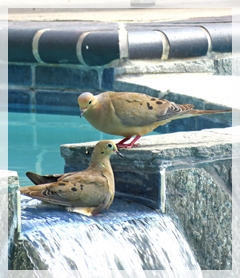 I’m not a good sitter and I’m even worse at soaking in a tub. Just wanting to get clean and get on with my day, I’m a shower person. Friends insist that sitting in the tub and reading is the best way to relax but that doesn’t work for me. I don’t have the patience to wait for the water to get high enough for a good soak or for the spa jets to work, I’ve never figured out how to turn pages without getting them wet and, rather than relaxing, I think about all the things I could and should be doing instead of sitting in hot water. I considered my inability to enjoy a bath when our pastor suggested that we bathe our decisions in prayer. Unfortunately, the same impatience that keeps me from enjoying my over-sized bath tub keeps me from bathing my decisions in prayer.
 When asked about her boys, a friend used to answer, “They’re doing their own thing.” Years later, I learned “their own thing” meant they were breaking her mama’s heart with their addictions and run-ins with the law. Because she kept her pain concealed, she carried the weight of that burden alone for many years. We often hear similar answers when we ask someone how they’re doing— brusque responses like, “I’m fine,” “It’s taken care of,” or “We don’t need a thing.” Maybe everything really is hunky dory but those answers are often used when life has gone seriously awry and things are anything but fine. Those vague but terse responses are conversation stoppers. Even best friends, who suspect something is amiss, won’t pry and the subject is politely changed.
 Most of us think of sloth as laziness: a dislike of work or any physical exertion. Having watched the local zoo’s sloth in action (or, rather, inaction), I think the sluggish animal is appropriately named. Spiritual sloth, however, is far different than being a couch potato. Originally, the sin of sloth was two sins: sadness and acedia. Compiled by Evagrius of Ponticus, a 4th century monk, these two “capitals sins” were part of a list of eight he believed to the greatest threats to devout monasticism.
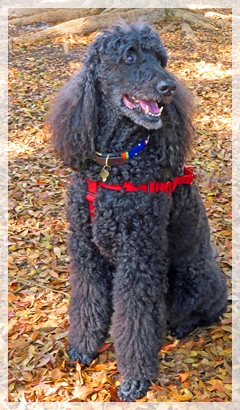 The store was called “Ms. Bossy Boots” and the sign in the window said, “I’m not bossy, I’m just helpful.” Having just had an encounter with a precocious youngster who’d been wearing some very bossy boots, I laughed. After advising me that I needed to put televisions in all my bedrooms, she informed me we couldn’t sell our house because she didn’t want new neighbors! She announced her disapproval of the appetizers, questioned the dinner menu, told me jam should be served with the bread, and criticized the vegetables. Following dinner, I was advised that any remaining cookies should be packed up for her. In a younger child, her behavior might have been slightly excusable. At her age, however, it was demanding and ill-mannered. Over-indulged by her mother and grandparents, she has not learned that it is the meek who will inherit the earth.
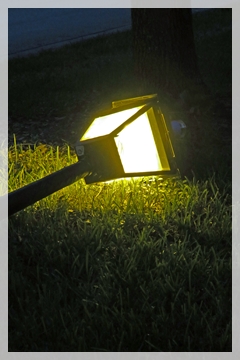 To avoid the southwest Florida heat, I waited until dusk to take my walk. Thanks to Hurricane Irma, most of the street lamps in my neighborhood don’t work. For a light to function, electrical energy has to be converted into light energy and both a source of electricity and a working connection are needed. For many of the lights, the connection was broken when blowing debris shattered their bulbs. For others, Irma’s 150 mph winds broke the connection when it blew off their tops, wrapped their poles around trees, or knocked them to the ground. Without a connection to their source of power, those street lights are useless—they’re just a tangle of wires and a pile of glass, plastic and metal. Even though they don’t work, people have been cautioned to remember that their exposed wires are live. It’s not the electricity that is missing; it’s the connection that is inoperative. Two poles, however, were down but not out. Even though they’d been flattened by the storm, neither wires nor bulb had broken. In spite of the storm’s violence, they remained connected and were beacons in the night’s darkness.
 Devotions of the Heart