HEIRLOOMS

Don’t store up treasures here on earth, where moths eat them and rust destroys them, and where thieves break in and steal. Store your treasures in heaven, where moths and rust cannot destroy, and thieves do not break in and steal. Wherever your treasure is, there the desires of your heart will also be. [Matthew 6:20-21 (NLT)]

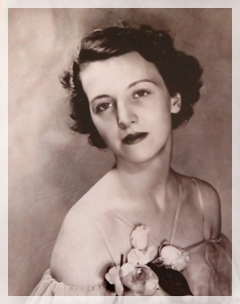
CamillaWe’re selling our northern home and, with limited space in Florida, I must winnow out our 52 years of accumulated possessions. “How can I give them away?” I wondered while looking at the beautiful hand-painted Bavarian dinner and dessert plates that belonged to my mother and her mother before that. My fondness for the plates, however, has less to do with their beauty than with their provenance.

When my mother died, I was only fifteen. I remember sitting with my older brother and sister as my father read her hand-written note to us. He tried to hold back his tears as he spoke her words of farewell that passed along various family heirlooms to each of us children. Mentioning her joy at never having broken a plate in the 23 years she’d used them, my mother gave her mother’s china to me. When I look at what is little more than clay, bone ash, flint, feldspar, glaze, paint, and gold gilding, I don’t see plates—I see my mother’s exquisitely set table, the two of us setting it, our family gathering together for a holiday dinner, and my father reading her farewell words to me.

Later, when sorting through books, I came to some that had been my mother’s. Inside the front covers, she’d carefully written her name and home address. “How can I give away these books that meant so much to her?” I thought. Many of them were written by C.S. Lewis and I suspect my affinity for the author comes from her. She belonged to a women’s guild at our church—sort of the 1950’s version of a small group. The women gathered twice a month for fellowship and service and often met at our house. They would sit around the dining room table and sew something called “cancer pads.” My mother couldn’t even thread a needle and her poor eyesight and clumsiness with a needle probably made her more of a hazard than a help in the women’s work. What she excelled at, however, was reading aloud, analyzing the written word and leading discussions. When the women realized that busy hands didn’t keep their mouths from minding other people’s business, my mother suggested that she read to them while they worked.

As I ran my finger over her name, I decided to save just one of her books. The rest of them will go to the church’s library so they can bring someone else pleasure and knowledge. Then, realizing that I don’t need the china to remember the beautiful woman who gave me life, I decided to keep just one of the dessert plates and give away the rest. Rather than hold onto things, I will hold on to my memory of a woman who, recognizing her limitations, wisely used the gifts God gave her.

While the Old Testament speaks of material inheritance and even gives guidelines to ensure the financial welfare of the family, the New Testament speaks of a spiritual inheritance. Rather than worrying about amassing things here on earth, Jesus told us to store up treasures in heaven. Granted, we want our families cared for once we’re gone but more crucial than passing along possessions is the passing along of good character, love, and faith in God.

The important thing is not to hold on to material possessions but to remember the people we associate with them, the love they offered, and the lessons they taught us. I think of the words of Morrie Schwartz (in Mitch Albom’s Tuesdays with Morrie) who said we continue to live on in the hearts of everyone we’ve touched and nurtured while we were here. “Death ends a life, not a relationship,” said the wise old professor. My children don’t need old china or books to know my mother; they know her through me!

All praise to God, the Father of our Lord Jesus Christ. It is by his great mercy that we have been born again, because God raised Jesus Christ from the dead. Now we live with great expectation, and we have a priceless inheritance—an inheritance that is kept in heaven for you, pure and undefiled, beyond the reach of change and decay. [1 Peter 1:3-4 (NLT)]

Copyright ©2019 jsjdevotions. All rights reserved.

WHERE IS HE?

As the deer longs for streams of water, so I long for you, O God. I thirst for God, the living God. When can I go and stand before him? Day and night I have only tears for food, while my enemies continually taunt me, saying, “Where is this God of yours?” [Psalm 42:1-3 (NLT)]

white-tailed deer - FloridaNot so long ago, it was hard to face my computer with any enthusiasm. Every beginning led to a dead end or took me down a rabbit hole of confusion. The paragraphs over which I’d struggled had come to nothing and my hours at the keyboard seemed an exercise in futility. It’s as if I had little scraps of useless fabric but couldn’t find a way to quilt them together. I wondered where God was when I so desperately needed His guidance.

The best place to go when feeling hollow or hopeless is God’s word and Psalms is where I usually begin. David certainly had plenty of times of downheartedness and he wasn’t afraid to express his exhaustion, frustration, or despair and yet there always seems to be a ray of hope in his words. I turned to Psalm 42 and, having hit a “dry spell,” I knew what the psalmist meant when comparing himself to a deer panting for water and thirsting for God. Like him, I felt like I was dying of thirst.

It was the psalm’s mention of enemies with their taunts of, “Where is this God of yours?” that really hit home. I don’t share David’s flesh and blood enemies but all of us share a common unseen enemy: the doubt and anxiety that comes from spiritual depression.

The palmist asks why God has forgotten him and I think we all know that feeling. While I can get it when I’m staring at an empty page, that sense of desolation may visit others as they wait for the return of a prodigal, sit in a hospital room, endure chronic pain, look at the empty chair once occupied by a spouse, or have too much month left at the end of their money. We’ve all had times when it feels like God has turned a deaf ear to our prayers or has closed His eyes to our situation.

“Where is this God of yours?” is the enemy’s voice. Wanting us to lose faith or wallow in despair, he causes us to question God’s presence in our lives. God hasn’t forgotten about us; even the psalmist, as depressed as he was, acknowledges that God pours out His unfailing love each day. Nevertheless, sometimes, it feels as if God is looking the other way. Feeling defeated, discouraged, lonely, weary, or insecure, it’s easy to forget that our feelings can’t always be trusted. God, however, always is steadfast and trustworty!

In a gentle reproach, the psalmist asks why he is so downcast and reminds himself of the hope he has in God. That we don’t sense God’s presence, feel His love, see His hand, or hear His voice doesn’t mean that our loving God isn’t there. When asked, “Where is this God of yours?” let us never forget that He dwells, not just in heaven above, but also in our broken spirits. There always will be dark valleys to traverse but we are never alone; we have hope in God and, for that, we praise him.

A loss of the present sense of God’s love is not a loss of that love itself; the jewel is there, though it gleams not on our breast; hope…expects the promised boon though present providence stands before her with empty hands. [Charles Spurgeon]

Why am I discouraged? Why is my heart so sad? I will put my hope in God! I will praise him again—my Savior and my God! [Psalm 42:11 (NLT)]

Copyright ©2019 jsjdevotions. All rights reserved.

DINGS AND DENTS

That Sunday evening the disciples were meeting behind locked doors because they were afraid of the Jewish leaders. Suddenly, Jesus was standing there among them! “Peace be with you,” he said. As he spoke, he showed them the wounds in his hands and his side. They were filled with joy when they saw the Lord! [John 20:19-20 (NLT)]

tiger swallowtail - butterflyWe’re selling our northern home and, as I packed up assorted family heirlooms, I came across the little sterling silver salt and pepper shakers we used for so many years. I held one in my hand a bit longer than the others; it had distinct teeth marks on it. For reasons that are unknown, my eldest child tried to bite through it. In spite of its obvious imperfection (or, perhaps because of it), the shaker is still beautiful. I’d wondered which child should get these silver pieces but, after remembering their history, I lovingly wrapped them up and placed them in my son’s box. I only hope his family will find the impressions of his baby teeth as beautiful as do I.
As I sorted through other family silver, I came to the sterling candle holders that were a wedding gift to my parents some 82 years ago. Like the salt and pepper set, they show their age with a few dents and scratches. My parent’s marriage, like the candle holders, wasn’t perfect but it endured through every circumstance. I decided to keep the candle sticks with our things as a reminder both to forgive and appreciate the beauty in imperfection.

I thought of Jesus’s scars as I packed up the dented silver. Our resurrected Lord carried the scars from his wounds. Yet, since He could pass through a locked door, He easily could have removed those wounds in his hands and side. Jesus’s scars let the disciples know who He was and our scars are an essential part of our identity, as well.

Like Jesus, we all bear scars, both inside and out. Like my silver, we have dings and dents and are a little (or a whole lot) tarnished. Just as the imperfections on my old silver tell a story, so do our scars. The scar from a C-section tells of blessings received while the scar from a hysterectomy tells of the loss of possibilities. The scars from a burn tell the story of injury and pain while the scars from open heart surgery tell of getting a new lease on life. Some scars, like those left from a divorce, a loved one’s death, or addiction, are invisible but tell their own tale, as well. Scars, dings and dents are simply evidence of things that didn’t defeat us; they are our beautiful trophies of survival and healing. Death did not conquer Jesus and, though God’s grace, life’s challenges cannot conquer us.

My scars remind me that I did indeed survive my deepest wounds. That in itself is an accomplishment. And they bring to mind something else, too. They remind me that the damage life has inflicted on me has, in many places, left me stronger and more resilient. What hurt me in the past has actually made me better equipped to face the present. [Steve Goodier]

From now on, don’t let anyone trouble me with these things. For I bear on my body the scars that show I belong to Jesus. [Galatians 6:17 (NLT)]

Copyright ©2019 jsjdevotions. All rights reserved.

TO BE STILL

God is our refuge and strength, always ready to help in times of trouble. … Be still, and know that I am God! I will be honored by every nation. I will be honored throughout the world. [Psalm 46:1,10 (NLT)]

When we’re told to “Be still” in Psalm 46, we tend to think in terms of stopping movement—our busyness, frantic activity, or agitated actions. We associate it with a director yelling, “Cut!” the ref blowing his whistle, or a frustrated parent’s “Cut it out!” Being still can entail all of that, but it is much more. The root of the original Hebrew word used for “still” is the verb rapa which means to be faint, forsake, or sink down. When used as the imperative ra’pha’h, as it is in Psalm 46, it means to drop or release our concerns, to become weak, or surrender. While most Bible versions translate this as “Be still,” some translate as desist, stop fighting, cease striving, be quiet, or be at peace. In short, we’re being told to stop anxiously fighting a situation and leave the matter to God—to relax our grip on things, stop worrying and let it be.

Forgetting that we can’t save ourselves, we often base our self-worth on what we can do—our strength, self-sufficiency and independence. It goes against the grain to accept that we must become weaker so that God can become stronger and that we must lose our lives to find them. But, it is when we loosen our grip, release our hold, and admit our helplessness that we finally understand that God is God and we are not!

Do we come to God with clenched fists or open hands? Do we come with hands clutching things like worry, fear, possessions, expectations, wealth, plans and goals or with open hands that have relinquished those things to God? “Be still,” we’re told—loosen the grip and surrender to God. Remember, just as clenched fists can’t release anything, they also can’t receive God’s blessings! Today, instead of bringing my hands together in prayer, I opened them and turned my palms upward in a symbolic gesture both of surrender and acceptance. I was still and knew that He is God.

When a train goes through a tunnel and it gets dark, you don’t throw away the ticket and jump off.  You sit still and trust the engineer. [Corrie ten Boom]

Trust in the Lord and do good. Then you will live safely in the land and prosper. Take delight in the Lord, and he will give you your heart’s desires. Commit everything you do to the Lord. Trust him, and he will help you. Be still in the presence of the Lord, and wait patiently for him to act. [Psalm 37:3-5,7a (NLT)]

Copyright ©2019 jsjdevotions. All rights reserved.

MARA

He has filled me with bitterness and given me a bitter cup of sorrow to drink. [Lamentations 3:5 (NLT)]

tiger swallowtailTo explain her sisters’ bitterness and sour outlook on life, my mother-in-law would say, “Well, their lives didn’t turn out the way they’d hoped.” Those women had no reason to complain when comparing their lives to Naomi (the mother-in-law in the book of Ruth).

Talk about things not turning out the way you’d hoped! Naomi endured famine, a move to an enemy nation, pagan daughters-in-law, no grandchildren, the death of her husband and then the death of her two sons. Poverty stricken, with no relatives to help her in Moab, Naomi decided to return to Israel. When her two daughters-in-law started back with her, she tried to deter them, telling them to go back to their parents where there may be another marriage in their future. While one woman returned home, Ruth stayed with her mother-in-law.

Widowed and childless, neither woman’s life seemed headed for a “happily ever after.” When the bereaved Naomi arrived back in Bethlehem, she told her old friends to call her Mara, meaning “bitter.” She explained that, “The Almighty has made life very bitter for me. I went away full, but the Lord brought me home empty.” Like my husband’s aunts, Naomi was resentful that life hadn’t turned out as she’d expected. What she didn’t understand was that God was busy at work behind the scenes. Her bitterness even blinded her to fact that she didn’t come home empty—she’d come home with Ruth, a woman described by Naomi’s friends as “better to you than seven sons!”  Embittered, Naomi didn’t see her blessing in a daughter-in-law who loved and honored her and would labor in the fields for her.

You know the rest of the story. Ruth gleaned grain in the fields of Boaz. He took on the role of “kinsman redeemer,” purchased land that had belonged to Naomi’s husband, and married Ruth. The couple had a son, Naomi became a grandmother, and that little boy would be grandfather to the future King David.

We all have been given reason to call ourselves bitter. But, as followers of Jesus, we can become better rather than bitter and not because a kinsman redeemer buys our land, marries us, pays our bills, solves our problems, and takes us away from our troubles. We don’t become bitter because we have a Redeemer God who walks with us through our trouble and enables us to find joy in our new normal. We don’t become bitter because we know our life is better than we ever dared hope. We don’t become bitter because we know life, in the world yet to come, can only be better!

We are ignored, even though we are well known. We live close to death, but we are still alive. We have been beaten, but we have not been killed. Our hearts ache, but we always have joy. We are poor, but we give spiritual riches to others. We own nothing, and yet we have everything. [2 Corinthians 6:9-10 (NLT)]

The faithful love of the Lord never ends! His mercies never cease. Great is his faithfulness; his mercies begin afresh each morning. I say to myself, “The Lord is my inheritance; therefore, I will hope in him!” [Lamentations 3:22-24 (NLT)]

LOVE SHALL NEVER DIE

If you love those who love you, what credit is that to you? Even sinners love those who love them. And if you do good to those who are good to you, what credit is that to you? Even sinners do that. And if you lend to those from whom you expect repayment, what credit is that to you? Even sinners lend to sinners, expecting to be repaid in full. But love your enemies, do good to them, and lend to them without expecting to get anything back. … Be merciful, just as your Father is merciful. [Luke 6:32-35a,36 (NLT)]

One of the hymns at our Easter Eve service was Christ is Alive and we sang, “In every insult, rift and war, where color, scorn or wealth divide, Christ suffers still, yet loves the more, and lives, where even hope has died.”  I thought of how hate must be like another nail in His hands and intolerance another scourging on His skin. The text of the hymn was written by Brian Wren in April of 1968, just two weeks after the assassination of Martin Luther King, Jr. “I could not let Easter go by without speaking of this tragic event which was on all our minds, “ he explained. “The hymn tries to see God’s love winning over tragedy and suffering in the world.”

Little did I know while singing those words that, just a few hours later, there would be tragedy and suffering half-way around the world in Sri Lanka. Coordinated bombings at three churches and four hotels turned Easter Sunday into a blood bath leaving more than 300 people dead and 500 injured. A Sri Lankan Sunday school class at Zion Church met before the service that morning. When their teacher asked, “How many of you are willing to die for Christ?” all of the children raised their hands. As they rededicated themselves to Jesus by lighting candles, little did they know that half of them actually would die for Christ that very morning. As they crossed a courtyard to enter the sanctuary, a stranger exploded the bomb he was carrying in his backpack.

Last week, bullets ripped through a peaceful Passover service at a synagogue outside of San Diego, leaving one dead and three inured. Exactly six months earlier, 11 people were killed at a Pittsburgh synagogue. In March, at least 50 were killed and 20 injured in shootings at two mosques in Christchurch, New Zealand. In January, two suicide bombers detonated their bombs in a Catholic church in the Philippines, leaving 20 dead and more than 100 injured. Last October, a gunman attacked a Sabbath service in a Pittsburgh synagogue, leaving 11 dead. The heart of God must be filled with grief at these horrific acts of terror and hate.

We live in a fallen world—a world where war, pain, injustice, violence, anger, and prejudice abound. As we mourn the loss of innocent lives, we must resist the temptation to return hate with even more hostility. Just as we pray for their victims, we must also pray for the extremists who perpetuate these terrible attacks. The war on terror isn’t just a political battle; it’s a spiritual battle against the Prince of Darkness.

Let us remember that Christ’s message is one of love and love is more powerful than hate. As a nation, we must work to resolve the social and political issues that encourage terrorism but, as Christians, peace must begin with us. We are called to love everyone—not just the people with whom we agree. Rather than living in fear, as Christians, we must live in hope. Let us be people of prayer against the ungodly hatred and violence of our world. We must extend the hand of friendship and love to all people, not just the ones who think, look, speak, and worship like us.

“Christ is alive!” we sang at that Easter service. “The cross stands empty to the sky. Let streets and homes with praises ring. Love, drowned in death, shall never die.” Let us answer the hate of the world with His love!

At some ideas you stand perplexed, especially at the sight of human sins, uncertain whether to combat it by force or by humble love. Always decide, “I will combat it with humble love.” If you make up your mind about that once and for all, you can conquer the whole world. Loving humility is a terrible force; it is the strongest of all things and there is nothing like it. [Fyodor Dostoyevsky from “The Brothers Karamazov”]

You have heard the law that says, “Love your neighbor” and hate your enemy. But I say, love your enemies! Pray for those who persecute you! In that way, you will be acting as true children of your Father in heaven. [Matthew 5:43-45 (NLT)]

Copyright ©2019 jsjdevotions. All rights reserved.