
That Sunday evening the disciples were meeting behind locked doors because they were afraid of the Jewish leaders. Suddenly, Jesus was standing there among them! “Peace be with you,” he said. As he spoke, he showed them the wounds in his hands and his side. They were filled with joy when they saw the Lord! [John 20:19-20 (NLT)]
 We’re selling our northern home and, as I packed up assorted family heirlooms, I came across the little sterling silver salt and pepper shakers we used for so many years. I held one in my hand a bit longer than the others; it had distinct teeth marks on it. For reasons that are unknown, my eldest child tried to bite through it. In spite of its obvious imperfection (or, perhaps because of it), the shaker is still beautiful. I’d wondered which child should get these silver pieces but, after remembering their history, I lovingly wrapped them up and placed them in my son’s box. I only hope his family will find the impressions of his baby teeth as beautiful as do I.
As I sorted through other family silver, I came to the sterling candle holders that were a wedding gift to my parents some 82 years ago. Like the salt and pepper set, they show their age with a few dents and scratches. My parent’s marriage, like the candle holders, wasn’t perfect but it endured through every circumstance. I decided to keep the candle sticks with our things as a reminder both to forgive and appreciate the beauty in imperfection.
I thought of Jesus’s scars as I packed up the dented silver. Our resurrected Lord carried the scars from his wounds. Yet, since He could pass through a locked door, He easily could have removed those wounds in his hands and side. Jesus’s scars let the disciples know who He was and our scars are an essential part of our identity, as well.
Like Jesus, we all bear scars, both inside and out. Like my silver, we have dings and dents and are a little (or a whole lot) tarnished. Just as the imperfections on my old silver tell a story, so do our scars. The scar from a C-section tells of blessings received while the scar from a hysterectomy tells of the loss of possibilities. The scars from a burn tell the story of injury and pain while the scars from open heart surgery tell of getting a new lease on life. Some scars, like those left from a divorce, a loved one’s death, or addiction, are invisible but tell their own tale, as well. Scars, dings and dents are simply evidence of things that didn’t defeat us; they are our beautiful trophies of survival and healing. Death did not conquer Jesus and, though God’s grace, life’s challenges cannot conquer us.
My scars remind me that I did indeed survive my deepest wounds. That in itself is an accomplishment. And they bring to mind something else, too. They remind me that the damage life has inflicted on me has, in many places, left me stronger and more resilient. What hurt me in the past has actually made me better equipped to face the present. [Steve Goodier]
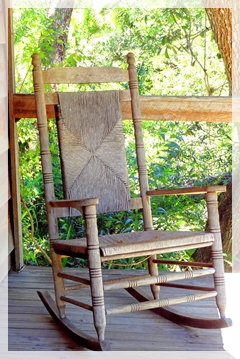 When we’re told to “Be still” in Psalm 46, we tend to think in terms of stopping movement—our busyness, frantic activity, or agitated actions. We associate it with a director yelling, “Cut!” the ref blowing his whistle, or a frustrated parent’s “Cut it out!” Being still can entail all of that, but it is much more. The root of the original Hebrew word used for “still” is the verb rapa which means to be faint, forsake, or sink down. When used as the imperative ra’pha’h, as it is in Psalm 46, it means to drop or release our concerns, to become weak, or surrender. While most Bible versions translate this as “Be still,” some translate as desist, stop fighting, cease striving, be quiet, or be at peace. In short, we’re being told to stop anxiously fighting a situation and leave the matter to God—to relax our grip on things, stop worrying and let it be.
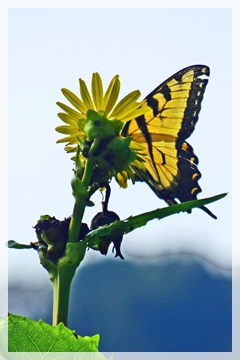 To explain her sisters’ bitterness and sour outlook on life, my mother-in-law would say, “Well, their lives didn’t turn out the way they’d hoped.” Those women had no reason to complain when comparing their lives to Naomi (the mother-in-law in the book of Ruth).
 One of the hymns at our Easter Eve service was Christ is Alive and we sang, “In every insult, rift and war, where color, scorn or wealth divide, Christ suffers still, yet loves the more, and lives, where even hope has died.” I thought of how hate must be like another nail in His hands and intolerance another scourging on His skin. The text of the hymn was written by Brian Wren in April of 1968, just two weeks after the assassination of Martin Luther King, Jr. “I could not let Easter go by without speaking of this tragic event which was on all our minds, “ he explained. “The hymn tries to see God’s love winning over tragedy and suffering in the world.”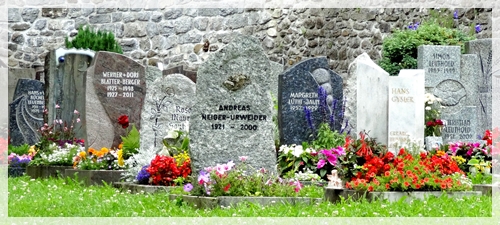
 We all know drama queens (and kings) who don the crown of martyrdom. On occasion, we even may have worn that crown ourselves. Along with the crown, we put on a robe of selfishness and self-righteousness. Dressed for the part, we see outer circumstance only in the light of how they negatively affect our lives (ignoring how they may be affecting those around us). Rather than asking, “What can I learn from this?” we protest, “I don’t deserve this!” as if anyone else does! Forgetting that God only wants our best and there is purpose in our pain, we find our troubles the perfect excuse for resentment, complaints, bitterness, and an all-out pity party.
 Devotions of the Heart