IT’S NOT OURS TO KEEP

When the poor and needy search for water and there is none, and their tongues are parched from thirst, then I, the Lord, will answer them. I, the God of Israel, will never abandon them. I will open up rivers for them on the high plateaus. I will give them fountains of water in the valleys. I will fill the desert with pools of water. Rivers fed by springs will flow across the parched ground. [Isaiah 41:17-18 (NLT)]
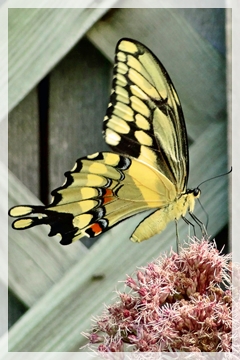
giant swallowtail butterflyYesterday, I wrote of God’s provision, yet I can’t help but wonder. If God promises His divine provision, why are there still people in need?

There was to be no permanent poverty in Israel. In the Old Testament, we find complex laws and social practices that were meant to ensure that no one lived in need. To eliminate food scarcity, every third year there was to be a special tithe of crops for the Levites and those at risk like foreigners, widows and orphans. The Israelites were to leave the edges of their fields unharvested and anything dropped during the harvest ungathered; this portion could be gleaned by the poor. There were laws against exploiting the vulnerable through usury or by demanding unreasonable collateral. Every seventh year was to be a Sabbath year when loans were forgiven and Hebrew slaves were released from servitude. The land would lay fallow and any produce that grew by itself was free to all. Additionally, in the Year of Jubilee, celebrated every fifty years, economic disparity was further minimized by returning all real estate (whether sold, mortgaged or leased) to its original owner.

The poor in the Bible were not much different than today’s poverty-stricken: the people without land or the economic, legal, or political resources to be self-sustaining. A diverse group of the marginalized, they were day laborers, subsistence farmers, indentured slaves, beggars, prostitutes, widows, resident aliens, the disabled and infirm. God’s vision wasn’t a welfare state but rather one that allowed families to have the opportunity to provide for themselves. The Sabbath and Jubilee years were a fresh start for those who found themselves in poverty. Unfortunately, the reproachful words of the prophets to Judah and Israel tell us that God’s laws were not obeyed.

The story is told of two businessmen. Like me, the first was troubled by the abject poverty that exists in the world today and wondered about God’s promise of provision. He said, “Someday, I hope to ask God why He allows poverty, famine, and injustice when He could do something about it.” The other man replied, “I’m afraid that God might ask me that very same question.”

Perhaps God has fulfilled His promise to provide by filling our wells with blessings. The problem is that we haven’t done our part by passing along His provision. Instead of letting His gifts flow through us to others, we’ve plugged the pipeline and are keeping His gifts for ourselves. We’ve been freed from the Old Testament laws but we haven’t been freed from the obligation to love our neighbors. Could we be holding the provision that God has promised? Could we be the answer to someone’s prayer? For those of us with water in our wells, perhaps it’s time turn on the faucet and let His blessings flow.

We are not cisterns made for hoarding, we are channels made for sharing. [Billy Graham]

We know what real love is because Jesus gave up his life for us. So we also ought to give up our lives for our brothers and sisters. If someone has enough money to live well and sees a brother or sister in need but shows no compassion—how can God’s love be in that person? Dear children, let’s not merely say that we love each other; let us show the truth by our actions. [1 John 3:16-18 (NLT)]

Copyright ©2018 jsjdevotions. All rights reserved.

FREE TO BE…

I form the light, and create darkness: I make peace, and create evil: I the Lord do all these things. [Isaiah 45:7 (KJV)]

sunflowerWow! Now there’s a troubling verse. God creates evil? Since evil is anything that contradicts God’s holy nature, it’s hard to understand how that could happen. Even other translations like the NLT’s, “I send good times and bad times,” the ESV’s, “I make well-being and create calamity,” and the NIV’s, “I bring prosperity and create disaster,” don’t make this verse sound much better. How do we reconcile a God who is good, a God who is love, with a God who says he creates evil?

There’s certainly no mention of God creating evil in Genesis. We are told that He created the world and everything in it, that man was made in His own image, and when God was finished, He looked over everything and saw that it was good. This is where we again see the flexible nature of Hebrew verbs in Scripture. As discussed yesterday, many verbs such as create, harden, send, blind, or deceive are used in a permissive sense as well as a causative one. As a result, we frequently find God represented as doing something when, in actuality, He is only permitting it or predicting that it will be done. Reading it that way, God didn’t create evil but He does allow it. Nevertheless, how can a righteous, just, and loving God even allow evil?

Our being made in God’s image means that, like Him, we have intelligence, reason and the ability to make conscious choices. Personal volition means that we have a choice as to whether or not we love and obey God. When God gave us the ability to choose, He also gave us the responsibility to choose well. Adam and Eve didn’t choose wisely when they ate the forbidden fruit and we’re not much better. While we can choose obedience over rebellion or love over hate, we also can choose deception instead of truth or vindictiveness rather than forgiveness. Because God allows us to choose, we can abandon good for evil as easily as we can close our eyes to His light, shut our ears to His truth, and harden our hearts to His love. C.S. Lewis pointed out that “If a thing is free to be good it’s free to be bad. And free will is what made evil possible.”

Knowing we’d mess up by the third chapter in Genesis, why did our omniscient God allow us freedom to go against His will? Yet, if He compelled us to be obedient, wouldn’t He be more a puppet master than a God of love? Without freedom of choice, would we be unique individuals, made in His image, or marionettes moving only when He pulled the strings? A relationship must be voluntary to be authentic and love must be freely given to be genuine. God didn’t create evil but He did create a people who can rebel and turn from righteousness and it is that rebellion that creates evil.

I don’t understand it completely; someday, I will. I do know that our good and loving God has a good reason for allowing evil to exist. I also know that God can use evil for our good and His glory; after all, from man’s rejection and murder of His only Son, came our salvation!

If a thing is free to be good it is also free to be bad. And free will is what has made evil possible. Why, then, did God give them free will? Because free will, though it makes evil possible, is also the only thing that makes possible any love or goodness or joy worth having. [C. S. Lewis]

For God so loved the world, that he gave his only begotten Son, that whosoever believeth in him should not perish, but have everlasting life. For God sent not his Son into the world to condemn the world; but that the world through him might be saved. … And this is the condemnation, that light is come into the world, and men loved darkness rather than light, because their deeds were evil. [John 3:16-17,19 (KJV)]

Copyright ©2018 jsjdevotions. All rights reserved.


GOD NUDGES

blanket fower - tulip - golden cannaAnd after the earthquake there was a fire, but the Lord was not in the fire. And after the fire there was the sound of a gentle whisper. [1 Kings 19: 12 (NLT)]
God’s nudges—we all get them and, all too often, we ignore them.

Last week, one of my pastors felt an uncanny impulse to call an old friend who lives across the country. As far as she knew, all was well with her friend and, as often happens with that sort of thing, she got busy and forgot about making the call. Today, she was reminded of her failure when she received a call telling her that her friend had died suddenly over the weekend. As she shared her regret, she reminded us all to respond to God’s gentle nudges. As Elijah learned, sometimes God’s voice is in a whisper!

When asked how to know whether we’re getting a nudge from God or simply have an idea, the pastor suggested we look to the source; if it comes from our heart, it’s probably from God and if it comes from our head, it’s probably us. Nevertheless, our own feelings and desires certainly can influence our perception of the idea and, for some people, “God laid it on my heart,” is just a euphemism for, “This is something I want to do.” A friend’s ex-daughter-in-law claimed that God “laid it on her heart” to leave her husband and children for another man—proof that our hearts can be as deceitful as our thoughts. We must be cautious of attributing our feelings to God. Not every good idea is a mystical message from the Lord; sometimes it’s just an idea!

Discerning the voice of God is not always an easy task. When something is weighing heavy on our heart, perhaps we ought to weigh the message against God’s word. Every one of God’s nudges will match up with His word and none will be something Scripture forbids! Of course, the better we know His word, the easier it is to recognize His voice. Checking Scripture, however, doesn’t mean randomly opening the Bible, picking the first verse we see, and saying that is God’s specific word for us; that’s little different than using a Magic 8-Ball for decisions.

Not everyone will get the same nudge and what God lays on my heart may not be what He lays on yours. His nudge is for us alone and rarely does anyone need to know the reason for our actions. Moreover, we should never say God told us to do something merely to add credibility to what we’re doing. Finally, just because someone says God laid it on his or her heart doesn’t mean He actually did! Just as we, on occasion, can mistake our own desire for one of God’s nudges, so can others. If someone tells us that God laid it on their heart that we should join choir or donate to their cause, we must be wary of getting pressured into something that isn’t God’s plan for us. If God really wants us to do something, most likely, He’ll be the one to tell us!

If God is nudging me about something of major consequence, I pray, study His word, and do research. For the most part, however, those little God-nudges are pretty easy to identify and don’t ask much of us: cross the room to speak with someone, make a call, offer to pray with them, give a hug, ask what you can do, or invite him to church. When in doubt, as long as it’s not contrary to Scripture, I’d rather risk looking foolish than miss a God-given opportunity. Most important, when we get a God-nudge, we should respond (and the sooner the better). We certainly wouldn’t want to miss our last chance to chat with a dear friend.

Your own ears will hear him. Right behind you a voice will say, “This is the way you should go,” whether to the right or to the left. [Isaiah 30:21 (NLT)]

My sheep listen to my voice; I know them, and they follow me. [John 10:27 (NLT)]

Copyright ©2018 jsjdevotions. All rights reserved.

FALL PREVENTION

If you think you are standing strong, be careful not to fall. The temptations in your life are no different from what others experience. And God is faithful. He will not allow the temptation to be more than you can stand. When you are tempted, he will show you a way out so that you can endure. [1 Corinthians 10:12-13 (NLT)]

The Lord directs the steps of the godly. He delights in every detail of their lives. Though they stumble, they will never fall, for the Lord holds them by the hand. [Psalm 37:23-24 (NLT)]

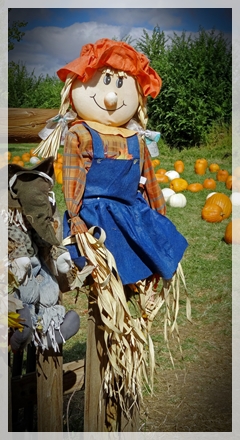
scarecrowLast week was “Fall Prevention Week” but it wasn’t about keeping summer’s flowers blooming or preventing Jack Frost from coloring the maple trees. Although accidents can happen, most falls are preventable and last week was dedicated to preventing those falls. Apparently, because my age puts me in the group most at risk of falling, my son sent me an article identifying the best ways to prevent falls. Instead of clearing walkways or installing non-slip tape and a grab bar in the tub, I ended up thinking about ways to prevent another kind of fall—the one into sin. In reality, I’m far more likely to fall that way than to stumble over my entry rug.
When most of us think of sin, we usually think of the “felony” sins: theft, murder, adultery, drug abuse, drunkenness, perjury, idolatry, bribery, extortion, wantonness, sorcery and witchcraft. Billy Graham, however, described sin as “any thought or action that falls short of God’s will.” Falling short of God’s will includes all sins, even those  “misdemeanor” ones like complaint, envy, attachment to possessions, selfishness, irreverence, laziness, arguing, hypocrisy, greed, backbiting, whining, jealousy, anger, broken promises, shortness of temper, and even gluttony. Sin isn’t just missing the target; it’s anything short of hitting the bull’s eye!

While the bathroom is the number one danger zone for slips and falls, it’s probably not our biggest danger zone for sin. That zone is harder to identify and probably varies from person to person. For some it may be the computer or refrigerator, for others the water cooler at work or an afternoon with the bridge group. It may seem as obvious as a bar, bachelor party or casino or as innocuous as the mall, TV, or the in-law’s house. It’s wise to identify our personal danger zones and either avoid them or do our best to slip-proof them. Sometimes hazards, like a child’s toy or spilled water, can be where we least expect them. Even a chat over coffee after church can turn into gossip or disparagement. No matter where we are, if we want to prevent either kind of fall, we should always be looking for hidden hazards. Keeping homes and work places tidy by cleaning up our messes is another bit of advice that works both ways. When our personal lives are in disorder and disarray, when we’re too rushed to spend time in prayer, when we’re not honest with others or ourselves, when we’re disgruntled or discouraged, sin has a way of tripping us up as easily as can a pair of shoes left in a hallway.

According to the fall prevention article, one of the best ways to prevent falls is exercise which increases flexibility, builds muscles, and improves balance. We don’t need get in our 10,000 steps or lift weights to avoid falling into sin but we do need to build up our spiritual muscles with Bible study, Christian fellowship and prayer. Using things like night lights, photocell outdoor lights, or photoluminescent tape to light the way was the final bit of advice in the article. While fine ideas, they’re not very effective when avoiding sin. A better solution is the light of Christ; He’s the light of the world and our never-ending supplier of spiritual light. His light allows us to spot temptation and step away from sin. His Holy Spirit enables us to look at life and people with godly eyes—and walk in God’s will. Stay safe!

Jesus spoke to the people once more and said, “I am the light of the world. If you follow me, you won’t have to walk in darkness, because you will have the light that leads to life.”  [John 8:12 (NLT)]

Copyright ©2018 jsjdevotions. All rights reserved.

SPINNING

Finally, I confessed all my sins to you and stopped trying to hide my guilt. I said to myself, “I will confess my rebellion to the Lord.” And you forgave me! All my guilt is gone. [Psalm 32:5 (NLT)]

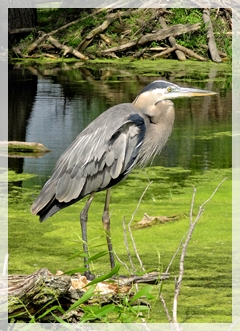
great blue heronHaving just returned from the East Coast, I had a lengthy “to do” list and thought I could fit in a few errands before picking up my mother-in-law for her doctor’s appointment. As I pushed the cart through the store, I glanced down at my watch to check the time and gasped. To my dismay, I’d lost an hour! I should have been picking her up right then; there was no way we would make it to the doctor’s on time. Leaving the cart in the aisle, I rushed to my car. Rather than think how to save the situation, my first thought was how to spin it! Other than my own carelessness and stupidity, what valid excuse could I have for my tardiness? As I started the car, I glanced at the clock on the dash and realized that hour hadn’t disappeared; I’d left it back East. While my watch was still on EST, my car, mother-in-law, the doctor and I were in CST and there was still plenty of time.;
Rather than a complete fabrication, spinning is selectively gathering facts, omitting relevant truths, and then shaping them to support our version of the story. Spinning reshapes people and events with half-truths, diversions, exaggeration, inaccuracies, emotion-laden words, attacks and euphemisms. Spinning gives us “alternative facts.” It calls bombs “lethal defensive weapons,” cheating on emissions tests “possible non-compliance,” adultery an “inappropriate relationship,” embezzlement a “personal failing,” and information we don’t like “fake news.”

Although spinning is just a nicer way of saying deceiving, we all do it. Sometimes, we spin to save someone’s feelings but, far more often, we do it to save ourselves from a reprimand, consequences, embarrassment, or humiliation. The first spinners, of course, were Eve and Adam who spun the apple story to shift the blame. Eve said it was the serpent’s fault and Adam placed the blame on both Eve and God (for giving him the woman in the first place)! Detouring around a troublesome question, Cain spun when he answered God’s question as to the whereabouts of his brother with a question of his own. We spin so we don’t have to admit our failings. Aaron spun the golden calf incident by blaming the evil Israelites rather than his weak leadership.

When we can’t make an accusation disappear, we spin it to explain that what we did wasn’t really that wrong. Told to completely destroy everything in the Amalekite nation, Saul disobeyed by sparing the king’s life. His troops destroyed only what was worthless and took the rest for themselves. When confronted by Samuel, rather than admitting his greed and disobedience, Saul spun the story. Making no mention of the monument he’d set up for himself, he claimed the prohibited plunder was to be a sacrifice to God. Sometimes, we spin when it isn’t even necessary. When Jesus asked the crippled man at Bethesda if he wanted to get well, rather than a simple yes or no, the man blamed his disability on those who wouldn’t help him to the pool.

David had a perfect opportunity to put a spin on his adultery with Bathsheba. When confronted by Nathan, the king easily could have blamed the beauty for seducing him or Joab for misunderstanding his directions regarding Uriah’s fate. Instead, David did what all of us are expected to do: confessed and said, “I have sinned against the Lord.” Although we prefer making excuses and laying the blame for our failures elsewhere, let us never forget that we, like David, must always take full responsibility for our actions.

But the tax collector stood at a distance and dared not even lift his eyes to heaven as he prayed. Instead, he beat his chest in sorrow, saying, “O God, be merciful to me, for I am a sinner.” I tell you, this sinner, not the Pharisee, returned home justified before God. For those who exalt themselves will be humbled, and those who humble themselves will be exalted. [Luke 18:13-14 (NLT)]

Copyright ©2018 jsjdevotions. All rights reserved.

YOUR MISSION

Therefore, go and make disciples of all the nations, baptizing them in the name of the Father and the Son and the Holy Spirit. Teach these new disciples to obey all the commands I have given you. And be sure of this: I am with you always, even to the end of the age. [Matthew 28:19-20 (NLT)]

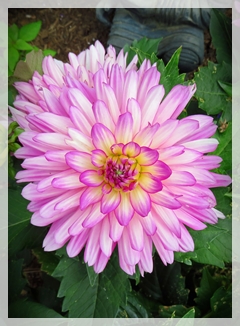
dahliaIn 1978, Merck Research Laboratories was approached by a scientist who thought a drug he was developing to treat parasitic infections in animals might be useful in treating a parasitic infection in humans. Called onchocerciasis or river blindness, it is transmitted through the bite of black flies and had no known cure. The pharmaceutical company faced a dilemma. Since onchocerciasis is found only in third world areas, the people needing the medication could never afford to buy it. How could the company expend money to develop a drug they’d never be able to sell? Nevertheless, they did and, in 1987, Merck announced that, for as long as was necessary, they would give away the drug (Mectizan®) for the treatment of onchocerciasis to any country that needed it. Eleven years later, they expanded their commitment and started donating Mectizan® for the treatment of Lymphatic filariasis, a mosquito-transmitted disease which can develop into elephantiasis. Since 1987, more than a billion treatments have been donated to thirty-three countries and the World Health Organization forecasts that both diseases could be eradicated by 2020.

Typically, in business, if there’s no chance for profit, there’s no chance for the project. In the case of Mectizan®, however, Merck saw the company’s primary goal as getting the drug to the people who needed it rather than getting a return on their investment. This mindset goes back to a statement by George Merck in 1933 that the company’s mission was to develop scientific breakthroughs to benefit humanity. In 1950, he elaborated by saying, “Medicine is for the people. It is not for the profits.” Merck’s CEO in 1978, Dr. Roy Vagelos, further clarified the company’s mission by directing its scientists to put medical needs before profits and to think of their work as a quest to alleviate worldwide human disease and suffering.

Jesus gave us what’s known as the Great Commission; recently, our northern church wanted to clarify how it intended to fulfill that command. At a congregational meeting to formulate a mission statement, the story of Merck putting people before profit was shared to illustrate the importance of knowing our purpose and what we will or won’t do to achieve it. It’s not just churches, businesses or charitable foundations, however, that need to articulate their mission. “What is my objective? What have I been called to do and how will I do it?” are questions each of us should ask of ourselves and our families.

In that same 1950 speech, George Merck said, “The all-important question in research, which must be asked constantly, is: what is the right thing to do? … We cannot rest till the way has been found…to bring our finest achievement to everyone.” I’m not in medical research but Merck’s words apply to us all. What is the right thing to do? How can we bring our finest achievements to others? A good place to start is to ask two more questions: “What would Jesus do and how would He do it?”

Do all the good you can, by all the means you can, in all the ways you can, in all the places you can, at all the times you can, to all the people you can, as long as ever you can. [John Wesley]

Don’t copy the behavior and customs of this world, but let God transform you into a new person by changing the way you think. Then you will learn to know God’s will for you, which is good and pleasing and perfect. … Don’t let evil conquer you, but conquer evil by doing good. [Romans 12:2,21 (NLT)]

Copyright ©2018 jsjdevotions. All rights reserved.