
And Mary said, “Behold, I am the servant of the Lord; let it be to me according to your word.” And the angel departed from her. [Luke 1:38 (ESV)]
 When writing about the Annunciation of our Lord, I came upon some articles by women who take offense at the story of Jesus’ conception. Interpreting Mary’s response as involuntary, they picture the angel Gabriel’s visit to Mary as some weird sort of supernatural rape. This is inconsistent both with Scripture and God as we know Him. The Archangel didn’t say, “Surprise, you’re pregnant!” and leave nor did he physically impregnate her. Read the words as reported by Luke; Gabriel told Mary what would happen, not what had already occurred. It was only after Mary asked how the angel’s words would be fulfilled and Gabriel explained that the Holy Spirit would make it possible that she accepted God’s invitation to motherhood. It was then that the miraculous power of God—the “Most High”—came upon her.
The God we know from Scripture is one of choice: it was He who gave us free will. Although God pursues, seeks, and invites us, it remains our choice to accept or reject Him. Jesus called the people to follow Him, but not everyone who heard His invitation did. When the people of the Gerasenes asked Jesus to leave, that’s exactly what He did. In Jesus’ parables about banquets to which the invited guests refused to come, the host accepted their refusals and simply invited others to the feast. God gave us free will and He will not violate this gift. No one, not even the virgin Mary, was ever forced to partake of God’s grace.
Although some would have us think that Mary was powerless in Gabriel’s presence, she was the one with the power. It was Mary who decided if she would accept God’s call. Calling God a “sovereign gentleman,” writer Mark Ballenger makes the point that, like a true gentleman, God waited for Mary’s verbal consent before the Holy Spirit came upon her!
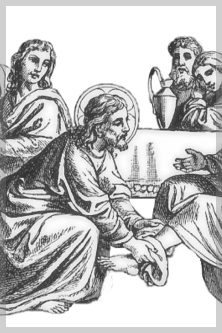
When people object to Mary calling herself the “Lord’s servant”, they are confusing being servile (mindlessly doing what is ordered) with consciously choosing to serve. There is nothing demeaning or weak about being a servant. After all, Jesus was God but He “emptied himself, by taking the form of a servant, being born in the likeness of men.” [Philippians 2:7] The One who calls us to be servants, is the same One who served us! He laid aside His majesty to wash His disciple’s filthy feet and He laid aside His divinity to suffer and die for all of mankind. If God can selflessly serve us, there is nothing demeaning about our serving Him!
Mary was far more than an incubator for God. We remember her not because she had the womb in which Jesus grew; we remember her because she freely chose to be a faithful and obedient servant to God. God could not have carried out His plan of salvation without Mary’s consent and cooperation. Let us remember that God cannot continue to carry out the plans for His Kingdom without our consent and cooperation. Like Mary, we are called to be God’s servants. Whether we accept His invitation, however, is entirely up to us.
 We tend to think of fasting during Lent as abstaining from certain foods, drinks, or activities. Several years ago, however, I was asked, “What if you fasted regret? What if your friends fasted comparison? What would be the fruit of fasting stinginess?” Those questions proposed an entirely different kind of fast than refraining from sweets or social media. In truth, fasting from things like self-righteousness, discontent, and criticism is probably harder (and more meaningful) than giving up energy drinks or dining out.
 Every evening, a man went to the local pub and ordered three beers. When asked why three, he explained that he ordered the two extra beers in honor of his two dear brothers who lived far away. One evening, when the man ordered only two beers, the bartender assumed the worst and extended sympathy for the loss of a brother. Correcting the bartender, the man said his brothers were both fit as fiddles and the beers were for them. “It’s me that’s not drinking tonight,” he explained. “You see, I’ve given up beer for Lent!”
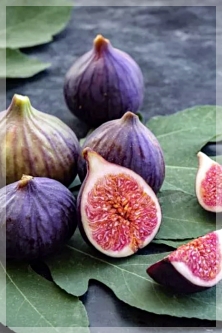 Mark tells of a time when a hungry Jesus cursed a fig tree and caused it to wither and die simply because it had no figs. As the only destructive miracle done by the Lord, His action is difficult to understand, especially since we’re told “it was too early in the season for fruit.” The same power that brought Lazarus back to life and turned water into wine easily could have given the tree ripe figs, so why did Jesus kill the fruitless tree?
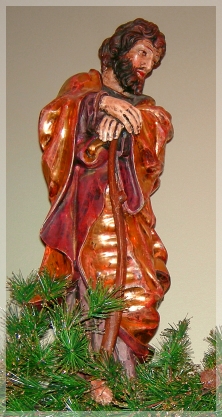 While putting away our nativity, I looked at the figure of Joseph. For the man who played a pivotal role in the Christmas story, once Christmas is packed away, Mary’s husband rarely gets a second thought until the next December. Neither Mark nor John mention the man who served as step-father to Jesus and the author of Hebrews didn’t even list him in its “Hall of Faith.”
 For those of us who attend liturgical churches, yesterday was the last Sunday of the liturgical (or church) year: Christ the King Sunday. A kind of liturgical “New Year’s Eve,” it is the climax and conclusion of the Church’s year.
 Devotions of the Heart