
The point is this: whoever sows sparingly will also reap sparingly, and whoever sows bountifully will also reap bountifully. Each one must give as he has decided in his heart, not reluctantly or under compulsion, for God loves a cheerful giver. And God is able to make all grace abound to you, so that having all sufficiency in all things at all times, you may abound in every good work. [2 Corinthians 9:6-8 (ESV)]

Yesterday was tax day: the day we rendered unto Washington what is theirs. In case we weren’t sure how much that was, we had 1099s, W-2s, 1040s, TurboTax, various receipts, H & R Block, and accountants to help us figure it out. Since Jesus told us to give God what is His, how much is that? God doesn’t send out W-2s listing our year’s many blessings, supply us with 1040s to fill out, or give us deductions for medical expenses, charitable donations, mortgage interest, property taxes, or gambling losses. Rather than a CPA or the IRS, we need to consult our Bibles for the answer to that question.
“Tithe” is an Old Testament term for the 10% gifts the Israelites were required to pay to support the Levites, provide for the Temple, and relieve the poor. A series of complicated rules regarding which tithes were made in what year and the amount tithed ended up making the tithe more like 23.3%. Although the New Testament never commands (or even recommends) a tithing system, Christians often refer to a tithe (or 10% of one’s earnings) as being the right donation to the church. In reality, for some, 10% would be unwise and for others, 10% is hardly enough!
Rather than a fixed percentage, the New Testament calls us to give regularly, according to our means, generously and joyously (even sacrificially at times), and out of love for God and others. While this requirement is vague about the actual amount, it actually is stricter than a fixed 10% because it is a matter of obedience and trust. What we give is a matter of prayer. It is an issue between God and us and we must be willing to give whatever it is He asks—be it time, talents, or finances—in the amount he desires.
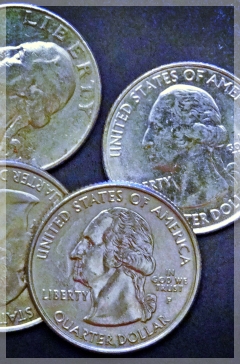
Because Caesar’s image was on the coin, it belonged to him. Let’s not forget that we are made in God’s image and it is His face that is stamped upon us. We belong to Him and whatever we give to God already is His. We simply are returning it to the rightful owner. Moreover, the list of what we should render unto God goes far beyond money. We should give Him our worship, service, obedience, praise, love, respect, gratitude, and fidelity. In short, we owe Him everything and not just on Sundays—we owe Him everything all of the time.
As John Wesley said, the question isn’t “how much of my money will I give to God, but, how much of God’s money will I keep for myself?” Although there is no need to worry about a letter from God questioning our deductions or demanding an audit, we must remember that one day we will be called in for an accounting of how we used His gifts.

 So, since God wants us to be prosperous, we’ll get 100 acres of land for every acre we give up or a return of $10,000 for every $100? Sounds too good to be true and it is. Logic tells us Matthew 19:29 can’t be taken literally—we can’t have one hundred fathers and none of us want one hundred children or wives! To make sure the disciples understood, Jesus made it clear that God is not our heavenly banker who dispenses gifts (especially monetary ones) to the most deserving with His parable of the Gracious Landowner. “Do I not have the right to do what I want to do with my own money? Does your eye make you want more because I am good?” asked the landowner. Jesus explained: “So those who are last will be first and the first will be last.” [Matthew 20:15-16] His message was clear: God’s grace can’t be earned or controlled. Moreover, the word often translated as “prosper” in Jeremiah 29:11 is shalom, meaning completeness, soundness, welfare, and peace rather than wealth. Biblical prosperity and prosperity theology are not the same!
 John 21 records Jesus telling Peter to feed His flock three times. The word translated as “feed” in verse 16 is poimaino which refers to the entire process of tending the sheep: feeding, leading, guarding, doctoring, and bringing them into the sheep fold. Although the food of which Jesus is speaking appears to be the word of God, in verses 15 and 17 the word translated as “feed” is bosko, which exclusively meant to feed. Jesus gave Peter these instructions immediately after He’d fed the disciples a breakfast of grilled fish and bread. Could He also have been speaking of providing actual food?
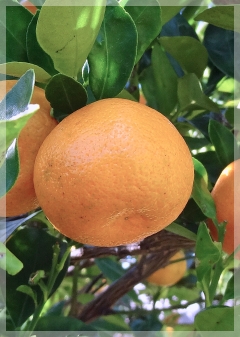 “What’s your orange?” the teacher asked her remote learning class. Before having them answer, she explained the “monkey trap.” In Southeast Asia, hunters capture monkeys by drilling a hole in a pumpkin. The hole is just large enough for a monkey’s hand but too small for his fist. They secure the pumpkin to a tree, put a piece of sweet juicy orange inside the gourd, then retreat and wait. Eventually, an unsuspecting monkey comes along, smells the orange, and reaches through that small hole into the pumpkin. Once he’s grabbed hold of the orange, however, his fist can’t get back through the same hole. The monkey pulls and pulls but can’t free his hand. While he’s struggling to pull out his orange-filled fist, hunters easily throw a net over him. Not understanding that he can’t have both his freedom and the orange, he loses them both. After telling this story, the teacher again asked her students, “What is your orange? What is it you can’t release?”
 Devotions of the Heart