CHAPTER 43 (Job – part 2)

Job stood up and tore his robe in grief. Then he shaved his head and fell to the ground to worship. He said, “I came naked from my mother’s womb, and I will be naked when I leave. The Lord gave me what I had, and the Lord has taken it away. Praise the name of the Lord!” In all of this, Job did not sin by blaming God. [Job 1:20-22 (NLT)]

mountain blue birdEven though all that he lost was restored to Job at the end of Chapter 42, did the ten new children remove Job’s memory of his first ten or his sorrow at their deaths? While the new ones may have filled Job’s home with laughter again, there still would be an empty place in his heart from his loss. Although Job’s health was restored, would the scars from his boils be a daily reminder of his past afflictions? Would double his livestock be enough to make him forget the original herds and servants who had perished? How would experiencing the precariousness of life—the inexplicable randomness of misfortune—affect Job’s next chapter, the Chapter 43 of his life? Would he be more affectionate, patient, or protective of his children? Would he better appreciate and cherish every precious moment with which he was blessed?

Even though he questioned God, Job is Scripture’s model for patience and endurance. I know some people who could give Job a run for his money if their stories were compared. People of faith, like Job, they have experienced more than their share of life’s tragedies first-hand—things like catastrophic loss, chronic disease, severe disability, heartache, betrayal, grief, poverty, divorce, addiction, abuse, disfigurement, ever-present pain, or the loss of spouse or children. Some have moved through their Job-like experiences while others are still in the midst of them. Like Job, their story didn’t end at Chapter 42 but unlike him, their next chapter wasn’t necessarily a fairy tale ending of complete restoration. I admire them—not because of their suffering but because of what they’ve made of it—because of how they’ve written the next chapter of their lives.

I think of one couple, both of whom lost their beloved first spouses to the ravages of cancer.  Perhaps because they know the fragility of life and the pain of loss, in their Chapter 43, they seem to listen better, cherish each other more, and complain less than do most couples. I think of a friend who was nearly destroyed by mental illness and came out the other side of her darkness stronger and wiser. Having experienced the depths of despair, she makes it a point to find joy and thanksgiving on each page of her Chapter 43. The mother who lost a child seems to grumble less about the tears, temper tantrums, mess and teen-age angst of her living children. The man who who once flat-lined values each moment more than those who never have been on the brink of death. I think of a friend, suffering from Parkinson’s, who enthusiastically seizes every today because she knows that she’ll be just a little worse tomorrow. I remember a couple who lost three of their children to drugs and yet they never lost their trust in the Lord and confidence in His goodness. I think of other friends whose Chapter 43 is a continuing battle with metastatic cancer, Alzheimer’s, MS, and chronic pain yet they still bravely face each day with courage, faith, and even joy. Does their experience of what truly defines a “bad day” give them a new perspective and help them know how little is necessary to make any day a great one?

I don’t admire these people simply because they are survivors of tragedy. Anyone can survive tragedy. I admire them because they managed not just to survive but to thrive, to become better not bitter, all while keeping their faith intact. I admire them because they are examples not just of faith, but also of determination, strength, wisdom, generosity, love, joy, and even optimism. I admire them because they are making the most of the 43rd chapter of their lives. Their examples remind me to thank God for every circumstance He throws at me and to savor every breath with which I am blessed!

I pray that from his glorious, unlimited resources he will empower you with inner strength through his Spirit. Then Christ will make his home in your hearts as you trust in him. Your roots will grow down into God’s love and keep you strong. And may you have the power to understand, as all God’s people should, how wide, how long, how high, and how deep his love is. May you experience the love of Christ, though it is too great to understand fully. Then you will be made complete with all the fullness of life and power that comes from God. [Ephesians 3:16-19 (NLT)]

Copyright ©2021 jsjdevotions. All rights reserved.

IT’S OKAY

Our hearts ache, but we always have joy. We are poor, but we give spiritual riches to others. We own nothing, and yet we have everything. [2 Corinthians 6:10 (NLT)]

lilac breasted rollerToday’s email contained a meme of that lovable loser Charlie Brown with the caption: “The smile on my face doesn’t mean my life is perfect. It means I appreciate what I have and what I have been blessed with. I choose to be happy.” The meme reminded me of words spoken by Jane Marczweski when she appeared on America’s Got Talent last week: “You can’t wait until life isn’t hard anymore before you decide to be happy.” Known as Nightbirde, the 30-year-old vocalist sang an original song called “It’s Okay” and received the “golden buzzer” from judge Simon Cowell. She said she wrote the song as a reminder that, “You can be happy and also be going through something really hard at the same time—you don’t have to pick one or the other.”

The young woman knows what she’s talking about. After being treated for breast cancer in 2017, numerous tumors in her lungs, liver, nymph nodes, ribs, and spine were discovered in December of 2019. The overwhelming diagnosis of terminal cancer came with the prognosis of six months to live and only a 2% chance of survival. But, as she optimistically says, “2% is not zero. 2% is something and I wish people knew how amazing it is.” Although declared “cancer-free” after her second battle with cancer, she recently was diagnosed with this terrible disease a third time. At the time of her audition, she had “some cancer” in her lungs, spine and liver. Although Jane received more treatment after the audition, it is too early to know the results. But, as she so aptly puts it, “2% is not zero!”

As Christians, we shouldn’t need a cartoon character meme or even an amazing young woman’s example to remind us that circumstances need not determine our state of mind. Regardless of what we happen to be going through, as Christians, we know we are blessed every day in every way. Faith is trusting God’s plan, as inexplicable (and unpleasant) it may be. Faith is being able to smile in the midst of pain because we know that, in spite of our anguish, God loves us. Faith is being able to rejoice in the Lord regardless of what He throws at us because we know that we are not alone. As Christians, we know that faith is not about everything turning out okay; faith is about being okay regardless of how things turn out! Faith is being able to echo the words of Job: “The Lord gave, and the Lord has taken away; Blessed be the name of the Lord.” [1:21]

But here’s one thing I do know: when it comes to pain, God isn’t often in the business of taking it away. Instead, he adds to it. He is more of a giver than a taker. He doesn’t take away my darkness, he adds light. He doesn’t spare me of thirst, he brings water. He doesn’t cure my loneliness, he comes near. … And I guess that means I have all the more reason to say thank you, because God is drawing near to me. [Jane Marczweski (Nightbirde)]

So be truly glad. There is wonderful joy ahead, even though you must endure many trials for a little while. … You love him even though you have never seen him. Though you do not see him now, you trust him; and you rejoice with a glorious, inexpressible joy. [1 Peter 1:6,8 (NLT)]

Always be joyful. Never stop praying. Be thankful in all circumstances, for this is God’s will for you who belong to Christ Jesus. [1 Thessalonians 5:16-18 (NLT)]

Copyright ©2021 jsjdevotions. All rights reserved.

BUCKET LISTS

Teach us to realize the brevity of life, so that we may grow in wisdom. [Psalm 90:12 (NLT)]

clock

Although its origin is unclear, the term “kick the bucket” as a figure of speech for dying has been in use since 1785 when it appeared in the Classical Dictionary of the Vulgar Tongue. The term “bucket list,” however, is far more recent. Meaning a list of things a person wants to do, learn or experience before he dies, it seems to have originated with the 2007 film, The Bucket List, written by Justin Zackham. His list of “Things to Do Before I Kick the Bucket” (later shortened to “Justin’s Bucket List”) included having a screenplay produced by a major Hollywood studio. Wondering what a bucket list would look like if someone had a brief time left in which to live, he wrote a screenplay about two terminally ill men who go on a road trip with a bucket list of activities to do before their deaths. The term “bucket list” was born and Zackham checked off an item on his own list!

“What’s on your bucket list? What would you do if you only had a short time left to live?” asked our neighbor over dinner the other night. I know one man whose immediate answer would be, “Start smoking again!” but I had no answer. In actuality, a Christian doesn’t need a bucket list because this is not the only life we’ll live. Someday, we’ll live in bodies made new in a world made new—one without suffering or sin. For a Christian, death doesn’t end our adventure—it begins it!

Nevertheless, I continued to ponder my neighbor’s question but failed to come up with a decisive list of adventures I must have. It’s not that I’ve lived a life full of fabulous travel and daring activities. There are many things I haven’t experienced but, if I had just a few months to live, I wouldn’t spend them visiting exotic locations or experiencing thrills. After spending an hour or so straightening my drawers and closets (so no one would know what a secret slob I am), I wouldn’t spend another minute cleaning, travelling, or looking for excitement. My remaining time would be spent doing pretty much the same things I do every day but with family and friends nearby instead of thousands of miles distant. We’d laugh, play silly games, bake cookies and brownies, hug, watch the men grill, eat way too much, watch sunsets, have water fights in the pool, play in the park, talk late into the night, and dance to Y.M.C.A.!

When facing imminent death, my regrets wouldn’t be about places unseen or thrills not experienced. They would be for time wasted being angry, hurt, critical, dissatisfied, argumentative, offended, resentful, pessimistic, grumpy, surfing the Internet, or being “too busy”—time that could (and should) have been invested in being forgiving, loving, compassionate, generous, positive, helpful, understanding, joyful, pleasant, peaceful, and present.

We all know we’re going to die and yet I wonder if we truly believe it. If we did, I suspect we’d spend less time dreaming about seeing the Great Wall of China, trekking to Machu Pichu, whale watching in Antarctica, or going skydiving and more time tending to what really is important—expressing thanks, making apologies, loving openly, giving generously, forgiving freely, laughing loudly, living the life we have right now with our loved ones, and being the person God wants us to be.

For all any of us know, we may have even less than a month in which to live. Will we waste it or wisely use whatever time is left?

Live so that when the final summons comes you will leave something more behind you than an epitaph on a tombstone or an obituary in a newspaper. [Billy Sunday]

Look here, you who say, “Today or tomorrow we are going to a certain town and will stay there a year. We will do business there and make a profit.” How do you know what your life will be like tomorrow? Your life is like the morning fog—it’s here a little while, then it’s gone.  [James 4:13-14 (NLT)]

Copyright ©2021 jsjdevotions. All rights reserved.

FAKING IT

The teachers of religious law and the Pharisees are the official interpreters of the law of Moses. So practice and obey whatever they tell you, but don’t follow their example. For they don’t practice what they teach. They crush people with unbearable religious demands and never lift a finger to ease the burden. Everything they do is for show. On their arms they wear extra wide prayer boxes with Scripture verses inside, and they wear robes with extra-long tassels. [Matthew 23:2-5 (NLT)]

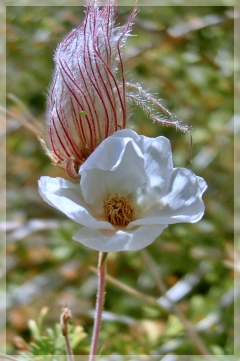
cliffroseThere is a funny scene in the movie When Harry Met Sally when, in the middle of a delicatessen, Sally proves to Harry that women can successfully fake being in the throes of passion. After a rather loud and vivid demonstration, Sally calmly returns to her meal. After watching Sally’s display of ecstasy, an older woman tells her waiter, “I’ll have what she’s having!” While it may be possible to fool people about a number of things, we can’t fool God. He looks beyond appearances right into our hearts.
Around the 4th century BC, the Jewish rabbis starting taking the commands in Deuteronomy 6:8, 11:18, and Exodus 13:9 literally. They wrote God’s command to love Him and keep His commandments, placed the words in small leather containers called tefillin or phylacteries, and strapped them to their left hand and forehead during prayers. There were various rules regarding the length and width of the straps, the color of the boxes, the knots used, the parchment and ink, and even the number of lines for each verse. These were the “extra wide prayer boxes” to which Jesus referred.

The “extra-long” tassels Jesus mentioned were called tzitzit and were worn on the four corners of an outer garment’s hem. In response to the command in Numbers 15:38-40, the original intent was to remind the people to keep the Lord’s commandments and be holy before Him. As happened with the prayer boxes, by Jesus’ time, additional rules had been added regarding the quantity of threads used in each tassel, the amount of white and blue tassels, and the knots used.

Jesus wasn’t criticizing the wearing of tefillin or tzitzit. After all, as Jews, He and the disciples may have worn them. Jesus was criticizing the religious leaders for the burden they placed on the people with so many demanding man-made regulations. Moreover, He was taking to task those men who sought to draw attention to themselves rather than God by enlarging their tefillin and lengthening their tzitzit in a conspicuous show of their piety and religious zeal when they didn’t truly obey God’s commands. Their garish example of faith was as false as Sally’s intense example of ecstasy. While their display may have fooled and impressed the people, it didn’t fool Jesus.

Some Christians wear crosses or t-shirts announcing their faith while others might display bumper stickers or hang crosses in their homes. More important than how we decorate ourselves or our possessions is the way in which we conduct our lives. Without the love of Jesus and the fruit produced by the Holy Spirit, we’re no different than the self-righteous Pharisees; we’re just faking it.

I remember a song from my Sunday school days in which I proclaimed having the “joy, joy, joy,” the “love of Jesus,” and the “peace that passes understanding down in my heart…down in my heart to stay!” It’s that joy, that love of Jesus, and that peace that passes understanding that truly identify us as Christians. When we know, love and worship God, His love instills a joy into our hearts and lives that only He can produce and, unlike passion and piousness, they can’t be faked. It is, however, only through the power of the Holy Spirit that we can live the kind of lives and exhibit the sort of behavior that truly will make people say, “I’ll have what they’re having!”

But the Holy Spirit produces this kind of fruit in our lives: love, joy, peace, patience, kindness, goodness, faithfulness, gentleness, and self-control. [Galatians 5:22-23a (NLT)]

Copyright ©2021 jsjdevotions. All rights reserved.

DECORATION DAY

God blesses those who mourn, for they will be comforted. [Matthew 5:4 (NLT)]

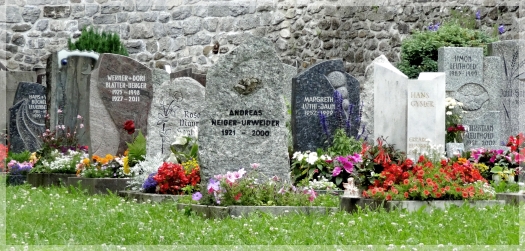
michaelkirsch cemetery - meringen switzerlandMany of the younger generation don’t know that yesterday’s Memorial Day originally was called Decoration Day and originated in the years following the Civil War. With some 620,000 dead from that conflict, communities began holding tributes to the fallen soldiers by reciting prayers and decorating their graves with flowers, flags and wreaths. The practice of leaving flowers at gravesites may have begun with the ancient Greeks who believed that, if the flowers took root and grew, the fallen had found peace or happiness in the afterlife.

Decorating graves with flowers and other memorabilia occurs throughout the year and isn’t limited to fallen warriors. When my mother-in-law was alive, I placed flowers on my father-in-law’s grave but I only did it because those flowers were important to her. They were placed to honor a living woman rather than her dead husband; I remember that wonderful man in other ways.

Forty-five years ago, we attended a Celebration of Life for my uncle and one of the speakers shared a quote that, even with Google, I have been unable to find. Although the exact wording is forgotten, the gist of it has continued to stay with me. In effect, its words were, “When you’re in a beautiful place, think of me so that I can come and share it with you!”

Whenever we attend the symphony, I remember that uncle and how much he would have enjoyed hearing the violins and reading the program notes. When I see a beautiful rose, dig in the garden, or read anything by C.S. Lewis, I remember my mother and how much she would have enjoyed the same things. When I schussed down a great run or enjoyed après ski fun, I thought of my brother and how he would have treasured a day like that. Watching men fishing in a mountain stream or hunters in their camouflage brings to mind my father and the avid sportsman he was. When my son discusses business with his father, I remember similar conversations my husband had with his dad and, whenever I bake spritz cookies or eat ripe red cherries, I joyfully remember our beloved GG. Even though I don’t think their spirits come and share those experiences, for a brief moment, those I’ve loved are again with me. Rather than decorating their graves, I have carried them forward into an unrealized future.

I want no flowers on my grave; then again, I want no grave. I do, however, want to be remembered. When the time comes, I hope my loved ones will remember me whenever they come upon a field of wildflowers, see a butterfly, eat chocolate chip cookies, hike the Rockies, or ski in deep power. Maybe they’ll even yell a joy filled “Ye-haw!” for me.

God promises to comfort us in our mourning. Indeed, there is comfort in our faith—in knowing that our loved ones who followed Jesus are with God and that someday we will be reunited. Although faith helps, it’s the memories of our loved ones that finally get us through the heartache of loss. Our memories are the way God heals our broken hearts.

As for decorating graves—we should send flowers to the living while they can still enjoy them. Smiles shared with our loved ones today will be far more welcome than tears at their gravesides tomorrow. As for flattering eulogies and glowing obituaries, perhaps those words of admiration should be spoken to the person now rather than about them at some later date.

Death leaves a heartache no one can heal; love leaves a memory no one can steal. [From a headstone in Ireland]

He heals the brokenhearted and bandages their wounds. [Psalm 147:3 (NLT)]

The Lord is close to the brokenhearted; he rescues those whose spirits are crushed. [Psalm 34:18 (NLT)]

Copyright ©2021 jsjdevotions. All rights reserved.

THE GOD-SHAPED HOLE (Part 1)

Wilson Arch - Moab UtahYet God has made everything beautiful for its own time. He has planted eternity in the human heart, but even so, people cannot see the whole scope of God’s work from beginning to end. [Ecclesiastes 3:11 (NLT)]

Our children gave us a jigsaw puzzle for Christmas and, as I struggled to complete it, I wondered if I should thank or curse them for their gift! After staring at an opening, I’d try to find the one piece out of 1,000 that would fit. Since the puzzle’s edges were one color, I confess to a bit of pride when I completed the puzzle’s border. After assembling several sections of the interior, I ran into difficulty finding the right spots for them. Eventually, I realized why—the left side was shorter than the right! With a puzzle that large, while each piece is unique, some are nearly identical; a close fit, however, isn’t good enough and the border had to be redone. As I struggled to find the perfect fit for each opening, I thought of the phrase about everyone having a God-shaped hole that only can be filled by Him. While it doesn’t come from Scripture, the concept is Biblical and I wondered about its source.

The saying may have been inspired by Augustine of Hippo’s word from his Confessions: “You have made us for yourself, O Lord, and our hearts are restless until they rest in you.” As a young man, Augustine attempted to fill his restless heart with things like paganism, revelry, drunkenness, empty philosophies, idleness, and decadence. Having tried to fill that void with everything but God, Augustine still felt empty until he heard a voice say, “Take up and read.” Reaching down, he picked up the book beside him and read the first thing he saw—the words from Paul’s epistle to the Romans urging them to stop participating in “the darkness of wild parties and drunkenness…sexual promiscuity and immoral living…quarreling and jealousy,” and  to “clothe yourself with the presence of the Lord Jesus Christ.” [13:13-14] Augustine had been living the life of debauchery about which Paul warned the Romans but, in the Apostle’s words to clothe himself in Jesus, he finally knew how to fill the emptiness in his life and immediately transformed. Augustine ended up being one of the most influential voices in both Roman Catholic and Protestant theology.

Some sources wrongly attribute a quote about having a “God-shaped vacuum” in our hearts to the 17th century French mathematician, physicist, and religious philosopher Blaise Pascal. While close, that’s not what Pascal said. In Pensées, a book written in defense of Christianity, Pascal wrote of an “infinite abyss” that man vainly seeks to fill with things that aren’t there. Since Pascal came along more than 1,200 years after Augustine, perhaps the ancient theologian’s words influenced him.

Like Augustine, Pascal had a conversion experience but, unlike him, Pascal never led the life of a libertine. Nevertheless, shortly before having a mystical vision in what he called a “night of fire,” Pascal complained of the dissatisfaction, guilt, lack of purpose, and boredom in his life. After his vision, Pascal committed his life to Christ, left the world of science and mathematics, put his remarkable mind to work for God and, like Augustine, left his mark on Christianity.

That “God-shaped hole” is man’s innate longing for something far greater than anything found in this world. Perhaps it’s the “eternity” God plants in our hearts that keeps us from finding complete fulfillment in earthly pursuits and passions. As happened with my puzzle, we often try to fill the emptiness in our lives with pieces that don’t fit and, while some may come close, only the perfect piece works. Nothing—not fame, wealth, education, possessions, shopping, popularity, ritual, false gods, self-indulgence, or even family, can fill that God-shaped hole. As for the puzzle, I eventually gave up and returned it to the box—perhaps, someday I’ll try again. Fortunately, seeking God and fitting Him into the emptiness in our hearts is far easier!

What else does this craving, and this helplessness, proclaim but that there was once in man a true happiness, of which all that now remains is the empty print and trace? This he tries in vain to fill with everything around him, seeking in things that are not there the help he cannot find in those that are, though none can help, since this infinite abyss can be filled only with an infinite and immutable object; in other words by God himself. [Blaise Pascal, Pensées VII (425)]

 If you look for me wholeheartedly, you will find me. I will be found by you,” says the Lord. [Jeremiah 29:13-14 (NLT)]

His purpose was for the nations to seek after God and perhaps feel their way toward him and find him—though he is not far from any one of us. For in him we live and move and exist. Acts 17 27-28 (NLT)]

Copyright ©2021 jsjdevotions. All rights reserved.