
PAY IT FORWARD

white-lined sphinx mothYou must not steal. [Exodus 20:15 (NLT)]

The wicked borrow and never repay, but the godly are generous givers. [Psalm 37:21 (NLT)]

Pay it Forward is more than the title of a novel or a film and today happens to be “Pay It Forward Day:” a worldwide celebration of kindness that takes place every year on April 28th. The pay it forward movement began with Catherine Ryan Hyde’s novel in which a young boy starts with the idea that, by doing a good deed for three people and then asking them to “pay it forward” to three more people, a human chain letter of kindness would be created that could go on forever. Paying it forward, however, is a long-standing philosophy. More than one hundred years ago, novelist Lily Hardy Hammond wrote, ”You don’t pay love back; you pay it forward,” and, in 1841, Ralph Waldo Emerson wrote that, “The benefit we receive must be rendered again, line for line, deed for deed, cent for cent, to somebody.” We can trace the idea back further to Benjamin Fanklin but the source of the concept is found in Scripture.

We’re all familiar with the prohibition against stealing in the eighth commandment. Most of us think of stealing as a criminal offense. Since we’re not likely to rob a bank, mug an old lady, break and enter, or even defraud people of their life savings, we probably feel pretty self-righteous when pondering this commandment. Reading Psalm 37, however, brought me to a wider interpretation of theft: “The wicked borrow and never repay…”

After a little thought, I think we’ll agree that if we borrow money, a lawnmower or even a book and don’t return it, we’ve stolen the item. But, what about other things that we might have taken from our family, friends and neighbors? What about the time someone spent teaching us to knit, change a tire, or use a computer? What about the guidance someone gave during a difficult time in our lives? What about the mentoring we received from teachers or fellow workers or the assistance offered by a neighbor when we were laid up and couldn’t fend for ourselves? What about the person who took a risk, trusted our ability, or gave us a valuable opportunity? Granted, the people who offered these things never expected payment in return. Moreover, in most cases, they don’t need those lessons, guidance, mentoring, assistance or opportunities returned. Regardless, don’t we still have a debt to settle? If we’ve received the gift of a good deed, don’t we have the obligation of repaying that debt to someone else in need?

Paying it forward means far more than just buying coffee for the person behind you at Starbucks. Perhaps it’s time to give that eighth commandment some serious thought. Is there a debt we haven’t yet repaid? And yet, even if no one ever did anything kind to us, we are still called to pay it forward. By God’s grace, we are saved and there is no way we can ever repay our debt to Him. Nevertheless, we can pay it forward by extending His grace and kindness to all we meet. Rather than just doing kindness, let us live it!

I do not pretend to give such a deed; I only lend it to you. When you … meet with another honest Man in similar Distress, you must pay me by lending this Sum to him; enjoining him to discharge the Debt by a like operation, when he shall be able, and shall meet with another opportunity. I hope it may thus go thro’ many hands, before it meets with a Knave that will stop its Progress. This is a trick of mine for doing a deal of good with a little money. [Benjamin Franklin, written on April 25, 1784]
Do to others whatever you would like them to do to you. This is the essence of all that is taught in the law and the prophets. [Matthew 7:12 (NLT)]

Copyright ©2020 jsjdevotions. All rights reserved.

CRUCIFIED WITH HIM

I have been crucified with the Anointed One—I am no longer alive—but the Anointed is living in me; and whatever life I have left in this failing body I live by the faithfulness of God’s Son, the One who loves me and gave His body on the cross for me. [Galatians 5:20 (VOICE)]

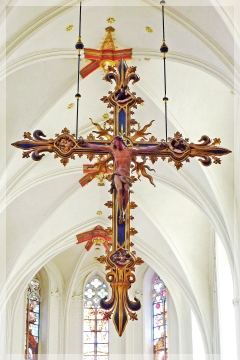
Our Lady Cathedral - Antwerp

The Apostle Paul wrote that he joined Christ in both death and resurrection. His old sinful life had been crucified with Christ and he now shared in Christ’s resurrected life. When Jesus came to live in him, Paul didn’t become a mindless automaton and their spiritual union didn’t cause the tent-maker to lose his uniqueness or personality. He was still Paul. By dying to sin and adding the characteristics of Christ to his heart and mind, however, the Apostle was a new and far better version of himself. He was still the same brilliant and well-educated man, skilled in making an argument or proving a point, who had set out for Damascus. But, by joining Christ in His resurrection, this single-minded Pharisee became entirely devoted to Jesus. Undeterred by persecution, he was faithful, patient, humble, courageous, filled with the Fruit of the Spirit, and passionate about passing along the gospel message. Indeed, Christ lived in him.

When Jesus met Paul on the road to Damascus, He changed Paul from a persecutor of Christians into a lover of Christ and His followers. While we probably didn’t experience a conversion as dramatic as Paul’s, when we accepted Christ, we also died to our old selves. Have we experienced that same spiritual death and resurrection described by the Apostle? Does Christ live in us or is He just an occasional guest, invited only on special occasions or when we feel like having company? Does He live in us or is He simply the cleaning service we call when there’s a mess we can’t clean by ourselves? Does He live in us or is He like a salesman who needs an appointment before calling? Does He live in us or is He just a kind-hearted acquaintance, welcome only when He has something we need or want?  Does He live in us or is He a renter whose lease will be terminated the moment we feel inconvenienced? If we say Christ lives in us, can anyone see Him there or do we hide Him behind a wall of self-righteousness? Are our words the words Christ would say? Are our actions His actions? Are our thoughts His thoughts? Can we honestly echo the Apostle Paul’s words?

Last Sunday, we celebrated the resurrection of Christ. Have we been resurrected with Him? Does He truly live in us? If not, then we haven’t yet been crucified with Him.

Therefore, if anyone is united with the Anointed One, that person is a new creation. The old life is gone—and see—a new life has begun! [2 Corinthians 5:17 (VOICE)]

Those of us who belong to the Anointed One have crucified our old lives and put to death the flesh and all the lusts and desires that plague us. Now since we have chosen to walk with the Spirit, let’s keep each step in perfect sync with God’s Spirit. This will happen when we set aside our self-interests and work together to create true community instead of a culture consumed by provocation, pride, and envy. [Galatians 5:24-26 (VOICE)]

Copyright ©2020 jsjdevotions. All rights reserved.

HE DIDN’T HAVE TO TAKE IT! – Easter Monday

When the devil had finished tempting Jesus, he left him until the next opportunity came. [Luke 4:13 (NLT)]

penitente morada Abiquiui NMWhen asked about the temptation of Christ, we probably think of Satan’s three temptations in the wilderness. Since the gospels don’t mention other specific temptations, it’s easy to think that Jesus, unlike the rest of us, was only tempted three times. “He left him until the next opportunity came,” wrote Luke and, while reading the four gospel accounts of the crucifixion during Holy Week, I know He had to have been sorely tempted that awful last day. Right up to the end, Satan must have been at His side, whispering into his ear and reminding Him that He didn’t have to take the abuse—after all, He was God!
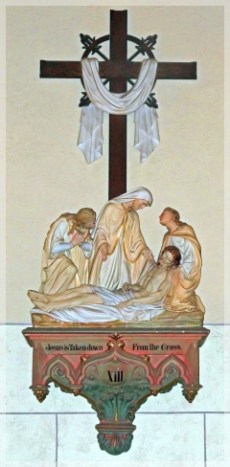
Satan just was warming up with his temptations during Christ’s forty days in the wilderness. When Jesus prayed so hard He sweat blood in Gethsemane, that wasn’t because He was afraid to suffer and die. That was Jesus resisting Satan as the enemy made false promises, cast doubt on His mission, and tried to keep Him from the cross.

I can’t believe Satan went down without a fight and it was in the hours following Jesus’s arrest that he must have made a determined last ditch effort to thwart God’s plan of salvation. It may have been a man’s body suffering the unspeakable abuse that horrifying Friday but, inside the bruised and bloody flesh, it was God! He’d fed a multitude with a few scraps, turned water into wine, cast out demons, healed lepers, and stilled a storm. Jesus didn’t lose His power when He was arrested; He deliberately chose not to use it!

When Jesus was wrongly accused and false witnesses testified before the high court, when the people who’d hailed Him just a few days earlier called to crucify him, or when the crowd ridiculed Him as His tortured body hung on the cross, could the One capable of giving hearing to the deaf been tempted to strike them all mute? Jesus was there when an angel of the Lord killed 185,000 Assyrian soldiers outside of Jerusalem’s walls. As He was being spit on, slapped, beaten with fists, hit on the head with a reed stick, flogged with a lead-tipped whip, and mocked with a crown of sharp thorns, surely Satan invited Jesus to do something similar to His taunters and abusers. Could the One who gave sight to the blind have been tempted to take away the sight of the soldiers as they gambled for his robe or knelt in mock worship? As they nailed His hands to the cross, could the One who’d cast demons into swine been tempted to kill the men who were torturing Him? Jesus was God. He existed before time, space, matter and energy began and, up to His very last breath, the One who could walk on water could have freed Himself, stepped off that cross, healed his wounds, and destroyed every last one of the soldiers and onlookers with just a thought. But, He didn’t!

Perhaps it was my familiarity with the crucifixion story (and the fact that I know the good news that follows) but I don’t think I truly grasped the anguish of Christ until I read all four gospel accounts in one sitting. I knew He suffered a gruesome tortuous death but I didn’t see how tempting it would have been for Him not to do so! Perhaps resisting the temptation to quit and punish His abusers was even harder than enduring the pain of the cross.

How long would you hold your hand over a burning flame when all you had to do was pull it out of the fire? Would you do it for people who reviled and berated you? Jesus didn’t have to suffer and die for us; He chose to do so out of love. I, for one, can’t comprehend a love that great! Thank you, Jesus!

He personally carried our sins in his body on the cross so that we can be dead to sin and live for what is right. By his wounds you are healed. [1 Peter 2:24 (NLT)]

Now, most people would not be willing to die for an upright person, though someone might perhaps be willing to die for a person who is especially good. But God showed his great love for us by sending Christ to die for us while we were still sinners. [Romans 5:7-8 (NLT)]

Copyright ©2020 jsjdevotions. All rights reserved.


DON’T STOP AT FRIDAY – Good Friday 2020

Earthly people are like the man of earth; heavenly people are like the man from heaven. We have borne the image of the man made of earth; we shall also bear the image of the man from heaven. [1 Corinthians 15:48-49 (NLT)]

loretto - santa fe NMEaster will be a little different this year. Instead of getting up early for the sunrise service, we’ll have all day to go to online church and, rather than new Easter attire, we can attend church in sweats or jammies and our proverbial Easter bonnet can be a baseball cap. The kids won’t have brunch with the Easter Bunny, no family or friends will come for dinner, and, instead of hunting for Easter eggs, we’ll search for hand sanitizer or face masks on the Internet. Fortunately, we don’t need new clothes, eggs, brunch, jelly beans, Peeps, parades, Easter lilies, chocolate bunnies, beautiful hymns, or even a church service for Easter. All we really need is the Resurrection!

Nevertheless, some people are just Christmas through Good Friday believers. While they believe Jesus was born, walked the earth, and died on the cross, they doubt His resurrection and the promise of our resurrection. Their faith stops on Good Friday rather than going all of the way to Easter Sunday. Some of those in the church at Corinth were like that and, in 1 Corinthians 15, we find Paul’s response to those who couldn’t believe in the resurrection of the body. Without resurrection, he said, Jesus couldn’t have risen from the dead and, if Jesus didn’t rise from the dead, their faith was futile; they were merely false witnesses whose faith was grounded on a lie.

If we only believe from Christmas through Good Friday, we have a philosophy but not a faith and Jesus was just a godly, wise, and loving man. Paul suggests that, without the resurrection of Jesus and His followers, we might as well live with the attitude, “Let’s eat and drink, because tomorrow we’re going to die!” If our belief stops at Friday, we finish like a Looney Tunes cartoon with, “That’s all folks!” On the other hand, if we believe through Sunday, our lives are just beginning! That Jesus was raised from the dead means that even though all people die, all those in Christ will rise again! Instead of a philosopher who offered answers, the Resurrection means we have a Messiah who was the answer.

When we accept the resurrection of the dead, we’re bound to wonder how it’s done and what we’ll look like. Rather than putrefied remains, ashes or the broken bodies we had at death, Paul uses the analogy of a seed growing into a plant. Transformed, our resurrected bodies will be as different from our earthly ones as an oak is from an acorn, a chicken from an egg, a butterfly from a caterpillar, or a sunflower from its seed. Because imperfect finite bodies can’t inhabit a world that is infinite and perfect, Paul explains that God will take our perishable bodies and replace them with ones that are spiritual and imperishable. By spiritual, Paul doesn’t mean something ghostly or indistinct. There will be a body of some kind but, unlike our earthly one, it won’t be subject to decay, weakness, or death. Incapable of deterioration, it will be a beautiful and perfect vehicle for God’s Spirit.

I like C.S. Lewis’ explanation. Pointing out that, in this life, we tend to think of the soul as inhabiting the body, he suggests that, in the glorified body of the resurrection, the physical body will inhabit the soul and, rather than being less, we’ll be more. Of course, it’s all speculation. We don’t know what it will look like nor can we understand how it will be done because we’re not God. But, because we are Resurrection Sunday people, we know that it will happen!

The body that Jesus wore when he walked the earth—the one that fed a multitude, healed the sick, ate with the disciples, prayed in the garden, sweat blood, stood trial, was beaten, had nails driven into it, and hung on a cross—was a body like ours. Subject to pain, injury, disease and death, it was a body designed for an earthly life. But, Jesus’ story didn’t end on Friday and He rose on Sunday with a body suited for heaven!

One day, we will inherit His everlasting kingdom with everlasting bodies of our own. Yes, we will die in mortality, weakness, and infirmity but we will be resurrected in glory, strength, and power. We will be resurrected because we are Easter people!

On what does the Christian argument for Immortality really rest? It stands upon the pedestal on which the theologian rests the whole of historical Christianity—the Resurrection of Jesus Christ. [Henry Drummond]

‘I am the resurrection and the life,’ replied Jesus. ‘Anyone who believes in me will live, even if they die. And anyone who lives and believes in me will never, ever die.’ [John 11:25-26 (NTE)]

Copyright ©2020 jsjdevotions. All rights reserved.

THE MAUNDATUM – Maundy Thursday

oxeye daisyIf any of you wants to be great, he must be your servant. If any of you wants to be first, he must be the slave of all. That’s how it is with the son of man: he didn’t come to have servants obey him, but to be a servant – and to give his life as “a ransom for many.” [Matthew 20:26b-28 (NTE)]

When my coed grand arrived in Florida last December, she wanted to celebrate going from boots to sandals with a pedicure. Although I enjoyed the comfy chair with its rolling massage, the warm whirlpool bathing my feet, the technician massaging the knots in my feet and calves, the exfoliating and buffing, and having someone else clip and paint my nails, I was incredibly uncomfortable with the whole thing (which is why I usually do my own pedicures). Even though I’d scrubbed my feet before arriving, was paying for the service, and liked being pampered, having someone wash my feet and tend to my toes seemed too intimate for me. I felt awkward being served in such a personal way.

My discomfort brought to mind that of the disciples on that Thursday evening so long ago when Jesus washed their feet in the upper room. Unlike mine, the men’s feet were filthy from walking sockless in sandals along unpaved dirt roads littered with animal waste, garbage, and the contents of people’s chamber pots. While the washing of feet was usually the job of the lowest servant, if no servant was present, people usually washed their own feet. Luke tells us the disciples argued that night about who would have the most prestige in the Kingdom. Perhaps it was then that Jesus, their rabbi, the guest of honor, and truly the greatest among them, removed his robe and, dressed like a slave, took on the menial task of washing their filthy feet—a task none of them were doing for themselves, one another, or Him.

If I’m uncomfortable with a pedicure, I can only imagine the discomfort of the disciples as their teacher humbly knelt before them, bathed their filthy calloused feet in the basin, and dried them with the towel at his waist. Not wanting to see his teacher perform such a menial task, Peter even objected and then, in typical Peter manner, told Jesus to wash his hands and head as well!

Today is Maundy Thursday, a day Christians throughout the world remember Jesus washing the disciples’ feet, the breaking of bread and drinking of wine during their Passover supper, Judas’ betrayal, Jesus’ prayers in Gethsemane, His arrest in the garden, and Peter’s betrayal. While many Christians observe this day with the sacrament of Holy Communion, most have no idea how this day got its name. “Maundy” comes from the Latin maundatum for commandment; after being translated into the French mande it was anglicized into “maundy.” This day is named for the mandate or command Jesus gave to his disciples after performing His extraordinary act of humility by washing the men’s feet. This new commandment (maundatum novarum ) was to love one another as Jesus loved them.

Maundy Thursday is a day for more than remembering the Last Supper. It is a day to remember Jesus’ lesson that we must serve others in the same way He did: as a lowly servant who willingly served with humility and love. As He loved us, so we must love one another, not just today but every day.

Love consecrates the humblest act
and haloes mercy’s deeds;
it sheds a benediction sweet
and hallows human needs.
Love serves and willing stoops to serve;
what Christ in love so true
has freely done for one and all,
let us now gladly do!
[“Love Consecrates the Humblest Act” (Silas B. McManus)]

Well, then: if I, as your master and teacher, washed your feet just now, you should wash each other’s feet. I’ve given you a pattern, so that you can do things in the same way that I did to you. … I’m giving you a new commandment, and it’s this: love one another! Just as I have loved you, so you must love one another. This is how everybody will know that you are my disciples, if you have love for each other. [John 13:14-15,34-35 (NTE)]

Copyright ©2020 jsjdevotions. All rights reserved.

IN REMEMBRANCE OF HIM – Maundy Thursday

When the time came, Jesus sat down at table, and the apostles with him. ‘I have been so much looking forward to eating this Passover with you before I have to suffer,’ he said to them. [Luke 22:14-15 (NTE)]

butterflyChristians call it the Lord’s Supper, the Lord’s Table, the Sacrament, Holy Communion, or the Eucharist; some denominations consider it a “sacrament” while others call it an “ordinance.”  While they may not agree on what to call it, they do agree that, during that last supper with His disciples, Jesus instituted or ordained its practice when He shared bread and wine, said the elements were His body and blood, and instructed the disciples to repeat the ceremony in remembrance of Him.

That was a Passover dinner and, on any other Passover, Jesus may have held up the matzo symbolizing Israel’s suffering, slavery, and privation in Egypt and said, “This is the bread of affliction our fathers ate in Egypt.” The night he was betrayed, however, Jesus held up the bread and said, “This is my body, which is given for you. Do this in remembrance of me.” On any other Passover, Jesus might have raised the Passover cup and said, “Blessed are You, Lord our God, King of the Universe, who creates the fruit of the vine.” That night, however, He lifted the cup and said, “This cup is the new covenant between God and his people—an agreement confirmed with my blood. Do this in remembrance of me as often as you drink it.”

What Jesus didn’t do that night was give step-by-step instructions regarding this rite of remembrance and there is disagreement across the denominations about the exact meaning of the elements and the whos, whats, wheres, whens, and hows of doing communion. Whether we agree or disagree over the theological details, we all probably agree that we miss coming together at the Lord’s Table during this time of social distancing. Sheltering in place, however, shouldn’t keep us from partaking in the Eucharist; it just means that we have to do it differently.

As we struggle to worship in a world where we can’t gather as a church, let us remember that the church is not a building. Altars, altar rails, chalices, patens, and specific wafers weren’t mentioned by Jesus the night he was betrayed. He didn’t say that priests or ministers were required nor did he specify songs, prayers, or method of receiving the elements. Read the gospel accounts. Jesus was at a table eating the Passover meal dinner with His friends when, with just a few well-chosen words, He instituted the Eucharist as a way of remembering Him!

Palm Sunday, while watching the on-line service, our church had Holy Communion. Using whatever we had in our kitchens, people gathered in front of their computers, tablets, and smartphones, prayed over the elements, and partook of this holy and blessed sacrament in remembrance of Him. The bread we used ranged from Triscuits, Ritz crackers, and saltines to pita, sour dough rolls, or Wonder Bread. For wine, we used whatever we had; for some, that was wine or grape juice and, for others, it could have been lemonade or water. Our purpose was to remember Jesus and we remembered Him with what we had!

Tomorrow is Maundy Thursday, the day Christians throughout the world commemorate the Last Supper and the institution of Communion. Even without an official service, my husband and I will partake of this sacrament in much the same way the early church did: in the context of a meal with a little bread and wine. We will remember Jesus, not just for what He did on the cross, but for who He was and is: our friend, Savior, Lord, and King! Won’t you join us? No matter how far apart we may be from each another, the body of Christ is one in Spirit!

We offer and present unto thee, O Lord, our selves, our souls and bodies, to be a reasonable, holy, and living sacrifice unto thee; humbly beseeching thee that we, and all others who shall be partakers of this Holy Communion, may worthily receive the most precious Body and Blood of thy Son Jesus Christ, be filled with thy grace and heavenly benediction, and made one body with him, that he may dwell in us, and we in him. [The Book of Common Prayer (1979)]

On the night when the Lord Jesus was betrayed, he took bread, gave thanks, broke it, and said, ‘This is my body; it’s for you! Do this as a memorial of me.’  He did the same with the cup after supper, and said, ‘This cup is the new covenant in my blood. Whenever you drink it, do this as a memorial of me.’ For whenever you eat this bread and drink the cup, you are announcing the Lord’s death until he comes. [1 Corinthians 11:23-26 (NTE)]

Copyright ©2020 jsjdevotions. All rights reserved.