
The stone that the builders rejected has now become the cornerstone. This is the Lord’s doing, and it is wonderful to see. [Psalm 118:22-23 (NLT)]
 After telling the Parable of the Two Sons, Jesus told one about the Evil Farmers. As parables go, it’s pretty easy to follow. The landowner (God) builds a vineyard (Israel), sets up a protective wall (the Law), and leases it to tenant farmers (religious leaders). When he sends his emissaries (faithful priests and prophets) to collect his rent, the farmers ignored, mistreated and even killed them. The landowner, thinking the farmers would respect his son (Jesus), sends him to the vineyard. Wanting the estate for themselves, the farmers murder him. When Jesus asked his listeners (who were the chief priest and elders) what the landowner would do to the famers when he returns to his land, they responded that he’d kill the tenants and lease the vineyard to new farmers who would honor him with his share of the crop.
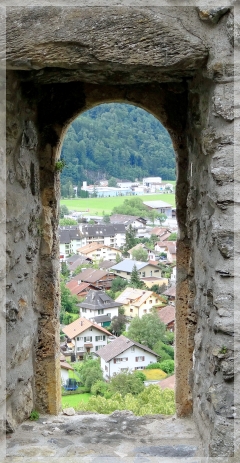
It was then that Jesus asked his audience if they were familiar with today’s verse from Psalm 118: “The stone that the builders rejected has now become the cornerstone.” When we encounter the word cornerstone in the Bible, there is some disagreement as to whether it is referring to a cornerstone—the first stone in a building and part of the foundation—or a capstone—the last stone that completes a building. The Hebrew literally means head of a corner so the exact meaning is unclear. Since Jesus is the Alpha and Omega—the first and last—perhaps both meanings apply. He is both the foundation upon which the church is built and the capstone which crowns the whole.
Regardless, in this context, the transition from a metaphor about a vineyard and evil farmers to one of architecture seems odd. Then again, we’re not first century Jews who would have been familiar both with Psalm 118 and the ancient rabbinic legend about the stone the builders rejected. When the first temple was being built, the stones were carefully cut at a quarry several miles away from Jerusalem. Although each stone was shaped to fit perfectly into place at the temple, the story is that the first stone to arrive didn’t seem to fit anywhere. Oddly shaped, the builders tossed it aside where people stumbled over it and weeds grew around it. When construction was nearly complete, it was time to place the final stone, the great lintel, in place over the doorway to the inner sanctuary of the tabernacle. Supported by scaffolding until then, once the capstone was placed, it would stand by itself. The builders, however, could not find the necessary stone. When they sent to the quarry for it, they were told they’d already received it. It was only then that they remembered the stone the builders had rejected. Retrieved from the weeds, it slid perfectly into place. As the capstone of the Temple, it held all the other stones in their proper position.
Just in case the religious leaders missed His point, Jesus told them that, like the vineyard, the Kingdom of God would be given to a new nation who would produce proper fruit. Changing metaphors back to the stone, He warned, “Anyone who stumbles over that stone will be broken to pieces, and it will crush anyone it falls on.” [Matthew 21:44] Until I learned the legend of the rejected stone, this verse troubled me—how could someone trip over a stone that also could fall on him? That rejected stone, however, could do both!
In this exchange, Jesus was telling the religious leaders that He was both the landowner’s son and the stone rejected by the builders—the very ones who should have recognized Him. His final words were a clear warning that the Kingdom of God could not be built without Him. Those who didn’t build on His truth would stumble over it and break while those who tried to pull it down would be crushed by it and destroyed!
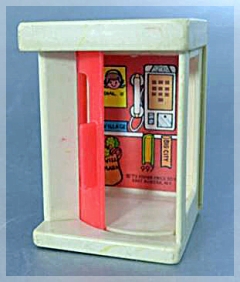 When my little grands came to play, I’d dig out the Fisher-Price “little people” village that had been their parents. Being from the early 70s, it included a free standing phone booth and I had to explain what it was and why pay phones were necessary. Phone booths are so scarce now that I suspect Superman needs to find another changing room! I can’t remember when last I dialed a phone, let alone filled a fountain pen, used carbon paper or even a typewriter. Mimeograph machines, 45s, rabbit-ear antennas, 8-track, VHS, and cassette tapes are all long forgotten. 35 mm film has been replaced by digital technology, dictionaries by spell check, and that cumbersome 26 volume encyclopedia by search engines. If you don’t understand my references, you probably don’t have a landline phone or use an alarm clock, address book, pocket calendar or travel agent. You stream your music rather than play CDs, use a GPS rather than maps, and get your news on the Internet! It’s amazing how many things have become antiquated in just my lifetime. There is, however, one thing that hasn’t become obsolete in 3,500 years: the Bible!
 Then Jesus, full of the Holy Spirit, returned from the Jordan River. He was led by the Spirit in the wilderness, where he was tempted by the devil for forty days. [Luke 4:1-2a (NLT)]
 When writing about dance yesterday, Footloose came to mind. This 1984 movie was about a small Midwestern town that had banned dancing and rock music. A pivotal scene in the movie occurs when the young hero, played by Kevin Bacon, reads off several Bible verses in an attempt to convince the city council that God approved of dance. I used some of the same references in yesterday’s devotion. The young man, however, was way off base because the verses he cited were about sacred dance rather than social dancing. He didn’t want to worship the Lord; he wanted to have a senior prom!
 When we moved to southwest Florida several years ago, everything was new and strange—we didn’t know which farmer’s market had the finest produce, the best routes to avoid traffic, the amenities of each beach, the fun activities available, or where to hike or bike. Rather than be confused and discouraged, we got out the guidebooks and maps and enthusiastically started exploring—churches, parks, theaters, markets, beaches, and museums. Every day became an adventure and, as we got to know our community, we came to love it.
 Devotions of the Heart