ASKING FOR WISDOM

The man who knows right from wrong and has good judgment and common sense is happier than the man who is immensely rich! For such wisdom is far more valuable than precious jewels. Nothing else compares with it. Wisdom gives: a long, good life, riches, honor, pleasure, peace. Wisdom is a tree of life to those who eat her fruit; happy is the man who keeps on eating it. [Proverbs 3:13-18 (TLB)]

Knowledge is knowing a tomato is a fruit. Wisdom is not putting it in a fruit salad. [Miles Kington]

barred-owlI know a lot of knowledgeable people, educated and erudite, some of whom may even be MENSA members. I also know several wise people, many of whom are neither learned nor especially well-read. While they might never come close to passing MENSA’s membership requirements, I would much prefer their wise advice to that of someone who is merely book smart or scholarly.

Solomon, when asked by God what he wanted, recognized his own inadequacy and asked God for wisdom. Recently, our pastor asked us what we’d want if God gave us a similar offer. Since we were at Bible study, we knew the right answer and promptly responded “wisdom.” In actuality, however, given the opportunity, wisdom probably wouldn’t be our first response. More often than not, we would request something like riches, health, success or happiness.

When Solomon asked for wisdom, God gave him that along with riches, fame, and a long life. While there were no caveats with the first three gifts, there was with the fourth—to get that long life, Solomon had to remain obedient to the Lord. As Solomon’s actions proved, all the wisdom in the world is meaningless unless one uses it. Unfortunately, through the years, the wise king started to depend on his own knowledge rather than God’s wisdom; as a result, he never got those extra years God had promised.

Fortunately, if we want wisdom, we don’t have to wait for God to make us an offer like Solomon’s. He’s already given it to us. The Apostle James assures us that, if we need wisdom, all we need to do is ask and God will generously give it to us! Just as there was for Solomon, however, there is a condition to this offer. When we ask God for wisdom, we must believe in Him and trust that His way is best. We’d better be planning on being obedient to His direction and committed to what He says. His wisdom is not to be weighed as we might the advice of a friend or consultant nor is it to be considered in light of our personal preferences. When we ask, we must believe that God will answer and be willing to accept His answer unconditionally. Although Solomon’s wisdom came with riches and fame, we shouldn’t expect to get such an extravagant bonus with God’s gift of wisdom to us. Then again, maybe we will. After all, regardless of the amount, a truly wise man is more than satisfied with all the riches, fame and years with which he is blessed.

Wisdom is the right use of knowledge. To know is not to be wise. Many men know a great deal, and are all the greater fools for it. There is no fool so great a fool as a knowing fool. But to know how to use knowledge is to have wisdom. [Charles Spurgeon]

And if, in the process, any of you does not know how to meet any particular problem he has only to ask God—who gives generously to all men without making them feel foolish or guilty—and he may be quite sure that the necessary wisdom will be given him. But he must ask in sincere faith without secret doubts as to whether he really wants God’s help or not. The man who trusts God, but with inward reservations, is like a wave of the sea, carried forward by the wind one moment and driven back the next. That sort of man cannot hope to receive anything from God, and the life of a man of divided loyalty will reveal instability at every turn. [James 1:5-8 (MSG)]

Copyright ©2016 jsjdevotions. All rights reserved.
 

EMPTY PAGES

You are my God, and I give thanks to you. My God, I honor you highly. Give thanks to the Lord because he is good, because his mercy endures forever. [Psalm 118:28-29 (GW)]

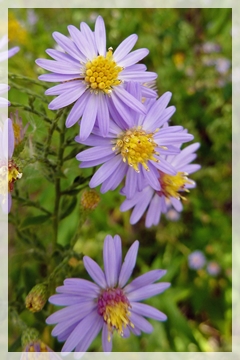
New England asterLast week, I sat down to write in my gratitude journal and couldn’t believe my eyes. I hadn’t written in it for seven days. “I write in it every day!” I protested. Surely there was a mistake—pages must be missing. It wasn’t and they weren’t—the mistake was mine and it wasn’t pages that were missing; it was gratitude! It had been a week jam-packed with family, errands, chores, and writing—a week of “same old, same old,” just at a faster pace than usual. That, however, was no excuse for a heart oblivious to the blessings of seven ordinary days. Surely, within each one of those unexceptional but busy days there had been something for which I could thank God. Although I always offer thanks in my daily prayers, that journal has been a way of making me mindful of God’s specific blessings of each day—a way of making me see His hand in a life of the “same old, same old.”
As I tried to recollect the previous week, I realized how many things I could have listed: a self-cleaning oven, on-line banking, Amazon Prime, Excel spreadsheets, Photoshop, Moody radio, no-iron clothes, auto-save, email, peanut butter, purple asters, discount coupons, honey crisp apples, text messaging and Google. My greatest oversight, however, was not mentioning my husband in that gratitude journal. No, he didn’t do anything out-of-the ordinary; he’s still the same old husband I’ve had for nearly fifty years. Still, I’d taken him for granted, just as I had all the rest of the week’s blessings. I’d neglected to thank God that I still have a spouse to hug when a friend lost her husband to cancer that same week. Oh, how easy it is to take the blessings of our unremarkable ordinary lives for granted.

It wasn’t until something special and out of the ordinary happened that I looked for my gratitude journal and discovered those blank pages. Most of our days, however, are not extraordinary. Rarely are they marked by outstanding achievements or special recognition. For the most part, our lives are simply the “same old, same old,” consisting of the familiar daily grind with a few minor variations. Nevertheless, hidden within each ordinary day are plenty of reasons for thanksgiving, beginning with our first breath of the day.

The unthankful heart…discovers no mercies; but let the thankful heart sweep through the day and, as the magnet finds the iron, so it will find, in every hour, some heavenly blessings! [Henry Ward Beecher]

When I first open my eyes upon the morning meadows and look out upon the beautiful world, I thank God I am alive. [Ralph Waldo Emerson]

Always thank God the Father for everything in the name of our Lord Jesus Christ. [Ephesians 5:20 (GW)]

Enter his gates with a song of thanksgiving. Come into his courtyards with a song of praise. Give thanks to him; praise his name. [Psalm 100:4 (GW)]

Copyright ©2016 jsjdevotions. All rights reserved.


MY COMPASS

Give me your lantern and compass, give me a map, So I can find my way to the sacred mountain, to the place of your presence, To enter the place of worship, meet my exuberant God, Sing my thanks with a harp, magnificent God, my God. [Psalm 43:3-4 (MSG)]

All sunshine and sovereign is God, generous in gifts and glory. He doesn’t scrimp with his traveling companions. It’s smooth sailing all the way with God-of-the-Angel-Armies. [Psalm 84:11-12 (MSG)]

compass plant

Fortunately, I’m not an explorer—my sense of direction is terrible and I’m not so handy with a compass.  Besides, compasses can’t be trusted. Because the earth actually is one big magnet, instead of pointing to true north (the “North Pole”), a compass will align itself with the earth’s magnetic field. Although true north is located somewhere in the Arctic Ocean, a compass points to magnetic north, which is about 500 km away on Ellesmere Island in Northern Canada. To make it even more confusing, magnetic north is always moving and has moved 1000 km in the last 150 years. Unfortunately, finding true north is essential for accurate navigation, which is why I defer to the captain of my ship and the pilot of my plane when travelling long distances.

Folklore has it that one of my favorite wildflowers can find true north better than most compasses. The Compass Plant (or Silphium laciniatum as the botanists would say) stands six to twelve feet tall and its bright yellow flowers are beacons in the prairie. In bright sunlight, its leaves tend to orient themselves in a north-south pattern to avoid the direct rays of the midday sun. Apparently, the plant got its name because the pioneers used it to guide them across the Midwest prairies. I’m not so sure about its accuracy since, from my observation, the leaves tend to go every which way. The flowers, however, always seem to point in the same direction—toward the sun!

Finding our true north is as essential in life as it is in navigation and it’s even easier to be lost in life’s journey than it is on the prairie or in the ocean. Uncertain of where we are, we’re often unclear about where we’re going or what path we are to take to get wherever it is. Life’s true north, of course, has nothing to do with the North Pole, the earth’s axis, magnetic variations, grid lines, maps or even compasses. If I need to know where I am, where I need to go, or how to get there, I’m going to follow the example of the Compass Plant and look to the Son!

Jesus once again addressed them: “I am the world’s Light. No one who follows me stumbles around in the darkness. I provide plenty of light to live in.” [John 8:12 (MSG)]

Jesus summed it all up when he cried out, “Whoever believes in me, believes not just in me but in the One who sent me. Whoever looks at me is looking, in fact, at the One who sent me. I am Light that has come into the world so that all who believe in me won’t have to stay any longer in the dark. [John 12:44-46 (MSG)]

Copyright ©2016 jsjdevotions. All rights reserved.


REMEMBERING WHO I LOVE (and who loves me)

Wear me as a signet ring on your heart, as a ring on your hand. Love is as overpowering as death. Devotion is as unyielding as the grave. Love’s flames are flames of fire, flames that come from the Lord. Raging water cannot extinguish love, and rivers will never wash it away. [Song of Solomon 8:6-7a (GW)]

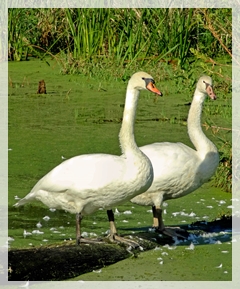
mute swansI was right. In fact, I was so right I deserved a gold star and he was so wrong that he should have gotten a big red “F” but he never admitted it. Although I congratulated myself for not saying, “I told you so!” I still wanted him to eat a little humble pie. Then the Holy Spirit did His job and rightly convicted me of being a bit self-righteous and a whole lot mean-spirited. I was reminded of Luther, a man from our church who I called “a disciple of Christ” in a previous devotion. He always greeted people with a smile and the phrase, “Jesus loves you and I do, too.” As I heard Luther’s words in my mind, I stopped in mid-gripe and remembered that Jesus loves my man and I do, too.
I wrote the previous paragraph several months’ ago and the devotion remained unfinished in my “work on” folder until I came upon it this morning. I don’t even remember what it was that vexed me so much but I do remember how I nearly allowed Satan to drive a wedge between me and the man I love. Had I allowed it, an incident that was trivial then could have developed into something rather troubling by now. Fortunately, I chose love instead of spite. Nevertheless, I shudder at thinking how easily something so trivial could have stolen our joy for even an instant.

If I made a list of my favorite chapters in the Bible, 1 Corinthians 13 would rank way up there. No matter how many times I study it, I never tire of reading about love—not romance—but true love—love that gives of itself, overlooks, forgives and yields, love that is polite, committed, unconditional, and respectful. Love finds joy in sorrow, beauty in brokenness, hope in despair, abundance in scarcity and laughter in tears. Love blesses, honors, shares, protects and endures; it serves, cooperates, builds and trusts. When we love, we delight in one another, listen to each other, and give without expecting anything in return. Love overlooks all those petty annoyances that are part of living with someone and love certainly doesn’t waste a minute griping, nagging or serving up humble pie. Love is a choice and love always remembers that “Jesus loves you and I do, too!”

 Let the wife make the husband glad to come home, and let him make her sorry to see him leave. [Martin Luther]

Love is patient. Love is kind. Love isn’t jealous. It doesn’t sing its own praises. It isn’t arrogant. It isn’t rude. It doesn’t think about itself. It isn’t irritable. It doesn’t keep track of wrongs. It isn’t happy when injustice is done, but it is happy with the truth. Love never stops being patient, never stops believing, never stops hoping, never gives up. Love never comes to an end. [1 Corinthians 13:4-8a (GW)]

Whoever forgives an offense seeks love, but whoever keeps bringing up the issue separates the closest of friends. [Proverbs 17:9 (GW)]

Copyright ©2016 jsjdevotions. All rights reserved.

MAKING A PERFECT SACRIFICE

“When you give blind animals as sacrifices, isn’t that wrong? And isn’t it wrong to offer animals that are crippled and diseased? Try giving gifts like that to your governor, and see how pleased he is!” says the Lord of Heaven’s Armies. “Go ahead, beg God to be merciful to you! But when you bring that kind of offering, why should he show you any favor at all?” asks the Lord of Heaven’s Armies. [Malachi 1:8-9 (NLT)]

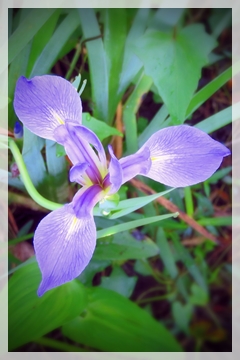
blue flag irisIn Leviticus, Moses laid out God’s law regarding sacrifices—only a perfect animal was acceptable. One thousand years later, in the time of Malachi, the priests allowed people to offer blind, crippled, diseased and even stolen animals as offerings. The Israelites were offering God the animals that were worthless or someone else’s animal entirely. Since, by definition, a sacrifice requires the giving up of something of great value to us, those certainly didn’t qualify as sacrifices. The Israelites, like a dishonest salesperson who substitutes an inferior product for a good one, were actually cheating God.

Abraham understood what it meant to give something valuable to God. When God demanded that he give his only son, the beloved Isaac, as a sacrifice, he obeyed. Fortunately for Isaac, when it was clear that Abraham loved God more than his precious child, God stopped him from completing the sacrifice. Hannah, the mother of Samuel, also understood what it was to give something irreplaceable to God. Unable to have a child, the anguished woman promised the Lord that, if he should bless her with a son, she would give him back to God. Hannah became pregnant and gave birth to a son called Samuel. When he was three years old, she brought him to Eli the priest and dedicated him to the Lord. Although Samuel later became a prophet and one of the greatest of Israel’s judges, it had to break Hannah’s heart to leave her young son in Eli’s care. Both Abraham and Hannah gave God their most cherished possessions: their sons. Moreover, God gave us His best when He sacrificed His only son for us.

What we offer God reflects our attitude toward him. Do we give Him our best or less? Does He get our gifts first or does He just get our leftovers—whatever remains after we’ve done whatever else we wanted to do? Our time, energy, talent, money and possessions—they all belong to God. He’s just allowing us to use His gifts for a short time while we’re here on earth. He deserves the best we have to offer; after all, it’s His anyway!

Because you have obeyed me and have not withheld even your son, your only son, I swear by my own name that I will certainly bless you. I will multiply your descendants beyond number, like the stars in the sky and the sands on the seashore. Your descendants will conquer the cities of their enemies. And through your descendants all the nations of the earth will be blessed – all because you have obeyed me. [Genesis 22:15-18 (NLT)]

Honor the Lord with your wealth and with the best part of everything you produce. Then he will fill your barns with grain, and your vats will overflow with good wine. [Proverbs 3:9-10 (NLT)]

Copyright ©2016 jsjdevotions. All rights reserved.

HAPPILY EVER AFTER

That night God appeared to Solomon and said, “What do you want? Ask, and I will give it to you! [2 Chronicles 1:7 (NLT)]

No one is really happy merely because he has what he wants, but only if he wants things he ought to want. [St. Augustine]

Mountain Bluebird In the many television tributes to the recently deceased actor Gene Wilder, a scene from the movie Willy Wonka & the Chocolate Factory frequently has been aired. In it, Willy tells Charlie not to forget what happened to the man who suddenly got everything he wanted. When the boy asks what that was, Wonka replies, “He lived happily ever after!”

While that exchange made for a nice ending to a children’s film, getting everything we want is hardly the way to guarantee living happily ever after—unless, of course, we only want the right things! Yet, even wanting the right things is no guarantee of happiness. Look at Solomon; when God asked what he wanted, the young king requested the right thing—wisdom. God rewarded him not just with wisdom but also with riches, possessions, honor and fame. Here was a king who truly got all that he wanted plus more. Surely, with everything that Solomon received, he should have lived happily ever after.

Nevertheless, all the wisdom and wealth in the world could not give meaning to Solomon’s life. Although gifted with wisdom, he failed to use it when he broke God’s rules for kings by amassing horses, collecting a harem of 1000, accumulating riches by excessive taxation, sealing alliances by marrying foreign women and worshiping pagan gods. Although he got everything he wanted, Solomon did not find happiness. His words in Ecclesiastes show us how disillusioned, bitter and disappointed this wealthy sage was when he realized how empty his life had been without God at its center.

Getting what we want will only lead to a happily ever after if we want what God wants for us and if we use His blessings with a wisdom far greater than Solomon’s. Let us never forget that God’s answers to our prayers often are not what we think will make us happy. They are, however, always what we need. Moreover, God has already given us all that we need for our happily ever after: His beloved Son, forgiveness, salvation, and eternal life.

God cannot give us a happiness and peace apart from Himself, because it is not there. There is no such thing. [C.S. Lewis]

I tell you the truth, anyone who believes has eternal life. [John 6:47 (NLT)]

I heard a loud shout from the throne, saying, “Look, God’s home is now among his people! He will live with them, and they will be his people. God himself will be with them. He will wipe every tear from their eyes, and there will be no more death or sorrow or crying or pain. All these things are gone forever.” [Revelation 21:3-4 (NLT)]

Copyright ©2016 jsjdevotions. All rights reserved.