ADVENT LOVE

This, you see, is how much God loved the world: enough to give his only, special son, so that everyone who believes in him should not be lost but should share in the life of God’s new age. After all, God didn’t send the son into the world to condemn the world, but so that the world could be saved by him. [John 3:16-17 (NTE)]

While we’re busy decorating our homes, planning holiday menus, finding the perfect gift for everyone on our list, and stressed about supply chain issues and shipping delays affecting the receipt of those gifts, let’s not forget that we’re in the season of Advent. This is a time for us to prepare for the second coming of Christ and to ponder the gifts of hope, love, peace, and joy we received with His first coming.

Although the observation of Advent has no Biblical mandate and its traditions vary throughout various denominations and nationalities, many churches observe this season with an Advent wreath and candles. At our northern church, last Sunday’s candle was the Prophet’s Candle, the candle of hope. This Sunday’s candle will be the Bethlehem candle, the candle of love. It was on that holy night in Bethlehem long ago that God’s love for His fallen children took on human form. When thinking about this amazing gift of love, the words of Christina Georgina Rossetti’s beautiful poem come to mind. “Love came down at Christmas, love all lovely, love divine; love was born at Christmas, star and angels gave the sign.”

God is love and that baby born in Bethlehem so very long ago was God! When love was made manifest in Jesus, we saw that love is far more than an abstract idea or emotion. We not only saw how much God loved us, but we also saw what real love looks like, and it has nothing to do with expensive gifts, gaily wrapped boxes, beautifully decorated cookies, or wreaths, colored lights, and tinsel. It has to do with serving others, humility, patience, compassion, forgiveness, generosity, mercy, and sacrifice.

In a season marked by materialism, stress, shopping, over-eating (and drinking), travel, and entertaining, let us reflect upon the love of a God who, rather than giving up on his sinful rebellious children, loved us enough to sacrifice his only Son for our salvation. That Son was “love incarnate, love divine” as He put on the flesh of humanity, was born of a woman, suffered and died for us just so He could redeem us with His own blood! Born in Bethlehem over two thousand years ago, He loved us enough to become flesh and blood, not so that He could be with us, but so that we could be with Him!

It’s been pointed out that, while it’s easy to believe in Christmas and even easier to celebrate it, it’s much harder to live Christmas. “Love incarnate, love divine” is the true meaning of Christmas. As God loved us, may we love others in the same way, not just in this season, but all year long.

Love came down at Christmas,
Love all lovely, love divine;
Love was born at Christmas,
Star and angels gave the sign.
Worship we the Godhead,
Love incarnate, love divine;
Worship we our Jesus:
But wherewith for sacred sign?
Love shall be our token,
Love shall be yours and love be mine,
Love to God and to all men,
Love for plea and gift and sign. [Christina Georgina Rossetti]


The one who does not love has not known God, because God is love. This is how God’s love has appeared among us: God sent his only son into the world, so that we should live through him. Love consists in this: not that we loved God, but that he loved us and sent his son to be the sacrifice that would atone for our sins. Beloved, if that’s how God loved us, we ought to love one another in the same way. [1 John 4:8-11 (NTE)]

Copyright ©2021 jsjdevotions. All rights reserved.

GOD-INCIDENCES

Remember the things I have done in the past. For I alone am God! I am God, and there is none like me. Only I can tell you the future before it even happens. Everything I plan will come to pass, for I do whatever I wish. [Isaiah 46:9-10 (NLT)]

monarch butterfly - milkweed

I suspect that most of us live rather ordinary and somewhat predictable lives that are occasionally interrupted by major life events (some of which are welcome and other which are not). For us, it is life’s little surprises—its happenstance and serendipity—that keep our lives from becoming humdrum.

We probably have no problem crediting God with the big blessings of life—things like the birth of a healthy child, a benign biopsy, a successful surgery, 10 years of sobriety, 50 plus years of marriage, the grand’s graduation, the better paying job, or God’s gifts of salvation and forgiveness. On the other hand, we tend to think of the little unexpected blessings—the butterfly or bluebird, the chance meeting, the out-of-the-blue phone call from an old friend, the sermon that spoke directly to our need, making the tight connection at the airport, or the humorous email that arrived when we were in the dumps—as mere coincidence or luck. After all, it seems that our Almighty God must be far too busy running the universe to deal with the minutiae of our everyday lives. Absolutely nothing, however, is unimportant to a God who sees every sparrow fall, knows the number of hairs on our heads, and has etched our names on the palms of His hands. Just as the universe is not run by random chance, neither are our lives!

God can multitask better than a one-armed paper-hanger or a mom with triplet toddlers! While God was keeping the stars and planets aligned back in 470 BC, He also orchestrated Persian King Xerxes’ insomnia and his attendant’s choice of what part of the king’s chronicles was read to him. For that matter, He is the one who placed the villains plotting the Xerxes’ death within ear shot of Mordecai. Rather than coincidences, all of the events in the book of Esther were part of God’s finely crafted plan!

Although we speak to God in prayer, we often chalk up His answer to luck or coincidence. God can speak audibly but He also speaks through seemingly random things—the day’s Bible verse, a chance meeting, a song on the radio, a casual comment, a wrong number, words in a book we accidentally open, and even a bout of insomnia. When we credit the little blessings of life to coincidence, we’re happy. When we credit them to their orchestrator, however, we become thankful. While we’re surprised by these seemingly random or capricious events, our God never is! Everything in our lives has passed through His hands!

Yesterday, we gave thanks for our food, family, health, homes, and all the major blessings of our lives. Today, let’s give thanks for the little blessings, the godsends, that make our ordinary lives so extraordinary—the things that encourage us when we want to give up, put smiles on our faces, fill our hearts with joy, answer our questions, or remind us how much we’re loved. Along with all the big things, let’s be sure to give God credit for the little ones—the God-incidences—that He scatters throughout our days. His fingerprints are everywhere we look!

You can make many plans, but the Lord’s purpose will prevail. [Proverbs 19:21 (NLT)]

And we know that God causes everything to work together for the good of those who love God and are called according to his purpose for them. [Romans 8:28 (NLT)]

Copyright ©2021 jsjdevotions. All rights reserved.

DESSERTS OR DESERTS?

But the other criminal protested, “Don’t you fear God even when you have been sentenced to die? We deserve to die for our crimes, but this man hasn’t done anything wrong.” [Luke 23:40-41 (NLT)]

wild turkeyWe’re hosting family and friends for Thanksgiving dinner and I’m still planning the menu. One guest won’t eat anything green, another doesn’t eat seafood, one dislikes turkey, and two are vegetarians. While I’m still working on appetizers, salad, main course and sides, dessert is a given. Between the sweets our guests are bringing and my pecan pumpkin pie topped with caramel sauce and whipped cream, even the pickiest eater will be happy! I probably could please everyone with just desserts!
Thinking of eating just desserts reminded me of a show I saw several years ago about non-traditional Thanksgiving menus. Prepared by the owner of a confectionery, the entire meal consisted of sweets masquerading as traditional savory holiday dishes. The turkey was formed of dark and light chocolate and the mashed potatoes and gravy were a white cake heaped in a bowl, topped with buttercream frosting, and drizzled with butterscotch syrup. The dinner rolls were doughnuts, the yams were sweet pumpkin soufflé, and the peas were made of marzipan. After their initial dismay, everyone enjoyed eating just desserts. In fact, upon cleaning his dinner plate, one little boy asked for dessert!

The life God give us isn’t like that holiday dinner of just desserts; there always will be things like sadness, trouble, loss, and pain. We didn’t enjoy them the first time around and certainly don’t want second or third helpings. Nevertheless, like that little boy, rather than relishing whatever sweetness we’re given, we often think we deserve more. While we might prefer a life of just desserts, what we don’t want is one of just deserts!

You see, in spite of their similar pronunciation, the phrases “just desserts” and “just deserts” are not the same thing.  “Just deserts” uses a now obsolete definition of “desert” as “something that is deserved” and precedes the mid-16th century concept of an after dinner sweet called “dessert” by several hundred years.

In fact, we’re blessed that God doesn’t give us our just deserts. As sinners, we don’t even deserve the blessings we’ve already been given. We certainly don’t deserve God’s love—a love so great that He sacrificed His only son for us. Without sin, Jesus didn’t get His just deserts when he suffered on the cross; He took our just deserts! Dying so that we might live, our Lord got what He didn’t deserve so that we could receive what we didn’t! We deserve condemnation and punishment but God’s mercy gives us love and forgiveness. Let’s be careful when we demand what we truly deserve from God; we don’t want Him to give us our just deserts!

The Gospel is good news of mercy to the undeserving. The symbol of the religion of Jesus is the cross, not the scales. [John Stott]

He does not punish us for all our sins; he does not deal harshly with us, as we deserve. For his unfailing love toward those who fear him is as great as the height of the heavens above the earth. He has removed our sins as far from us as the east is from the west. [Psalm 103:10-12 (NLT)]

Copyright ©2021 jsjdevotions. All rights reserved.

NEW WINE (Matthew 9:16-17 – Part 2)

But now we have been cut loose from the law; we have died to the thing in which we were held tightly. The aim is that we should now be enslaved in the new life of the spirit, not in the old life of the letter. [Romans 7:6 (NTE)]

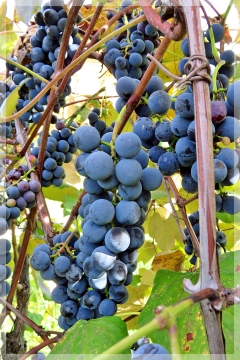
concord grapesWhen explaining to some of John the Baptist’s followers why His disciples didn’t fast, along with the illustration of patching an old garment, Jesus compared His new way with winemaking. While many of us have sewn patches on clothing, few of us are experienced winemakers. Nevertheless, we know that today’s vintners ferment their wine in oak, stainless, concrete, or clay barrels rather than wineskins. Our only experience with wineskins may hearken back to college football games and ski trips when some fellows carried a wineskin filled with an alcoholic beverage hidden under their coats.

In the 1st century, however, wine often was fermented in large wineskins made from animal hide or bladders. Like new material sewn on old fabric, new wine in old skins also would be a failure. When unfermented juice was put into a skin and left to age, gasses would form. Although new wineskins were pliable enough to hold both wine and gasses as they fermented, old skins were hard and brittle. Without elasticity, the old skins would be unyielding as the new wine expanded during fermentation. Eventually, the old skins would burst and both wineskin and wine would be spoiled.

Thinking of new wine, today is Beaujolais Nouveau Day in France. Observed with music, fireworks and festivals, it celebrates the release of the first wine of the season. Bottled and sold just six weeks after harvest, Beaujolais Nouveau is intended for immediate drinking. I thought of this fruity red when Jesus concluded His two parables with these words in Luke 5:39: “But no one who drinks the old wine seems to want the new wine. ‘The old is just fine,’ they say.”

With Beaujolais Nouveau, people who prefer the old to the new are correct. In spite of its popularity, Beaujolais Nouveau rarely lives up to its promise and never is as rich as properly aged red wine. The result of shortcuts and additives, unlike other wines, it doesn’t even improve with age. Calling it “near wine,” wine critics have compared Beaujolais Nouveau to eating raw cookie dough.

Jesus, however, wasn’t talking about new wine; He was talking about the difference between the old religious legalism of the Pharisees and the new way of God’s grace found in Him. He cautioned that it is far easier to fall back into the old familiar ways than to take on anything new. Grace through faith was a radical idea and Jesus knew He couldn’t put new ideas into inflexible closed minds. For many people, it was easier to remain in a life governed by laws and regulations than to step out in faith and live according the Spirit.

Unlike Beaujolais Nouveau, the rich life found in Christ isn’t the result of shortcuts or additives. Following Him lives up to its promise and only gets richer and better with time. Like Beaujolais Nouveau, however, the message of hope and salvation Jesus brought into the world is worthy of celebration (and not just on the third Thursday of November)!

Then he took some bread. He gave thanks, broke it and gave it to them. “This is my body,” he said, “which is given for you. Do this in memory of me.” So too, after supper, with the cup: “This cup,” he said, “is the new covenant, in my blood which is shed for you.” [Luke 22:19-20 NTE]

Copyright ©2021 jsjdevotions. All rights reserved.

COME AS YOU ARE

“Now go out to the street corners and invite everyone you see.” So the servants brought in everyone they could find, good and bad alike, and the banquet hall was filled with guests. [Matthew 22:9-10 (NLT)]

My in-laws were great ones for giving theme parties. When they hosted a “Backwards Party,” guests entered through the back door, wore their clothes backwards (which my mother-in-law admitted made it difficult for the men), and ate dessert before dinner. At another get-together, attendees came dressed as children, received jump ropes and jacks, pulled taffy, and played games like “Mother May I?” and “Pin the Tail on the Donkey.” My introduction to their parties was in 1966 when they turned their house into a Prohibition era speakeasy and guests needed a password to enter. Women dressed as flappers while the men wore fedoras, vests, and spats. Another party had the theme, “Come as You Wish You Had Been.” My mother-in-law, dressed in shorts with a whistle around her neck, came as the PE teacher she once dreamed of becoming and my father-in-law dressed as the train conductor he once aspired to be. Other attendees dressed as ballerinas, weight lifters, princesses, cowboys, or baseball players.

The one theme party they never hosted was “Come as You Are!” After all, no one wants to come as they are. If we can’t be someone else entirely, at least we want to be a better version of ourselves! If I were invited to a “Come as You Are” party, I know I would cheat. I’d change out of my yoga pants, tee, and Crocs into an outfit that would suggest my life is far more exciting than it really is. Then I’d put on make-up, touch up my nails, comb my hair, and spritz on perfume before leaving the house. Yet, “Come as you are!” is exactly how God invites us to come to Him.

We don’t have to be neat, clean or accomplished, nor do we have to repair what’s broken in our lives to accept the invitation to Jesus’ party. Our Lord didn’t invite the elite or influential to be his disciples; He invited twelve ordinary, uneducated, and imperfect men. He knew Peter was impulsive, John and James hot-tempered, Judas flawed, and Matthew a traitorous tax-collector. The woman at the well and the thief on the cross didn’t have to pretend to be anything but the sinners they were and neither do we! The blind, lame, adulterous, afflicted, possessed, soiled and corrupt—they all came to Jesus, not as the innocent children they once were nor as they once wished they could have been, but just as they were. It’s hard to believe that our perfect God could love and accept us, as imperfect and flawed as we are, but He does.

Although we can come to Him as we are, make no mistake about it, we won’t remain that way. We must shed the old us and put on the new in the same way that Saul, the self-righteous Pharisee, did when he became Paul, the Apostle. When we accept Jesus’ invitation to come as we are, He will make of us what we should be.

The church is not a select circle of the immaculate, but a home where the outcast may come in. It is not a palace with gate attendants and challenging sentinels along the entrance-ways holding off at arm’s-length the stranger, but rather a hospital where the broken-hearted may be healed, and where all the weary and troubled may find rest and take counsel together. [James H. Aughey]

Jesus answered them, “Healthy people don’t need a doctor—sick people do. I have come to call not those who think they are righteous, but those who know they are sinners and need to repent.” [Luke 5:31-32 (NLT)]

Put on your new nature, and be renewed as you learn to know your Creator and become like him. In this new life, it doesn’t matter if you are a Jew or a Gentile, circumcised or uncircumcised, barbaric, uncivilized, slave, or free. Christ is all that matters, and he lives in all of us. [Colossians 3:10-11 (NLT)]

Copyright ©2021 jsjdevotions. All rights reserved.

HE ALWAYS ANSWERS

Why do you accuse God of not answering anyone?  God does speak—sometimes one way and sometimes another—even though people may not understand it. He speaks in a dream or a vision of the night when people are in a deep sleep, lying on their beds. He speaks in their ears and frightens them with warnings to turn them away from doing wrong and to keep them from being proud. [Job 33:13-17 (NCV)]

monarch butterflyWhile sorting through comic strips I’d saved, I came across an old Beetle Bailey (written by Greg and Mort Walker). In it, the inept General Halftrack approaches the chaplain and says, “I’d like to talk to God like you do, but when I try to talk to him, He doesn’t answer.” Chaplain Stainglass replies, “Maybe you’ve been calling the wrong number!” Indeed, sometimes the silence seems deafening when we call on God but I don’t think it’s because we’ve called the wrong number. The general simply may have hung up too quickly! Abraham determinedly pled for the city of Sodom, Hannah untiringly prayed for a son, Elijah persisted in praying for rain, and the Syrophoenician woman stubbornly begged Jesus to heal her daughter. They continued to call and God answered them all! Then again, maybe the General was so busy talking, that he didn’t hear God answer him!

The General may have missed the answer because he didn’t recognize God’s voice. Perhaps he expected to hear an audible voice as did Moses in the meeting tent or Paul on the road to Damascus. Maybe the general imagined God’s words would come from an angel as they did to Mary and the shepherds long ago. Most of us, however, will have neither a face-to-face meeting with God nor an encounter with a host of angels. It’s more likely that God will use the voices of other believers when He talks to us as He did with the prophets to Israel and Judah, Jethro to Moses, Samuel to Saul, and Paul to Timothy.

Nature and natural events are another way God speaks. The thunder, lightning, quaking and smoke at Mt. Sinai certainly made God’s presence clear to the Israelites. He spoke through both a flood and a rainbow to Noah and a star to the Magi. Because God has a specific plan for our lives, we also will find God’s voice in our circumstances. When, like the Israelites, we find ourselves between an army and the sea or a rock and a hard place, He may be telling us to trust Him. If, like Jonah, we end up in the belly of a whale, He might be teaching us about obedience. Sometimes God’s even speaks through the supernatural as He did to Gideon with the fleece, to Moses with the burning bush, to Balaam with a talking donkey, and to King Belshazzar with writing on the wall.

Dreams and visions are another way God speaks. It was in a dream that God told Abimelech that Sarah was Abraham’s wife and a vision led Ananias to visit Paul. In one dream, Jacob saw angels ascending and descending from a ladder and, in another, God told him to return home. It was through Joseph’s dreams God spoke to him and through Pharaoh’s dreams that Joseph knew of Egypt’s future famine.

God also He speaks to us through the Holy Spirit. While some refer to Him as that “still small voice,” the Holy Spirit is anything but still or small when He points out our sins or has an assignment for us. Speaking to our hearts and often through our conscience, the Holy Spirit helps us discern God’s will, convicts us when we go astray, and gives us a sense of peace when we’ve taken the right path.

Perhaps the General forgot that God already provided him with plenty of answers in the Bible. All of scripture is God-breathed and His word is filled with wisdom and guidance. The words of Jesus are as relevant today as they were over 2,000 years ago. We, however, have to do our part by reading those words!

Like the General, we all have times when it seems God is away from his desk and ignoring our calls. The problem isn’t with God; it’s with us. We’re just not listening with our ears, eyes and hearts!

And the sheep listen to the voice of the shepherd. He calls his own sheep by name and leads them out. When he brings all his sheep out, he goes ahead of them, and they follow him because they know his voice. … My sheep listen to my voice; I know them, and they follow me. [John 10:3-4,27 (NCV)]

Copyright ©2021 jsjdevotions. All rights reserved.